


Al-Tammuz, also written Tammuz-1, was an Iraqi project of the late 1980s, run by Iraq itself, to build an indigenous medium-range ballistic missile with a claimed range of 1,200 to 2,000 kilometers, well beyond anything Iraq had fielded before.1,2 It sits at the obscure end of Cold War missile proliferation history. No confirmed flight test of Al-Tammuz ever took place, and even contemporary Pentagon analysts were unsure whether the project was a genuine engineering effort or largely a paper missile meant to signal capability Iraq did not actually possess.4
- Claimed range nearly triple the Al-Hussein's 650 km
- Backed by a dedicated engine-development project (1728)
- Drew on outside expertise beyond Iraq's own engineers
- Diameter and payload figures corroborated across multiple sources
- Never flight tested in any confirmed instance
- Design basis disputed even among Western analysts
- Confused in some sources with the unrelated Al-Abid launch vehicle
- Program ended by the Gulf War before reaching hardware maturity
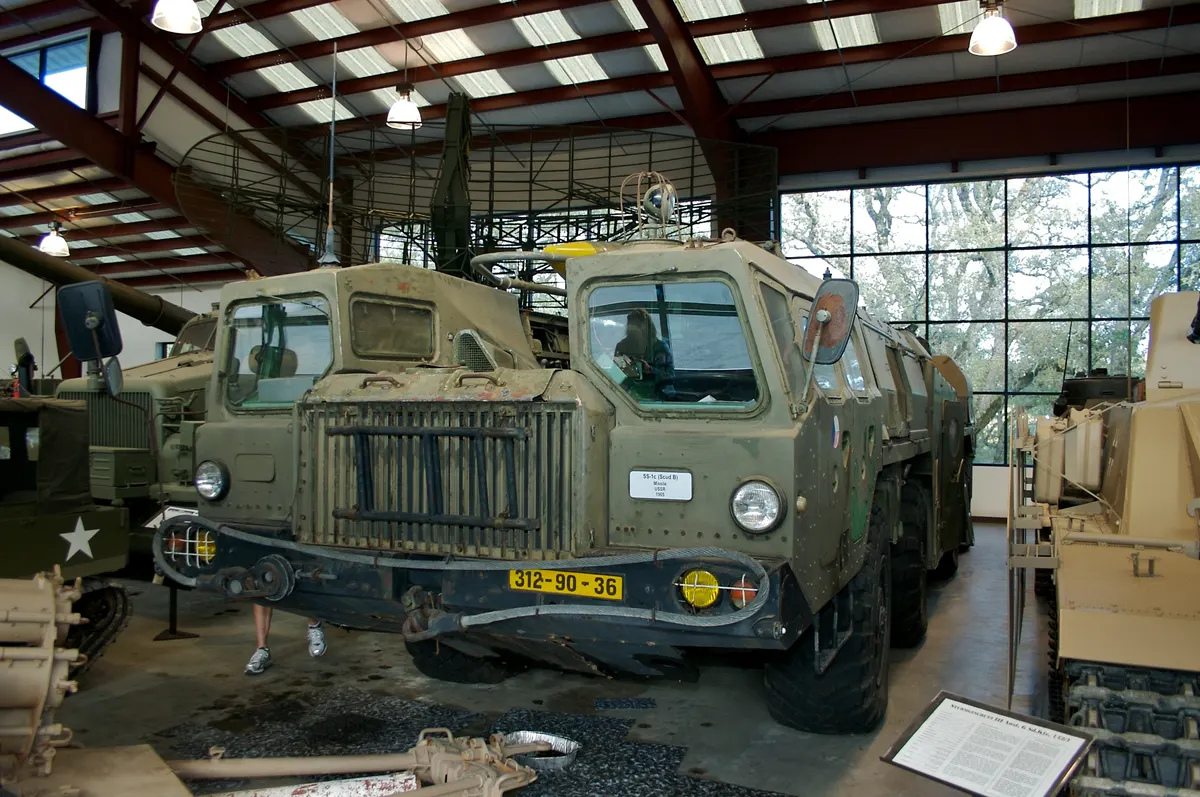
The program grew out of Project 144, Iraq's broader effort from the mid-1980s to reverse engineer and extend the range of its Soviet-supplied Scud missiles.1,4 Project 144 was assigned to the Al Qaya State Establishment, while a related effort, Project 1729, went to the Nassr State Enterprise research and development center at Taji, north of Baghdad.1,2 A third designation, Project 1728, covered indigenous production of Scud-derived rocket engines, the component Al-Tammuz would have needed most.1,12
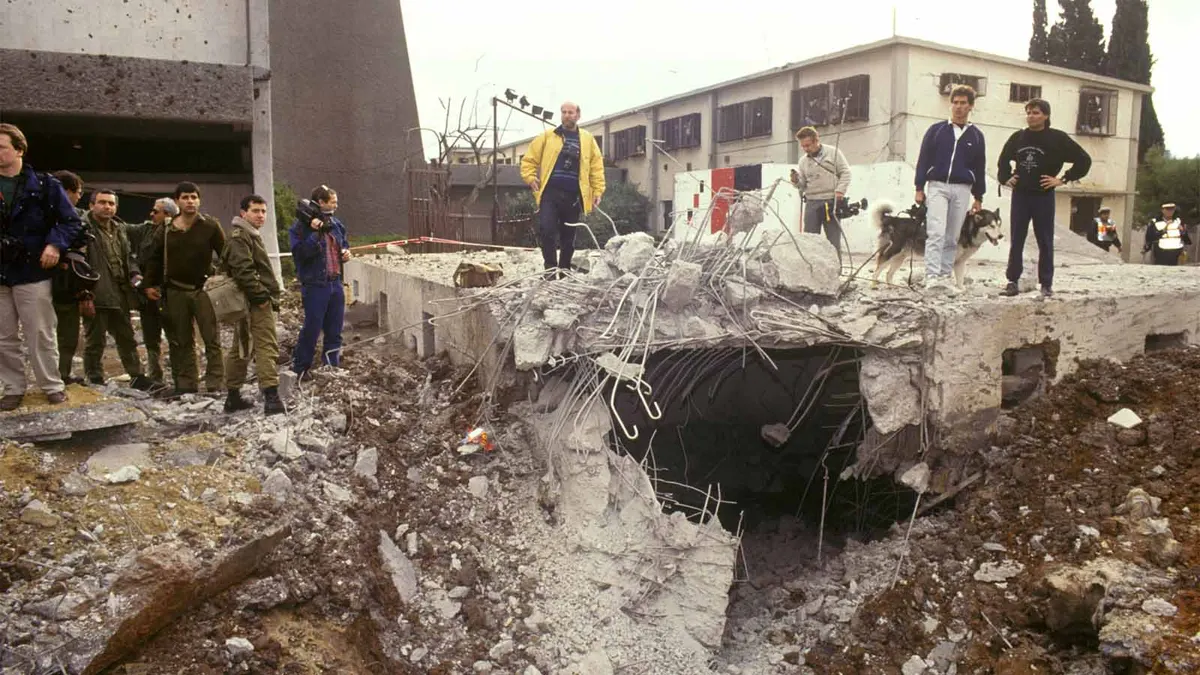
Iraq's own designation choice adds a genuine historical trap for researchers. Tammuz is the Iraqi calendar name for July, the month the Ba'ath Party seized power in 1968, and Iraq had already used it once before, for the Tammuz-1 and Tammuz-2 reactors supplied by France at Osirak, destroyed by Israel's air raid in 1981.10,11 The missile announced eight years later borrowed the same name for an entirely different program, and the two are unrelated beyond the shared word.
Because so little verifiable engineering detail survives, this article states plainly where sources disagree or where information is simply thin, rather than filling gaps with invented specifics. Iraq's own claims about Al-Tammuz, made under Saddam Hussein's government amid an active disinformation effort around several weapons programs, cannot be taken at face value, and Western intelligence assessments themselves varied.4,7
Iraq ran Al-Tammuz alongside a second, better-documented long-range effort, the trilateral Condor II program with Argentina and Egypt, known in Iraq as Badr-2000.5,6 The two are frequently conflated because both targeted a similar 1,000 to 2,000 kilometer class and overlapped in time, but they were separate designs with separate propellants, and this article treats them as distinct programs throughout, consistent with how the primary sources describe them.
The clearest technical description of Al-Tammuz comes from declassified Pentagon assessments compiled after the Gulf War. The missile was to have a 1.25 meter diameter airframe, carrying a payload of at least 1,000 kilograms, roughly a tonne, to a distance Iraq itself claimed could reach 2,000 kilometers, though most Western estimates put the realistic figure closer to 1,200 kilometers.1,2,3 Like the Scud family it descended from, Al-Tammuz was to be liquid propelled, not solid fueled, a detail that matters because it separates the design philosophy of Al-Tammuz clearly from the solid-fuel Badr-2000 running in parallel.3
- Füze SınıfıMedium-range ballistic missile (MRBM)
- TasarımcıAl Qaya State Establishment and Nassr State Enterprise R&D Center (Iraq), with Brazilian-led foreign advisory support
- Çap1,25 m
- HizmetteHayır
Where sources disagree is the second stage. The Pentagon's own assessment described a two stage design, a Scud-derived first stage paired with a second stage adapted from the Soviet SA-2 surface-to-air missile.4 Other technical summaries instead tie the second stage to the engine developed for the Al-Abid space launch vehicle, Iraq's clustered-Scud satellite launcher tested the same month Al-Tammuz was announced, and note that some sources even label the Al-Abid launcher itself Tammuz-2, adding to the confusion between the missile project and the rocket.2,3 Both explanations point to the same underlying fact, Iraq had no indigenous large rocket motor of its own and was stretching Scud-family hardware in more than one direction at once.
- Tahrik Tipiliquid-propellant
- Kademe Sayısı2
- Yakıt TipiScud-derived storable liquid propellant
- Katı YakıtlıHayır
Practical engineering work on the Project 1728 engine did not begin until April 1989, and Iraq's own internal planning reportedly judged that a nuclear-capable version of the missile would not be ready before 1993, itself two years past the date Iraqi officials expected to have a usable nuclear device.1,2 That timeline alone signals how far Al-Tammuz sat from an operational weapon when the Gulf War intervened. No confirmed test article was ever built to completion, and Project 1728's activity was limited largely to static and limited flight tests of engines rather than complete airframes, roughly twenty such tests according to post-war UN accounting.12
- Asgari Menzil1.200 km
- Azami Menzil2.000 km
- Taşıma Kapasitesi (Throw Weight)1.000 kg
Design responsibility split across Iraqi state enterprises rather than one company, with Al Qaya handling missile-system production and modification and Nassr's Taji research center handling both airframe and engine work under the 1728 and 1729 designations.1,2 Foreign expertise reached the project through a 23-person team led by Hugo de Oliveira Piva, a Brazilian major general who had previously directed Brazil's Aerospace Technology Center and its Sonda IV sounding rocket conversion, and whose team is also described as receiving assistance from Canadian artillery designer Gerald Bull, better known for Iraq's Project Babylon supergun.6,8,9
- Harp Başlığı TipiPayload chamber sized for a conventional or potential nuclear warhead, never fitted with either before the program ended
- Konvansiyonel KabiliyetliEvet
- Toplam Üretim0
- Kullanıcılar0
Al-Tammuz has to be read against the backdrop of the Iran-Iraq War, which ended in 1988 after both sides had traded increasingly long-range missile strikes on each other's cities. That war left Iraq convinced that range mattered as much as accuracy, and Project 144's Scud-stretching techniques, cutting the oxidizer and fuel tanks of Scud-Bs and splicing in additional sections, had already produced the 650 kilometer Al-Hussein and the roughly 900 kilometer Al-Abbas by the time the war ended.4 Al-Tammuz was conceived as the next step past both, a design meant to at least double the Al-Hussein's reach.
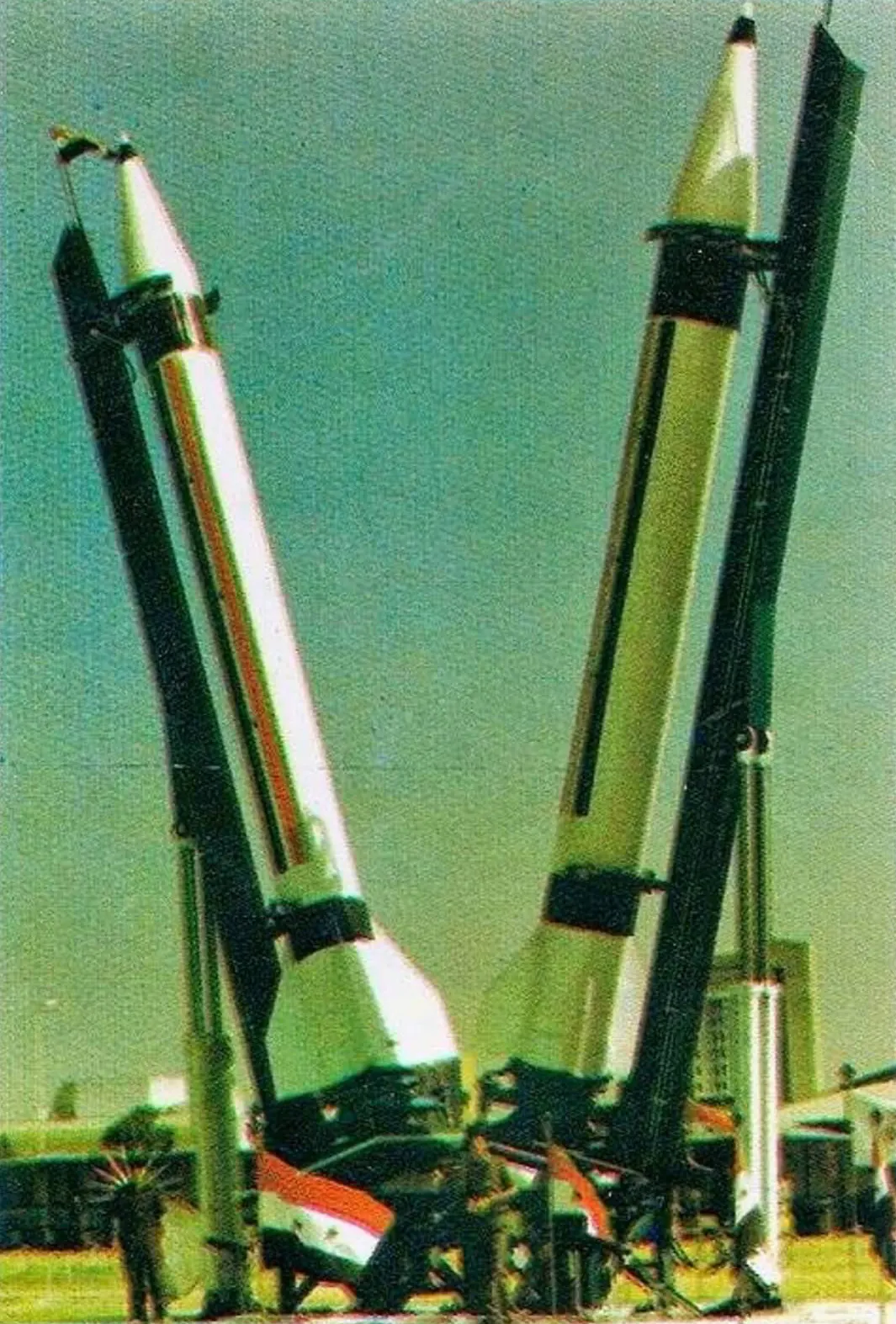
The project's first public marker came at the First Baghdad International Exhibition of April 28 to May 2, 1989, where roughly 200 companies from 29 countries displayed military production under the government motto Defense Equipment for Peace and Blossoming, and Iraq showed off its Al-Hussein and Al-Abbas missiles, along with mockups analysts later assessed were intended more for image than substance.14,4 Al-Tammuz itself was not confirmed on display that spring.
Iraq formally announced Al-Tammuz in December 1989, within days of testing the Al-Abid satellite launch vehicle on December 5 of that year, a three-stage rocket built from five clustered Scud airframes as a first stage that broke apart roughly 45 seconds into flight when aerodynamic stress near Mach 1 overwhelmed the inter-stage structure.7,6 Whether Al-Tammuz was announced to capitalize on Al-Abid's partial success, or simply because both drew on the same engine-development work, is not clearly resolved in the sources, and the overlap between the two programs is exactly what caused some analysts to treat Al-Abid's own second stage as interchangeable with the Tammuz design.2
Bull's own better-known project, the Project Babylon supergun, ran on a parallel track through the same period and ended with his assassination in Brussels in March 1990, a killing widely attributed to Israeli intelligence, after which the supergun program itself collapsed and its remaining barrel sections were seized in transit through Europe.9 Al-Tammuz's own foreign advisory team departed Iraq without that kind of dramatic ending, simply leaving before the war made further work impossible.
The 1991 Gulf War ended whatever momentum Al-Tammuz still had. Under UN Security Council Resolution 687, the newly created UN Special Commission (UNSCOM) began verifying and destroying Iraq's proscribed missile programs, and Project 1728's own equipment became a focus of that effort. Iraq later admitted diverting production tools and engine components from destruction in July 1991, moving them onto eleven trucks handed to officers linked to Hussein Kamel, Saddam Hussein's son-in-law, whose 1995 defection to Jordan prompted a wave of fresh Iraqi disclosures about programs UNSCOM had not fully uncovered.12 Verification of what Iraq said it had already destroyed unilaterally proved messy in its own right, at the Al Alam site near Tikrit, inspectors could confirm only about 12 of a claimed 100 tons destroyed by explosion, and only about 50 of a claimed 200 tons said to have been melted down.12
Al-Tammuz was never fired in anger, and no source claims otherwise. Its relevance to any conflict is indirect, the program existed because of lessons Iraq drew from the Iran-Iraq War's city-bombardment phase, and it was terminated as a direct consequence of the Gulf War and the UNSCOM inspections that followed Iraq's defeat.12,4 That absence of combat use is itself a meaningful data point for a program this obscure, distinguishing Al-Tammuz sharply from the Al-Hussein missiles Iraq did fire at Iran, Israel, and Saudi Arabia.
Iraq fired dozens of Al-Hussein missiles at Israeli and Saudi Arabian cities during the Gulf War, the kind of large-scale combat use that prompted American Patriot missile batteries to deploy against them.4 Al-Tammuz never approached that scale of use because it never existed as a complete, flyable missile. Iraq could reliably modify and fire Scud-based systems it had already built in quantity, but the extra engineering step Al-Tammuz needed, a working second stage, never cleared the design and limited engine-testing phase before the war intervened.12
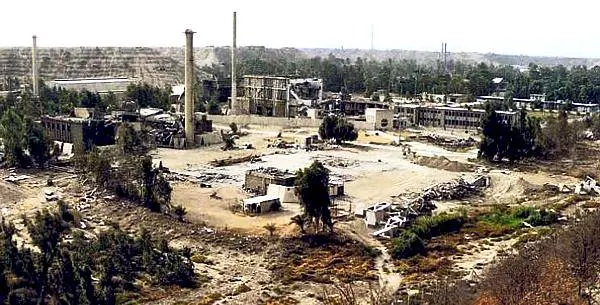
The Taji complex that hosted much of the Al-Tammuz and Project 1728 engine work sat only 30 kilometers north of Baghdad, and functioned through the war as Iraq's central hub for missile airframe design and liquid-fuel engine production, alongside separate factories for casings and launcher components at the nearby Balat al-Shuhada site.13 UNSCOM inspectors destroyed prohibited missiles, engines, and specialized tools recovered there after the war, though they left the physical buildings themselves standing, a detail underscoring how much of Iraq's missile infrastructure survived even after the weapons programs inside it did not.13
Al-Tammuz is documented under a handful of overlapping names that reflect how unsettled its own program boundaries were. Tammuz-1 is used interchangeably with Al-Tammuz in most Western sources, while at least one technical summary separately labels the Al-Abid launch vehicle Tammuz-2, which is a naming choice that conflates a satellite launcher with a weapons program rather than describing an actual missile variant.2,3 Readers researching this topic should treat any reference to a Tammuz-2 missile with caution, since the underlying sources are describing the Al-Abid rocket, not a second Al-Tammuz missile design.
Archival sources are not even internally consistent about which vehicle actually carries the Tammuz-2 designation. The Federation of American Scientists' own missile overview page applies Tammuz-2 to the Al-Abid launcher, while its dedicated Al-Tammuz entry treats Tammuz-1 as a plain synonym for Al-Tammuz without acknowledging a second missile at all.2,3 That small inconsistency is a fair proxy for how loosely documented this entire program remains outside a handful of Pentagon-derived assessments.
The clearer sibling relationship runs backward, not forward. Al-Tammuz followed the shorter-range Al-Hussein (650 km) and Al-Abbas (roughly 900 km), both built by cutting apart standard Scud-Bs and splicing in extended tankage, a crude but effective technique Iraq used repeatedly across its Project 144 family before attempting the more ambitious two-stage jump that Al-Tammuz represented.4 No production example of Al-Tammuz itself is documented as having reached that airframe-splicing stage, which is precisely why it remains, in the assessment of multiple Western analysts, closer to a paper design than a fielded variant chain.

Iraq is the only state ever associated with Al-Tammuz, as the sole developer, financier, and intended user of the system.1,2 No missile is documented as having reached operational status, no unit is recorded as having received one, and the program's history ends with UNSCOM's post-Gulf War verification and destruction work rather than with any fielding decision.12 That makes Al-Tammuz's operator history unusually short even by the standards of a Tier C archive entry, a single state that tried and never finished.
The state enterprises behind the program did not simply vanish along with it. Taji's research and production complex survived UNSCOM's dismantlement of its missile-specific equipment largely intact as a physical facility, since inspectors destroyed prohibited hardware but left the buildings standing, and the site went on to house long-term UN monitoring equipment through the 1990s rather than any successor missile effort.13
Whether Iraq would ever have exported the design, licensed it, or shared it with the same partners involved in Badr-2000 is not addressed in any source consulted for this article, and speculating about it would go beyond what the record actually supports.
Iraq's own Badr-2000 program, the local name for the trilateral Condor II effort with Argentina and Egypt, makes the most useful comparison, precisely because the two are so often mixed up. Condor II was modeled openly on the American Pershing II Weapon System, a design similarity Western intelligence flagged early, and it used solid propellant across two stages aiming for roughly 800 to 1,200 kilometers with a payload nearer 450 to 500 kilograms.5,6 Al-Tammuz, by contrast, stayed inside the Scud-derived liquid propellant tradition and aimed further, at a claimed 1,200 to 2,000 kilometers with a heavier tonne-class payload.1,3
The two programs also differed completely in how they were financed and organized. Badr-2000 was a genuinely multinational venture, Argentina developing hardware at Falda del Carmen, Egypt procuring Western technology through its own channels, and Iraq supplying roughly $400 million in financing, backed by a Swiss-registered consortium of European contractors and coordinated loosely through the Arab League Industrial Development Organisation in Baghdad.5,6 Al-Tammuz had no equivalent international structure, it ran through Iraqi state enterprises alone, drawing on individually recruited foreign specialists like Piva's team rather than a formal multi-government partnership.
| Al-Tammuz | Badr-2000 / Condor II | |
|---|---|---|
| Propellant | Liquid3 | Solid5 |
| Claimed range | 1,200 to 2,000 km1 | 800 to 1,200 km6 |
| Payload | Roughly 1,000 kg1 | Roughly 450 to 500 kg6 |
| Partners | Iraq alone | Argentina, Egypt, Iraq5 |
Both programs ultimately failed for the same underlying reason, Iraq's industrial base could finance ambitious designs but not complete them into fielded hardware before the Gulf War closed the door on further development. Neither Al-Tammuz nor Badr-2000 produced a missile that ever entered service, and both were dismantled under UN oversight rather than retired through normal service life, a genuinely unusual shared ending for two programs the wider public still tends to confuse with each other.


What was the Al-Tammuz missile's range? Iraq claimed a range of up to 2,000 kilometers, though most Western intelligence estimates treated 1,200 kilometers as the more credible figure, and no confirmed test ever established which was accurate.1,2,4
Was the Al-Tammuz missile ever tested or used in combat? No. No confirmed flight test of Al-Tammuz is documented, and it was never fired in the Iran-Iraq War, the Gulf War, or any other conflict.4,12
Is the Al-Tammuz missile the same as Iraq's Osirak Tammuz nuclear reactor? No, despite the shared name. Iraq named its French-supplied Osirak reactor Tammuz-1 in the 1970s, destroyed by Israel in 1981, eight years before the unrelated Al-Tammuz missile program was announced in 1989.10,11
How does Al-Tammuz relate to the Condor II and Badr-2000 program? They were separate, parallel Iraqi efforts running in the same years. Badr-2000 was Iraq's name for the trilateral, solid-fuel Condor II program with Argentina and Egypt, while Al-Tammuz was a purely Iraqi, liquid-fuel design descended from Scud technology.5,6
What happened to Iraq's Al-Tammuz missile program? It never progressed past engine development and design work. The 1991 Gulf War ended active work, and UNSCOM inspectors subsequently verified and destroyed related production equipment and components under UN Security Council Resolution 687.12
Who helped Iraq develop the Al-Tammuz missile? A 23-person team led by Brazilian major general Hugo de Oliveira Piva, formerly of Brazil's Aerospace Technology Center, provided outside engineering expertise, reportedly with some assistance from Canadian engineer Gerald Bull.6,9
- "Project 144 / Project 1728", Federation of American Scientists — nuke.fas.org ↩
- "Al-Tammuz", Wikipedia — en.wikipedia.org ↩
- "Missiles, Iraq Special Weapons", Federation of American Scientists — nuke.fas.org ↩
- "Iraq's Missile Program Profile", Wisconsin Project on Nuclear Arms Control — wisconsinproject.org ↩
- "Badr-2000", Wikipedia — en.wikipedia.org ↩
- "National Briefings, Iraq", US Department of Defense Gulflink archive — gulflink.osd.mil ↩
- "From the sand to the stars, Saddam Hussein's failed space program", The Space Review — thespacereview.com ↩
- "al-Abid", Federation of American Scientists — nuke.fas.org ↩
- "Project Babylon", Wikipedia — en.wikipedia.org ↩
- "Iraq's Nuclear Weapons Program, From Aflaq to Tammuz", Nuclear Weapon Archive — nuclearweaponarchive.org ↩
- "Operation Opera", Wikipedia — en.wikipedia.org ↩
- "UNSCOM and Iraqi Missiles", Federation of American Scientists — nuke.fas.org ↩
- "Taji", Federation of American Scientists — nuke.fas.org ↩
- "Report on the First Baghdad International Exhibition of Military Technology", Wilson Center Digital Archive — digitalarchive.wilsoncenter.org ↩