


The S2 was the first nuclear-armed missile France ever put on continuous combat alert, and the only weapon in its class anywhere in Western Europe to be based in fixed underground silos rather than on a truck or rail car. Entering service in August 1971, the S2 was a two-stage, solid-fuel medium-range ballistic missile fielded by France as the land leg of the force de dissuasion, the independent nuclear deterrent built under Charles de Gaulle. Eighteen missiles sat on permanent alert inside concrete silos sunk into the limestone of the Plateau d'Albion in the Vaucluse, southern France, each one able to launch within about a minute of the order arriving.1,2
- Hardened, permanently ready silo basing
- Simple two-stage solid-fuel design, fast reaction time
- Politically and operationally independent of NATO command
- Very high 120 kt single warhead yield
- Fixed silos are easy to locate and eventually target precisely
- Purely inertial guidance limited accuracy to about 1 km CEP
- No penetration aids or MIRV capability
- Short service life meant a second costly rebuild (S3) within a decade
Unlike the mobile launchers that dominate this leaf's other Cold War and modern entries, the S2 was deliberately immobile. French planners in the early 1960s judged that a small, all-silo force, hardened against a first strike and cheap to guard with a single garrison, better suited a nation building its first strategic missile arsenal from nothing than a dispersed fleet of road-mobile transporter-erector-launchers. That choice, and the reasoning behind it, is one of the more genuinely interesting doctrinal contrasts inside this entire leaf of medium and intermediate-range ballistic missiles.
The missile carried a single MR 31 warhead rated at 120 kilotons, built by the French atomic energy commission (CEA) as a pure plutonium fission device with no thermonuclear boost stage, reportedly the largest unboosted fission warhead ever built.3 Guidance was purely inertial, with no radio or satellite correction, giving the S2 a stated accuracy of roughly 1 kilometer circular error probable at a maximum range of 3,000 km.4 That combination, huge yield paired with modest accuracy, reflected the counter-value deterrence of the strong by the weak doctrine France pursued, threatening cities rather than trying to destroy an enemy's own missile silos.
The S2's operational life was short. Development was contracted to the SEREB consortium and its parent firms Sud Aviation and Nord Aviation starting from a 1962 government decision, first battery combat-ready in 1971, second in 1972, and the whole force already being rebuilt into the longer-ranged S3 by 1978.5,1 Full S2 withdrawal came around 1980, less than a decade after the type first went on alert, one of the shortest frontline careers of any strategic missile of the era.
France's S2, formally the Sol-Sol Balistique Stratégique (SSBS, French for ground-ground strategic ballistic missile), measured 14.8 m long and 1.5 m in diameter, launching at a mass of 31,900 kg.1,4 Both stages burned solid propellant, a polyurethane-bound mix of ammonium perchlorate and aluminum powder known in French service as Izolane 29/9. The first stage (designated P16) burned for about 77 seconds, the second (P10) for roughly 53 seconds, each steered by four rotating exhaust nozzles rather than separate vernier thrusters, a comparatively simple control scheme for a missile of its generation.4
- Füze SınıfıMedium-range ballistic missile (MRBM)
- Hizmete Giriş Yılı1971
- TasarımcıSEREB (Societe pour l'Etude et la Realisation d'Engins Balistiques), with Sud Aviation and Nord Aviation as prime contractors
- Uzunluk14,8 m
- Çap1,5 m
- Fırlatma Ağırlığı31.900 kg
- HizmetteHayır
The single MR 31 re-entry vehicle carried a 120 kt warhead weighing about 700 kg, detonating either as an air burst or on contact.3 Because it was an unboosted pure-fission design, the MR 31 needed a comparatively large plutonium core to reach that yield, which is why French and independent sources describe it as the largest device of its kind ever fielded.3 The S2's successor, the S3, replaced this with the thermonuclear TN 61 warhead rated at 1.2 megatons, a substantial jump in destructive power that also removed the plutonium-scaling limits of a pure-fission design.6
- Tahrik TipiTwo-stage solid-propellant rocket
- Kademe Sayısı2
- Yakıt TipiSolid propellant (Izolane 29/9, polyurethane binder with ammonium perchlorate and aluminum powder)
- Katı YakıtlıEvet
Guidance relied entirely on an inertial platform housed in the second stage's instrumentation bay, with no radio command link, no MIRV capability, and no penetration aids to help the single warhead survive an intercept attempt.4 France accepted a published accuracy of roughly 1 km CEP, coarse next to contemporary American and Soviet systems, on the logic that a 120 kt device does not need pinpoint accuracy against a city-sized aim point.
- Azami Menzil3.000 km
- Apoje (En Yüksek Nokta)600 km
The silo network itself was as much a part of the design as the missile. Eighteen individual underground silos, spaced roughly 400 meters apart across about 360 square kilometers of the Plateau d'Albion, each went about 24 meters deep and were capped by a reinforced concrete roof some 1.4 meters thick and weighing close to 140 tonnes.4 French engineers rated the complex able to absorb roughly 21 kg per square centimeter of nuclear overpressure, a hardening figure they claimed exceeded comparable American Minuteman or Soviet RSD-10 Pioneer basing of the same period.4 Two independent firing groups of nine silos each, each with its own underground command post, meant the loss of one control center could not take down the entire force.
- Dairesel Hata Olasılığı (CEP)1.000 m
- Güdüm TipiAtaletsel / GPS
- Terminal GüdümHayır
- Manevra Kabiliyetli Geri Giriş Aracı (MaRV)Hayır
- Delme Yardımcıları / YemlerHayır
Roughly 2,000 personnel, including more than 1,100 officers and non-commissioned technicians, staffed the Saint-Christol garrison that kept the S2 force on permanent quick-reaction alert.4 From launch order to ignition, the missile was rated to fire in about 60 seconds, a readiness figure the 1st Strategic Missile Group crews at Saint-Christol trained against constantly during the S2's decade on alert (a routine exercise cadence rather than a genuine crisis footing, since the missile was never used in combat).
- Harp Başlığı TipiSingle MR 31 unboosted pure-fission warhead
- NükleerEvet
- TermonükleerHayır
- Patlama Gücü (başlık başına)120
- MIRVHayır
- Harp Başlığı / RV Sayısı1
- Konvansiyonel KabiliyetliHayır
- Konuşlanma ŞekliSilo (fixed underground launch silo)
- Silo KonuşluEvet
- Karayolu Hareketli (TEL)Hayır
- Rayda HareketliHayır
- Denizaltından FırlatılanHayır
- Toplam Üretim18
- Kullanıcılar1
- İlk Test1968
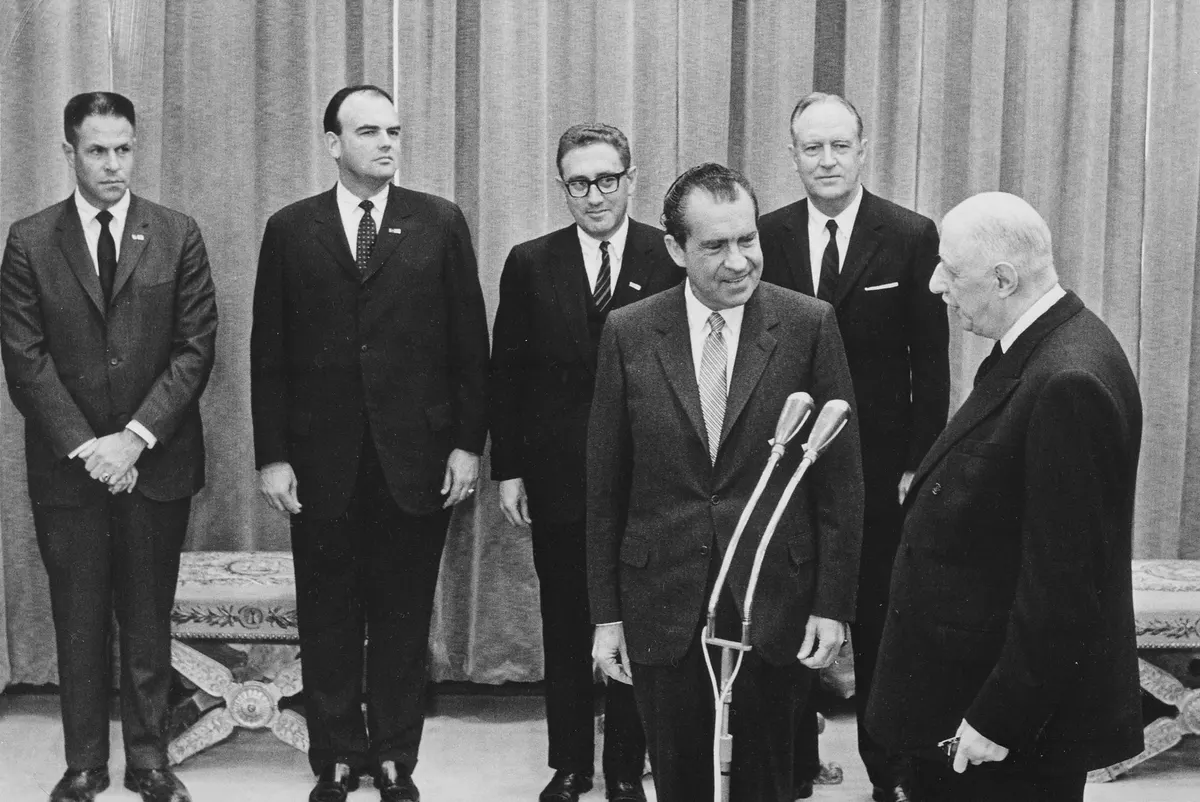
France's push for its own land-based nuclear missile traces to a February 1962 Defense Council decision, taken while President Charles de Gaulle was consolidating the force de frappe as a strategic capability entirely outside NATO's integrated command.7 De Gaulle's reasoning had a very concrete precedent close at hand. Barely a year earlier the United States had deployed PGM-19 Jupiter medium-range missiles to Italy and Turkey, only to quietly withdraw every one of them in 1963 as part of the secret bargain that ended the Cuban Missile Crisis, trading away an ally's missiles to settle a superpower dispute neither Italy nor Turkey had a vote in.8 For de Gaulle that episode was proof that a deterrent controlled by Washington could be negotiated away over a European ally's head, and that France needed a nuclear force it alone could order into use.
The missile itself was built by the newly formed SEREB consortium (Societe pour l'Etude et la Realisation d'Engins Balistiques), drawing on the two leading French aerospace firms of the day, Sud Aviation and Nord Aviation, alongside the CEA for the warhead.5 Development ran through a series of sub-scale and prototype vehicles, the S-112 test round in 1966 and the S-01 in 1967, before the definitive S-02 prototype began flight trials in December 1968.4 Thirteen test launches and more than four years of development turned that prototype into a serial-production missile ready for silo installation.4 In 1970, mid-program, Sud Aviation, Nord Aviation and SEREB were merged by the French government into a single state-owned firm, Societe Nationale Industrielle Aerospatiale, which finished the S2 program and would go on to build its S3 successor.9
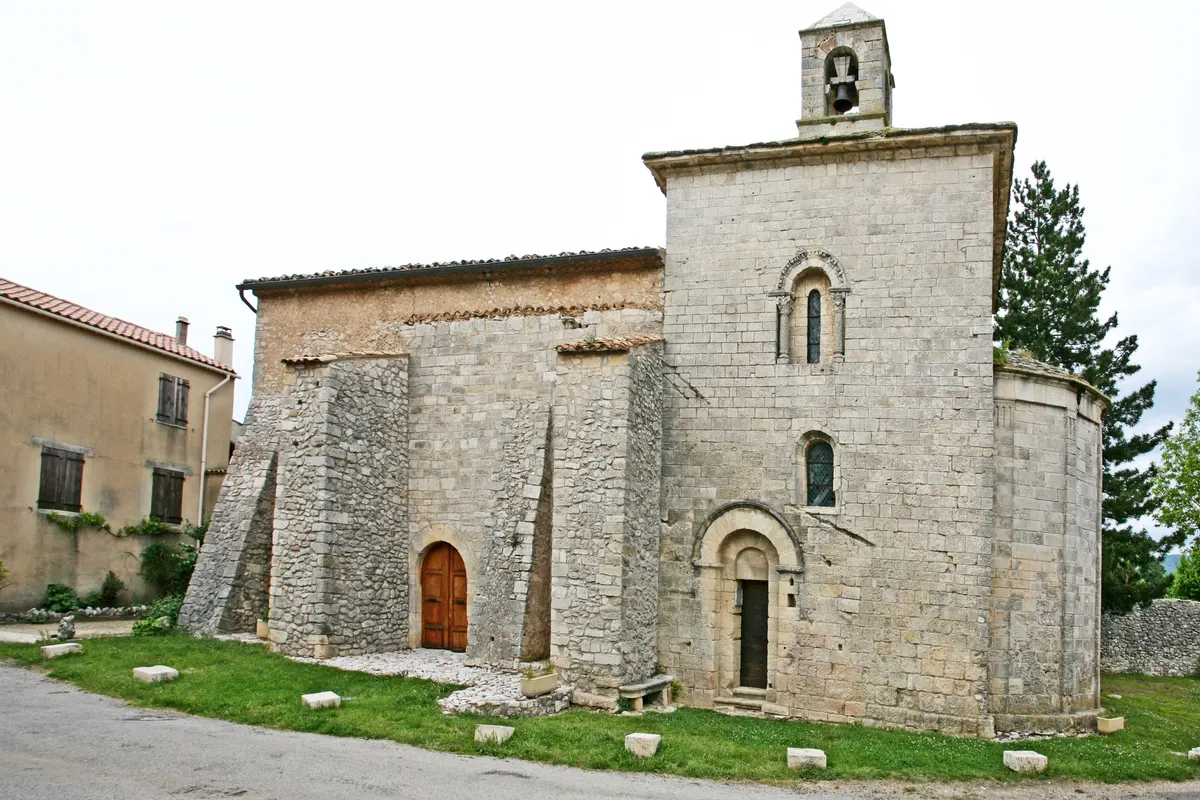
The first nine-missile group reached combat readiness on 2 August 1971, with the second group following in April 1972, giving France a complete, 18-missile land-based force barely nine years after de Gaulle's original decision.1,4 Command sat initially with the French Army's Strategic Missile Brigade 05.200, later redesignated the 95th Strategic Missile Wing when responsibility passed to the Air Force in 1985.1 The Plateau d'Albion force gave France, for the first time, a genuine three-legged nuclear triad, matching land, sea and air delivery in a way only the two superpowers had previously managed.7
That force did not stay static for long. A modernization program launched in 1973 aimed to replace the S2 with a longer-ranged, harder-hitting successor. The first S3 missile arrived at Saint-Christol in May 1980, and by 1982 both nine-silo groups had been re-equipped with the new type, ending the S2's service after less than a decade on alert.5,1 The S2 was not exported, licensed, or adapted for any other user. France alone designed it, built it, and retired it.
The wider Plateau d'Albion missile force outlived the S2 by more than fifteen years, but its own end came for reasons the S2's original planners had tried to design around. On 22 February 1996, President Jacques Chirac announced that the Albion missiles would be dismantled entirely, judging that improving enemy missile accuracy had made fixed silos a liability rather than an asset, and that the annual cost of maintaining the site, roughly half a billion francs, no longer justified a modernization that would have run into the tens of billions.2 The last S3 missiles were withdrawn in September 1996, and full dismantlement of the silos and support facilities was complete within about two years.2,5 With Albion's closure France's nuclear deterrent became, and remains, a two-legged force built entirely around submarine-launched and air-launched weapons, a notable strategic reversal for a country that had spent a decade building the S2 specifically to complete a three-legged triad.
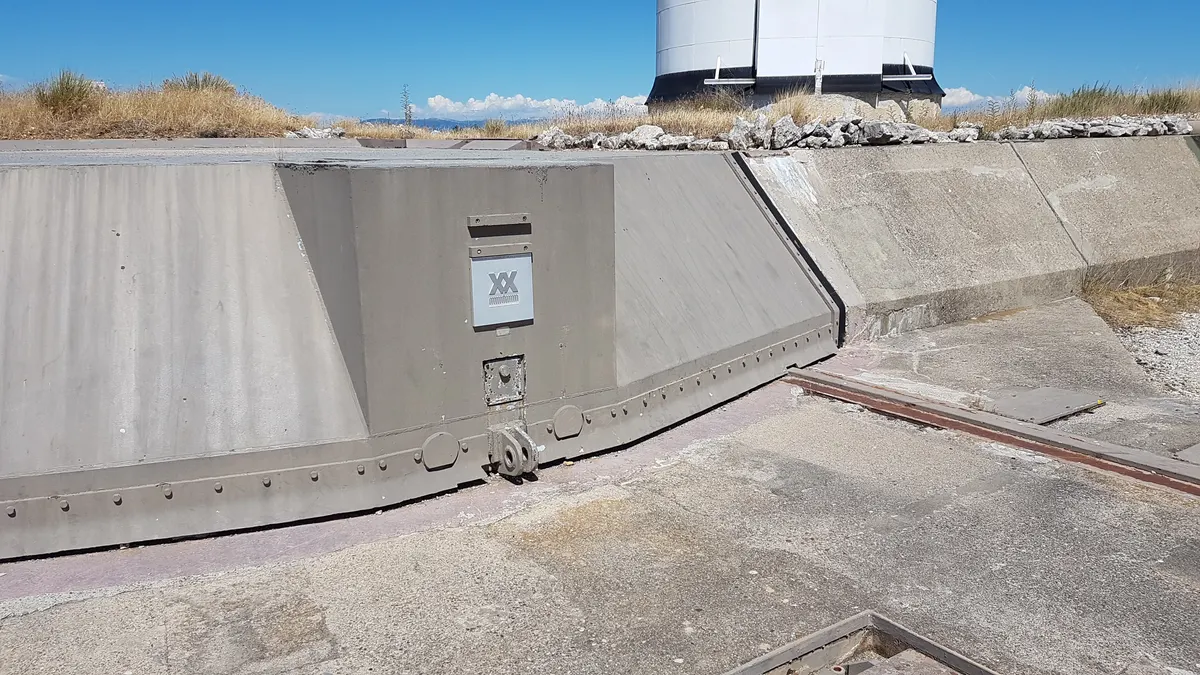
Most of the 18 silos were simply filled in and abandoned after 1996, but a handful found new uses that say something about how thoroughly the site's military purpose disappeared. One silo now houses the Sirene public astronomical observatory, another has been converted into a low-noise physics laboratory, and the missile field's old launch pads have in places been redeveloped as solar power installations.6,2

France was the S2's only operator. The missile served exclusively with the French Air Force (initially under Army command as the Strategic Missile Brigade 05.200, transferred to the Air Force's 95th Strategic Missile Wing in 1985), based entirely at Air Base 200 Apt-Saint-Christol on the Plateau d'Albion.1 It was never exported, never license-built abroad, and never offered to any other country, a direct consequence of the same force de frappe independence logic that justified building it in the first place.
The clearest contrast for the S2 inside this leaf is the Soviet RSD-10 Pioneer (NATO reporting name SS-20 Saber), which entered service in 1976, only five years after the S2 and while the French missile was still on alert. The two systems answered the same basic problem, a solid-fuel land-based nuclear missile for a continental power, with almost opposite engineering answers. The S2 sat in a fixed underground silo it could never leave. The RSD-10 rode a road-mobile transporter-erector-launcher that could redeploy across the Soviet road network, trading the S2's concrete hardening for the ability to simply not be where an enemy first strike expected it.10
The warheads diverge just as sharply. The S2 carried one unboosted 120 kt device with plain inertial guidance and roughly 1 km accuracy. The RSD-10, by contrast, could carry up to three independently targetable 150 kt MIRV warheads on later production missiles, at nearly double the S2's range.10 France built 18 S2 missiles for one national deterrent. The Soviet Union built and fielded 435 RSD-10 launchers across 48 sites, an order of magnitude larger effort reflecting the very different scale and threat model each country was building against.10
| S2 | RSD-10 Pioneer | |
|---|---|---|
| Basing | Fixed silo | Road-mobile TEL |
| Warhead | 1 x 120 kt (unboosted fission) | Up to 3 x 150 kt MIRV |
| Range | 3,000 km | up to 5,800 km |
| Entered service | 1971 | 1976 |
| Units fielded | 18 | 435 |
That gap in scale is really a gap in strategic ambition. The RSD-10 was built to threaten every NATO capital and airbase in Western Europe from mobile, survivable launchers, and its deployment from 1976 onward directly triggered NATO's Double-Track Decision and, eventually, the Pershing II and ground-launched cruise missile deployments that helped bring about the INF Treaty.10 The S2, in contrast, was never meant to overwhelm an adversary. Eighteen missiles could not have destroyed the Soviet Union's own retaliatory capability. It existed purely to guarantee that any attack on France, however limited, would trigger a nuclear response France alone controlled, the same deterrence of the strong by the weak logic that shaped nearly every French nuclear program of the era.
Against the American Pershing II, deployed in West Germany from 1983, the contrast runs along the same lines. Pershing II was also road-mobile, carried a maneuverable, radar-terminal-guided warhead accurate to tens of meters rather than a kilometer, and existed within an alliance command structure. The S2 answered to nobody but Paris, at the cost of the accuracy, survivability and warhead flexibility that later systems like Pershing II and the RSD-10 Pioneer both had and it did not.


Is the S2 missile still in service? No. The S2 was withdrawn from service around 1980, replaced in its own silos by the longer-ranged S3. The wider Plateau d'Albion missile force that succeeded it was itself shut down in 1996, and France has fielded no land-based nuclear missile since.2,5
What was the S2 missile's range? The S2 had a maximum range of about 3,000 km, classing it as a medium-range ballistic missile.1,4
Who manufactured the S2 missile? The S2 was developed by the SEREB consortium built around Sud Aviation and Nord Aviation, which the French government merged into Aerospatiale in 1970.5,9
What warhead did the S2 carry? A single MR 31 warhead yielding 120 kilotons, an unboosted pure-fission device built by the French CEA, described in some sources as the largest weapon of its type ever built.3
Why did France base the S2 in silos instead of on mobile launchers? Fixed silos were cheaper to build and guard for a small, first-generation missile force, and gave the French government a permanently ready deterrent without the logistics of a dispersed mobile fleet, a deliberate contrast with the mobile-launcher doctrine the Soviet Union, and later Pershing II, both adopted.4
Where were the S2 missiles based? All 18 S2 silos sat on the Plateau d'Albion in the Vaucluse region of southern France, controlled from Air Base 200 Apt-Saint-Christol.1
- "S2 (missile)", Wikipedia — en.wikipedia.org) ↩
- "Plateau d'Albion: Missiles and Michelin Stars", Climb Bike Ski — climbbikeski.com ↩
- "MR 31", Wikipedia — en.wikipedia.org ↩
- "S-2 medium-range ballistic missile", Missilery.info — en.missilery.info ↩
- "S3 (missile)", Wikipedia — en.wikipedia.org) ↩
- "1st Strategic Missile Group (France)", Wikipedia — en.wikipedia.org) ↩
- "Force de dissuasion", Wikipedia — en.wikipedia.org ↩
- "The Jupiter Missiles and the Endgame of the Cuban Missile Crisis, 60 Years Ago", National Security Archive — nsarchive.gwu.edu ↩
- "Aerospatiale", Wikipedia — en.wikipedia.org ↩
- "RSD-10 Pioneer", Wikipedia — en.wikipedia.org ↩