


The Aerospace Force of Iran's Islamic Revolutionary Guard Corps unveiled a new single-stage, liquid-fueled ballistic missile named Rezvan during a Tehran military parade on 22 September 2022, the annual Sacred Defense Week commemoration of the 1980-1988 Iran-Iraq war.1,2 IRGC commander Hossein Salami described it as a precision ballistic missile, and it was displayed on a wheeled transporter erector launcher alongside the solid-fuel Kheibar Shekan, a missile Iran had introduced seven months earlier.2,3 Iranian officials give Rezvan a maximum range of 1,400 kilometers and a detachable, maneuvering warhead, enough to reach Israel and most Gulf-based US installations from launch sites deep inside Iran.1,4
- Long 1,400 km claimed range reaches Israel and Gulf US bases from inside Iran
- Design already combat-tested for years through Houthi use before Iran's own reveal
- Wheeled TEL basing rather than a fixed site, easing dispersal and survivability
- Detachable warhead Iran describes as maneuverable during reentry
- No independently confirmed strike credited specifically to Iran's own Rezvan
- Liquid propellant needs lengthy pre-launch fueling unlike Iran's newer solid-fuel types
- Core specifications rest heavily on Iranian statements and one unofficial physics-based estimate
- Overlapping Houthi names (Burkan-3, Zulfiqar) for a related design make attribution of any single strike difficult
What made the 2022 unveiling unusual is what it was not. Rezvan did not make its combat debut at home. Iran Watch and other trackers of Iran's missile-proliferation activity describe Rezvan as Iran's own domestic reveal of a missile Yemen's Houthi movement (Ansar Allah) had reportedly already fielded years earlier under different names, Burkan-3 and later Zulfiqar.7 Iran had built a customized, longer-range liquid-fuel derivative of its shorter-range Qiam-1 missile specifically for the Houthis around 2019, with no evidence that version was ever deployed inside Iran itself at the time.7 Tehran only rolled out its own branded version for its own IRGC Aerospace Force three years later. That reversal, missile technology flowing outward to a non-state partner before flowing back into Iran's own declared arsenal, is the most distinctive fact in Rezvan's history, and it means the design was combat-tested in Yemen's war years before Iran's own forces fired a shot under the Rezvan name.
Rezvan sits within Iran's wider family of medium-range ballistic missiles, a category that also includes the Ghadr-110, the Khorramshahr, the Dezful, the Haj Qasem, and the Sejjil. Within that group Rezvan is one of the more thinly documented systems, unveiled less than four years ago and still without a single confirmed, independently verified combat strike under its own Iranian name. The sections below cover what is actually known about Rezvan's specifications and design, its unusual Houthi-first history, its disputed role in the recent Iran-Israel missile exchanges, and how it compares with the missile Iran displayed at the same 2022 parade.
Rezvan is a single-stage, liquid-fueled ballistic missile roughly 12 meters long, launched from a wheeled transporter erector launcher rather than a silo or rail system.1 Iranian officials describe the missile's range as up to 1,400 kilometers, though a leaked technical image that circulated online in December 2023 and was reported by Army Recognition gave a slightly shorter figure near 1,350 kilometers, a reminder that even Iran's own disclosed numbers for this missile are not fully consistent between sources.5 The warhead separates from the missile body in flight, a detachable-warhead design shared with most of Iran's Qiam-descended missile family, and Salami said at the unveiling that the reentry vehicle reaches roughly Mach 8 while descending through the atmosphere, a claim made by Iran itself and not independently measured by outside observers.1,2
- Füze Sınıfımedium_range_ballistic_missile
- Hizmete Giriş Yılı2022
- TasarımcıAerospace Industries Organization
- Uzunluk12 m
- HizmetteEvet
An independent, physics-based reconstruction published by a missile enthusiast analyst in 2023 estimated Rezvan uses a modified IR-9D21 engine, itself a reverse-engineered derivative of a Soviet design, burning a UDMH fuel and AK-27 oxidizer combination, and modeled a roughly 10 kilometer higher burnout altitude than the older Qiam-1.6 That analysis is a private, unofficial estimate built from museum-catalog photographs and general rocket-performance software rather than leaked Iranian technical documents, and its numbers should be read as an informed guess rather than confirmed data.
- Tahrik Tipiliquid_fueled_rocket_engine
- Kademe Sayısı1
- Yakıt Tipiliquid
- Katı YakıtlıHayır
- KanisterliHayır
Rezvan carries a single conventional high-explosive warhead rather than multiple reentry vehicles, and Iran has never described a nuclear role for the type. Guidance is generally understood to be inertial, consistent with the broader Qiam family Rezvan is built from, though Iran has not published the kind of detailed guidance breakdown it has given for newer designs like Kheibar Shekan or the electro-optical seeker on Haj Qasem's Qasem Basir upgrade.1,6 The missile is fielded exclusively by the Aerospace Force of the Islamic Revolutionary Guard Corps, Iran's dedicated ballistic and cruise missile branch, and built through Iran's Aerospace Industries Organization, the state body responsible for most of Iran's ballistic missile programs.2,7
- Azami Menzil1.400 km
- Geri Giriş Hızı (Mach)8 Mach
- Güdüm TipiAtaletsel
- Harp Başlığı Tipiconventional_high_explosive
- NükleerHayır
- TermonükleerHayır
- MIRVHayır
- Harp Başlığı / RV Sayısı1
- Konvansiyonel KabiliyetliEvet
- Konuşlanma Şekliroad_mobile_transporter_erector_launcher
- Karayolu Hareketli (TEL)Evet
- Rayda HareketliHayır
- Denizaltından FırlatılanHayır
- Kullanıcılar1
The Houthi side of Rezvan's story predates Iran's own unveiling by roughly three years. Iran Watch and other trackers of Iran's missile-proliferation activity report that the Quds Force, the IRGC's external operations arm, began sending liquid-fuel missile components into Yemen for local assembly by around 2015, work that eventually produced an extended-range Qiam-1 derivative the Houthis fielded as the Burkan-3, sometimes also referred to in reporting as Zolfaqar or Zulfiqar.7,8

Analysts at the Washington Institute describe the Burkan-3 as a substantial range improvement over the earlier Burkan-2H (itself a Scud and Qiam-1 hybrid), and note that IRGC advisors were directly involved in developing it, well beyond what Yemeni technicians could have produced on their own.8 By February 2021, this extended-range Houthi variant struck the Saudi Arabia Aramco facility at Ras Tanura from a reported distance near 900 miles (roughly 1,450 kilometers), a range consistent with the figures Iran would later claim for Rezvan itself.8
Iran did not publicly acknowledge owning a version of this missile for its own forces until the 22 September 2022 Tehran parade, when the Aerospace Force displayed it for the first time under the Rezvan name.1,2 That the reveal happened while then-President Ebrahim Raisi was in New York attending United Nations meetings on regional diplomacy was widely noted by regional outlets as a deliberate signal, a new precision missile at home even as Iranian diplomats spoke of de-escalation abroad.3
Iran's own presentation of Rezvan treats it as a new domestic capability, and Tehran has never publicly acknowledged the Houthi head start documented by outside proliferation researchers, a pattern consistent with how Iran generally frames its missile programs as purely indigenous achievements.7
Attributing any specific strike to Iran's own Rezvan, as opposed to the earlier Houthi-fielded version of the same missile family, is genuinely difficult in open-source reporting, and this article treats that difficulty as a fact worth stating rather than smoothing over. In Operation True Promise, Iran's direct ballistic missile and drone attack on Israel on 13-14 April 2024, Israeli researcher Or Fialkov's wreckage-based assessment identified the Emad, Ghadr-110, Kheibar Shekan, and probably a Shahab-3B variant among the missile types fired.9 Rezvan was not among the types that assessment confirmed, even though some Western defense trackers had listed it as a plausible participant given Iran's inventory at the time.
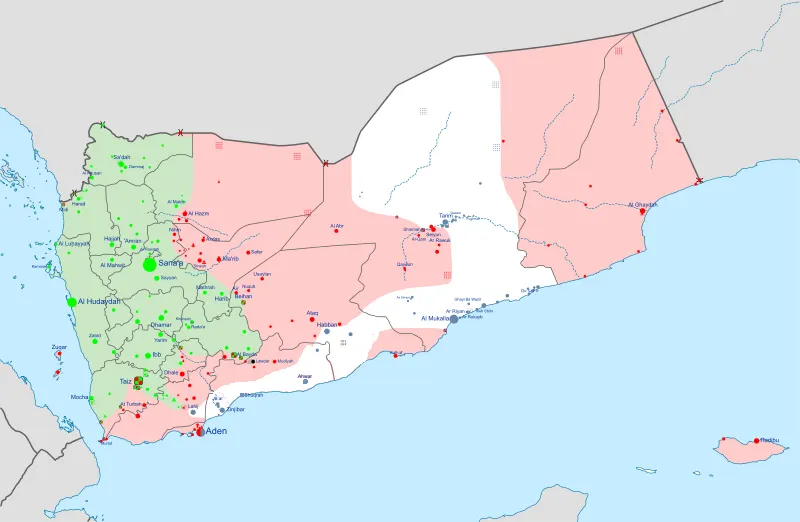
On the Houthi side, the picture is clearer in outline if not in exact missile identification. Multiple trackers report that Houthi forces have used the Rezvan-related design, generally cited under the Zulfiqar name, against Israel during the Red Sea Crisis shipping and missile campaign that began after October 2023, part of a broader pattern in which Iran treats the war in Yemen as a live proving ground for systems it may later adopt formally at home.7
The wider Iran-Israel missile exchange escalated sharply through the 13-24 June 2025 Twelve-Day War, in which Iran fired more than 550 ballistic missiles at Israel, and again from 28 February 2026, when the 2026 Iran war began after US and Israeli strikes killed Iran's Supreme Leader and other senior officials.10,13 Iranian state media has periodically named Rezvan among the missile types available to its forces during these later waves of Operation True Promise, but as with the April 2024 attack, no independent, wreckage-based source reviewed for this article specifically confirms Rezvan hit a named target inside Israel. A March 2026 strike on Beit Shemesh that killed nine civilians, investigated by Amnesty International as a probable war crime, was confirmed as an Iranian ballistic missile strike but was not attributed to a specific named missile type in that investigation.11
Iran has not disclosed a distinct upgraded variant of Rezvan comparable to the electro-optical Qasem Basir successor it built for Haj Qasem. The clearest variation in Rezvan's story is geographic and political rather than technical, the same underlying Qiam-1 derived design carrying different names depending on who fields it.
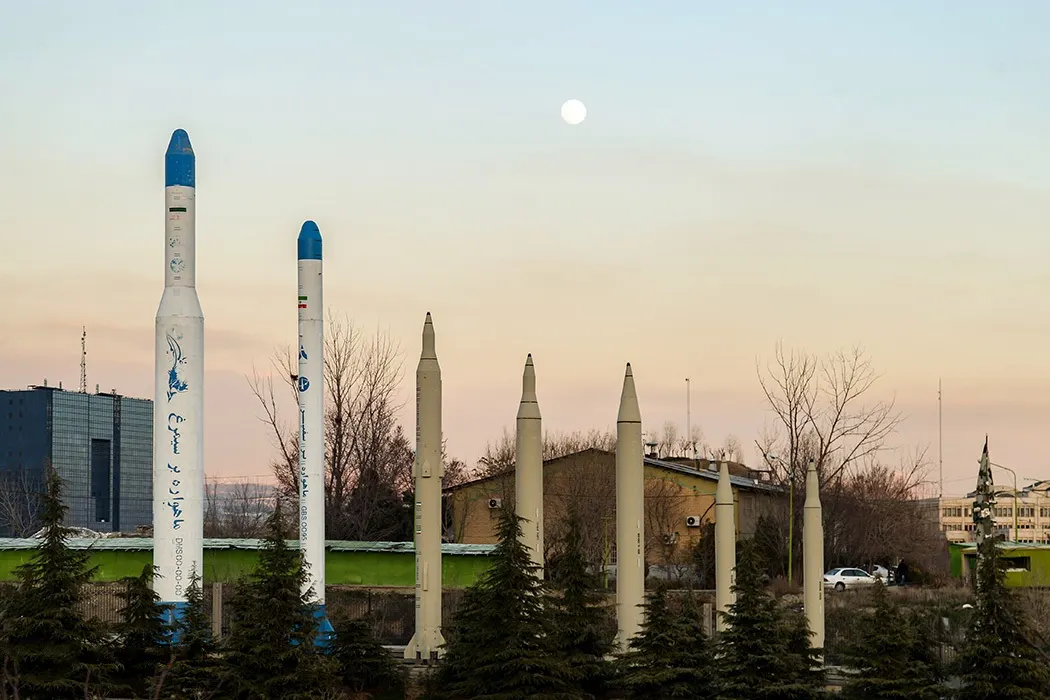
In Iranian service, it is Rezvan. In Houthi service, open-source reporting most often labels the closely related design Burkan-3 or Zulfiqar, and earlier Yemeni missiles built from a mix of Scud and Qiam-1 components were separately labeled Burkan-2H.7,8 Whether every Houthi missile called Zulfiqar in press reporting is mechanically identical to the missile Iran calls Rezvan, or merely a closely related derivative of the same Qiam-1 parent, is not something open-source reporting resolves with certainty.
What both proliferation trackers and Iran's own conduct suggest is a deliberate pattern, testing a design abroad through a partner force before committing to a public reveal at home. That pattern places Rezvan alongside a broader set of Iranian-linked systems fielded first in Yemen and only later shown, sometimes years later, on a parade ground in Tehran.

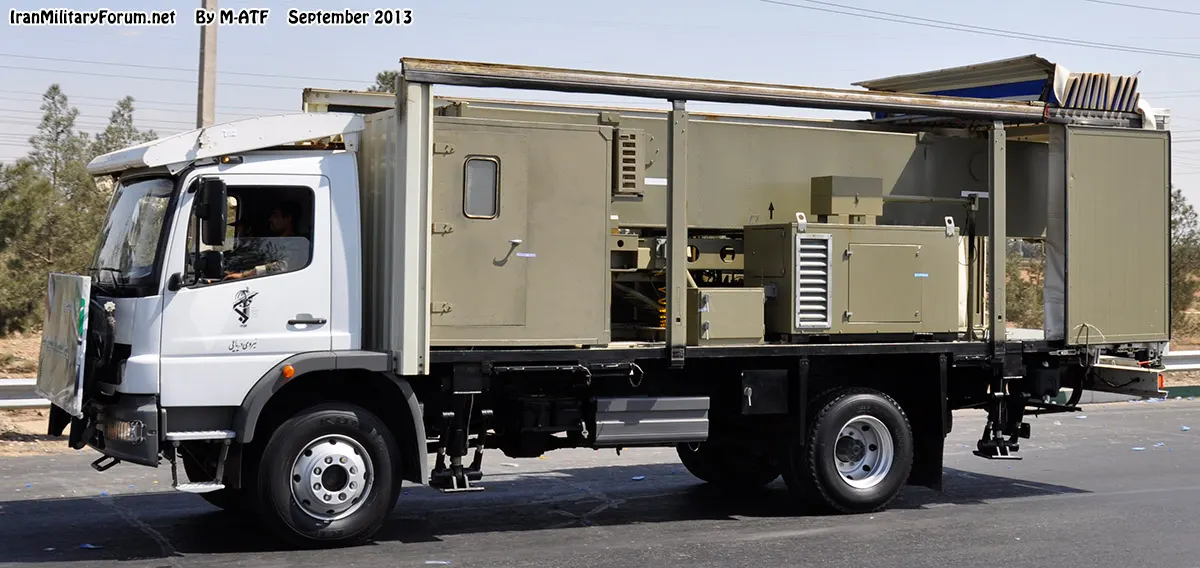
The Islamic Revolutionary Guard Corps Aerospace Force is the only state force that has formally displayed and claimed ownership of a missile under the Rezvan name, doing so since its September 2022 parade debut.1,2 Iran has not announced any export sale of Rezvan itself, and the missile does not appear on any confirmed transfer list the way some of Iran's shorter-range systems do.
The closely related Houthi-fielded design is a separate case worth understanding on its own terms rather than folding into a simple export story. Open-source and UN Panel of Experts reporting describes years of component smuggling and technical assistance that let Houthi forces in Yemen assemble and field their own version years before Iran's own forces received an equivalent publicly, rather than a straightforward arms sale.7,12
That distinction, direct sale versus technology transfer to a non-state proxy, matters for anyone trying to answer whether Rezvan is really an Iranian or a Yemeni weapon. The honest answer is that Iran's Islamic Revolutionary Guard Corps is the only confirmed formal operator of a missile carrying the Rezvan name, while a related design has been in Houthi hands under different names for years longer.
Iran unveiled Rezvan and the solid-fuel Kheibar Shekan within the same 2022 parade season, and the pairing says as much about Iran's missile strategy as either missile does individually. Kheibar Shekan represents Iran's newer generation of solid-fuel systems, quick to prepare and fire, while Rezvan carries forward the older liquid-fuel approach that traces back through the Qiam family, trading launch speed for a design Iran had already tested indirectly for years through Houthi use in Yemen.1,2,7
| Missile | Fuel | Claimed range | First reported use |
|---|---|---|---|
| Rezvan | Liquid, single-stage | ~1,350-1,400 km | 2021 (as Burkan-3/Zolfaqar, Houthi) |
| Kheibar Shekan | Solid, two-stage | ~1,450 km | January 2024 (Idlib) |
Kheibar Shekan has a far more established combat record, with confirmed use in the January 2024 strikes on Idlib and repeated appearances in the identified missile rosters for the 2024 exchanges with Israel.9 Rezvan, despite an arguably longer real-world history through its Houthi-fielded predecessor, has no strike independently confirmed under its own Iranian name. That gap is not really about which missile is more capable. It reflects how differently the two systems have been tracked, one fired openly and often enough for outside analysts to build a confirmed record, the other tangled in years of proxy use and inconsistent naming that makes a clean combat history difficult to write.


Is the Rezvan missile Iranian or Houthi/Yemeni? Rezvan is formally an Iranian missile, unveiled and operated by the Aerospace Force of Iran's Islamic Revolutionary Guard Corps since September 2022. A closely related design, built with Iranian-supplied components, has been fielded by Houthi forces in Yemen since around 2019 under the names Burkan-3 and Zulfiqar, years before Iran's own reveal.1,7
What is the range of the Rezvan missile? Iran states a maximum range of up to 1,400 kilometers, though a separately reported technical estimate puts it nearer 1,350 kilometers.1,5
Has the Rezvan missile been used in combat? A closely related Houthi-fielded version, reported under different names, struck Saudi Arabia's Ras Tanura facility in February 2021. No independent source confirms Iran's own Rezvan striking a target under that name in the 2024, 2025, or 2026 exchanges with Israel.8,9
What is the difference between the Rezvan and Kheibar Shekan missiles? Rezvan is a liquid-fueled, single-stage missile requiring lengthy pre-launch fueling, while Kheibar Shekan is a newer solid-fuel, two-stage design that can launch far faster. Iran unveiled both at the same 2022 parade season.1,2
Who manufactures the Rezvan missile? Iran's Aerospace Industries Organization is credited with building Rezvan for the Aerospace Force of the Islamic Revolutionary Guard Corps.2,7
What is the Rezvan missile's unit cost? Iran has never published a unit price for Rezvan, and no independently sourced cost estimate exists reliable enough to state a figure here.
- "Rezvan missile", Wikipedia — en.wikipedia.org ↩
- "Iran Unveils New Medium-Range Ballistic Missile, State TV", The Defense Post — thedefensepost.com ↩
- "Iran unveils Rezvan new surface-to-surface ballistic missile", Army Recognition — armyrecognition.com ↩
- "Iran Unveils Rezvan Surface-to-Surface Ballistic Missile in Military Parade", Iran Watch — iranwatch.org ↩
- "Online publication unveils Iran's new Rizvan ballistic missile specifications", Army Recognition — armyrecognition.com ↩
- "Statistical analysis and documentation on Rezvan MRBM specifications through physics-based software", m-reyhani — mreyhani.wordpress.com ↩
- "Iran Solidifies Missile Support to the Houthis", Iran Watch — iranwatch.org ↩
- "Yemen's Southern Hezbollah, Implications of Houthi Missile and Drone Improvements", The Washington Institute — washingtoninstitute.org ↩
- "April 2024 Iranian strikes on Israel", Wikipedia — en.wikipedia.org ↩
- "Twelve-Day War", Wikipedia — en.wikipedia.org ↩
- "Israel, Iran's missile strike that killed nine civilians must be investigated as a war crime, new investigation", Amnesty International — amnesty.org ↩
- "UN panel finds further evidence of Iran link to Yemen missiles", The National — thenationalnews.com ↩
- "2026 Iran war", Wikipedia — en.wikipedia.org ↩