

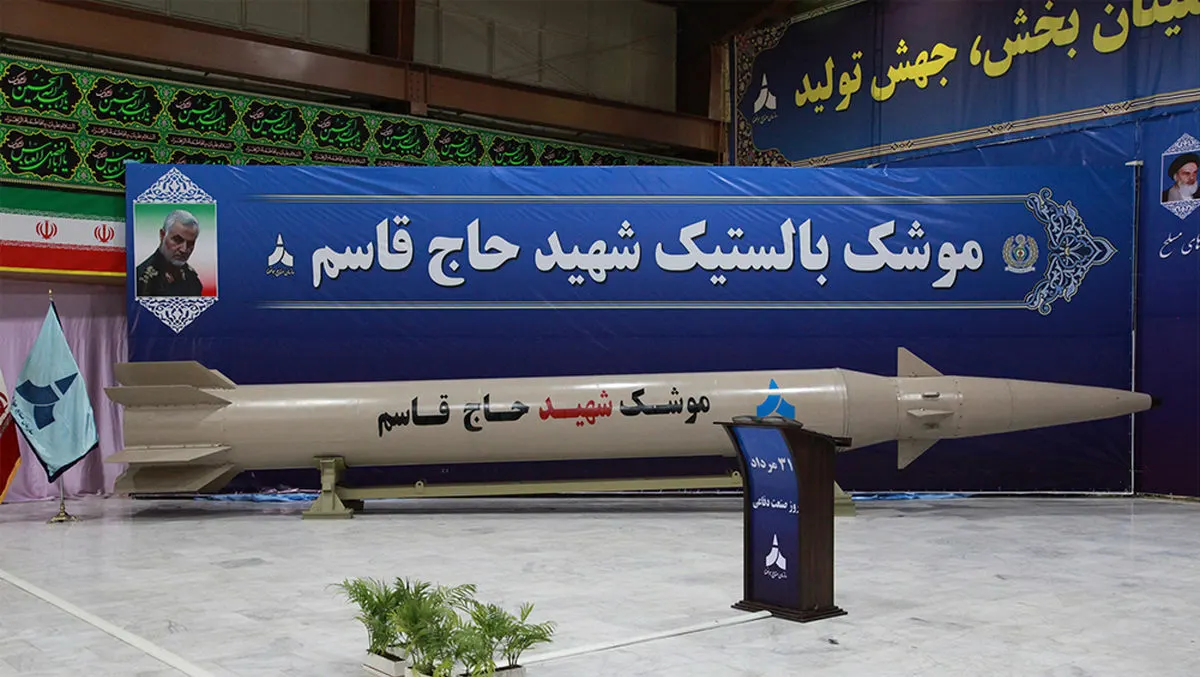

On 20 August 2020, the Aerospace Force of the Islamic Revolutionary Guard Corps unveiled a new two-stage, solid-fuel medium-range ballistic missile named for Qasem Soleimani, the Quds Force commander killed seven months earlier in a US drone strike near Baghdad.1 The missile, Haj Qasem (also transliterated Hajj Qassem), is roughly 11 meters long, weighs about 7,000 kilograms at launch, and is credited with a maximum range of 1,400 kilometers carrying a 500 kilogram warhead.1,3 Iran describes it as a road-mobile system fired from a transporter erector launcher, built by the Ministry of Defense and Armed Forces Logistics (MODAFL), the state body that oversees Iran's domestic missile industry.3
- Solid fuel allows faster launch preparation than older liquid-fueled types
- Road-mobile basing improves survivability against preemptive strikes
- Claimed maneuverable reentry vehicle for terminal defense penetration
- Long-range strike reach covering all of Israel and Gulf US bases from inside Iran
- Terminal guidance and defense-penetration claims rest almost entirely on Iranian statements
- Reported combat use is rare and often unconfirmed rather than routine
- Payload and range both trail some of Iran's other MRBM designs
- Limited independent battle-damage assessment exists for any confirmed strike
The naming was deliberate and openly political. Iranian officials framed the unveiling as both a tribute to Soleimani and a promise of retaliation for his killing, a framing state media repeated when the missile was reportedly fired for the first time years later.4 Iran's own statements about the missile's capabilities deserve the same scrutiny any government's claims about its own weapons get. Tehran says Haj Qasem carries a maneuvering reentry vehicle able to change course during descent and defeat missile defense systems including the American THAAD and the Patriot batteries Israel operates, a claim that has not been independently verified by outside analysts.6 Whether the missile can do everything Iran says is a separate question from whether it exists and has been paraded, delivered to units, and reportedly used in combat, all of which are documented.
Haj Qasem sits alongside missiles such as the Emad, the Ghadr-110, the Kheibar Shekan, and the Sejjil in Iran's layered medium-range ballistic missile arsenal, a class covered in more depth on the medium-range ballistic missile glossary page. It has been reported in Iranian ballistic missile barrages against Israel since 2025, though which specific missile hit which specific target is frequently disputed even by specialists reviewing the same wreckage.11 The sections below cover Haj Qasem's specifications, the political story behind its name, its documented (and undocumented) combat history, and how it compares with the other missiles Iran fires from the same family of programs.
Haj Qasem is built around a two-stage solid rocket motor, a different propulsion approach from the mixed liquid-fuel first stage used by older Iranian designs descended from the Shahab-3.1,3 Solid propellant is pre-loaded into the missile body at the factory, so a Haj Qasem does not need the hours of fueling that a liquid-fueled missile like the Ghadr-110 requires before launch. That difference matters operationally. A solid-fuel missile can be moved, erected, and fired in minutes, which is exactly the trade Iran is making across its newer missile programs, favoring quicker reaction time and survivability over the larger throw weight that liquid propellant traditionally allows.
- Füze SınıfıOrta menzilli balistik füze
- Hizmete Giriş Yılı2020
- TasarımcıMinistry of Defense and Armed Forces Logistics
- Uzunluk11 m
- Fırlatma Ağırlığı7.000 kg
- HizmetteEvet
At roughly 11 meters in length and 7 tonnes at launch, Haj Qasem is a mid-sized member of Iran's MRBM inventory, smaller than the liquid-fueled Ghadr-110 but broadly comparable in size to the solid-fuel Kheibar Shekan.1,3 Its 500 kilogram warhead is conventional, high-explosive, and Iran has not claimed a nuclear or thermonuclear role for the type. The missile carries a single warhead rather than multiple independently targetable reentry vehicles.
- Tahrik Tipiiki kademeli
- Kademe Sayısı2
- Yakıt Tipikatı
- Katı YakıtlıEvet
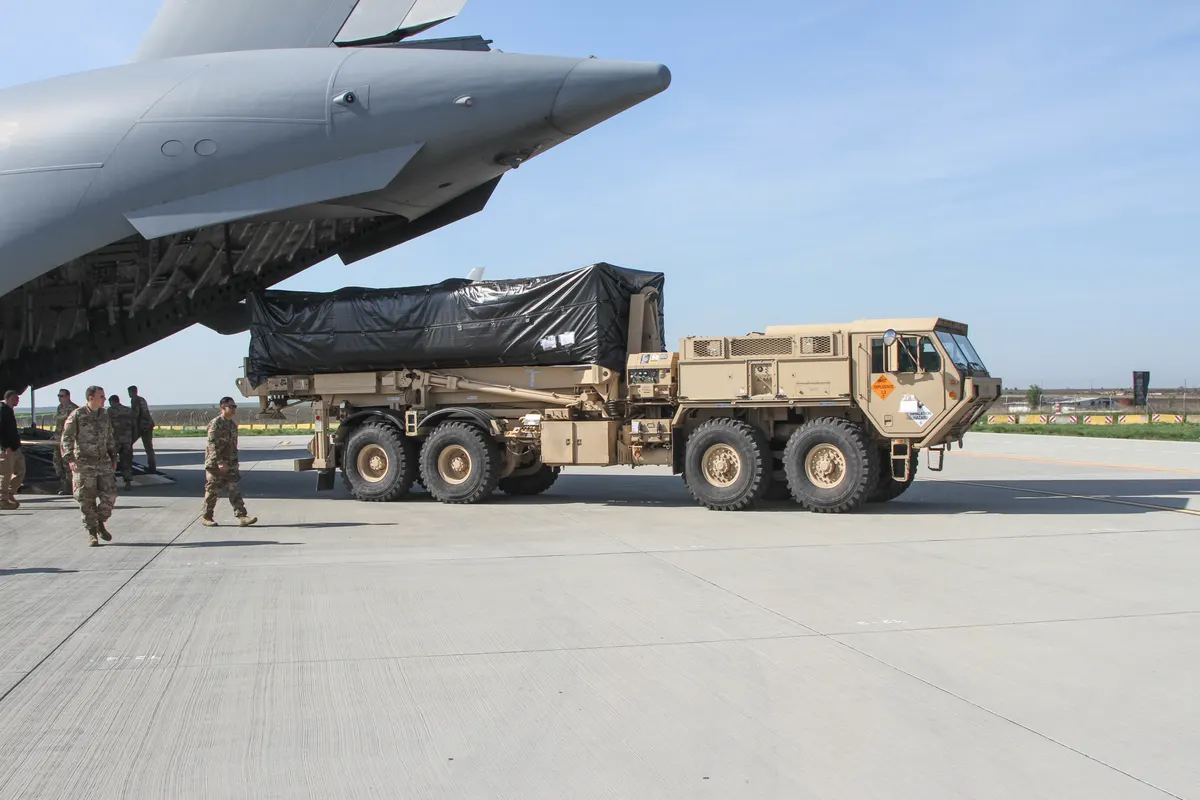
The feature Iran advertises most is the reentry vehicle's claimed maneuverability. Officials describe speeds up to Mach 12 during the terminal phase of flight, paired with course corrections meant to defeat interceptors that expect a predictable ballistic path.1 This is the basis for Iranian Defense Minister statements that Haj Qasem, and its 2025 terminal-guidance upgrade the Qasem Basir, are engineered specifically to get past THAAD and Patriot batteries.6 Outside missile-defense specialists generally accept that a maneuvering reentry vehicle raises the difficulty of an intercept. They are far more skeptical of Iranian claims about interception rates against specific fielded systems, since those numbers come exclusively from Tehran and have never been tested in a controlled setting either side would accept as neutral.
- Azami Menzil1.400 km
- Geri Giriş Hızı (Mach)12 Mach
- Taşıma Kapasitesi (Throw Weight)500 kg
Haj Qasem's guidance suite has not been described by Iran in the same granular detail as the electro-optical seeker later shown on Qasem Basir. What is public is that the base Haj Qasem variant is presented as more accurate than Iran's older, unguided or lightly guided Shahab-derived missiles, without the specific circular error probable figure being released.16 The missile is fired from a wheeled transporter erector launcher rather than a rail or silo system, keeping it consistent with the road-mobile basing Iran uses across nearly its entire ballistic missile force, a deliberate hedge against the fixed-site vulnerabilities that a purely silo-based force would carry.
- Güdüm TipiAtaletsel / GPS
- Terminal GüdümEvet
- Manevra Kabiliyetli Geri Giriş Aracı (MaRV)Evet
- Harp Başlığı Tipikonvansiyonel
- NükleerHayır
- TermonükleerHayır
- MIRVHayır
- Harp Başlığı / RV Sayısı1
- Konvansiyonel KabiliyetliEvet
- Konuşlanma Şeklikarayolu mobil
- Karayolu Hareketli (TEL)Evet
- Denizaltından FırlatılanHayır
- Kullanıcılar1
- Patlayıcı Dolgu Ağırlığı500 kg
Haj Qasem was unveiled on 20 August 2020 in a ceremony that paired it with a new anti-ship cruise missile, the Abu Mahdi, named for Abu Mahdi al-Muhandis, the Iraqi militia commander killed in the same US strike that killed Soleimani on 3 January 2020.1,2 The double unveiling was not a coincidence. Iran built an entire messaging event around honoring both men and, implicitly, warning that their deaths would be answered with an expanded missile arsenal rather than a one-time reprisal.

Development of Haj Qasem itself is not well documented in open sources, consistent with how MODAFL and its subsidiary the Aerospace Industries Organization generally handle missile programs, revealing finished hardware at staged events rather than publishing development timelines. What is documented is the next concrete milestone after the 2020 unveiling. On 22 August 2023, at a Defence Industry Day ceremony attended by then-President Ebrahim Raisi, the IRGC formally received three Haj Qasem missiles mounted on their launch vehicles, a handover Iranian state media presented as the type entering operational units rather than remaining a display piece.5
That three-year gap between unveiling and formal delivery is itself informative. Iran regularly unveils missiles at ceremonies years before any confirmed operational fielding, and Haj Qasem's timeline (reveal in 2020, handover in 2023, first reported combat use even later) fits that pattern rather than the immediate large-scale production Iranian officials often imply at unveiling events. Whether the missile was quietly fielded in smaller numbers between 2020 and 2023, or existed mainly as pre-production hardware until the handover, is not something open reporting resolves cleanly.
By 2025, an upgraded variant, Qasem Basir, appeared with a stated electro-optical terminal seeker meant to resist jamming, a shorter quoted range near 1,200 kilometers, and a carbon-fiber airframe Iranian officials said reduces its radar signature.16,17 Iran presented Qasem Basir explicitly as a lesson-learned successor drawing on the results of the April and October 2024 missile exchanges with Israel, discussed in the Conflicts section below, rather than as an unrelated new program.17
Haj Qasem predates most of the missile exchanges between Iran and Israel that followed Soleimani's killing, but it has featured in only some of them, and rarely as the headline system. During the 15-16 January 2024 strikes Iran carried out against targets in Iraq's Erbil, Syria's Idlib Governorate, and Pakistan's Balochistan province, the IRGC used four Kheibar Shekan missiles against Idlib, not Haj Qasem.9 Haj Qasem does not appear in confirmed reporting on that round of strikes at all.

In Operation True Promise on 13-14 April 2024, Iran's retaliation for the Israeli strike on its consulate in Damascus, and again in the 1 October 2024 attack that followed the killing of Hezbollah leader Hassan Nasrallah, Iranian and Israeli sources both identify the missiles used as the Emad, Ghadr-110, Kheibar Shekan, and, in the October wave, the newer Fattah-1.7,8 Haj Qasem is absent from both of those attack rosters in the sourcing available. Anyone searching whether Haj Qasem was used in Iran's April or October 2024 strikes on Israel should treat the answer as no, based on the missile types both governments and independent researchers have named.
The picture becomes murkier during the Twelve-Day War of 13-24 June 2025, the short but intense conflict that began with Israeli strikes on Iranian nuclear and military sites. Iran's retaliatory barrages, which totaled more than 550 ballistic missiles over twelve days, reportedly drew on its most advanced systems, and multiple accounts list Haj Qasem among the types employed, alongside an upgraded Kheibar Shekan variant, Ghadr, and Emad, though only in small numbers rather than routinely.10 When a missile struck Bat Yam on 15 June 2025, killing at least six people, Israeli defense sources could not immediately confirm which of three candidate types (Emad, Kheibar Shekan, or Haj Qasem) had hit the building, illustrating how difficult attribution is even for the country absorbing the strike.11
The clearest claim of Haj Qasem's combat debut comes from the 2026 Iran war, the far larger conflict that began on 28 February 2026 after US and Israeli strikes killed Iran's Supreme Leader and other senior officials.15 On 17 March 2026, in what Iranian outlets called the 59th wave of Operation True Promise 4, the IRGC said it fired Haj Qasem missiles for the first time operationally, alongside Ghadr, Emad, and Fattah missiles and drones, in strikes that hit Beit Shemesh, Tel Aviv, and Jerusalem inside Israel, killing at least nine people in Beit Shemesh alone.12,14 The same wave reportedly struck US-linked bases in the region, including Al Udeid Air Base in Qatar, facilities in Kuwait, the United Arab Emirates, and Erbil in Iraq.13
That IRGC framing of a first operational use in March 2026 sits awkwardly next to the June 2025 reporting that already listed Haj Qasem among the missiles fired during the Twelve-Day War. The contradiction is not resolved cleanly in open sources. It may reflect a genuine escalation, with the missile fired in truly minimal numbers or held in reserve in 2025 and only committed at scale in 2026, or it may reflect state media overstating a combat debut for propaganda value on both occasions. Readers researching whether Haj Qasem has confirmed combat use should treat the 2025 reporting as plausible but unconfirmed, and the March 2026 use as the best-documented instance, while noting that both rest heavily on Iranian government statements rather than independent battle damage assessment.
The main production Haj Qasem carries the specifications described above, an 11 meter, 7 tonne, solid-fuel missile with a claimed 1,400 kilometer range and a 500 kilogram conventional warhead.1,3
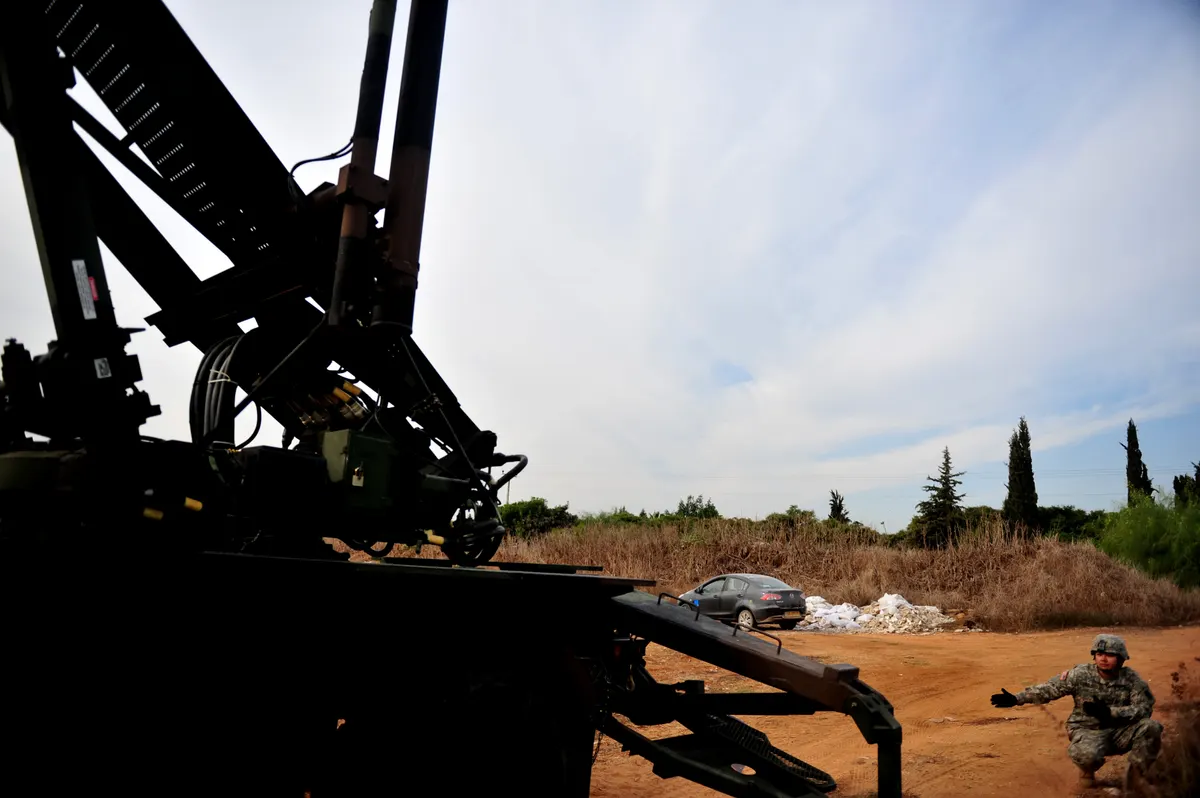
Qasem Basir, unveiled on 3-5 May 2025, is the confirmed successor variant. Iran quotes a shorter range of roughly 1,200 kilometers in exchange for an electro-optical terminal seeker that guides the reentry vehicle onto its target using an imaging sensor rather than inertial guidance alone, a change Iranian officials say makes the missile immune to GPS jamming and electronic warfare aimed at earlier designs.16,17 Test footage Iran released showed black-and-white imagery apparently filmed by the seeker as it descended, consistent with an infrared or electro-optical terminal sensor.16
Iranian officials also describe a carbon-fiber airframe on Qasem Basir intended to reduce its radar cross-section, and they have said the design incorporates specific lessons drawn from how the April and October 2024 missile exchanges with Israel actually played out, rather than being a generic upgrade.17 Iran's own projection is that Qasem Basir would cut the interception rate its missiles face to under 5 losses per 200 to 300 launched, a figure that, like the THAAD and Patriot penetration claims for the base Haj Qasem, comes from Iranian sources and has not been independently tested.17 No confirmed combat use of Qasem Basir specifically, as distinct from the base Haj Qasem, has been documented as of mid-2026.

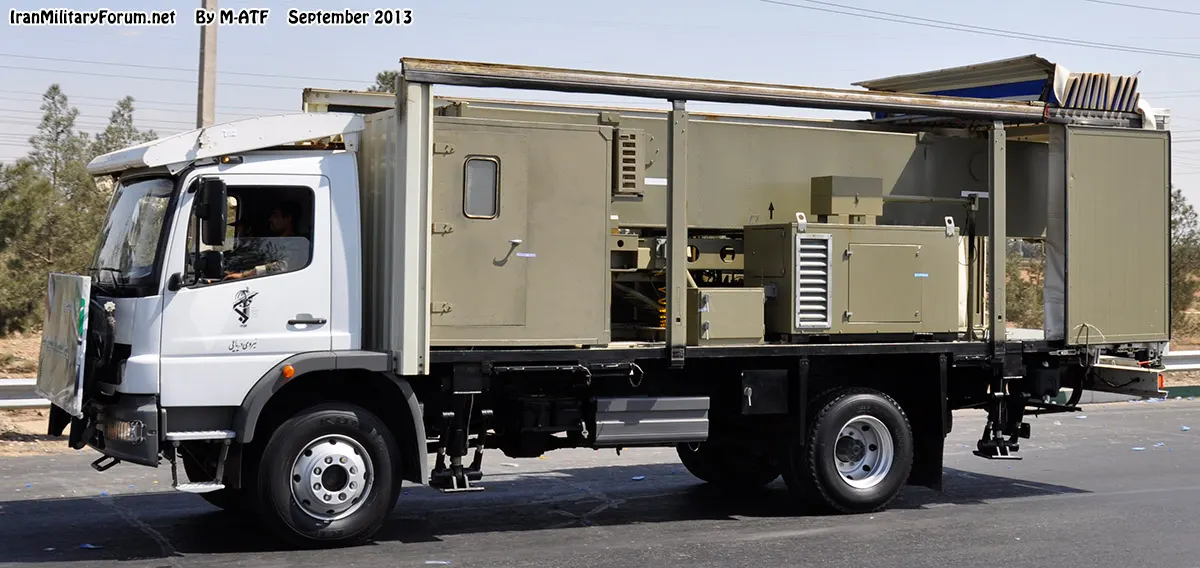
Haj Qasem is operated exclusively by Iran, specifically by the missile forces of the Islamic Revolutionary Guard Corps Aerospace Force, the branch responsible for Iran's ballistic and cruise missile arsenal.1,5 No export sales or transfers to other states or non-state groups have been reported, and Iran has not marketed the missile for export the way it has with some shorter-range systems supplied to regional partners.
Because Iran has never disclosed serial production numbers for Haj Qasem, outside estimates of how many are actually in the IRGC's inventory vary widely and are largely guesswork built from satellite imagery of launch and storage sites plus the handful of missiles shown at events like the 2023 handover ceremony. The 1,400 kilometer range puts all of Israel, most Gulf Arab states, and US bases across the region within reach from launch sites deep inside Iranian territory, which is the operational logic behind fielding an MRBM of this class in the first place rather than a shorter-range system.
Haj Qasem and the Kheibar Shekan are the two Iranian solid-fuel medium-range missiles most often mentioned together, and the comparison is really about how Iran allocates a genuinely new capability. Kheibar Shekan has been fired far more often in confirmed strikes, including the January 2024 attack on Idlib and repeated use across the 2024 and 2025 exchanges with Israel.9,7,8 Haj Qasem, by contrast, shows up in far fewer confirmed engagements and, per the sourcing in the Conflicts section above, its very first confirmed operational use is itself disputed between 2025 and 2026 reporting. That gap suggests Iran has treated Haj Qasem as a smaller-batch, higher-value system reserved for particular targets, while Kheibar Shekan functions as more of a workhorse across the same solid-fuel weight class.
Against the older liquid-fueled Emad and Ghadr-110, the contrast is about propulsion rather than raw destructive power. Emad and Ghadr-110 both trace their propulsion back to the Shahab-3 program and carry larger warheads, in the 650 to 1,000 kilogram range depending on the specific reporting, but they require lengthy pre-launch fueling that leaves them more exposed on the ground before they fire.7 Haj Qasem trades some of that payload margin for the ability to launch on much shorter notice, the same bet Iran has made across its entire post-2010s solid-fuel missile programs. In practical terms, a force built around Ghadr-110 and Emad depends on getting missiles fueled and erected before an adversary can strike the launch site, while a Haj Qasem or Kheibar Shekan battery can fire with far less warning.
| Missile | Fuel | Range (claimed) | Warhead | First reported combat use |
|---|---|---|---|---|
| Haj Qasem | Solid, 2-stage | ~1,400 km | 500 kg | 2025 (disputed) / 2026 (claimed first) |
| Kheibar Shekan | Solid, 2-stage | ~1,450 km | 500 kg | January 2024 (Idlib) |
| Ghadr-110 | Liquid | ~1,700-1,950 km | 650-1,000 kg | April 2024 |
Every figure in that table needs the same caveat that applies to the rest of this article. Iranian ballistic missile specifications are rarely independently verified, and ranges in particular tend to shift slightly between different Iranian statements and different outside analysts reading the same launch footage.


What is the range of the Haj Qasem missile? Iran states a maximum range of 1,400 kilometers, sufficient to reach Israel and most Gulf US bases from launch sites inside Iranian territory.1,3
Is the Haj Qasem missile still in service? Yes. It remains part of the IRGC Aerospace Force's ballistic missile arsenal, and Iranian state media reported it being fired operationally as recently as March 2026.12
Was the Haj Qasem missile used against Israel? Iranian sources say yes, both during the June 2025 Twelve-Day War and, more explicitly, in March 2026 strikes on Beit Shemesh, Tel Aviv, and Jerusalem. Independent confirmation of the earlier 2025 use specifically is weaker than the 2026 claim.10,11,12
Was Haj Qasem used in Iran's April or October 2024 strikes on Israel? No confirmed reporting places Haj Qasem in either the April 2024 or the October 2024 attacks. Both used the Emad, Ghadr-110, Kheibar Shekan, and, in October, the Fattah-1.7,8
How does Haj Qasem defeat missile defense systems like THAAD and Patriot? Iran says the missile's reentry vehicle maneuvers during descent to reduce the effectiveness of interceptors tuned for a predictable ballistic path. This claim comes from Iranian officials and has not been independently tested.6
What is the Haj Qasem missile's unit cost? Iran has never published a unit price for Haj Qasem, and no independent cost estimate has been sourced reliably enough to state a figure here.
Who manufactures the Haj Qasem missile? Iran's Ministry of Defense and Armed Forces Logistics, working through the Aerospace Industries Organization, is credited as the developer and manufacturer.3,5
- "Haj Qasem (missile)", Wikipedia — en.wikipedia.org) ↩
- "Assassination of Qasem Soleimani", Wikipedia — en.wikipedia.org ↩
- "Haj Qassem Soleimani MRBM", GlobalSecurity.org — globalsecurity.org ↩
- "This is for you for Soleimani: Iran used the Haj-Qasem missile for the first time", EADaily — eadaily.com ↩
- "New ballistic missile types delivered to IRGC", Janes — janes.com ↩
- "A brief guide to Iranian ballistic missiles", Action on Armed Violence — aoav.org.uk ↩
- "April 2024 Iranian strikes on Israel", Wikipedia — en.wikipedia.org ↩
- "October 2024 Iranian strikes on Israel", Wikipedia — en.wikipedia.org ↩
- "2024 Iranian missile strikes in Iraq and Syria", Wikipedia — en.wikipedia.org ↩
- "Twelve-Day War", Wikipedia — en.wikipedia.org ↩
- "Which Iranian missile hit Bat Yam? Emad, Kheibar Shekan or Haj Qasem", The Jerusalem Post — jpost.com ↩
- "Iran deploys new Haj Qasem missile in retaliatory strikes on Israel, U.S. bases", Xinhua — english.news.cn ↩
- "IRGC Uses Haj Qassem Missile in 59th Wave of True Promise 4", Islam Times — islamtimes.com ↩
- "Iranian missile strike on Israel's Beit Shemesh kills nine people", Al Jazeera — aljazeera.com ↩
- "2026 Iran war", Wikipedia — en.wikipedia.org ↩
- "Explainer: Why is Qasem Basir, Iran's latest high-precision missile, a military asset?", Press TV — presstv.ir ↩
- "Iran deploys new Qassem Basir ballistic missile to counter US most advanced air defense systems", Army Recognition — armyrecognition.com ↩