


South Africa's RSA-3 program lived a double life. In public, it was a civilian satellite launch vehicle, built to place a small reconnaissance satellite into orbit from a remote stretch of coast east of Cape Town. Behind that cover story, western intelligence agencies and United Nations investigators treated the RSA-3 rocket as the delivery system attached to Pretoria's most closely guarded secret, the nuclear arsenal the apartheid government built and then quietly dismantled in the early 1990s.1,3 The RSA-3 was developed by Armscor (the Armaments Corporation of South Africa) through its Houwteq subsidiary at Grabouw, roughly 30 km east of Cape Town, and it is widely reported to be based almost directly on Israeli Jericho II and Shavit rocket technology.2,5,6
- Solid-fuel motor technology on par with contemporary [IRBMs](/en/glossary/irbm)
- Satellite-launch cover story reduced diplomatic exposure for years
- Demonstrated a genuine long-range flight test in 1989
- Built a full domestic propellant and assembly industry from nothing
- Never reached operational service or a confirmed warhead
- Heavily dependent on transferred Israeli motor design
- Guidance accuracy and re-entry performance never independently verified
- Program shut down before a third planned test, hardware fate undocumented
Two test flights of the RSA-3 rocket are confirmed, one on 5 July 1989 and a second on 19 November 1990, both launched from the Overberg Test Range (also called Arniston or OTR) near Bredasdorp.2,4,5 A third test was expected in 1991 and never took place, and the whole program, along with its sibling RSA-4 design, was formally cancelled in 1993 as South Africa dismantled its nuclear weapons stockpile and worked toward joining the Missile Technology Control Regime.2,5
Whether the RSA-3 was ever meant to carry a nuclear warhead is a genuinely disputed question, and South Africa has never officially confirmed a nuclear-delivery role for this specific rocket.1,3 A 1989 UN General Assembly resolution stated with concern that collaboration between Israel and South Africa had produced a nuclear-tipped missile, and a 1990 UN Department of Disarmament Affairs report was titled South Africa's Nuclear Tipped Ballistic Missile Capability, but these were political and analytical documents, not admissions from Pretoria.5 What is well documented is that South Africa's declared nuclear devices used 55 kg of highly enriched uranium each and were reportedly too heavy for the light payload the RSA-3's third stage could realistically lift, a technical mismatch some analysts cite as evidence the rocket's real value was always the satellite-launch and IRBM demonstration itself, with the nuclear question left as leverage and ambiguity rather than a completed weapon.3,5
This kind of dual-purpose IRBM sits at the older, secretive end of the broader medium-range and intermediate-range ballistic missile category, alongside contemporaries built for entirely different reasons in China, Iran, and Pakistan. Unlike most of those programs, the RSA-3's own government spent decades refusing to confirm even its most basic parameters, which is why so much of what follows relies on declassified cables, UN reporting, and open-source missile analysis rather than an official technical manual.
The RSA-3 was a three-stage, solid-fuel rocket, and its first two stages reportedly used the identical rocket motor design, each stage loaded with roughly nine metric tons of propellant, first steered by vanes in the exhaust for the first 16 to 20 seconds of flight and then by aerodynamic fins.5 A third stage, added specifically for orbital insertion, functioned as an apogee-kick motor broadly similar to the spherical, five-metric-ton-thrust upper stage used on Israel's own Shavit satellite launcher.5 At ignition the assembled vehicle massed 23,564 kg, according to a detailed flight-profile table compiled by open-source missile analysts, though no source gives a confirmed total assembled length for the RSA-3 itself.5,6
- Füze SınıfıIntermediate-range ballistic missile / satellite launch vehicle
- TasarımcıHouwteq (Armscor), developed with Israeli technical assistance
- Fırlatma Ağırlığı23.564 kg
- HizmetteHayır
That absence is one of several places where the record is genuinely thin. Because the RSA-3's shared first and second stage motor is described as matching Israel's Jericho II design, and Jericho II's own reported dimensions vary by source (14 meters long and 1.56 meters in diameter in one widely cited figure, versus the separately reported 18-meter, 1.35-meter-diameter Shavit, which some officials describe as literally the same first-stage hardware with the warhead replaced by an upper stage), the RSA-3's true body diameter cannot be stated with confidence from public sources.5 The payload fairing on top, by contrast, is precisely documented at 4.5 meters long, 1.3 meters in diameter, and 57 kg empty.5
- Tahrik TipiSolid rocket motor
- Kademe Sayısı3
- Yakıt TipiSolid composite propellant, reported to match the shared Jericho II/Shavit motor family
- Katı YakıtlıEvet
In its intended satellite-launch role, the RSA-3 was meant to place a roughly 330 kg reconnaissance satellite, reportedly codenamed Greensat, into a 41-degree orbit between 212 and 460 km altitude.1,3 A projected flight profile places the third-stage burnout at 212 km altitude and roughly 7,500 meters per second, which would have been fast enough for orbital insertion, but South Africa never actually attempted a full orbital launch before the program was cancelled, so this profile represents an intended trajectory rather than a demonstrated one.5 For guidance, the RSA-3 is treated in modern reference works as using the same inertial navigation approach inherited from Jericho II, since no independent South African guidance system has ever been documented.5,6 As an intermediate-range ballistic missile configuration, the RSA-3's first stage (designated RSA-1 on its own) was rated for a 1,500 kg payload over about 1,100 km, and the two-stage RSA-2 configuration extended that to roughly 1,900 km, figures that describe theoretical strike missions rather than the satellite-launch flights actually flown.5
- Azami Menzil1.620 km
- Apoje (En Yüksek Nokta)212 km
- Taşıma Kapasitesi (Throw Weight)330 kg
The RSA-3 was mated to a road-mobile transporter-erector-launcher that was reportedly in an advanced stage of testing when the program was cancelled in 1993, though its final disposition, like most of the RSA-3's hardware, was never made public.5
- Güdüm TipiAtaletsel / GPS
- MIRVHayır
- Konuşlanma ŞekliMobile transporter-erector-launcher (fixed pad used for SLV test flights)
- Silo KonuşluHayır
- Karayolu Hareketli (TEL)Evet
- Denizaltından FırlatılanHayır
- Kullanıcılar0
- İlk Test1989
South Africa's missile effort traces back to 1963, when the state Armaments Production Board began work on short-range surface-to-air and cruise missiles, followed in 1964 by the founding of the South African Rocket Research Institute with West German technical assistance.5 The 1968 Armaments Development and Production Act consolidated this work under Armscor.2,5
The relationship with Israel that eventually produced the RSA-3 grew out of the 1973 Yom Kippur War, after which most African states broke relations with Israel and South Africa emerged as one of Israel's few remaining regional partners.5
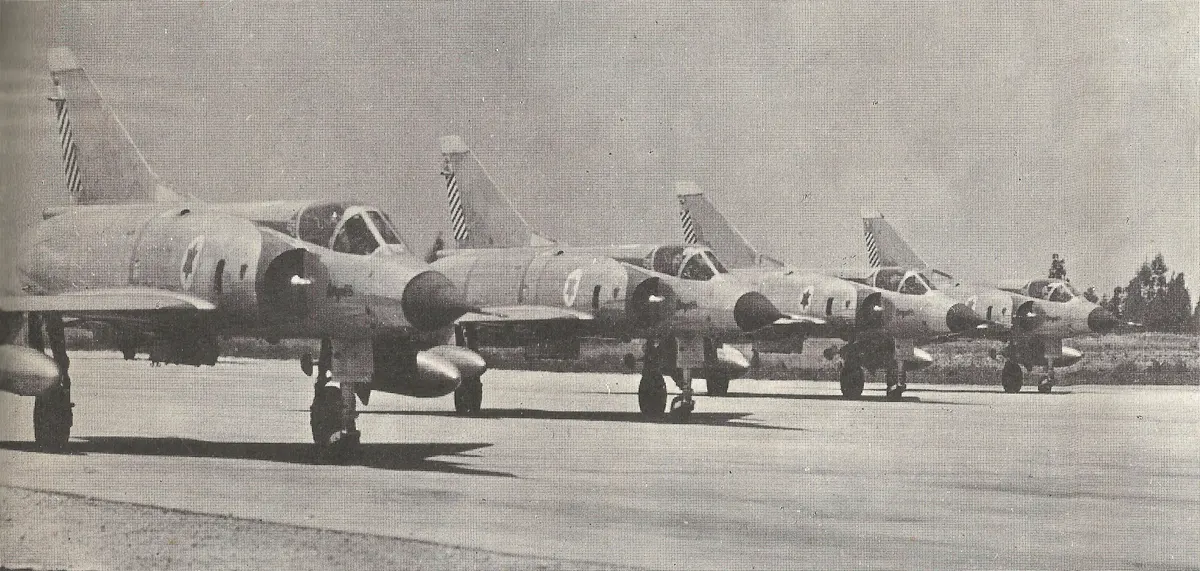
In 1974, Israeli defense minister Shimon Peres and South African prime minister John Vorster reportedly held a secret meeting in Geneva and signed a mutual defense pact, with a later clause, codenamed Chalet, under which Israel allegedly agreed to arm several Jericho II missiles with special warheads for South Africa.5 The following year the two countries exchanged tritium for South African uranium, deepening a nuclear relationship that predated any missile cooperation.5
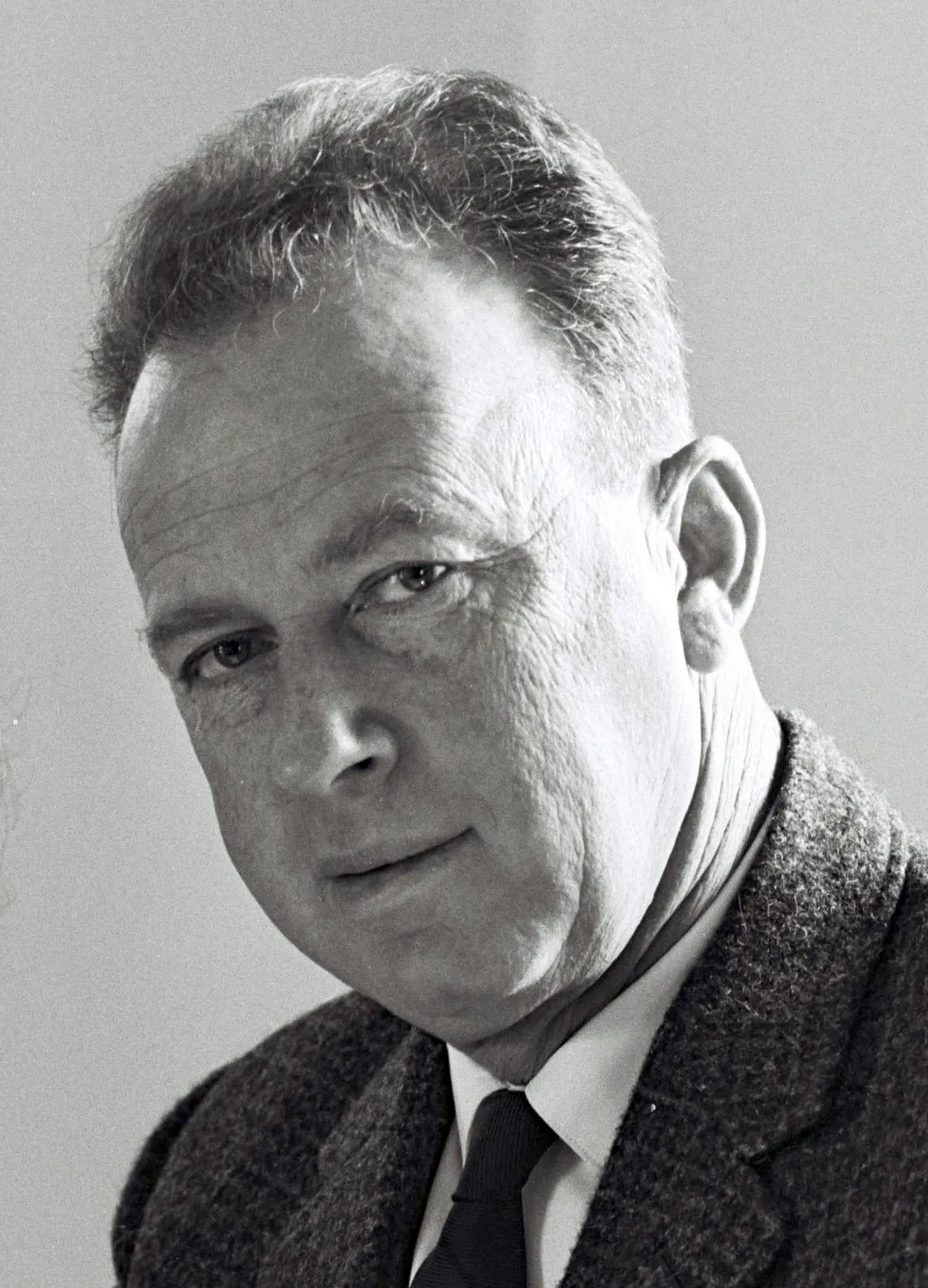
South Africa's own strategic anxiety in this period centered on the South African Border War and the wider Angolan Civil War, where Cuban and Angolan forces built up armor and air-defense systems just across the Namibian frontier through the 1980s.5 Kentron Missiles, an Armscor subsidiary formed in 1978, and the Somchem propellant works both expanded through the early 1980s to give South Africa an independent solid-propellant production base, and by 1985 South Africa had begun receiving Jericho I missile technology from Israel.5
The single-stage RSA-1, built around the same motor as the RSA-3's first stage, was conceived specifically to strike Cuban military concentrations in Angola from mobile launchers inside South African territory, and the two-stage RSA-2 extended that reach further north.5 Development of the three-stage RSA-3 itself began in the mid-to-late 1980s at Houwteq's Grabouw facility, with the Overberg Test Range built out for flight testing and an engine test stand at Rooi Els.2,4,5 At its peak in 1992 the program involved 50 to 70 public and private companies and between 1,300 and 1,500 employees.5
The 5 July 1989 test, in which the rocket flew southeast toward Prince Edward Island, drew immediate international attention. US intelligence assessed the missile as resembling Israel's Jericho II closely enough that a senior Israeli delegation was probably present for the launch, and NBC News later reported, citing anonymous intelligence sources, that Israel and South Africa were cooperating on a nuclear-armed missile in exchange for enriched uranium and test-range access, a claim Israeli prime minister Yitzhak Shamir publicly denied.5 In December 1989 the UN General Assembly formally noted its concern over the reported cooperation between Israel and South Africa on a nuclear-tipped missile.5 The second RSA-3 test flew on 19 November 1990, again described by South Africa as a peaceful booster-rocket test.2,4,5
President F.W. de Klerk set the dismantlement in motion in September 1989, when he decided both apartheid and the nuclear weapons program had to end for South Africa to rejoin the international community, and the country's six completed nuclear devices (plus one partially built) began to be dismantled from February 1992 onward.3,5
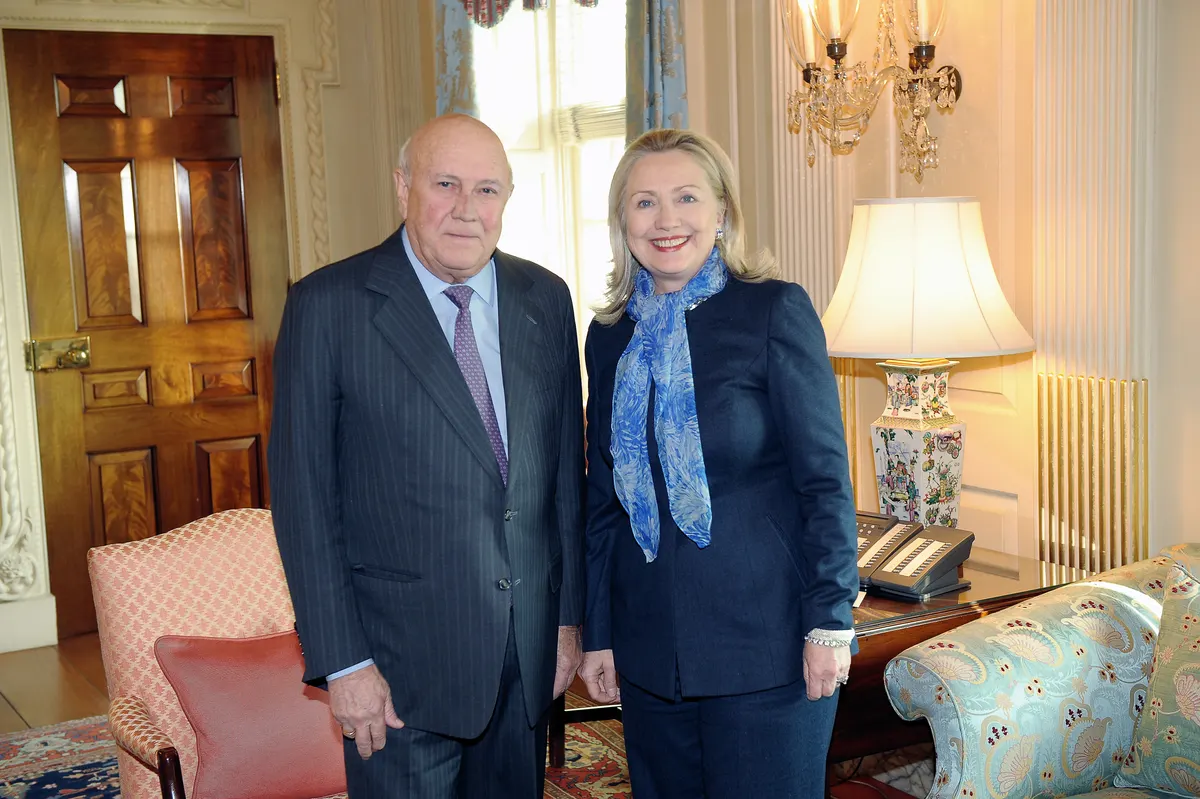
Under sustained American pressure, South Africa agreed on 30 June 1993 to abandon long-range missile manufacturing altogether, cancelling the RSA-3 and RSA-4 space launch programs outright.5 Houwteq dismantled the surviving RSA-3 hardware and sequestered its technical data, Somchem eliminated its remaining solid propellant stocks and rocket casings, and Denel, the commercialized successor Armscor had spun off in April 1992, filled in the large engine casting pits at Somerset West and destroyed related X-ray inspection equipment.5 The US State Department later paid roughly $500,000 to help fund demolition of the Rooi-Els rocket motor test facility in November 1994, and a bilateral non-proliferation pact signed that October formally ended South Africa's missile development effort.5 South Africa acceded to the Missile Technology Control Regime on 13 September 1995.2,5
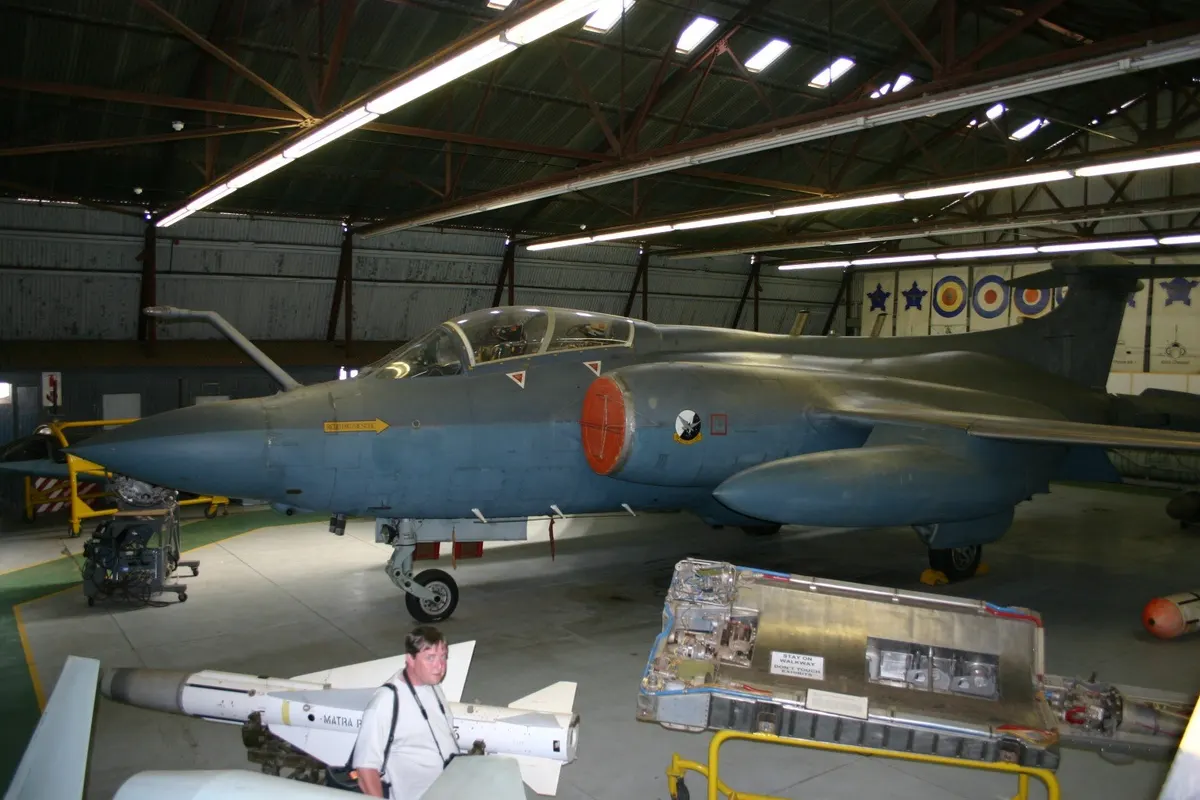
South Africa also explored aircraft-based nuclear delivery in parallel with its missile work. In 1976 the South African Air Force practiced nuclear-weapon delivery profiles using Blackburn Buccaneer bombers against a decommissioned World War II salvage ship off Cape Town, a reminder that the RSA-3 rocket was never the only delivery option under study even at the height of the program.5
The RSA-3 sat in the middle of a four-part family that shared a common first-stage motor design. The RSA-1 was the base single-stage configuration, rated at roughly 1,500 kg over about 1,100 km and intended for mobile, road-launched strikes against targets in Angola.5 The RSA-2 added a second stage identical in concept to the RSA-3's own second stage, stretching the range to around 1,900 km.5 The RSA-3 covered in this article added the third-stage apogee-kick motor needed to reach orbit, turning the same booster into a declared satellite launch vehicle while retaining the underlying IRBM performance of its siblings.5 A fourth design, the RSA-4, existed only on paper when the whole family was cancelled in 1993, and no further technical details were ever released.5
South Africa's missile program cannot be separated from its two Israeli counterparts. Jericho II entered Israeli service around 1989 as a genuine, fielded two-stage IRBM, reportedly capable of ranges up to 1,500 km with a 1,000 kg payload (and considerably further with a lighter one), and it remains the missile most consistently cited as the RSA-3's direct technical template.5 Israel's own Shavit satellite launcher, first flown successfully in September 1988 to orbit the Ofeq-1 satellite, supplied the apogee-kick-motor concept the RSA-3 borrowed for its own third stage, and the RSA-3's satellite-launch cover story mirrors the same civilian framing Israel used for Shavit itself.5
No air force or army, in South Africa or anywhere else, ever operated the RSA-3 as a fielded weapon. It remained a test and development program throughout its life and was cancelled in 1993 before entering service, so the operator history that would normally attach to a deployed missile like Jericho II simply does not exist for the RSA-3.2,5
Jericho II and the RSA-3 share so much of the same reported hardware that intelligence analysts spent much of the late 1980s debating whether they were really describing one missile program wearing two flags or two genuinely separate ones. The practical difference that matters most is status rather than shared technology, since Jericho II went on to become an actual fielded weapon in Israeli service around 1989, while the RSA-3 never advanced past a satellite-launch test program before it was dismantled under international pressure in 1993.5
| Spec | RSA-3 (South Africa) | Jericho II (Israel) |
|---|---|---|
| Stages | 3 (SLV configuration) | 2 |
| Launch weight | ~23,564 kg | ~21,935 to 26,000 kg (sources vary) |
| Demonstrated range | ~1,400 to 1,620 km (test flight, disputed) | up to ~1,500 km, further with lighter payload |
| Status in 2026 | Cancelled 1993, dismantled | Reported in service, still classified |
The RSA-3's satellite-launch identity puts it in closer conversation with Shavit, a rocket from the military space launch vehicles category, than with a purpose-built weapon. Shavit actually reached orbit for Israel in September 1988 and went on to launch further Ofeq reconnaissance satellites, while the RSA-3's own orbital attempt never happened, its two confirmed flights in 1989 and 1990 were suborbital booster tests rather than satellite launches.5 That gap, an operational SLV on one side of the relationship and a cancelled test program on the other, is arguably the clearest evidence that South Africa's missile effort, however much Israeli technology it borrowed, never closed the distance between demonstrating a rocket and fielding a deployable weapon.


What was the RSA-3 missile? The RSA-3 was a three-stage South African rocket, developed by Armscor's Houwteq subsidiary in the 1980s, that doubled as a declared satellite launch vehicle and a suspected intermediate-range ballistic missile.1,2
Did the RSA-3 carry a nuclear warhead? South Africa has never officially confirmed a nuclear role for the RSA-3 specifically. UN and US intelligence assessments from 1989 and 1990 suspected a nuclear-tipped missile developed with Israeli help, but no test flight is documented as carrying an actual warhead, and analysts have noted South Africa's own nuclear devices may have been too heavy for the rocket's realistic payload.1,3,5
How far could the RSA-3 fly? Its one fully documented test flight, on 5 July 1989, is reported at distances ranging from about 1,400 to 1,620 kilometers depending on the source, flying southeast over the Indian Ocean toward Prince Edward Island.2,5
Is the RSA-3 still in service today? No. The program was cancelled in 1993 and its hardware and test facilities were dismantled under South Africa's 1994 non-proliferation agreement with the United States, ahead of South Africa joining the Missile Technology Control Regime in 1995.2,5
How is the RSA-3 related to Israel's Jericho II missile? Multiple intelligence and open-source assessments describe the RSA-3's first two stages as functionally identical to Jericho II, developed with direct Israeli technical assistance beginning in the mid-1980s, making it one of the best-documented cases of missile technology transfer of the Cold War era.5,6
- "Missile Programs - South Africa", GlobalSecurity.org — globalsecurity.org ↩
- "Missile Programs - South Africa", Federation of American Scientists — nuke.fas.org ↩
- "South Africa and weapons of mass destruction", Wikipedia — en.wikipedia.org ↩
- "Denel Overberg Test Range", Wikipedia — en.wikipedia.org ↩
- "South Africa Missile Chronology", Nuclear Threat Initiative / James Martin Center for Nonproliferation Studies — media.nti.org ↩
- "RSA-3", Encyclopedia Astronautica — astronautix.com ↩