

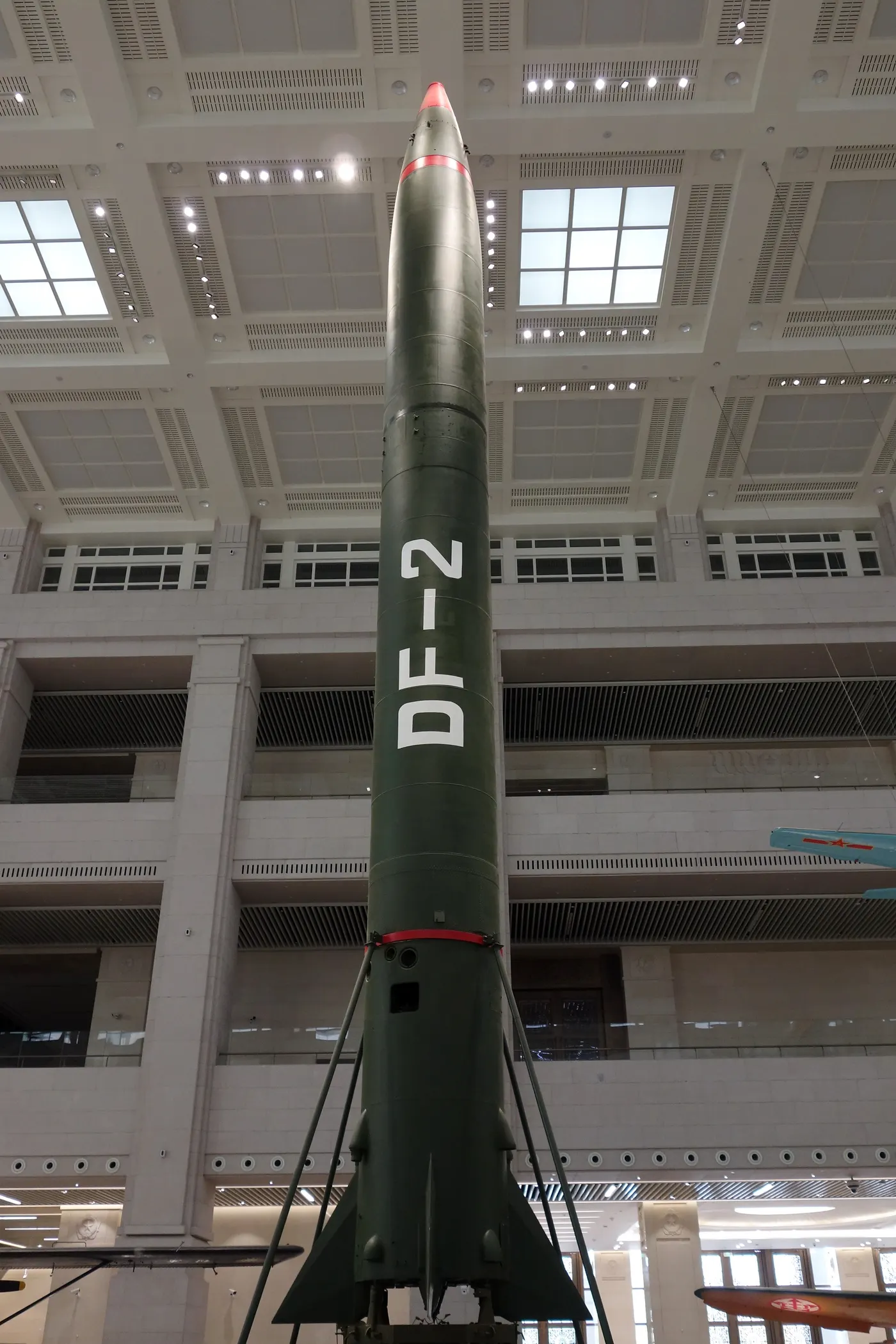

The DF-2 (Dongfeng-2, meaning East Wind, NATO reporting name CSS-1) is China's first indigenously developed medium-range ballistic missile, a single-stage, liquid-fueled weapon that entered flight testing in 1962 and became the delivery vehicle for China's first live nuclear warhead test fired from an operational missile in October 1966.1 It grew directly out of the DF-1, a license-built copy of the Soviet R-2 rocket itself a stretched, improved V-2 derivative, but the DF-2 was the first Chinese missile design that was genuinely scaled up and reworked rather than simply copied.2 Its history is inseparable from the Sino-Soviet split. The missile's final development happened only after Soviet engineers and technical documentation, promised under a 1957 assistance agreement, were withdrawn in mid-1960.3
- First fully Chinese-designed ballistic missile, not a copy
- Sufficient range (DF-2A) to strike US bases in Japan
- Proven nuclear-delivery capability, validated by live 1966 test
- Doubled the DF-1's range and payload in one generation
- Cryogenic liquid-oxygen fuel meant hours of pre-launch fueling
- Radio-corrected guidance (base DF-2) needed a fixed ground antenna array
- Range fell well short of Soviet and American MRBM contemporaries
- Never deployed in numbers larger than roughly 100 airframes
Development sat inside the Fifth Academy of China's Ministry of National Defense, the institutional ancestor of today's China Academy of Launch Vehicle Technology and its parent, the China Aerospace Science and Technology Corporation. Qian Xuesen, the American-trained engineer who founded the Fifth Academy after returning to China in a Cold War prisoner exchange, oversaw the institute during the DF-2's development, and Lin Shuang took over as chief designer after the program's dramatic first-flight failure in 1962.4 The improved DF-2A variant, first tested in November 1965, is specifically the missile that carried a live 12-kiloton warhead nearly 900 kilometers downrange to Lop Nur the following year, one of the four pillars of China's Two Bombs, One Satellite program alongside the 1964 atomic bomb test, the 1967 hydrogen bomb test, and the 1970 first satellite launch.5
By the time it reached squadron service with China's Second Artillery Corps (the PLA's strategic-missile branch, forerunner of today's PLA Rocket Force), the DF-2 and DF-2A were already a stopgap. Their successor, the DF-3, was in development before the DF-2A had even finished its own flight-test program, and the DF-2 family was fully retired within roughly a decade of entering service.6 Even so, the missile's place in Chinese military history is fixed by two firsts, the first indigenous MRBM design and the airframe used to prove China could actually deliver a nuclear weapon by missile rather than only detonate one on a test tower or from a bomber.
Developed with zero foreign technical assistance after Soviet engineers and documentation were withdrawn mid-1960 (Sino-Soviet split); the DF-1 predecessor was Soviet-assisted, but the DF-2 itself was finished entirely by Chinese engineers.
A Stretched R-2 Derivative, Not a Clean-Sheet Design
The DF-2 measured 20.6 meters long and 1.65 meters in diameter, with a launch weight around 32,000 kilograms, figures that made it noticeably larger than the DF-1/R-2 it descended from but still modest next to the American and Soviet MRBMs of the same period.1 It kept the single-stage layout and four delta stabilizing fins of its predecessor, and it reused the basic architecture of the R-2's 5D52 engine, uprated by Chinese engineers into the 5D60.7 The airframe carried a throw weight of roughly 1,500 kilograms, enough for a single warhead package rather than any multiple-warhead arrangement, and the missile was never built as a MIRV-capable system.
- Füze SınıfıOrta Menzilli Balistik Füze
- Hizmete Giriş Yılı1960
- Tasarımcılin_shuang
- Uzunluk20,6 m
- Çap1,65 m
- Fırlatma Ağırlığı32.000 kg
- HizmetteEvet
Liquid Oxygen and Alcohol, Not Storable Propellant
The DF-2's propulsion is one of the clearest places where the surviving database record needs correcting. The missile burned liquid oxygen and alcohol (a cryogenic bipropellant combination inherited from the R-2), not the storable UDMH/N2O4 hypergolic fuel sometimes attributed to it. Storable propellant was a genuine step forward that China only achieved with the DF-2's successor, the DF-3, explicitly credited as the first Chinese ballistic missile to use storable propellants.1 Liquid oxygen could not be kept loaded in the missile's tanks for long without boiling off, so a DF-2 sitting on its launch stand had to be fueled shortly before flight, a process contemporary Chinese accounts describe taking six to ten hours even after streamlining.6
- Tahrik Tipisıvı yakıtlı
- Kademe Sayısı1
- Yakıt Tipilox_alcohol
Guidance, Radio Correction on the DF-2 versus Full Inertial on the DF-2A
The original DF-2 combined inertial guidance with a radio correction signal, which meant every launch depended on a ground antenna array positioned 20 to 30 kilometers behind the pad to refine the missile's course during powered flight.7 The improved DF-2A dropped that requirement, switching to a fully Chinese-developed inertial guidance package that needed no external radio link, a change that both simplified deployment and tightened accuracy.7 Published circular error probable figures for the DF-2 cluster around 2 to 4 kilometers, at the wide end of what the database's current 1,500-meter figure implies, and should be read as an approximate, imprecise-guidance-era number rather than a tightly bounded value.6
- Asgari Menzil1.000 km
- Azami Menzil1.250 km
- Geri Giriş Hızı (Mach)5 Mach
- Taşıma Kapasitesi (Throw Weight)1.500 kg
Range, DF-2 Versus the Longer-Legged DF-2A
The database's current 1,000 to 1,250-kilometer range band actually describes the improved DF-2A, not the original DF-2. The base DF-2, after its 1962 failure forced a redesign that cut liftoff thrust from roughly 45.5 to 40.5 tons, flew to about 960 to 1,050 kilometers.7 The DF-2A, with thrust raised again to about 47.5 tons and the new inertial guidance package, extended that to roughly 1,200 to 1,250 kilometers, reportedly enough to bring every US military base in Japan within range from launch sites in northern China.1 Warhead yield is better documented. The missile that flew the live 1966 test carried a 12-kiloton device, while general service-loadout accounts describe options in the 15 to 20-kiloton class.8
- Dairesel Hata Olasılığı (CEP)3.000 m
- Güdüm TipiAtaletsel / GPS
A Soft, Towed-to-Site Basing Mode
The database's flat road-mobile basing label undersells how cumbersome the DF-2 actually was to move and fire. The missile was towed to a prepared launch site on a flatbed trailer as part of a long convoy that also carried fueling trucks and support vehicles, rather than erecting and firing from a self-contained transporter-erector-launcher the way later mobile missiles do.6 Once at the site, total launch preparation, including the multi-hour liquid-oxygen fueling described above, ran to roughly 150 to 180 minutes. FAS's own assessment labels this basing arrangement explicitly as soft, the opposite of a hardened silo or a quick-reaction mobile launcher, and no evidence points to any silo-based or rail-based DF-2 deployment.6
- Harp Başlığı Tipinükleer fisyon
- NükleerEvet
- TermonükleerHayır
- Patlama Gücü (başlık başına)12
- MIRVHayır
- Harp Başlığı / RV Sayısı1
- Konuşlanma Şeklikarayolu mobil
- İlk Test1960
Origins in a 1957 Soviet Technology Transfer
China's ballistic missile program began with Soviet assistance. On 6 December 1957 the USSR agreed to license-produce the R-2 rocket in China, shipping engineers, tooling, and roughly 10,151 volumes of R-2 technical documentation to the newly formed Fifth Academy.9 Design work on a larger, more capable follow-on missile, the future DF-2, started at the academy's 1st Sub-Academy in March 1960, and China's Central Military Commission formally approved the DF-2 program that August.7
The Sino-Soviet Split Forces a Fully Indigenous Finish
The timing could hardly have been worse for continuity. In June 1960, amid the deepening Sino-Soviet split, Nikita Khrushchev ordered Soviet technical assistance to China suspended, and by August 1960 all 1,343 Soviet specialists had been withdrawn from the Fifth Academy, leaving 343 contracts unfinished.3 Chinese engineers completed the DF-1 (the R-2 copy) on their own and launched the first entirely Chinese-built version from the Jiuquan test range within about three months of the Soviet departure. The DF-2, still in its design phase when the split happened, had to be carried to completion the same way, with no further outside engineering support.3
The 21 March 1962 Failure and Lin Shuang's Redesign
The DF-2's first test launch, from the Northwest Missile Test Range at Jiuquan (also called Shuangchengzi) on 21 March 1962, ended in a dramatic and highly visible failure. The missile veered off its intended flight path within seconds of liftoff, its engine caught fire and shut down, and it fell back to earth in an uncontrolled crash at roughly 69 seconds of flight, tearing a crater about 4 meters deep and 22 meters across near the launch pad.7 That September, Lin Shuang was appointed chief designer to lead a thorough redesign, which reduced liftoff thrust from about 45.5 to 40.5 tons and trimmed the missile's nominal range to roughly 1,050 kilometers in exchange for reliability.7 The redesigned DF-2 flew its first successful test on 29 June 1964.7
From DF-2A to the 1966 Live Nuclear Test
Even before the redesigned DF-2 had proven itself, work began in August 1964 on the improved DF-2A, raising thrust to about 47.5 tons and replacing the radio-corrected guidance with a fully domestic inertial package.1 The DF-2A first flew on 13 November 1965. Less than a year later, on 27 October 1966, a DF-2A launched from Jiuquan carrying a live 12-kiloton nuclear warhead, flying approximately 894 kilometers over populated Chinese territory before detonating at 569 meters over the Lop Nur test range.5 It remains widely cited as the only time any country has flight-tested a live nuclear warhead on an operational-type ballistic missile flown over its own inhabited territory, a test with no single popular codename comparable to Project 596, the name attached to China's separate, earlier, tower-detonated first atomic bomb test in October 1964. Qian Xuesen personally shuttled between Beijing and the test base to monitor the DF-2A's final preparations for the launch.4
Deployment and Retirement
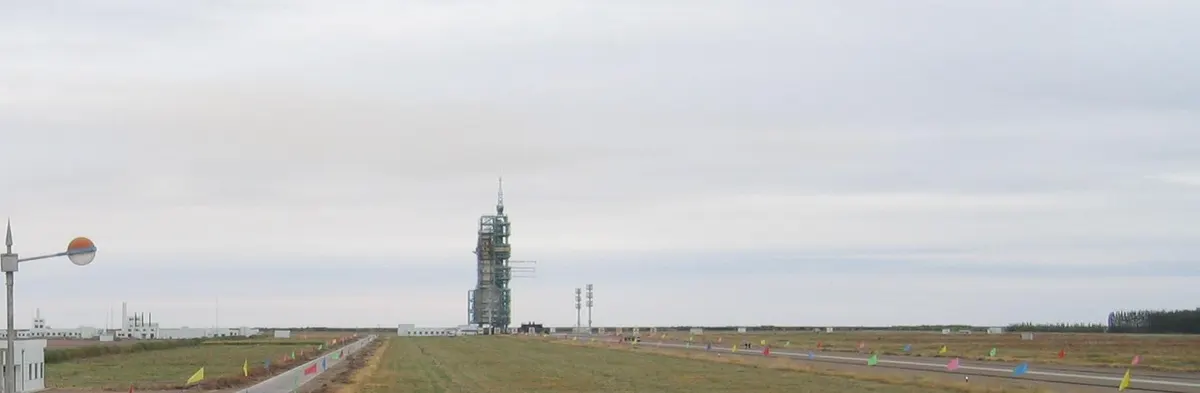
Full deployment of the DF-2 and DF-2A followed in 1969 and 1970, timed closely with the escalating Sino-Soviet border conflict, and roughly 90 to 100 missiles were eventually built and fielded in northern China, oriented toward Soviet Far East targets.6 Production ended around early 1970. The DF-2/DF-2A force was withdrawn from service sometime between 1979 and the early 1980s as the longer-ranged DF-3 took over the medium-range nuclear mission, sources differ on the exact retirement year.6
The DF-2 was never fired at a target in an actual war. Its entire significance is as a Cold War deterrent and nuclear-delivery milestone rather than a combat weapon, and its operational deployment history is best understood through the Sino-Soviet border conflict rather than any shooting war it directly fought in. Relations between China and the Soviet Union deteriorated through the 1960s over ideological and territorial disputes, culminating in armed clashes along the Ussuri River in March 1969, including the first and second battles of Zhenbao Island (known to the Soviets as Damansky Island).6
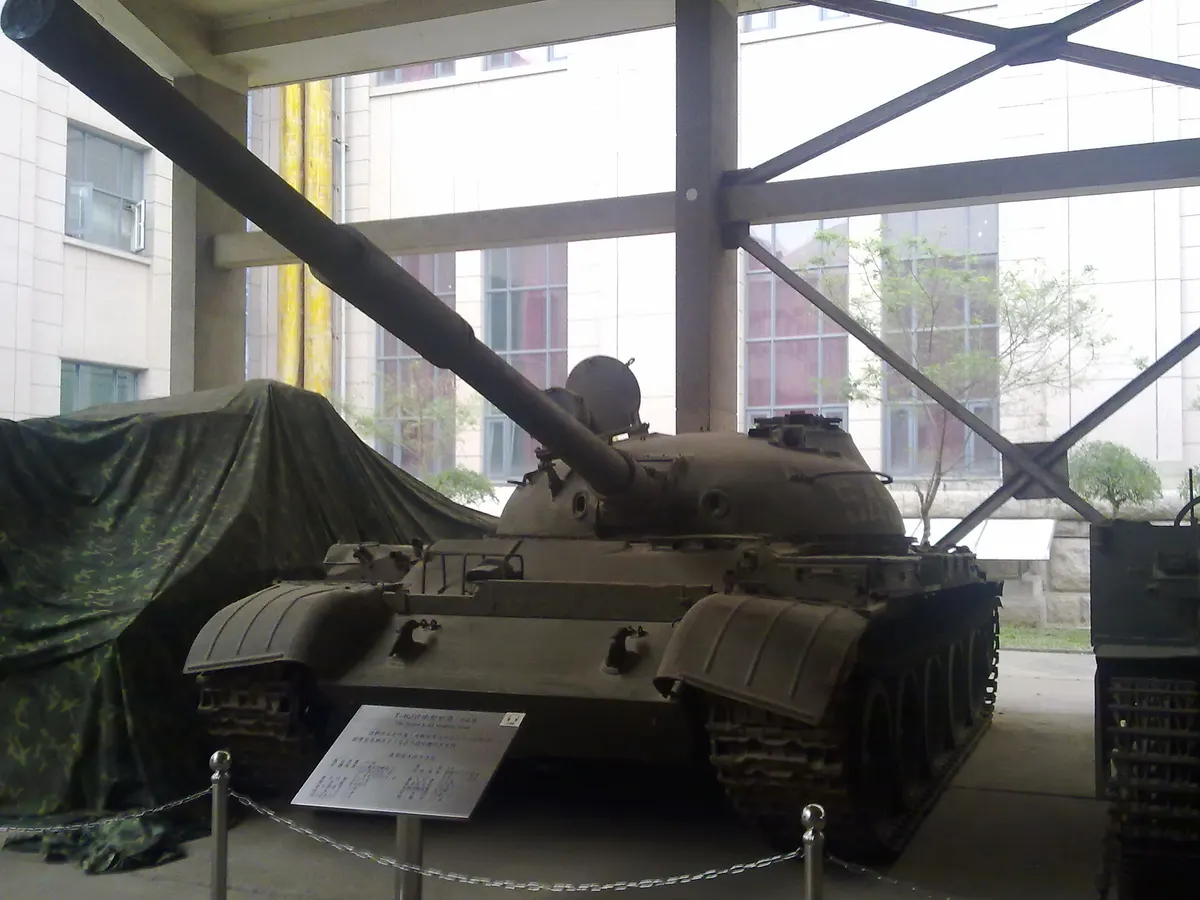
China's decision to push DF-2 and DF-2A deployment into northern China in 1969 and 1970, aiming the missiles at Soviet Far East military targets, is explicitly tied by Western intelligence assessments to fears of Soviet retaliation after those border clashes.6 In that sense the DF-2 functioned less as a weapon aimed at any single adversary from the start and more as a deterrent asset repositioned in response to a specific, escalating crisis with the country that had originally supplied its underlying technology.
- DF-1 is the direct predecessor, a license-built copy of the Soviet R-2 rocket (itself a stretched V-2 derivative), first launched by an all-Chinese team around November 1960. It shared the DF-2's liquid-oxygen-and-alcohol propellant and 5D52 engine heritage, but on a much smaller airframe with far shorter range.2
- DF-2 (base) is the original 1962 to 1964 design, roughly 960 to 1,050 kilometers range after the post-failure redesign, combined inertial and radio-corrected guidance requiring a ground antenna array.7
- DF-2A is the improved model ordered in August 1964 and first flown in November 1965, extending range to roughly 1,200 to 1,250 kilometers with higher thrust and fully inertial, radio-independent guidance. This is the variant that carried the live nuclear warhead in the October 1966 test and is generally the missile meant by China's first operational nuclear-capable ballistic missile.1
- DF-3 is the direct successor, switching to storable UDMH/N2O4 propellant and stretching range to roughly 3,000 kilometers from silo basing, solving the DF-2 family's slow liquid-oxygen fueling problem outright and making the DF-2/DF-2A obsolete by the late 1970s.1


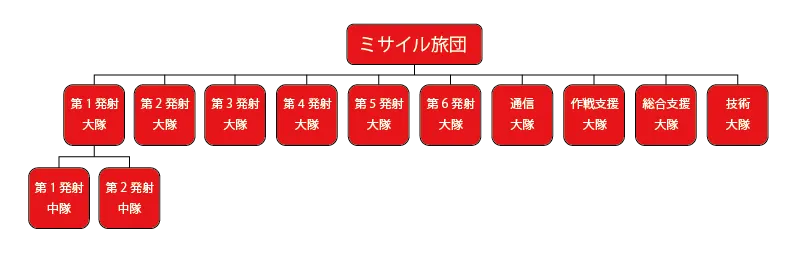
The DF-2 and DF-2A were operated exclusively by China's Second Artillery Corps, the People's Liberation Army's strategic-missile service and forerunner of today's PLA Rocket Force. Roughly 90 to 100 airframes were built through about 1969 to 1970, with squadrons based in northern China oriented toward the Soviet Far East. No export or third-party operator of the DF-2 has ever been documented, and the type left service entirely by the early 1980s as the DF-3 took over the nuclear medium-range mission.6
China's DF-2 and DF-2A were far from unique as first-generation medium-range ballistic missiles built in the shadow of the Cuban Missile Crisis era, but they were also clearly the least capable of the group. The Soviet R-12 Dvina, which entered service in 1959 and gained lasting fame when its deployment to Cuba in 1962 triggered the Cuban Missile Crisis, flew roughly 2,080 kilometers with a thermonuclear warhead in the 1 to 2.3-megaton class, several times the DF-2A's yield and nearly double its range.10 The American PGM-19 Jupiter, fielded in Italy and Turkey from 1960 to 1963 before its withdrawal as part of the same crisis's resolution, reached about 2,800 kilometers with a 1.44-megaton W49 warhead, again vastly outranging and outgunning the DF-2A.11
| ÖZELLİK | DF-2 | R-12 Dvina | PGM-19 Jupiter |
|---|---|---|---|
| Azami Menzil | 1250 km | 2500 km | 2414 km |
| Patlama Gücü (başlık başına) | 12 kt | 2300 kt | 1450 kt |
| Konuşlanma Şekli | karayolu mobil | silo ve karayolu mobil | karayolu mobil fırlatıcı |
The gap is best read as a snapshot of where China's missile program actually stood in the mid-1960s rather than a fair fight between peer systems. The DF-2 and DF-2A were the first missiles China designed rather than copied, but they were built by a program working from a single 1950s Soviet blueprint with no further outside help, while the R-12 and Jupiter were both mature products of established, better-funded Cold War missile-industrial bases. Against its own successor, the DF-3, the comparison is more telling about what China fixed rather than what it lacked. The DF-3 nearly tripled range to about 3,000 kilometers and switched to storable propellant, directly solving the DF-2/DF-2A's defining weakness, the multi-hour liquid-oxygen fueling delay that kept the earlier missile soft and slow to launch.1
Is the DF-2 still in service anywhere today? No. Every DF-2 and DF-2A airframe was retired between the late 1970s and early 1980s, and China's current land-based nuclear missile force is built around entirely different, solid-fueled designs descended down a different line from the DF-21 family rather than from the DF-2/DF-3 liquid-fueled branch.


What does DF-2 stand for and what does the name mean? DF-2 is short for Dongfeng-2, using China's Dongfeng (East Wind) missile-naming series. NATO assigned it the reporting name CSS-1.1
How does the DF-2 missile work? The DF-2 is a single-stage, liquid-oxygen-and-alcohol-fueled ballistic missile. It is towed to a prepared launch site, fueled over several hours because liquid oxygen cannot be stored loaded, then launched on an inertial-guided trajectory, with the base DF-2 additionally relying on a ground radio correction signal that the later DF-2A eliminated.7
What is the DF-2's range? The original DF-2 reached roughly 960 to 1,050 kilometers. The improved DF-2A extended that to about 1,200 to 1,250 kilometers, reportedly enough to threaten US bases in Japan from launch sites in northern China.1
Is the DF-2 nuclear capable? Yes. A DF-2A carried a live 12-kiloton nuclear warhead in China's 27 October 1966 test, the first and to date only time a country has flight-tested a live nuclear warhead on an operational-type ballistic missile over its own populated territory.5
Who manufactured the DF-2? The Fifth Academy of China's Ministry of National Defense, the institutional ancestor of today's China Academy of Launch Vehicle Technology and China Aerospace Science and Technology Corporation, developed and built the DF-2 under chief designer Lin Shuang after 1962, with Qian Xuesen overseeing the wider program.4
Is the DF-2 still in service? No. It was withdrawn sometime between 1979 and the early 1980s, replaced first by the DF-3 and eventually by the solid-fueled DF-21 family.6
- "Dongfeng (missile)", Wikipedia — en.wikipedia.org) ↩
- "DF-1", Astronautix — astronautix.com ↩
- "Sino-Soviet split", Wikipedia — en.wikipedia.org ↩
- "Qian Xuesen", Wikipedia — en.wikipedia.org ↩
- "Two Bombs, One Satellite", Wikipedia — en.wikipedia.org ↩
- "DF-2", Federation of American Scientists — nuke.fas.org ↩
- "DF-2 / CSS-1", China Spaceflight — chinaspaceflight.wordpress.com ↩
- "DF2", Sinodefence — sinodefence.wordpress.com ↩
- "Creation of the Missile Programme", China Space Report — chinaspacereport.wordpress.com ↩
- "R-12 Dvina", Wikipedia — en.wikipedia.org ↩
- "PGM-19 Jupiter", Wikipedia — en.wikipedia.org ↩