


The R-5M was the Soviet Union's first operational nuclear-armed ballistic missile, and on 2 February 1956 it became the only weapon system in history to carry a live nuclear warhead on an operational ballistic missile over populated national territory during a test.1 Developed by Sergei Korolev's OKB-1 design bureau as a nuclear variant of the earlier R-5 Pobeda, the R-5M (NATO reporting name SS-3 Shyster) kept the same single-stage, liquid-propellant airframe and roughly 1,200-kilometer range but rebuilt the warhead compartment from the ground up to survive the shock, vibration, and heat of a live nuclear payload riding a ballistic trajectory.1,3 It is a founding weapon of the medium-range ballistic missile category as a genuine strategic deterrent rather than a battlefield rocket, entering combat duty in May 1956 and formal service that June, only ten years after Soviet engineers first got their hands on captured German V-2 hardware.4
- First operational missile in the world to carry a live nuclear warhead
- Proven, if crude, inertial guidance inherited from a decade of R-1/R-2/R-5 testing
- Road-transportable rather than fixed, unlike later silo-based Soviet designs
- Genuine 1,200 km reach, enough to threaten Western Europe from Soviet territory
- Alcohol/liquid-oxygen fueling took hours and made rapid readiness impossible
- Extremely short service life, replaced within a decade by the R-12 Dvina
- Only 48 missiles ever built, a tiny production run by Cold War standards
- Warhead yield and even the live test's own results remain disputed in open sources
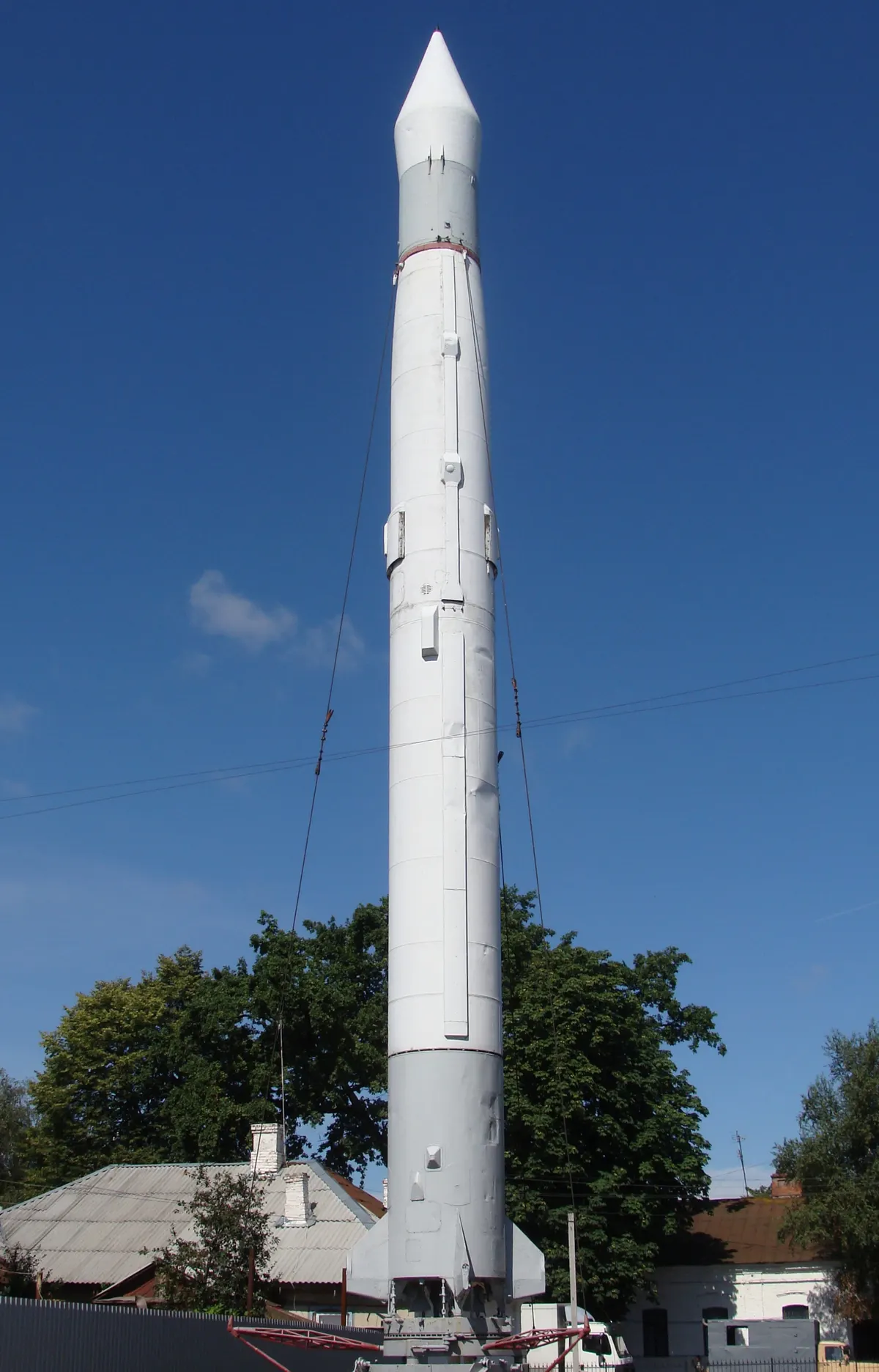
Development traced back to the failure of the mid-range R-3 project in the early 1950s, after which OKB-1 reworked the shorter-ranged R-2 into a larger, more capable airframe under Korolev's direction.3 The base R-5, later marketed under the name Pobeda (Victory), completed its preliminary design in October 1951 and first flew from Kapustin Yar on 15 March 1953, still carrying a conventional high-explosive warhead.3 A government decree of 17 December 1953 authorized a dedicated nuclear-capable derivative, and Korolev's bureau began redesigning the missile's forward section for a live RDS-4 warhead in April 1955, a decision that turned the R-5 program from a conventional artillery-range rocket into the Soviet Union's first credible nuclear delivery system.2,4 The R-5M's country of origin, the Soviet Union, fielded no other nuclear-armed missile of any kind until this program matured, which is why the R-5M's engineering, not just its politics, mattered so much to Moscow.
Korolev's team did not have to reinvent the missile's aerodynamics or propulsion to build the R-5M. What they had to solve, largely from scratch, was how to keep a nuclear device intact and functional through the acceleration, vibration, and re-entry heating of a ballistic flight, a problem no engineering team anywhere had fully solved by 1955. That warhead-integration story, more than the missile's unremarkable single-stage airframe, is the reason the R-5M still gets discussed today, alongside its brief but historically pivotal three years as the Soviet Union's only fielded nuclear ballistic missile before the R-12 Dvina took over the role.8
No R-5M remains in service anywhere today. The type was fully retired from the Soviet inventory in 1966, and no successor state or foreign operator ever continued fielding it.4 What survives is the engineering legacy. The warhead-hardening and re-entry work that Korolev's OKB-1 bureau completed for the R-5M directly shaped how later Soviet medium-range and intercontinental ballistic missile programs handled the same problem, starting with the R-12 Dvina.5,8
A V-2-Derived Airframe Carrying a Redesigned Nuclear Warhead Section
The R-5M measured just under 21 meters long and 1.65 meters in diameter, with a fully fueled launch weight of roughly 28,600 to 29,100 kilograms, figures reported consistently across Russian and Western technical sources.1,3 Its single RD-103 engine, itself a developed descendant of the German A-4 (V-2) powerplant that Soviet engineers had studied after 1945, burned a 92-percent ethanol and water mixture against a liquid-oxygen oxidizer to produce about 43.8 tons of thrust.3 That propellant combination, not the nitric-acid and kerosene mixture used by later Soviet missiles like the R-12 Dvina, meant the R-5M still needed the multi-hour, weather-sensitive fueling process typical of first-generation ballistic rockets, since liquid oxygen boils off and cannot simply be stored in a fueled, ready-to-fire missile for long.3 Maximum range was about 1,200 kilometers, sufficient to reach targets across most of Western Europe from Soviet or East German launch sites, though it fell well short of the roughly 2,080-kilometer reach of its eventual R-12 Dvina successor.8
- Hizmete Giriş Yılı1956
- Uzunluk20,75 m
- Çap1,65 m
- Fırlatma Ağırlığı29.100 kg
Hardening a Live Nuclear Warhead for Ballistic Flight
The genuinely hard engineering problem was the nose section. The R-5M carried an RDS-4 fission warhead, a compact device that had already been proven as an air-dropped bomb at the Semipalatinsk Test Site in Kazakhstan in August 1953, with a design weight around 1,200 kilograms and a composite plutonium-uranium core.2 Adapting that same device for a ballistic missile meant it had to survive launch acceleration, powered-flight vibration, and then a fast, thermally punishing re-entry, conditions the bomb's original aircraft-delivery design had never faced.5 Korolev's engineers reshaped the warhead section, removed the thermal insulation around the missile's oxygen tank to save weight elsewhere, and cut the warhead's terminal impact velocity roughly in half, down to about 1,100 meters per second, specifically to reduce the dynamic and thermal loads the live device would face on the way down.5 That re-entry vehicle work began as early as 1953, well before the December 1953 government decree formally authorized the nuclear program, an indication of how early Korolev's team started treating warhead survivability as its own engineering discipline rather than a simple payload swap.5
- Tahrik TipiSıvı yakıtlı roket
- Kademe Sayısı1
- Yakıt TipiNitrik asit / Gazyağı
- Katı YakıtlıHayır
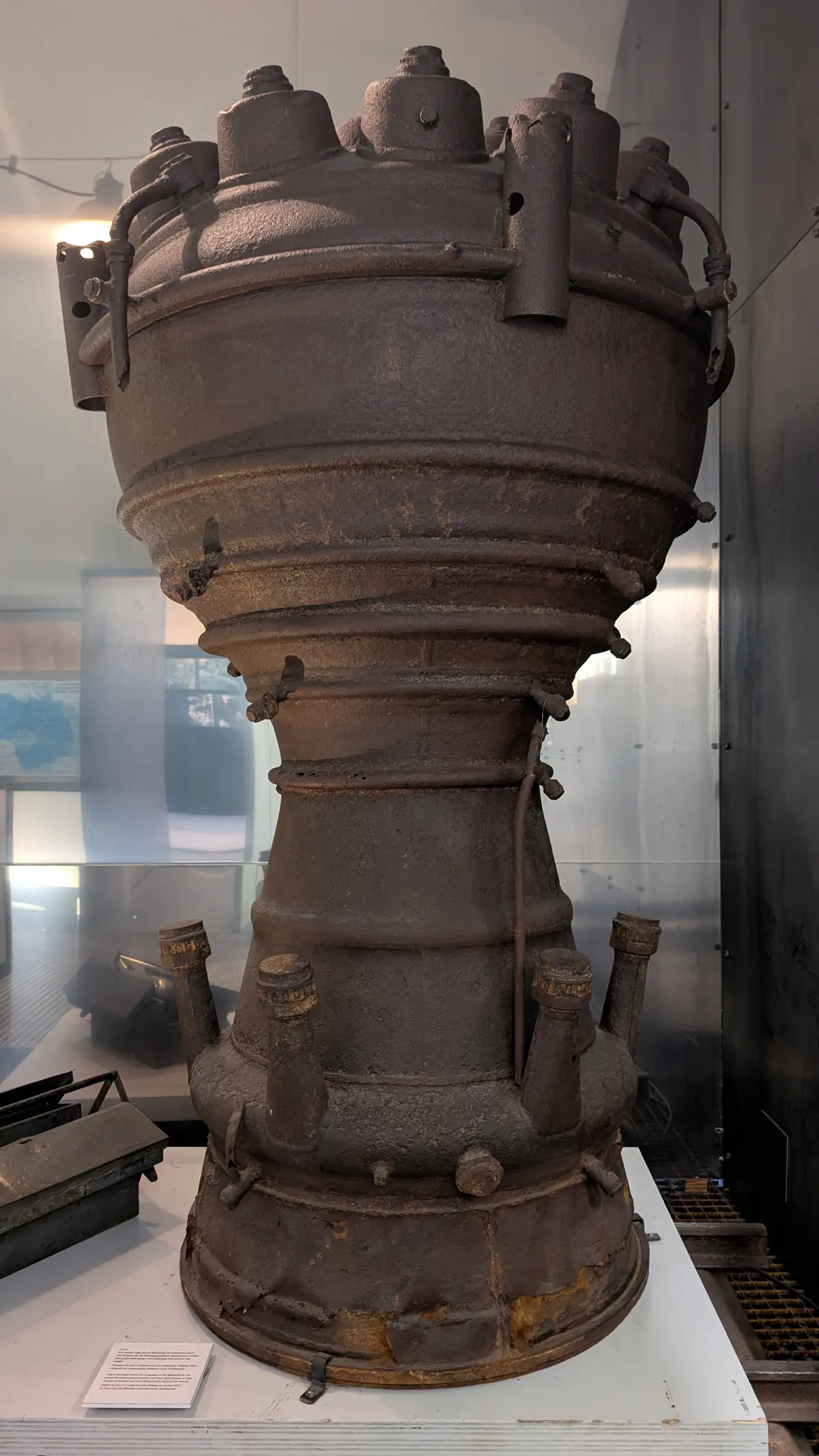
Reported accuracy for the R-5M varies across sources and should be treated with some caution given the primitive state of 1950s inertial instruments, but a circular error probable on the order of a few kilometers is broadly consistent with what contemporary Soviet and Western missiles of the era achieved.6 The R-5M's guidance and warhead-hardening work, taken together, is what separates it from the conventional R-5 Pobeda in every meaningful engineering sense, even though the two shared an outwardly identical airframe.
- Azami Menzil1.200 km
Compared to the conventional R-5 Pobeda's simpler unitary warhead, the R-5M's nuclear-specific nose section added real engineering complexity without changing the missile's overall length, diameter, or launch weight in any way that open sources document with precision, which is one reason dimensional data for the two variants converges so closely across Russian and Western references.1,3
- Dairesel Hata Olasılığı (CEP)3.000 m
- Güdüm TipiAtaletsel / GPS
- NükleerEvet
- TermonükleerEvet
- Patlama Gücü (başlık başına)1.000
- MIRVHayır
- Konvansiyonel KabiliyetliHayır
- Silo KonuşluHayır
- Karayolu Hareketli (TEL)Evet
From a Failed R-3 Project to the Decree That Created the R-5M
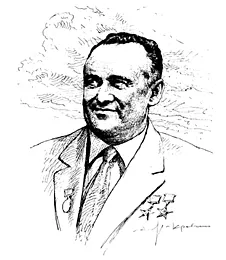
OKB-1's work on what became the R-5M began after the more ambitious R-3 missile project stalled in the early 1950s, pushing Korolev's team back toward a scaled-up version of the shorter-range R-2.3
The resulting R-5 completed its first test flight from the Kapustin Yar test range on 15 March 1953, and 34 test launches followed through February 1955, validating the conventional airframe well before any nuclear-specific work began.3,7 The pivotal decision came with a Soviet government decree dated 17 December 1953, which formally authorized mating the missile to a live RDS-4 nuclear warhead, and by April 1955 Korolev's bureau had redirected its engineering effort fully toward the nuclear-capable R-5M variant.4
Operation Baikal, 2 February 1956
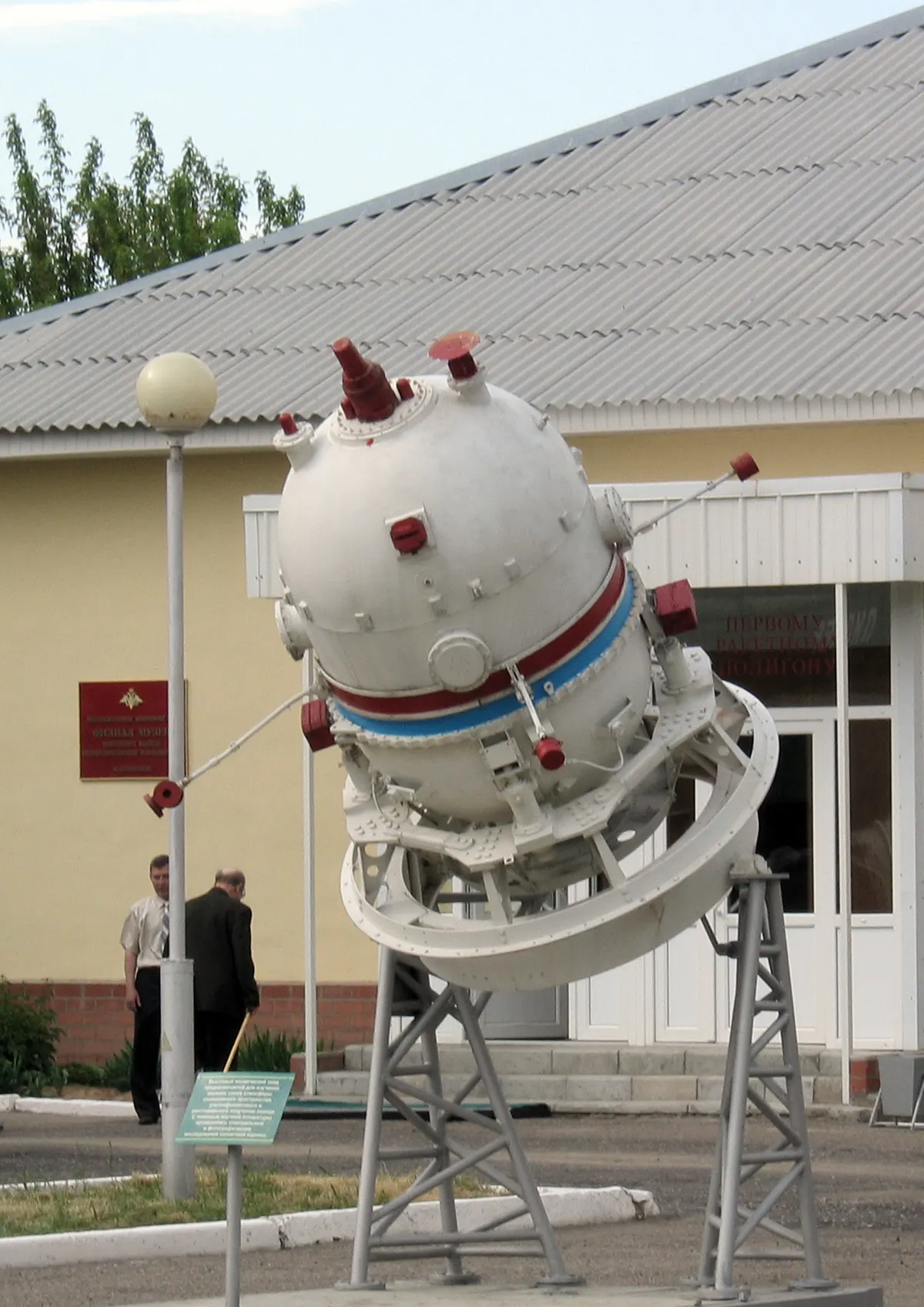
Flight trials specific to the R-5M ran in three distinct phases. The first phase, from 21 January to July 1955, produced 13 successful launches out of 14 attempts. A second phase that August through November 1955 added ten more successful flights, at ranges between 1,083 and 1,190 kilometers, closely matching the missile's eventual operational range. A final five-launch series began on 11 January 1956 with a dummy warhead, clearing the way for the live nuclear test that followed three weeks later.5
On 2 February 1956, an R-5M missile lifted off from Kapustin Yar carrying a live RDS-4 nuclear warhead in a test that Soviet planners code-named Baikal.1,4 The missile flew roughly 1,200 kilometers before its warhead detonated over the Karakum steppe near Priaralsk, close to the Aral Sea, marking the first time in history that any country had launched an actual nuclear weapon on an operational ballistic missile and detonated it at the end of that flight.1 Korolev himself, his deputy Boris Chertok, guidance-system chief Refat Appazov, and nuclear-weapons official Nikolai Pavlov were all present for the launch, and the mission carried a fail-safe self-destruct system with the code word Ivanhoe that ultimately went unused because the missile's flight path stayed close enough to its intended target.4
The test's precise yield is one of the more genuinely unresolved details in open Western literature. Some accounts, drawing on Western intelligence-era estimates, describe an 80-kiloton detonation consistent with the RDS-4's nominal design yield.4,6 Other Russian-language technical retrospectives describe a much smaller actual result, with one detailed account putting the true explosive yield at only around 0.3 to 0.4 kilotons, suggesting either a deliberately derated test device or a partial failure of the warhead's designed yield.5 No authoritative open source fully reconciles these figures, and the discrepancy is worth stating plainly rather than picking one number and presenting it as settled fact.
Korolev and his deputy Vasily Mishin were both awarded the title Hero of Socialist Labor for the successful Baikal test, and roughly twenty engineers at the NII-88 research institute received the Order of Lenin, an unusually large batch of top state honors for a single missile test.4
The R-5M formally entered combat duty in May 1956 and was officially adopted into Soviet service on 21 June 1956, under the operational control of the 72nd Guards Engineering Brigade commanded by Colonel Alexander Kholopov.4 At the time, Soviet nuclear missile forces still sat administratively under the Reserve of the Supreme High Command rather than a dedicated missile branch, since the Strategic Rocket Forces would not be established as a separate service until December 1959.
A Short Deployment to East Germany
The Dnepropetrovsk plant, later the core of what became the Yuzhnoye design bureau, built 48 R-5M missiles in total, of which 36 reached operational units between 1960 and 1964.4

The R-5M's only forward deployment outside Soviet territory came in February 1959, when two divisions of the 72nd Guards Engineering Brigade moved to East Germany, one stationed near Fürstenberg and the other near the Templin airfield, placing nuclear-armed Soviet missiles on foreign soil for the first time.4 The deployment was kept secret even from East German leadership, and it proved short-lived. By the fall of 1959, both divisions had returned to Soviet territory near Gvardeysk in the Kaliningrad region, because the newly adopted R-12 Dvina, with almost double the R-5M's range, could cover the same Western European targets from launch sites well inside Soviet borders, removing the operational need for forward basing altogether.4
The R-5M remained in limited Soviet service through the early 1960s but was already being overtaken by faster-reacting, longer-ranged designs. It was formally withdrawn from service in 1966, superseded entirely by the R-12 Dvina, which by then had grown into the backbone of the Soviet Union's medium-range nuclear force with hundreds of operational launchers.8 Fewer than ten years separated the R-5M's first live nuclear test from its full retirement, a strikingly short service life for a weapon that carried so much symbolic and strategic weight.
The R-5M was never fired at a target in an actual war, and its historical importance sits almost entirely in nuclear testing and Cold War deterrence rather than combat use. Its brief 1959 deployment to East Germany came during a period of rising Cold War tension in Europe, as both superpowers pushed nuclear-capable missiles closer to each other's borders in the years before the Berlin Crisis reached its peak.4 The R-5M itself never participated in any crisis response or alert posture that historians have documented in detail, and its main legacy is the engineering and testing program that made every later Soviet nuclear ballistic missile possible, rather than any specific military confrontation.
The baseline R-5 Pobeda carried a conventional high-explosive warhead and first flew in 1953, three years before the nuclear-armed R-5M variant existed at all.3 Beyond the R-5M itself, OKB-1 built at least one further derivative, an upgraded warhead-carrying version, though production numbers for any variant beyond the initial 48 R-5M missiles remained small by the standards of later Soviet missile programs.4 No foreign country ever produced the R-5M under license, and no export version existed, a sharp contrast with several later Soviet medium-range missiles that Moscow eventually sold or transferred to allied states.

The R-5M served exclusively with the Soviet Union's armed forces, first under the artillery-linked Reserve of the Supreme High Command and then, from December 1959 onward, under the newly formed Strategic Rocket Forces.4 Its only foreign basing was the brief, secret 1959 deployment to East Germany described above, which was a Soviet-operated forward position rather than a transfer of the missile itself to East German forces.4 No other country ever operated the R-5M, and by the time later Soviet missiles began appearing in Cuba and other allied territory, the R-5M itself had already been retired.
The R-12 Dvina is the R-5M's most direct point of comparison, since it was the missile that replaced it, tested against it in front of Nikita Khrushchev at Kapustin Yar in September 1958, and eventually made the R-5M's entire forward-deployment strategy unnecessary.8 Where the R-5M topped out at roughly 1,200 kilometers of range and needed hours of alcohol and liquid-oxygen fueling before launch, the R-12 Dvina reached about 2,080 kilometers using storable, room-temperature propellants that let it sit fueled and ready for extended periods, cutting reaction time to as little as five to fifteen minutes from a hardened launch position.8 That difference explains why the R-5M's operational life was so short. It solved the problem of mobile theater-range nuclear delivery reasonably well for 1956, and a newer design simply solved the same problem better within just three years.
A useful contemporary comparison from outside the Soviet program is the American PGM-19 Jupiter, an intermediate-range missile that the United States forward-deployed to Italy and Turkey in 1961, playing almost the same forward-basing role for NATO that the R-5M briefly played for the Warsaw Pact in East Germany two years earlier.9 Both missiles used liquid oxygen as an oxidizer, both required lengthy pre-launch fueling, and both were retired quickly once solid-fueled or storable-propellant designs made them operationally obsolete, the Jupiter by 1963 and the R-5M by 1966.9 The Jupiter's roughly 2,400-kilometer range and 49-tonne launch weight made it a considerably larger missile than the R-5M, reflecting the different design priorities of a purpose-built intermediate-range weapon versus the R-5M's more improvised path from a shorter-range conventional rocket into a full nuclear delivery system.


What made the R-5M historically significant? The R-5M is the missile behind the 2 February 1956 Baikal test, the only time any country has launched a live nuclear warhead on an operational ballistic missile and detonated it over its own territory as a test.1 It was also the Soviet Union's first genuinely operational nuclear-armed ballistic missile.4
How is the R-5M different from the R-5 Pobeda? The R-5 Pobeda was the original 1953 missile carrying a conventional high-explosive warhead. The R-5M shared the same airframe but had a substantially redesigned warhead section built to survive the shock, vibration, and re-entry heat of carrying a live RDS-4 nuclear device.3,5
What was the R-5M's range and how far could it reach? The R-5M's maximum range was about 1,200 kilometers, enough to strike targets across much of Western Europe when launched from Soviet or East German territory.1,3
Is the R-5M still in service anywhere? No. The R-5M was withdrawn from Soviet service in 1966, replaced entirely by the longer-ranged, faster-reacting R-12 Dvina.8
How many R-5M missiles were built? Soviet records indicate 48 R-5M missiles were manufactured at the Dnepropetrovsk plant, with 36 reaching operational deployment between 1960 and 1964.4
Did the R-5M ever see combat? No. The R-5M was never fired at a target outside of testing. Its role was strategic deterrence, most visibly through its brief 1959 forward deployment to East Germany.4
- "R-5 Pobeda", Wikipedia — en.wikipedia.org ↩
- "RDS-4", Wikipedia — en.wikipedia.org ↩
- "R-5 (SS-3 Shyster) Russian Medium Range Ballistic Missile", The Military Standard — themilitarystandard.com ↩
- "R-5M rocket, the firstborn of the nuclear missile era", Knifesburg — knifesburg.ru ↩
- "R-5M", Encyclopedia Astronautica — astronautix.com ↩
- "R-5 / SS-3 Shyster", GlobalSecurity.org — globalsecurity.org ↩
- "Kapustin Yar", Wikipedia — en.wikipedia.org ↩
- "R-12 Dvina", Wikipedia — en.wikipedia.org ↩
- "PGM-19 Jupiter", Wikipedia — en.wikipedia.org ↩