


The Ghauri-II stretched Pakistan's original Ghauri design by roughly two meters of motor casing and a larger fuel load, turning a missile that could barely reach New Delhi into one that could reach almost anywhere in India. Also carried under the military designation Hatf-VA, it is a two-stage, road-mobile, liquid-propellant medium-range ballistic missile (MRBM) developed by Khan Research Laboratories (KRL) as the extended-range sibling of the Ghauri-I (Hatf-V), which had already entered Pakistani service in the early 2000s.1,2
- Longer reach than Ghauri-I, covering most of India
- Proven two-stage liquid engine derived from combat-tested Nodong-1 technology
- Road-mobile TEL improves survivability over fixed sites
- Only two flight tests, never formally inducted with its own designation
- Liquid fuel demands hours of pre-launch preparation
- Heavier and slower to ready than solid-fuel rivals like Shaheen-II
Where the Ghauri-I topped out at roughly 1,300 to 1,500 kilometers, the Ghauri-II was built to cover 1,800 to 2,300 kilometers, depending on payload, extending Pakistani nuclear reach to the far southern and eastern edges of India.1,3 Pakistan first flight-tested the missile on April 14, 1999, days after India tested its own Agni-II, and only tested it once more, in 2004.1,2 No separate military designation or confirmed operational induction has ever followed those two tests, a gap that sets the Ghauri-II apart from its already-deployed predecessor.
The missile takes its name from Muhammad of Ghor, the twelfth-century conqueror who defeated the Rajput ruler Prithviraj Chauhan and captured Delhi, a naming choice a KRL scientist with an interest in medieval history proposed and Prime Minister Benazir Bhutto approved in 1994.2,14 That naming pattern, drawing on historical conquerors of the Indian subcontinent, carries through to Pakistan's other missile lines like the Ghaznavi, and stands in deliberate contrast to India's own Agni series, named simply for fire rather than any historical figure.10 Pakistan's Ghauri-II remains classified as in service only in the loosest sense, a tested but never fully operational rung in Pakistan's nuclear ladder alongside the solid-fuel Shaheen-II.
Ghauri-II specifications place it among the larger road-mobile MRBMs in South Asia, and the Ghauri-II range of roughly 2,000 kilometers gives Pakistan's Army Strategic Forces Command a delivery system that, on paper, can strike targets across virtually all of India from launch sites well inside Pakistani territory.3,4
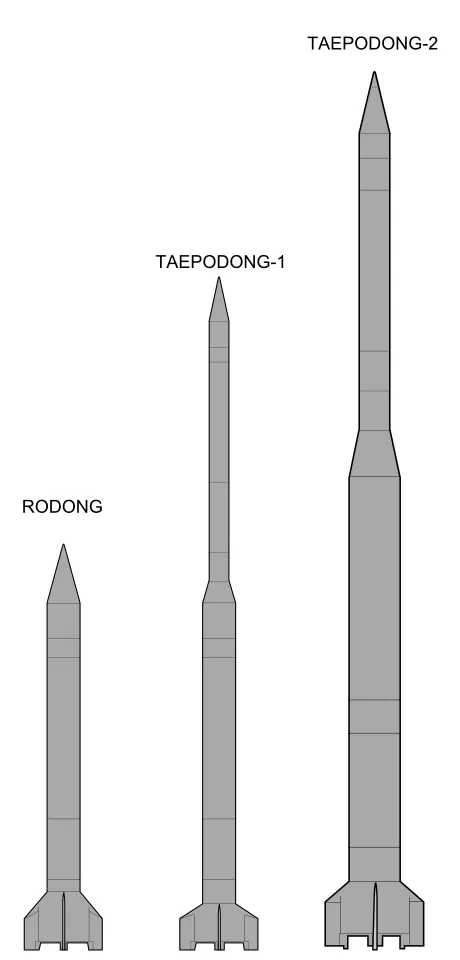
The Ghauri-II missile is built around an airframe stretched to roughly 18 meters and a diameter held at 1.35 meters, the same width as the Ghauri-I but with a longer second-stage motor casing to hold additional propellant.1,4 Public figures for its launch weight vary widely and are frequently miscopied. A commonly repeated figure of 1,800 kilograms is off by an entire order of magnitude and does not match the missile's size. Independent specification sheets for the closely related Ghauri-I put its launch weight near 15,850 kilograms, and the longer, heavier-fueled Ghauri-II is generally cited in the 17,000 to 17,800 kilogram range, consistent with its two-stage liquid architecture and the North Korean Hwasong-7 design it draws from.3,4,5
- Füze SınıfıMRBM
- Hizmete Giriş Yılı2004
- Tasarımcıkhan_research_laboratories_krl_
- Uzunluk18 m
- Çap1,35 m
- Fırlatma Ağırlığı17.800 kg
- HizmetteHayır
Propulsion is a two-stage liquid-propellant rocket motor, using a storable oxidizer and kerosene-based fuel similar to the Scud family the whole Nodong/Ghauri line descends from, burning for close to two minutes before the second stage separates and the reentry vehicle continues on a ballistic path.5 That reentry vehicle carries a single, non-MIRVed warhead, reported at 760 to 1,500 kilograms depending on range trade-off, with a dual-capable high-explosive or nuclear fill estimated at 12 to 35 kilotons yield.1,3 The missile is not a maneuverable reentry vehicle design and carries no reported penetration aids, relying instead on payload weight and warhead hardening to survive reentry heating, a problem that plagued early Ghauri-I tests badly enough that KRL had to redesign the nose cone from a sharp cone to a rounder profile.2
- Tahrik Tipiiki kademeli sıvı yakıtlı roket
- Kademe Sayısı2
- Yakıt Tipiliquid_propellant
- Katı YakıtlıHayır
- Soğuk FırlatmaHayır
- KanisterliHayır
Guidance is inertial navigation with terminal guidance corrections, and reported accuracy is another figure that swings sharply between sources, from an optimistic 190-meter circular error probable (CEP) to a far more conservative 2,500 meters, a spread that reflects genuine uncertainty about how much of the terminal guidance package Pakistan has actually fielded rather than a simple sourcing error.4,5 The missile launches from a road-mobile transporter-erector-launcher, originally modeled on Soviet-era Scud-B TELs, which lets the Ghauri-II disperse and hide between fueling and launch rather than sit exposed at a fixed site.3,5
- Asgari Menzil1.000 km
- Azami Menzil2.000 km
- Apoje (En Yüksek Nokta)612 km
- Geri Giriş Hızı (Mach)5,5 Mach
- Taşıma Kapasitesi (Throw Weight)1.500 kg
- Alçak Yörünge KabiliyetliHayır
The Nodong-1 Connection and North Korea's Role
The single most consequential design fact about the whole Ghauri family, Ghauri-II included, is that it was not designed from scratch. American intelligence assessments from the late 1990s concluded the Ghauri's design was based directly on North Korea's Hwasong-7, known in Western reporting as the Nodong-1, itself a scaled-up derivative of Soviet Scud technology.2,6 Pakistan is estimated to have imported somewhere between 12 and 25 Nodong-1 missiles or major components from North Korea in the mid-1990s, with North Korean engineers reportedly teaching missile aerospace courses at Pakistani institutions as early as 1993.7,2
- Dairesel Hata Olasılığı (CEP)250 m
- Güdüm TipiAtaletsel / GPS
- Terminal GüdümEvet
- Manevra Kabiliyetli Geri Giriş Aracı (MaRV)Hayır
- Delme Yardımcıları / YemlerHayır
The exchange ran in both directions. Investigations by international nonproliferation bodies and journalists later established that KRL, under Abdul Qadeer Khan, supplied North Korea with Zippe-type gas centrifuge uranium-enrichment technology at roughly the same period Pakistan was receiving Nodong-derived missile hardware and know-how, a barter arrangement that let each country plug the biggest gap in its own weapons program.9 The United States sanctioned North Korea's Changgwang Sinyong Corporation in 2003 specifically for transferring missile technology covered under the Missile Technology Control Regime to Khan Research Laboratories.8
- Harp Başlığı TipiHE/Nükleer
- NükleerEvet
- TermonükleerHayır
- Patlama Gücü (başlık başına)12
- MIRVHayır
- Harp Başlığı / RV Sayısı1
- Konvansiyonel KabiliyetliEvet
The Ghauri-II's own contribution over the base Nodong-1 design was mainly a longer motor casing, a switch to higher-strength aluminum alloys in place of some of the Nodong-1's steel structure, and reentry vehicle changes including spin-up stabilization roughly ten seconds before engine cutoff, intended to steady the warhead through reentry.1,5 The result is a missile that shares its parent's basic propulsion and airframe architecture but carries several hundred more kilometers of range.
- Konuşlanma Şeklikarayolu mobil yarı römork
- Silo KonuşluHayır
- Karayolu Hareketli (TEL)Evet
- Rayda HareketliHayır
- Denizaltından FırlatılanHayır
- Toplam Üretim2
- Kullanıcılar1
- İlk Test1999
- Patlatma Mekanizması / Tapaçarpma
- Patlayıcı Dolgu Ağırlığı1.500 kg
- Patlayıcı Dolgu Tipihe_ne
Pakistan's ballistic missile program traces to a secretive project code-named Hatf, begun in 1987, but the Ghauri line specifically began development at Khan Research Laboratories between 1993 and 1994, under intense pressure to answer India's own missile advances.2 Early Ghauri-I engineering proved harder than expected. The original nose cone design failed to survive reentry heating during initial trials, forcing KRL to work through several rounds of redesign before the missile was considered reliable enough to test publicly.2
The Ghauri-I had its first public flight test on April 6, 1998, launched from the Mashhood Test Firing Range near Jhelum and flown roughly 1,100 kilometers to a target area, a test Pakistan formally notified India of in advance.2,5 That test alone was enough to sharpen the pressure inside India's own weapons establishment in the run-up to the Pokhran-II nuclear tests weeks later.15 Work on a longer-range follow-on began almost immediately, and design changes centered on lengthening the motor assembly by around two meters and refining the propellant mixture to squeeze out extra range without a full redesign of the airframe.1
Pakistan flight-tested the Ghauri-II for the first time on April 14, 1999, launched from the Jhelum area and flown on a trajectory reported at just over 1,000 kilometers downrange, reportedly reaching an apogee in the range of several hundred kilometers during a flight lasting about twelve minutes.1,2 That test came only three days after India tested its own Agni-II, and Pakistan followed the Ghauri-II test with a first flight of the solid-fuel Shaheen-I missile within 48 hours, a rapid tit-for-tat sequence that played out while Indian and Pakistani troops were actively fighting in the mountains above Kargil.15
A second Ghauri-II test followed in 2004, reportedly incorporating engine and airframe refinements, after which Pakistan conducted no further known Ghauri-II flight tests.1 Unlike the Ghauri-I, which entered confirmed service with Pakistan's Army Strategic Forces Command in 2003, the Ghauri-II was never assigned a distinct operational designation or confirmed induction date, and most open-source assessments describe it as tested but not clearly fielded as a separate operational system.1,3 A planned further stretch of the design, the Ghauri-III, reportedly completed at least one static engine trial around 1999 with a target range beyond 3,000 kilometers, but the program was later shelved entirely.5
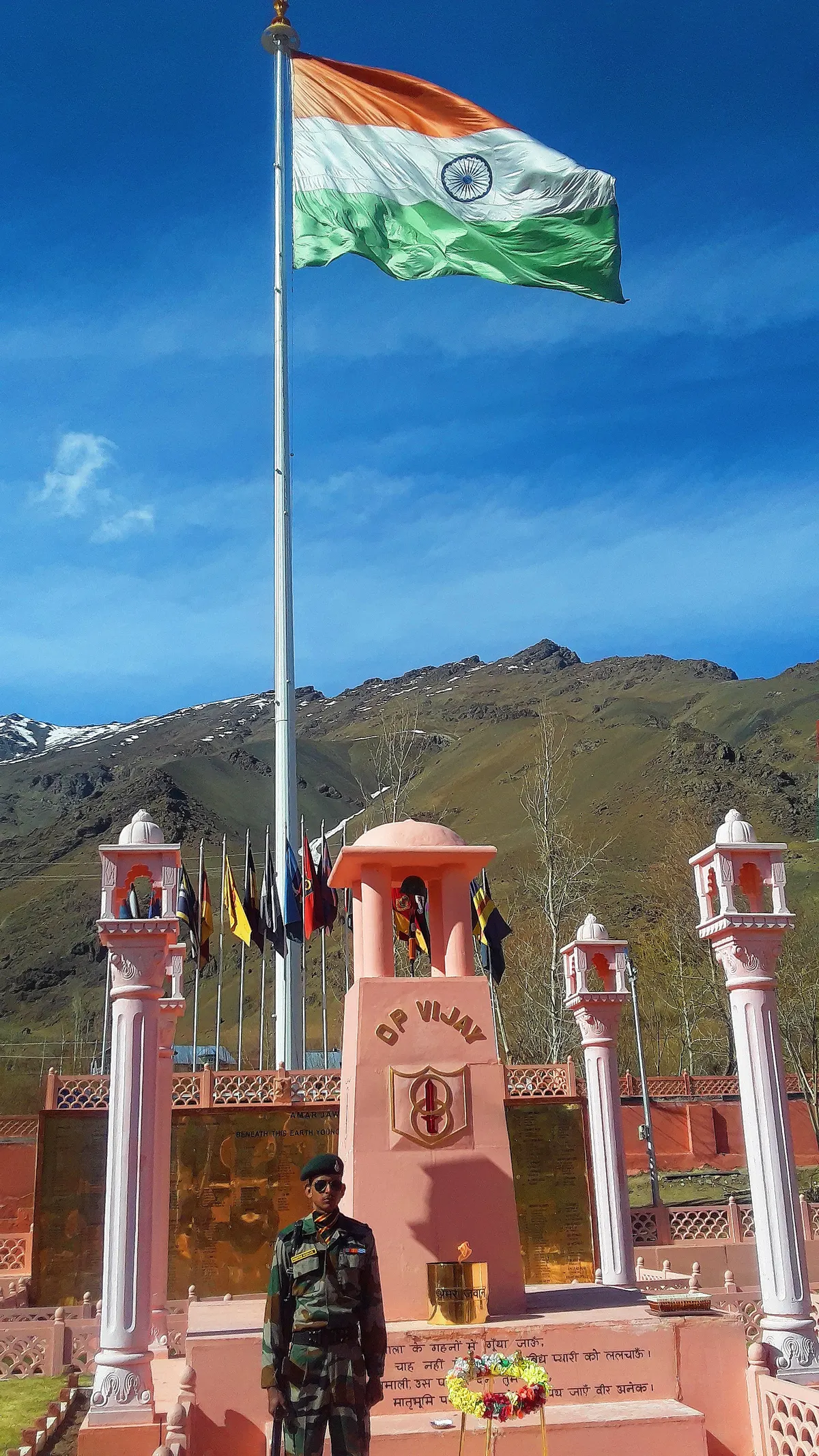
The Ghauri-II has never been fired in combat, and no confirmed operational launch outside of its two flight tests exists in the open record. Its relevance to actual fighting is almost entirely as a background deterrent presence rather than a weapon used on any battlefield. The missile's first test, on April 14, 1999, landed squarely inside the Kargil War, the limited but intense conflict then underway in the mountains above Dras and Kargil between Indian and Pakistani forces, and the timing was read on both sides as deliberate nuclear signaling layered on top of a conventional war neither government wanted to escalate further.15
Analysts examining the Kargil War afterward have generally concluded that neither the Ghauri-II nor any other missile in the still-developing Pakistani or Indian arsenals functioned as a credible, ready nuclear delivery system at that point. Both countries' nuclear doctrines were barely a year old following the 1998 tests, command and control structures for missile forces were still being organized, and the only genuinely available nuclear delivery option on either side was strike aircraft rather than ballistic missiles.15 What the Ghauri-II test demonstrated instead was intent and technical direction, a signal to New Delhi that Pakistan's missile reach was expanding even as ground fighting continued.
That pattern, testing or displaying missile capability alongside or shortly after moments of acute India-Pakistan friction, has recurred repeatedly in the decades since, though the Ghauri-II specifically has not been part of it after 2004 given the lack of further flight activity. Its longer-ranged, solid-fuel successors, including Shaheen-II and the newer Agni-P on the Indian side, have taken over most of the public signaling role the Ghauri line once played.12,11
The Ghauri family runs to three planned members, though only two ever flew. Ghauri-I (Hatf-V) is the baseline design, with a roughly 1,300 to 1,500 kilometer range, a shorter single-stage motor, and confirmed operational service with Pakistan's Army Strategic Forces Command since 2003.2,3 Ghauri-II (Hatf-VA), covered here, stretches the airframe and adds a second stage worth of extra propellant volume to reach roughly 1,800 to 2,300 kilometers, at the cost of never receiving a confirmed independent operational designation of its own.1
A planned Ghauri-III would have stretched the design further still, targeting a range beyond 3,000 kilometers, which would have brought it close to intermediate-range territory and given Pakistan reach into parts of China as well as India. Reports from 1999 describe at least one static engine trial for the Ghauri-III, but no flight test of the missile was ever conducted, and the program appears to have been quietly dropped in favor of the solid-fuel Shaheen line, which offered better readiness at a lower operating cost.5

Pakistan is the only confirmed operator of the Ghauri-II, and even that status comes with a significant caveat. Pakistan's Army Strategic Forces Command operates the broader Ghauri and Shaheen missile inventories, with independent estimates putting overall Ghauri-family holdings at roughly 30 missiles across variants, though how many of those are Ghauri-I versus Ghauri-II specifically is not disclosed in any open source.2 No other country operates or has purchased the Ghauri-II, and there is no confirmed export history for the missile, unlike the Nodong-1 technology it descends from, which North Korea sold onward to Iran as well as Pakistan.7
Whether the Ghauri-II is genuinely in active service is itself a matter of definition. Two flight tests and no confirmed follow-on production or induction announcement puts it in an unusual middle category, tested and evidently retained as a design option, but never clearly declared operational the way Ghauri-I, Shaheen-I, and Shaheen-II all were.1,3 Some Pakistani and Western assessments treat the Ghauri-II as a technology stepping stone toward the solid-fuel Shaheen program rather than a fielded weapon in its own right.
India's own Agni-II test schedule shaped the Ghauri-II's timeline more than any Pakistani engineering milestone did. Pakistan flight-tested the Ghauri-II on April 14, 1999, three days after an Agni-II test of comparable range, and both missiles trace back to the same 1998 to 1999 stretch of tit-for-tat South Asian missile testing, both liquid-fuel systems from that first generation of MRBM development, both built to hold the other country's major cities within reach of a nuclear-capable delivery system.
| Parameter | Ghauri-II | Agni-P |
|---|---|---|
| Propellant | Two-stage liquid | Two-stage solid |
| Range | ~2,000 km | 1,000 to 2,000 km |
| Launch weight | ~17,800 kg | ~11,000 kg |
| CEP | 190 to 2,500 m (disputed) | ~10 m (claimed) |
| Reentry vehicle | Fixed | Maneuverable (MaRV) |
India actually tried the same extended-range trick on its Agni-II a decade after Pakistan did it to the Ghauri-I. An upgraded variant, first flight-tested in December 2010 under the interim name Agni-II Prime, added a larger first-stage motor and revised guidance electronics to push well past Agni-II's own reach, but India ultimately renamed the whole program Agni-IV rather than keep it inside the Agni-II family the way Pakistan kept the Ghauri-II inside the Ghauri family.17 Pakistan's choice to keep the Ghauri-II under its parent's name, despite the range jump, understates just how substantial the redesign actually was.
The more revealing comparison, though, is with Agni-P, India's newer solid-fuel missile that has effectively replaced the aging Agni-I and Agni-II as the system aimed primarily at Pakistan rather than China.10,11 Agni-P is lighter, canister-launched, and uses a solid-fuel motor that can be readied for launch far faster than the Ghauri-II's liquid engine, which needs hours of fueling before it can fire. Agni-P also carries a claimed CEP near 10 meters using a maneuverable reentry vehicle and modern inertial and satellite-aided guidance, a precision class the Ghauri-II's inertial-plus-terminal-guidance package, with its widely disputed 190 to 2,500 meter accuracy range, was never designed to match.10 The generational gap is really the point. Agni-P reflects a whole-force shift India made toward solid fuel and quick readiness, and the Ghauri-II, stuck at an intermediate development stage with just two tests and no confirmed operational designation, illustrates the opposite outcome for a program that started the same arms race but never made that same jump.
Closer to home, Pakistan's own Shaheen-II makes an even sharper contrast, a solid-fuel missile of similar range that Pakistan's Army Strategic Forces Command treats as the more credible long-range system precisely because it does not carry the Ghauri-II's fueling delay.12,13 The Ghauri-II demonstrated that Pakistan could stretch a Nodong-derived liquid design to cover most of India. Shaheen-II demonstrated that Pakistan no longer needed liquid propellant at all to do it, and Pakistani officials describe Shaheen-II, not Ghauri-II, as the system that consolidated the country's full-spectrum deterrent reach against India.16,13


Is the Ghauri-II still in service with Pakistan? Its status is ambiguous. Only two flight tests are confirmed, in 1999 and 2004, and no separate operational designation or confirmed induction has followed either test, which puts the Ghauri-II in an unusual category somewhere between a tested prototype and a fully fielded weapon.1,3
What is the Ghauri-II's range? Most specifications place the Ghauri-II range at approximately 1,800 to 2,300 kilometers, with the US-based CSIS Missile Threat project citing a maximum operating range around 2,000 kilometers, up from the roughly 1,300 to 1,500 kilometer range of the original Ghauri-I.1,3
Is the Ghauri-II based on a North Korean missile? Yes. American intelligence assessments and multiple independent sources describe the Ghauri family's basic design, including the Ghauri-II, as derived from North Korea's Hwasong-7 (Nodong-1) missile, transferred to Pakistan's Khan Research Laboratories in the mid-1990s.2,6
What is the Ghauri-II's caliber or diameter? The Ghauri-II has a body diameter of 1.35 meters, unchanged from the Ghauri-I, with the added range instead coming from a longer motor casing and larger propellant load.1,4
Who manufactures the Ghauri-II missile? Khan Research Laboratories (KRL), Pakistan's premier state missile and nuclear-technology laboratory, designed and built the Ghauri-II as an extended-range derivative of its own earlier Ghauri-I.1,2
- "Ghauri-II", Wikipedia — en.wikipedia.org ↩
- "Ghauri (missile)", Wikipedia — en.wikipedia.org) ↩
- "Ghauri (Hatf 5)", Missile Threat, CSIS — missilethreat.csis.org ↩
- "Ghauri [Hatf-5]", Federation of American Scientists — nuke.fas.org ↩
- "Ghauri (Hatf-5)", GlobalSecurity.org — globalsecurity.org ↩
- "Hwasong-7 (Nodong 1)", Missile Threat, CSIS — missilethreat.csis.org ↩
- "NoDong", Missile Defense Advocacy Alliance — missiledefenseadvocacy.org ↩
- "North Korea, Pakistani Lab Sanctioned for Proliferation", Arms Control Association — armscontrol.org ↩
- "A.Q. Khan and Pakistan Helped North Korea Get Nuclear Weapons", Foreign Policy — foreignpolicy.com ↩
- "Agni-P", Wikipedia — en.wikipedia.org ↩
- "India's Agni-Prime Rail-based Test Launch Is Aimed Squarely at Pakistan", The Diplomat — thediplomat.com ↩
- "Shaheen-II", Wikipedia — en.wikipedia.org ↩
- "Ghaznavi / Shaheen-II", GlobalSecurity.org — globalsecurity.org ↩
- "Muhammad of Ghor", Wikipedia — en.wikipedia.org ↩
- "The nuclear confrontation in South Asia", SIPRI Yearbook — sipri.org ↩
- "Pakistan's Evolving Nuclear Doctrine", Arms Control Association — armscontrol.org ↩
- "Agni-IV", Wikipedia — en.wikipedia.org ↩