


Data Quality83%
MASS(Military Archive Scoring System)
ⓘ Regardless of era, the same scoring system applies to all units in the tanks category.
01 / Overview
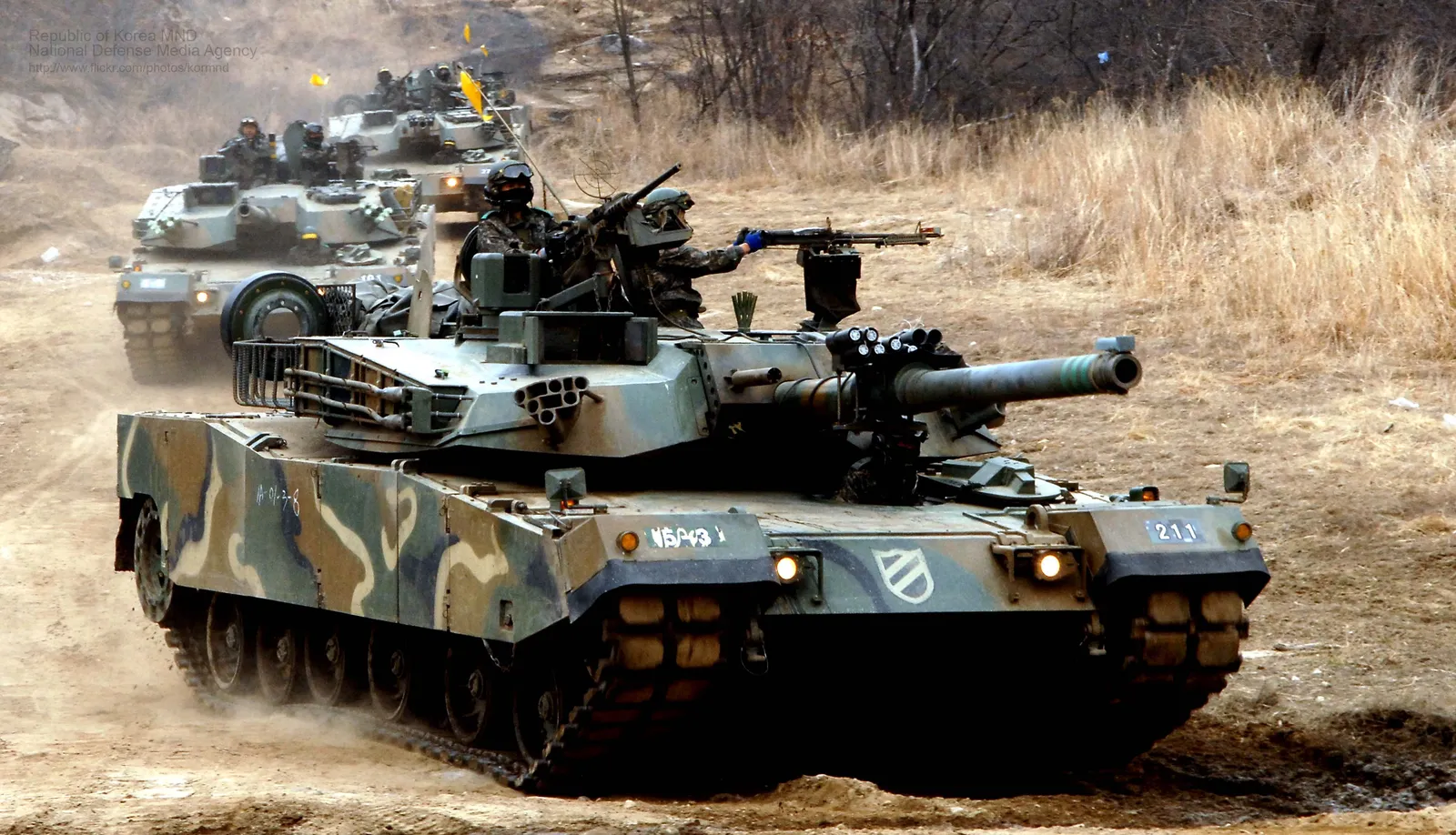
K1 88-Tank
Category
Country
Production
1987–1997
Quantity
1,027
Unit Price (current)
$6.2M↗ 117% inflation · 1994→2025
Original Price
$2.9M (1994)
Operators
💰 PERFORMANCE / PRICE ASSESSMENT Methodology ↗
TANKS · COLD WAR
53
PERFORMANCE/PRICE
40
UNIT COST (2025 USD)
$6.2M
Original: $2.9M (1994)
Inflation: +%117
ⓘ Performance/Price and MASS score are computed across all units in the tanks category, regardless of era.
02 / Specs & Design
◎General5MOD.5
- Tank ClassificationMain Battle Tank (MBT)
- GenerationPost-Cold War
- Combat Weight51.1 t
- Crew Size4
- Service Entry Year1987
◈Firepower9MOD.9
- Main Gun Calibre105 mm
- Main Gun TypeRifled
- Main Gun Length (Calibres)52
- Ammunition Stowage47
- Can Fire APFSDSYes
- Can Fire HEATYes
- Can Fire HE-FragYes
- Can Fire ATGMNo
- Coaxial / Secondary MG Count1
▣Protection5MOD.5
- Armour TypeComposite Armour
- Has ERANo
- Has APSNo
- NBC ProtectionYes
- Smoke GrenadesYes
◇Mobility9MOD.9
- Engine Power1,200 hp
- Power-to-Weight Ratio23.5 hp/t
- Fuel TypeDiesel
- Transmission TypeHydromechanical
- Suspension TypeHydropneumatic
- Max Road Speed65 km/h
- Max Off-Road Speed40 km/h
- Operational Range (Road)500 km
- Fording Depth1.2 m
◆Dimensions5MOD.5
- Length (Hull)9.67 m
- Length (Overall, Gun Forward)9.67 m
- Width3.6 m
- Height2.25 m
- Ground Clearance0.46 m
▤Electronics & Optics8MOD.8
⬢Amphibious & Special4MOD.4
- AmphibiousNo
- Snorkel / Deep Wading Depth2.2 m
- Mine Plough CapabilityNo
- Dozer Blade CapabilityNo
▲Production & Service4MOD.4
- Total Production Units1,027
- Years in Production10 year
- Current Service StatusActive Service
- Notable Variants Count1
03 / History
SERVICE LIFESPANStill in Service
- 1987Production started
- 1997Production ended
39
years in service
10
years in production
1,027
units produced
1
countries operating
ⓘ The producing country still actively operates it.

05 / MASS Score
TANKS RANKING Tanks · Cold War


MASS RANKINGSMASS ↗
186TANKS53COLD WAR · TANKS79SOUTH KOREA · ALL WEAPONS27PRICE · TANKS392PRICE · ALL WEAPONS312PERFORMANCE/PRICE · TANKS
ⓘ Rankings are within theTankscategory.
📖 TERMS ON THIS PAGE17terms
Armour-piercing fin-stabilized discarding sabot: a type of kinetic energy penetrator ammunition.
A Battle Management System (BMS) is a command‑and‑control software suite that gathers, processes, and shares battlefield data to provide situational awareness and coordinate the actions of military units.
Armour made from multiple materials, such as metals and ceramics, to increase effectiveness.
Computerised Advanced: a tank fire‑control system generation that uses digital computers to calculate ballistic solutions and integrate sensor data for enhanced targeting accuracy.
Type of internal combustion engine fuel, refined from crude oil.
High-Explosive Fragmentation: ammunition that explodes on impact, releasing fragments.
High-Explosive Anti-Tank: a type of projectile that uses a shaped charge to penetrate armor.
Hydromechanical transmission combines hydraulic fluid power with mechanical gear components to transmit engine power to a tank's tracks.
Hydropneumatic suspension employs hydraulic fluid and compressed gas in sealed chambers to provide variable damping and ride height, allowing tanks to adjust ground clearance and improve cross‑country mobility.
Optical device that uses laser pulses to measure the distance to a target with high precision.
A main battle tank is a heavily armored vehicle with a large caliber gun, used for front-line combat.
Nuclear, Biological, Chemical protection for tank crews.
Enhanced low-light visibility through specialized optics or sensors.
A rifled gun has spiral grooves cut into its barrel.
Handheld or vehicle-mounted devices that release dense smoke to obscure vision, conceal movements, or screen friendly forces from enemy observation.
Thermal sights are infrared imaging devices mounted on a tank's gunner station that detect heat emitted by objects, enabling target identification and aiming in low‑visibility conditions.
These terms are listed automatically because they appear on this page.full encyclopedia →
📚 Sources