

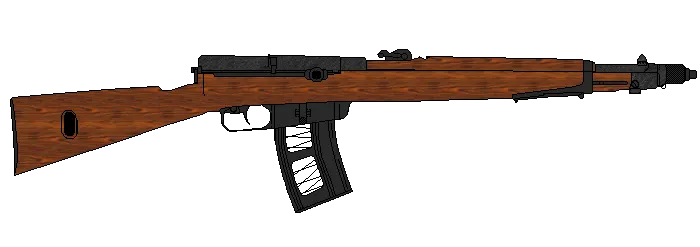

The Breda M1935 PG rifle is an Italian gas-operated self-loading rifle designed by Sestilio Fiorini, chief designer at the Milan-headquartered Breda works, and finalized around 1931.1,5 The PG in its name stands for Presa Gas, Italian for gas take-off, a plain description of its gas-operated action rather than a model number.3 Società Italiana Ernesto Breda built the rifle in the hope of replacing the Regio Esercito's aging Carcano Model 91 bolt-action rifle with a modern semi-automatic rifle, one of only a handful of interwar semi-automatic rifles anywhere to leave the drawing board and reach even limited production.1,2
- genuine locked-breech gas action, a decade ahead of most rival self-loaders
- hybrid receiver-integrated magazine lips, an unusually compact feed design
- Costa Rican carbine variant pioneered burst-limited select fire
- adaptable to two very different cartridges (6.5mm and 7mm)
- too expensive and complex to win the Italian Army's own contract
- total production stayed under a thousand rifles and carbines combined
- burst limiter did not reset between bursts, an acknowledged design flaw
- no confirmed frontline combat use anywhere
Only about 800 rifles and carbines left Breda's shops across the whole PG family, and the great majority of them were never issued to an Italian soldier at all.2,7 Italian Army trials in 6.5x52mm Carcano never produced a real contract, the General Staff judging the design too costly and too mechanically complex next to a simple bolt-action.1,3 The design's actual customer turned out to be Costa Rica, whose 1935 order for a select-fire carbine version chambered in 7x57mm Mauser became the PG's only significant sale.1,4
The Breda M1935 PG rifle's real historical footnote is not Italian service at all. A Costa Rican-contract example, recovered from the estate of cartridge collector William H. Woodin, carries archival paperwork showing it was shipped to Aberdeen Proving Ground and fired as part of American research into burst-limiting mechanisms, work that fed directly into the later M16A2's three-round burst trigger group.6 That connection, more than any Italian Army trial result, is why collectors and historians still discuss an otherwise commercially unsuccessful 1930s Italian rifle today.
The Breda M1935 PG rifle's gas system taps propellant gas through ports drilled near the muzzle into a movable gas tube that slides over the barrel and drives a push rod rearward.5 That push rod cycles a two-piece bolt whose single locking lug sits on top of the bolt body, and the lug rides up into a recess machined into the top of the receiver once the bolt reaches its fully forward, in-battery position, rigidly locking breech to receiver for the moment of firing.2,5 It is a genuinely modern locked-breech gas design for a rifle developed in 1931, arriving years ahead of most other nations' successful self-loading rifles.
- DesignerSestilio Fiorini
- Weight (Empty)5.25 kg
- Currently In ServiceNo
- Notable UsersKingdom of Italy, Costa Rica
Feeding is where sources disagree. Wikipedia's summary describes the semi-automatic rifle variant as clip-fed from the same 6-round charger stripper clips used with the bolt-action Carcano Model 91, firing semi-automatically only.1 Two specialist firearms publications instead describe a genuinely unusual detachable box magazine offered in 20, 30, and 50-round capacities, with an unusual hybrid feed-lip arrangement, the magazine's own lips cover only about a quarter of its length, and the rest of the feed geometry is machined permanently into the receiver itself rather than the magazine body.2,3,5 That hybrid detail is corroborated independently by two different sources describing the same mechanical quirk, which makes the detachable magazine description the better-supported account, though the clip-fed claim cannot be ruled out for an early prototype configuration.
- Cartridge6.5x52mm Carcano (Italian rifle/carbine); 7x57mm Mauser (Costa Rican automatic carbine)
- Calibre6.5 mm
- Case Length52 mm
- Calibre Class6.5mm
The rifle weighs 5.25 kg empty, measures roughly 910 mm overall, and carries a barrel around 455 mm long.7 Muzzle velocity is cited between 661 and 770 m/s depending on the exact cartridge and barrel length involved, with an effective range around 400 to 500 m and a maximum listed range out to 1,500 m against a rear sight graduated to 2,000 m, typical of the era's optimistic sight gradations.7 The Italian 6.5mm version fired as a closed-bolt semi-automatic weapon only.4
- Action TypeGas-Operated
- Fire Modessemi-automatic (Italian rifle/carbine); semi-automatic and 4-round burst (Costa Rican automatic carbine)
- Select FireYes
- Feed SystemDetachable Magazine
- Magazine Capacity20
Costa Rica's order changed the formula considerably. Breda rechambered the carbine for 7x57mm Mauser, switched the action to open-bolt firing, and added select-fire capability, semi-automatic or a limited four-round burst, cyclic rate around 600 rounds per minute.4,5 The burst limiter itself is a small rotating gearwheel mounted above the trigger, advancing one tooth every time the bolt cycles and physically blocking the sear once it reaches its fourth position.5 Its acknowledged flaw is that the gearwheel never resets fully to zero between bursts, so the exact number of rounds fired in a given burst was not perfectly consistent, a limitation period sources documented honestly rather than glossing over.5 Even with that flaw, it is generally credited as the earliest fielded burst-limiting mechanism on any production small arm.2,4
- Muzzle Velocity700 m/s
- Effective Range (point)400 m
- Barrel Length455 mm
- Sight Typeadjustable iron sights, graduated to 2000 m
- Iron SightsYes
- Overall Length910 mm
- Production Start1931
- Production End1935
- Variants3
Breda began work on a self-loading service rifle in the early 1930s as the Regio Esercito's General Staff looked for a replacement for the Carcano Model 91, Italy's standard bolt-action rifle since the 1890s.1 Sestilio Fiorini, working at Breda's Milan-headquartered parent company with its own arms-manufacturing works, finished the design around 1931 and it entered small-scale production for trials and export by 1935.1,5 Three configurations came out of that effort, a full-length Fucile Semiautomatico rifle, a shorter Moschetto Semiautomatico carbine, and the select-fire Moschetto Automatico carbine that Costa Rica eventually bought.2
Italian Army trials never produced a real order. The General Staff judged the Breda M1935 PG rifle too expensive and mechanically complicated compared with the simple, cheap-to-manufacture Carcano bolt-action already in every arsenal, and Italy went into the Second World War still fielding the Model 91 as its primary infantry rifle.1,3 Some accounts describe a small number of the 6.5mm semi-automatic rifles being pressed into limited Italian service as late as 1943 to 1944, though this claim is explicitly hedged in the source that raises it and is not corroborated elsewhere, so it should be read as unconfirmed rather than settled fact.2
Costa Rica became the design's only real customer. In 1935, the Costa Rican government contracted Breda for a batch of the select-fire automatic carbine chambered in 7x57mm Mauser, the same cartridge as Costa Rica's existing Mauser-pattern bolt-action rifles, and the carbines even used the same bayonet as those Mausers for logistical simplicity.3,4 Sources disagree on the exact quantity, most put the order at roughly 800 rifles and carbines combined, matching the total figure generally cited for the whole PG production run, while at least one specialist account cites a smaller initial batch of around 400.4,5,7 Either way it represented the largest single Breda PG contract by a wide margin over the token Italian trials batch.

The contrast with the contemporary American M1 Garand is instructive. Where the Garand won a single large, well-funded government contract that let its unit cost fall with volume, the Breda M1935 PG rifle depended on convincing foreign militaries to buy small batches one at a time, a business model that could never generate the scale needed to bring its own machining costs down.1 Costa Rica's few hundred carbines were the closest the design ever came to that kind of validation.
Production of the whole PG family wound down not long after the Costa Rican order shipped, and Breda's own arms line moved on to the machine guns and aircraft ordnance that made up the bulk of its Second World War output, leaving Fiorini's self-loading rifle a commercial dead end within Italy itself.2 The design's only later chapter came from outside Italy entirely, when American ordnance researchers picked up a surviving Costa Rican example decades after Breda had stopped making it.6
Confirmed combat use of the Breda M1935 PG rifle is thin. The Italian Army never adopted it in numbers, so there is no documented Italian combat deployment beyond the disputed, unconfirmed claim of limited 1943 to 1944 issue.2 Costa Rica's carbines remained in national army service through the 1940s, spanning the lead-up to and duration of the 1948 Costa Rican Civil War, but available sources do not document any specific engagement in which the Breda PG carbines were actually fired in anger during that conflict.4
The war itself ended with victor José Figueres Ferrer abolishing the Costa Rican military altogether in favor of a civil police force, which closed off any further conventional combat career the design might otherwise have had.4
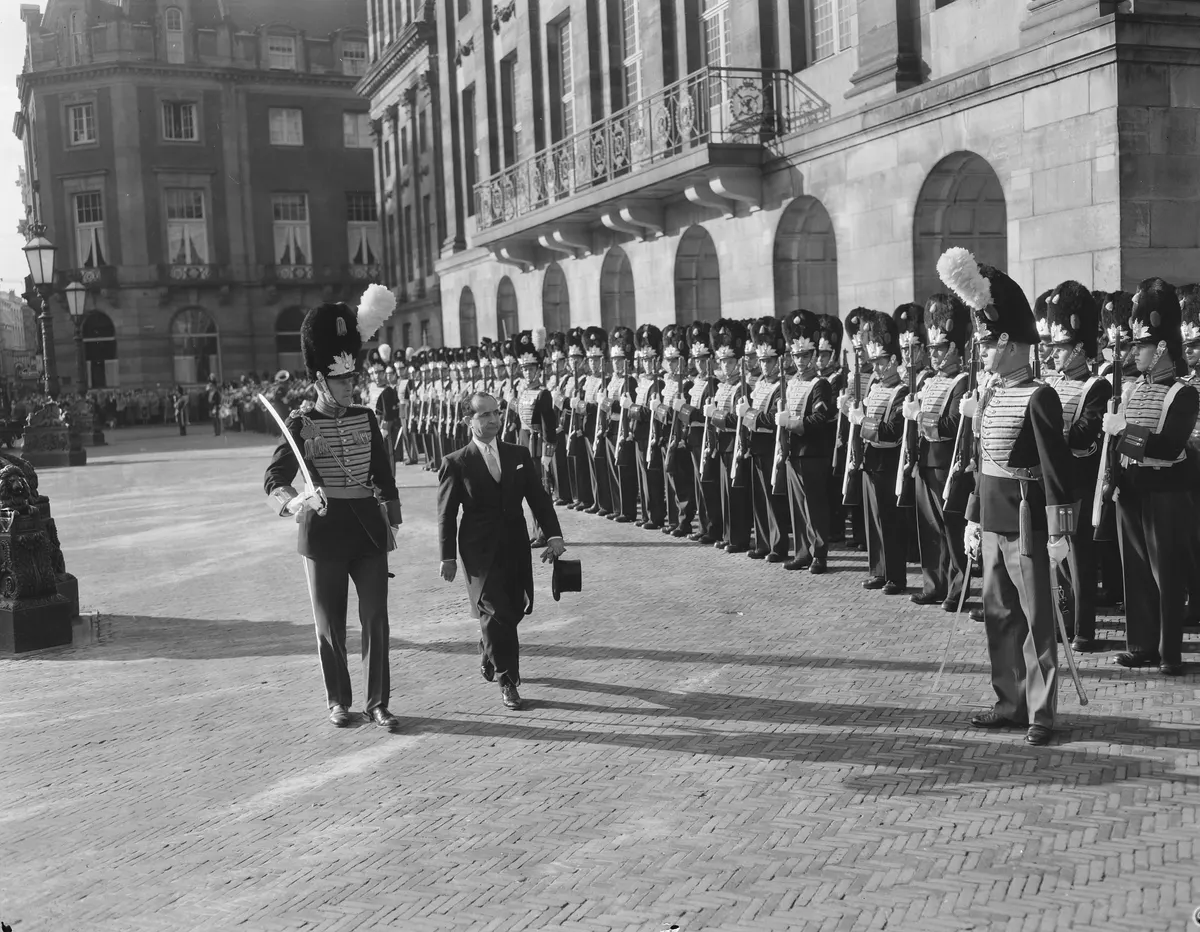
The more consequential use of a Costa Rican-contract carbine came decades later and far from any battlefield, in an American Army research program. The Aberdeen Proving Ground documentation attached to the Woodin-collection example places the rifle's real influence in a laboratory testing burst-fire limiters rather than in any wartime engagement, work that reportedly informed the American M16A2's eventual three-round burst trigger group.6
Costa Rica itself was formally a belligerent for most of the Second World War, declaring war on Japan on December 8, 1941, a day after Pearl Harbor, and on Germany and Italy on December 11, 1941.8 No Costa Rican unit ever deployed abroad and no fighting reached Costa Rican soil, so the country's formal war footing never translated into a combat record for its Breda PG carbines, a mundane explanation that fits the design's overall pattern of paperwork and contracts far outrunning any actual battlefield history.8
Breda built three distinct configurations of the PG design. The base Fucile Semiautomatico was a full-length rifle chambered in 6.5x52mm Carcano, closed-bolt, semi-automatic only, aimed at the Italian Army trials.2,4 A shorter Moschetto Semiautomatico carbine used the same 6.5mm chambering and closed-bolt semi-automatic operation in a shorter, handier package.2 The Moschetto Automatico, the version Costa Rica actually bought, went furthest from the original design, rechambered to 7x57mm Mauser, switched to open-bolt operation, and given select-fire capability with the four-round burst limiter.2,4
No sniper, bayonet-only, or further select-fire rifle-length derivative is documented beyond these three configurations. Where Italy's arms industry did field select-fire weapons at real scale in this period, it favored the far simpler and cheaper Beretta Model 38 submachine gun instead, a design that avoided the Breda PG rifle's cost and complexity problems entirely by giving up full-power rifle range in exchange for cheap, reliable pistol-caliber automatic fire.3
The Costa Rican-contract Moschetto Automatico variant specifically, rather than the plain Italian rifle, is the version that shows up in modern popular media.9


| Year | Buyer | Quantity | Amount | Present Value (2025) |
|---|---|---|---|---|
| 1935 |  Costa Rica | 800 | — | — |
Italy evaluated the Breda M1935 PG rifle in Regio Esercito trials from around 1931 but never placed a service order, and any later Italian use in 1943 to 1944 remains an unconfirmed, disputed claim rather than a documented fact.1,2 Costa Rica is the only confirmed operator with a real contract, purchasing roughly 800 rifles and carbines (with one account citing an initial batch closer to 400) in 1935 for national army service that lasted through the 1940s until the army itself was abolished in 1948.4,7
Breda's own arms catalog in this period offers the sharpest comparison, the Beretta Model 38 submachine gun. Both were Italian-designed automatic small arms competing for the same defense budget in the run-up to the Second World War, yet they solved the automatic-fire problem in opposite ways. The Beretta Model 38 gave up rifle-caliber range and power in exchange for a simple blowback pistol-caliber submachine gun the Regio Esercito could actually afford in bulk, while the Breda M1935 PG rifle kept full rifle-class ballistics and a genuinely sophisticated locked-breech gas system, at a cost and complexity the Italian military ultimately would not pay for.3 The Beretta Model 38 went on to arm Italian and German forces by the hundreds of thousands. The Breda PG never cleared a thousand units combined across every variant and customer.
| Weapon | Cartridge | Action | Confirmed adopter |
|---|---|---|---|
| Breda M1935 PG rifle | 6.5x52mm Carcano / 7x57mm Mauser | Gas-operated, locked breech | Costa Rica only |
| Beretta Model 38 | 9x19mm Parabellum | Blowback | Italy, Germany |
Against the American M1 Garand, the contrast is about procurement rather than mechanism. Both rifles reached limited trial status in roughly the same decade, and both used a locked, gas or spring-driven action rather than simple blowback, but only the Garand's home government backed it with a single mass domestic contract. That single decision, more than any technical shortcoming in Fiorini's design, explains why the M1 Garand armed an entire army while the Breda M1935 PG rifle armed a few hundred Costa Rican soldiers and ended up best remembered for a burst-fire experiment run by a foreign army decades after its own manufacturer had stopped making it.


What caliber does the Breda M1935 PG rifle use? The original Italian version chambers 6.5x52mm Carcano, the same rifle cartridge as the Carcano Model 91 it was meant to replace. The Costa Rican-contract automatic carbine was rechambered to 7x57mm Mauser to match Costa Rica's existing Mauser-pattern rifles.1,4
How does the Breda M1935 PG rifle work? It is a gas-operated rifle. Gas tapped near the muzzle drives a movable tube and push rod rearward, unlocking a two-piece bolt whose top-mounted lug had been locked into the receiver, then cycling the action to load the next round.2,5
Is the Breda M1935 PG rifle still in service anywhere? No. Italy never adopted it in numbers and Costa Rica's national army, its only real customer, was abolished in 1948. Surviving examples are collector and museum pieces today, including one held by the Smithsonian's National Museum of American History.4
How rare is the Breda M1935 PG rifle today? Very rare. Total production across the whole PG family is estimated at around 800 rifles and carbines, most of them the Costa Rican-contract automatic carbine, making surviving examples a scarce find at auction.6,7
What is the Breda M1935 PG rifle's connection to the M16A2? A Costa Rican-contract carbine with documented Aberdeen Proving Ground paperwork was fired and studied there as part of American research into burst-limiting fire-control mechanisms, work that reportedly informed the M16A2's later three-round burst trigger group, making the Breda PG an unlikely technical ancestor of a rifle built decades after its own production ended.6
- "Breda M1935 PG Rifle", Wikipedia — en.wikipedia.org ↩
- "Breda M1935 PG", Modern Firearms — modernfirearms.net ↩
- "Breda PG rifle", Forgotten Weapons — forgottenweapons.com ↩
- "Costa Rican Breda PG, The First Burst-Fire Rifle", Forgotten Weapons — forgottenweapons.com ↩
- "The Breda Modello PG, The World's First Burst-Firing Automatic Rifle", Small Arms Review — smallarmsreview.com ↩
- "Extremely Rare Breda Costa Rican Model PG Machine Gun Used For Development Of Three Shot Burst For American M16A2", Morphy Auctions — auctions.morphyauctions.com ↩
- "Breda Mod. 1935 PG", Wikipedia (Italian) — it.wikipedia.org ↩
- "Costa Rica's Role in World War Two, A Small Nation's Contribution to a Global Conflict", The Costa Rica News — thecostaricanews.com ↩
- "Breda PG", Internet Movie Firearms Database — imfdb.org ↩