

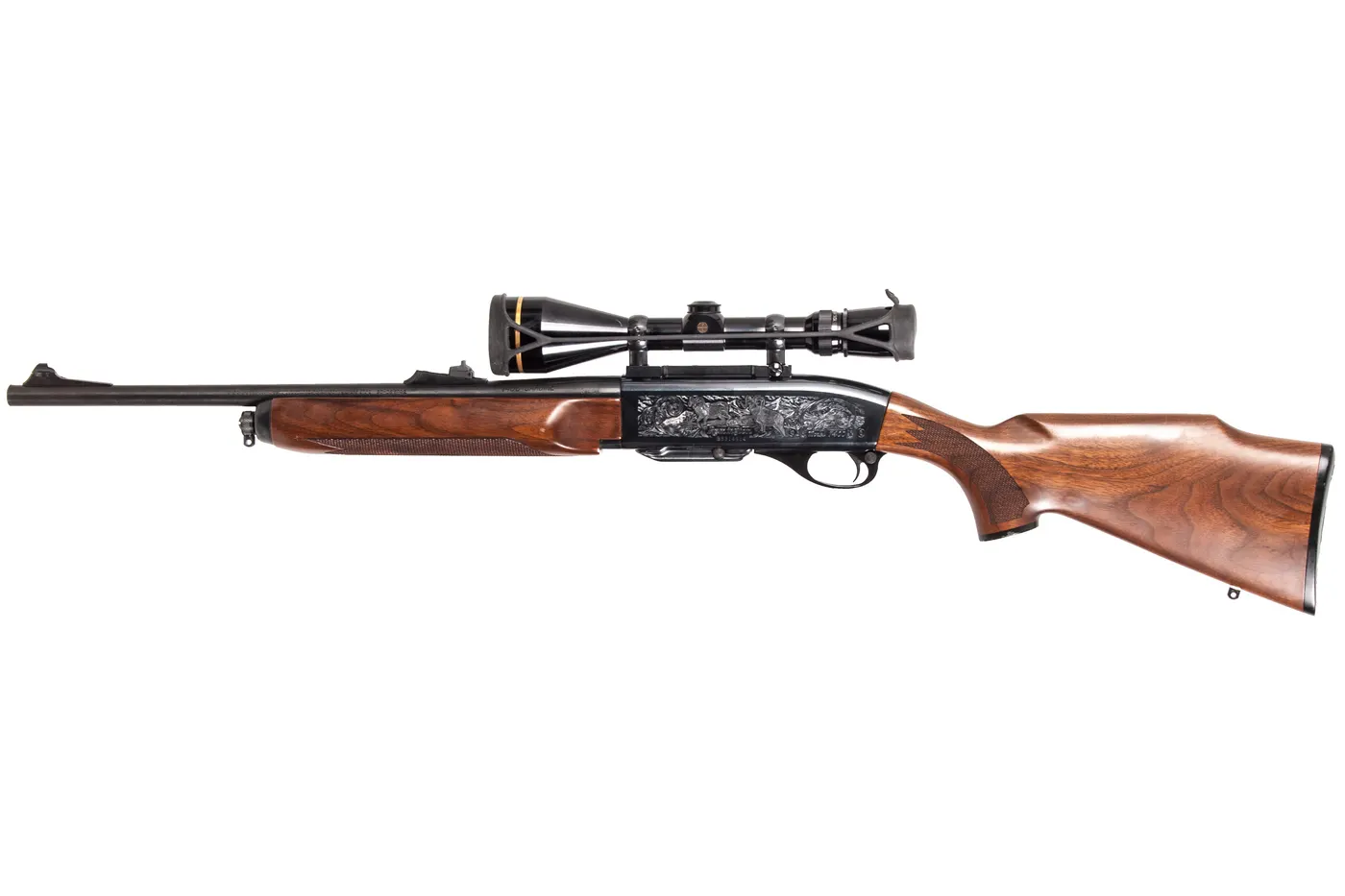

The Remington Model 7400 is a gas-operated, centerfire hunting rifle that Remington Arms sold from 1981 to 2004 as the standard-grade replacement for the Remington Model 742.1 It belongs to the same American semi-automatic rifles tradition that runs from the long-recoil Remington Model 8 of 1906 through the 740 and 742, and it shares its receiver, bolt, and trigger group almost exactly with its higher-grade sibling, the Remington Model Four, which launched the same year.2 Chambered in gas-operated centerfire hunting cartridges from .243 Winchester up to .35 Whelen, the Model 7400 was built for whitetail and big-game hunters who wanted a fast second shot without the bolt manipulation of a conventional hunting rifle.
- Fast repeat shots without working a bolt
- Interchangeable barrels across the same action length
- Wide factory caliber selection (.243 Win to .35 Whelen)
- Stronger receiver and bolt than the Model 742 it replaced
- Factory trigger widely criticized as heavy and gritty
- Accuracy inconsistent gun to gun, rarely sub-MOA
- Gas system fouls quickly and needs frequent cleaning
- Heavier than a comparable bolt-action hunting rifle

Remington positioned the 7400 as the everyday working-grade gun in its autoloading line, with a plain checkered pistol grip stock and a lower price than the Model Four's gloss-finished walnut.3 That pricing gap (roughly $399.95 against $449.95 at launch) meant the 7400 vastly outsold its fancier sibling, and it remained in Remington's catalog for 23 years, more than five times as long as the Model Four survived.3 Anyone searching for Remington 7400 specifications, or asking whether the Remington 7400 is still in production, finds the short answer is no, production ended in 2004 and the Remington Model 750 took over the autoloader slot in Remington's lineup two years later.1
The rifle's reputation is a genuine mixed bag. Hunters who kept it clean and fed it factory ammunition generally got a reliable gun for deer camp, while others ran into the extraction and fouling problems that dogged the whole 740/742/7400 family and earned it the unflattering nickname Jamomatics in some hunting circles.4 That reputation, more than any single design flaw, is why the Remington 7400 sits below bolt-action rifles like the Remington Model 700 in the esteem of serious precision shooters even though it was never marketed as a target rifle.
The Three-Lug Bolt That Replaced the 742's Weak Point
Remington built the Model 7400 to fix the single biggest complaint about the Remington Model 742, which chewed up its own receiver rails over years of hard use because the steel guiding the bolt's many small locking lugs was too soft.5 The 7400 (and the Model Four introduced alongside it) cut the bolt down to a small number of larger locking lugs, with technical breakdowns disagreeing on the exact count, three according to gunsmith reference material, four according to other summaries, and added a hardened steel insert let into the top of the receiver to guide the upper lug.5,6 That insert, combined with a redesigned rotating bolt that locks directly into a barrel extension rather than the receiver itself, is the mechanical core of what separates the 7400 from the earlier 740 and 742, not just cosmetics or wood grade.6
- First Production Year1981
- Weight (Empty)3.4 kg
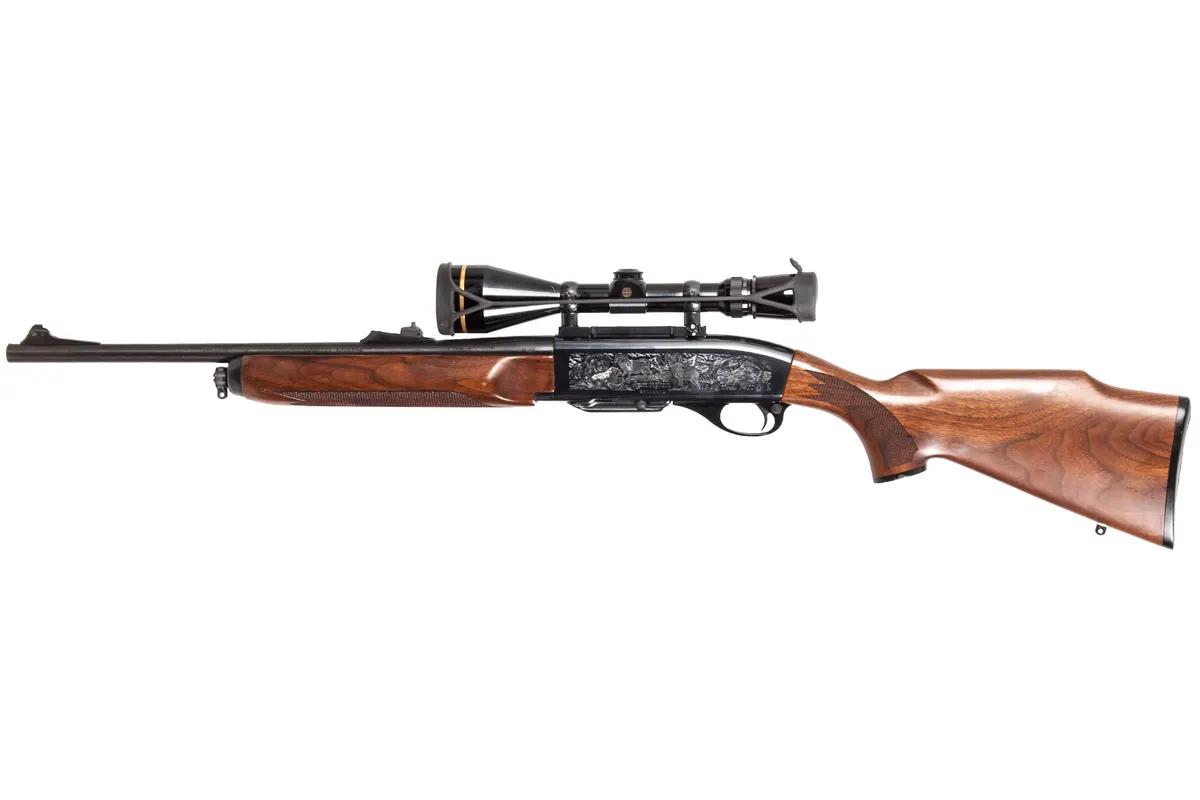
The gas-operated system taps propellant gas from the barrel to drive a piston and action bar rearward, cycling the bolt and detachable magazine feed. Remington's own engineers, building on the gas mechanism the company had refined since the Model 740 debuted in 1955, added a self-centering conical gas seal between the barrel nozzle and the action bar for more consistent bolt speed and less carbon leakage into the action.6 The gas system still fouls faster than a bolt-action's, and several long-time owners describe needing to strip and clean the gas cylinder every few hundred rounds to keep the action cycling reliably.7
- Cartridge6mm Remington, .243 Winchester, .270 Winchester, 7mm Express Remington, .280 Remington, .30-06 Springfield, .308 Winchester, .35 Whelen
- Calibre7.62 mm
- Calibre Classcenterfire
- RimfireNo
- Caseless AmmunitionNo
Calibers, Weight, and the Carbine Variant
Remington chambered the 7400 in 6mm Remington, .243 Winchester, .270 Winchester, 7mm Express Remington, .280 Remington, .30-06 Springfield, .308 Winchester, and .35 Whelen, all rimless bottleneck centerfire hunting cartridges built around one of two action lengths.1 The standard rifle shipped with a 22 inch (559 mm) barrel and an overall length of 42 inches (1,067 mm), weighing about 7.5 lb (3.4 kg) unloaded, and Remington added an 18 inch (457 mm) barreled Carbine version in 1988 for hunters who wanted a shorter, handier gun in heavy cover.1 The four-round detachable box magazine sits flush with the stock rather than protruding like an AR-pattern rifle's, giving the 7400 the silhouette of a conventional sporting rifle despite its semi-automatic action.
- Action TypeGas-Operated
- Fire Modessemi-automatic
- Select FireNo
- Feed SystemDetachable Magazine
- Magazine Capacity4
- Trigger Typesingle-stage
- Safety Typecross-bolt
Sights were open iron sights as standard, adjustable for windage and elevation at the rear, with the receiver drilled and tapped for a scope mount, the far more common setup among hunters who bought the rifle for fast shots at moving deer rather than iron-sight target work.1 The factory trigger is the Model 7400's most consistently criticized component. Owner and gunsmith accounts describe factory pull weights well above the 4 to 5 lb that most hunting rifles ship with, sometimes over 12 lb, though a competent trigger job can bring that down to around 3 lb.9 Combined with a gas system that some owners say struggles to hold sub-6-inch groups at 100 yards without careful tuning, the Model 7400 built a reputation as a functional deer rifle rather than a precision one, a tradeoff most buyers accepted for the speed of a semi-automatic action in the woods.9
- Barrel Length558.8 mm
- Sight Typeiron sights
- Optic RailNo
- Iron SightsYes
- Threaded BarrelNo
Furniture was walnut on the standard rifle, with a synthetic fiberglass-reinforced stock introduced in 1998 for a non-reflective, weatherproof option, and the receiver and barrel were carbon steel throughout the production run.1
- Overall Length1,066.8 mm
- Receiver Materialsteel
- Furniture Materialwood
- Folding / Collapsing StockNo
- Bullpup LayoutNo
- Ambidextrous ControlsNo
- Production Start1981
- Production End2004
- Variants5
From the Model 8 Through the 740 and 742 to a Stronger Receiver
Remington's autoloading hunting rifle line traces back to the long-recoil Remington Model 8, designed by John Browning and sold from 1906, but the direct ancestor of the 7400 is the gas-operated Model 740, which Remington introduced in 1955 and which gave way to the improved Model 742 in 1960.2 Both the 740 and 742 sold well among American deer hunters, but their receivers used a soft steel that wore under the pounding of the bolt's many small locking lugs, eventually creating excessive headspace that could jam or damage the rifle after years of use.5
Remington answered the receiver-wear problem in 1981 by launching two new rifles at once, the workaday Model 7400 and the upscale Model Four, both built around the same redesigned bolt and hardened receiver insert.5,6 The Remington Model Four carried a glossier Monte Carlo walnut stock, cut checkering, and a cartridge-head medallion inlaid in the receiver's belly, features aimed at hunters willing to pay a premium for a nicer-looking gun, while the 7400 kept a plainer pistol-grip stock and a lower shelf price.2,3 Mechanically the two rifles were close to identical, sharing the same bolt, receiver, gas system, and magazine, so the split was a marketing and finish decision rather than a functional one.6

The economics did not favor the deluxe model. An unstable early-1980s American economy squeezed sales of the pricier Model Four, and Remington discontinued it in 1987 after roughly seven years, folding several of its features into higher grades of the surviving 7400 line rather than replacing it outright.2,10 The Model 7400 kept selling through the 1980s and 1990s in Standard, Special Purpose (1993, non-reflective finish with sling swivels), Synthetic (1998, fiberglass stock), and Weathermaster (2003, matte nickel metal with a black synthetic stock) configurations before Remington finally discontinued it in 2004.1
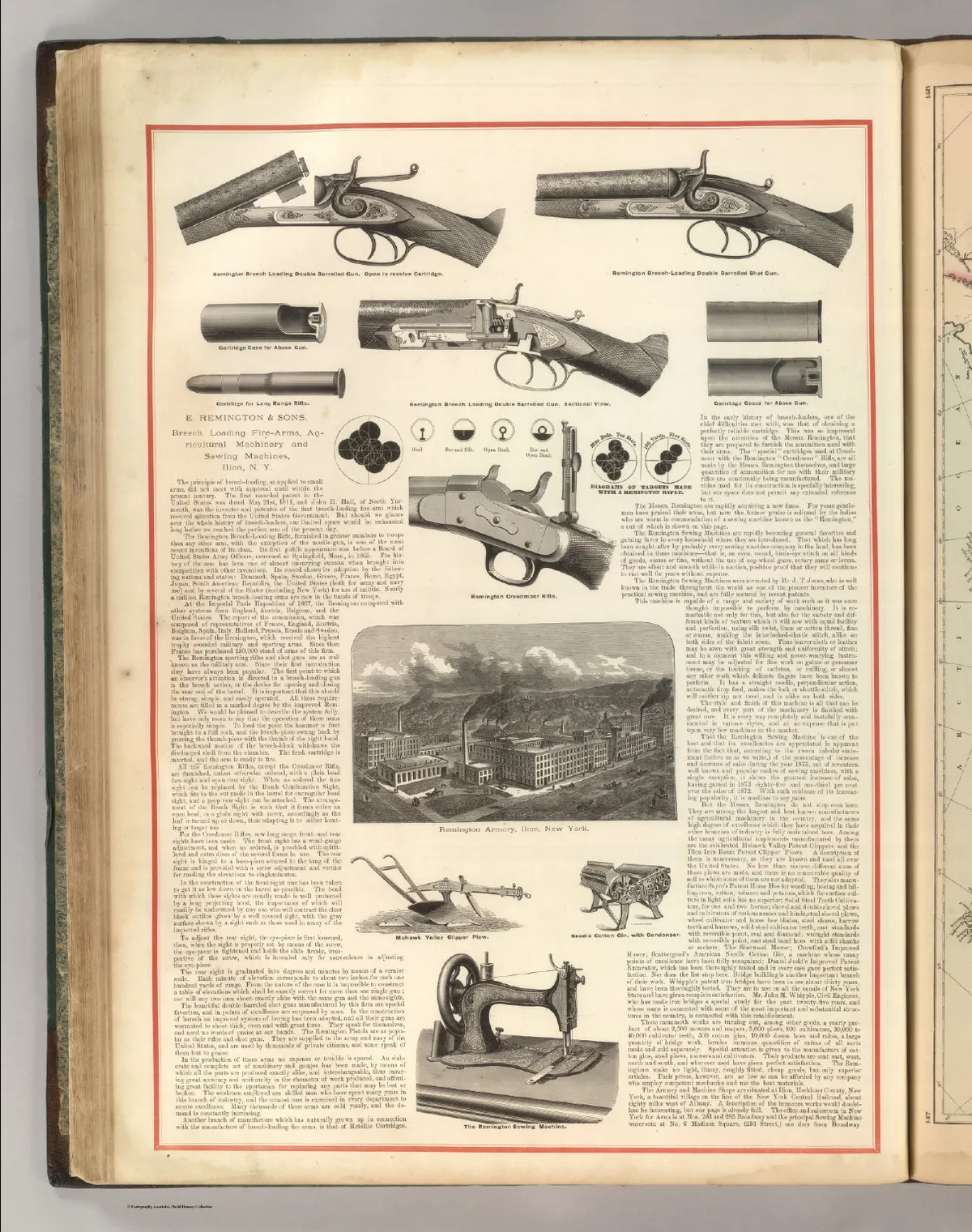
Both rifles carried Remington's own gas-operated system forward from the 740 and 742 rather than borrowing from a competitor, and both were built at Remington's historic Ilion, New York, plant, the same Erie Canal-side factory that had produced Remington firearms since 1828 and that remained the company's principal rifle works until it closed in 2024, two decades after the 7400 itself went out of production.11
The Model 7400 also turned up regularly in American hunting and outdoors magazines through the 1980s and 1990s, reviewed alongside its Model 742 and Model Four relatives as a straightforward working gun rather than a showcase piece, which matches how most owners actually used it.7
A Discontinued Rifle With a Persistent Aftermarket
Remington replaced the 7400 with the Remington Model 750 in 2006, a rifle Remington marketed as fixing the trigger and reliability complaints that had followed the 740/742/7400 family for decades, though owners disagree on how much actually changed under the surface.1 Because the 7400, Model Four, and 750 share magazines, triggers, and many small parts, the 7400 remains easy to keep running today even though Remington itself stopped supporting the model outright, and its resale value has climbed as buyers on the used market look for an affordable semi-automatic deer rifle.9
Remington sold the Model 7400 in five broad configurations over its 23-year run. The Standard rifle with a 22 inch barrel and walnut stock was the baseline from 1981 onward. The Carbine, added in 1988, used an 18 inch barrel for faster handling in thick cover at a small cost in muzzle velocity.1 The Special Purpose model of 1993 added a non-reflective matte finish and sling swivel studs aimed at hunters who wanted a less conspicuous gun in the field. The Synthetic, introduced in 1998, replaced walnut with a fiberglass-reinforced black stock for weather resistance. The Weathermaster, added in 2003 near the very end of production, paired that synthetic stock with a matte nickel-plated barrel and receiver for rust resistance in wet climates.1
All five configurations used the same receiver, bolt, and four-round detachable magazine, so the differences between them are cosmetic and environmental rather than mechanical, unlike the earlier split between the plain 7400 and the deluxe Model Four, which at least changed the stock's shape and checkering.2
Among hunters shopping the used market today, the Synthetic and Weathermaster grades draw the most interest because their fiberglass or matte-nickel construction tolerates rain and rough field handling better than the original walnut-stocked Standard rifle, even though all three shoot the same cartridges through the same action.9


The Remington 7400's closest sibling comparison is not really a rival at all. The Remington Model Four used the identical action, bolt, and magazine, so choosing between them in 1981 came down to how much a hunter wanted to pay for nicer wood and checkering, not which rifle shot better or cycled more reliably.2,6 That is a genuinely unusual comparison for this leaf, most rival pairs differ mechanically, but the 7400 and Model Four differed almost entirely in finish grade.
| Spec | Remington 7400 | Remington Model Four |
|---|---|---|
| Production | 1981 to 2004 | 1981 to 1987 |
| Launch price | $399.95 | $449.95 |
| Stock | Checkered pistol grip, plain walnut | Monte Carlo, high-gloss walnut, cut checkering |
| Action, bolt, magazine | Shared | Shared |
Against its direct predecessor, the Remington Model 742, the comparison is mechanical rather than cosmetic. The 742 sold in far larger numbers over its 20-year run but carried the soft-receiver flaw that the 7400 was specifically engineered to fix, so a well-worn 742 is more likely to show headspace problems than a 7400 in similar condition.5 Against the rimfire Ruger 10/22, the comparison is really about role rather than mechanism. Both rifles are among the best-selling American semi-automatic sporting rifles of the postwar era, but the 10/22's rimfire chambering makes it a plinking and small-game gun, while the 7400's centerfire hunting cartridges put it in a completely different category aimed at deer and larger big game.


What calibers does the Remington 7400 come in? Remington chambered the 7400 in 6mm Remington, .243 Winchester, .270 Winchester, 7mm Express Remington, .280 Remington, .30-06 Springfield, .308 Winchester, and .35 Whelen.1
Is the Remington 7400 still in production? No. Remington built the Model 7400 from 1981 to 2004, then replaced it in the catalog with the Remington Model 750 in 2006.1
How much is a Remington 7400 worth today? Used Remington 7400 rifles typically sell in the several-hundred-dollar range depending on caliber, condition, and stock configuration, well above the $399.95 the rifle cost new in 1981 before accounting for inflation.3,12
What is the difference between the Remington 7400 and the Remington 742? The 7400 uses fewer, larger bolt locking lugs and a hardened steel receiver insert that the 742 lacked, addressing the 742's tendency to wear its own receiver rails and develop excess headspace after heavy use.5
Is the Remington 7400 accurate? Accuracy is inconsistent gun to gun. Some rifles group under 2 inches at 100 yards with the right ammunition, while others struggle to beat 6 inch groups, and the factory trigger is widely regarded as the weakest part of the package.9
- "Remington Model 7400", Wikipedia — en.wikipedia.org ↩
- "Remington Model Four", Wikipedia — en.wikipedia.org ↩
- "Remington model 742, model 4 and model 7400", Graybeard Outdoors forum — go2gbo.com ↩
- "Remington 7400 Problems: An In-depth Analysis and Solutions", The Wild Hunter — thewildhunter.com ↩
- "Remington Model 740, Model 742 and Model 7400 Autoloading Rifles", Remington Society of America — remingtonsociety.org ↩
- "Remington 740/742/7400 Semi-Auto", LeeRoy's Ramblings — leeroysramblings.com ↩
- "TFB Armorer's Bench: Commentary on The Remington 74 Series", The Firearm Blog — thefirearmblog.com ↩
- "Remington Model Four/74/740/742/7400/750 Detachable Box Magazine", Wholesale Hunter — wholesalehunter.com ↩
- "Remington 7400 Accuaracy", Shooters' Forum (Accurate Shooter) — forum.accurateshooter.com ↩
- "Remington Model Four", Grokipedia — grokipedia.com ↩
- "Remington's 200-year run in Ilion, N.Y., facility concludes", Outdoor News — outdoornews.com ↩
- "REMINGTON 7400 New and Used Price, Value, & Trends", True Gun Value — truegunvalue.com ↩
- "JAG - Season 1", Internet Movie Firearms Database — imfdb.org ↩
- "The Road (2009)", Internet Movie Firearms Database — imfdb.org) ↩