
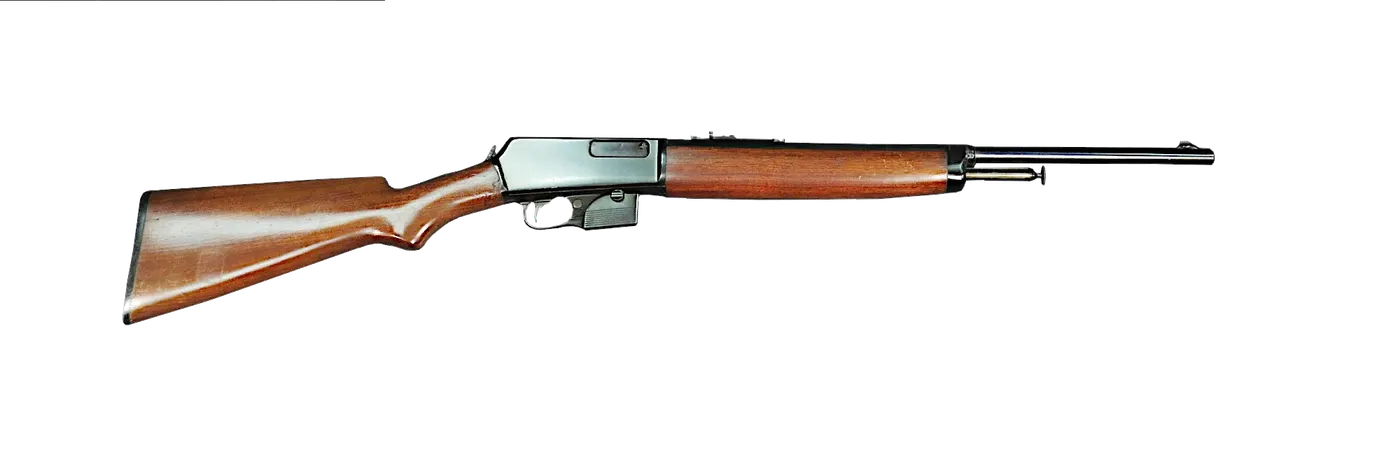

The Winchester Model 1907 stayed in Winchester's catalog for fifty years, from 1907 to 1957, longer than any other rifle in Winchester's early self-loading family, and Winchester built 58,733 of them across that run1. It was designed by Thomas Crossley Johnson, the same engineer behind the earlier rimfire Winchester Model 1903 and the underpowered Winchester Model 1905, and it fixed the one problem that had killed the Model 1905's commercial chances, a cartridge with enough punch to matter1,3.
- Fifty-year production run, the longest of Winchester's self-loading family
- .351 WSL cartridge with genuine stopping power for the era
- Compact and light enough for aircraft observers and mounted patrolmen
- Quick single-screw takedown shared across the whole self-loading line
- Unlocked blowback breech limited it to a relatively low-pressure cartridge
- Heavy bolt and stiff recoil spring made cycling feel unusually mechanical
- No factory scope mount, aperture sights were the only precision option
- Krag-pattern bayonet lug on the police variant proved too weak for field use

That cartridge was the .351 Winchester Self-Loading, a proprietary semi-rimmed round Winchester introduced alongside the rifle in 1906. It pushed a 180-grain bullet to roughly 570 meters per second (about 1,870 feet per second) for close to 1,900 joules of muzzle energy, putting it between the .30-30 Winchester and the .35 Remington in a class period writers already called an intermediate power cartridge2,5. The Winchester Model 1907's blowback action needed no locking breech to handle that pressure, and its detachable-magazine fed from a 5-round box as standard, with 10, 15, or 20-round options cataloged over the decades1,3.
The Winchester Model 1907 is best known today for two very different careers that ran almost side by side. As an aviator's auxiliary weapon it armed French, British, and Russian aircrew during the First World War before machine guns were common on airplanes1,4. As a civilian and police arm it became, in the hands of a San Antonio gunsmith and a circle of Depression-era bank robbers, the basis for illegal automatic conversions nicknamed gangster gats7. Both threads belong to the same semi-automatic rifles category the Winchester Model 1907 helped establish commercially, alongside its stablemate the Winchester Model 1910 and its main outside rival, the Remington Model 8.
Winchester marketed the Winchester Model 1907, like the earlier Model 1905, as self-loading rather than automatic, still wary of scaring off buyers who associated the word with uncontrolled fully-automatic fire3. That caution mattered less as the rifle's actual customer base shifted. Early buyers included railway guards, industrial security details, and police departments looking for faster repeat shots than a lever-action offered, not primarily big-game hunters5. By the 1930s the Winchester Model 1907's main American market was law enforcement rather than the outdoorsman Winchester had first pitched it to.
A Heavier Blowback Built Around the .351 WSL Cartridge
The Winchester Model 1907's action is a straightforward blowback design with no rotating bolt, no locking lugs, and no gas system. An unusually heavy bolt, close to 1.1 kilograms, sits mostly below the barrel line and is driven forward by a return spring, cycling by simple mass and spring tension rather than any mechanical lock3. That heavy bolt is why the Winchester Model 1907 could safely handle the .351 Winchester Self-Loading where the earlier Model 1905's lighter action could not, more reciprocating mass meant more resistance before the breech opened3,5. A forward plunger below the forend charges the action, the same layout Johnson had already used on the Model 1903 and Model 1905.
- First Production Year1907
- DesignerT.C. Johnson
- Weight (Empty)3.63 kg
- Notable UsersFrance, United Kingdom, Russian Empire, United States, Italy
The Winchester Model 1907 weighed between roughly 3.6 and 4.1 kilograms unloaded depending on finish and barrel configuration, measured about 1,000mm overall, and carried a 508mm (20-inch) barrel1. It used plain iron-sights as standard, with a tang or receiver-mounted aperture sight cataloged as an option for shooters who wanted more precision1. The rifle came apart into two main assemblies via a single cross screw at the rear of the receiver, the same fast-takedown feature Winchester built into the whole self-loading family3. The Winchester Model 1907's .351 WSL bullet measured 0.351 inches across, an unusual bore diameter that did not interchange with the more common 0.358-inch .35-caliber projectiles used elsewhere in the American market, a naming quirk period reloaders had to learn the hard way2.
- Cartridge.351 Winchester Self-Loading
- Calibre8.9 mm
- Calibre Classintermediate
- Bullet Weight11.7 g
- RimfireNo
- Caseless AmmunitionNo
Standard magazine capacity was 5 rounds, with 10, 15, and even 20-round detachable box magazines cataloged at different points across the fifty-year production run, mostly for police and aviation buyers who wanted more rounds on hand than a hunter typically needed1,3. A bayonet-lug was not part of the standard sporting rifle. Winchester added one, sized for the M1892 Krag bayonet, only on the dedicated police variant introduced around 1935, and government acceptance trials later found that specific lug too weak, it kept breaking under field use1. That detail matters for reading the Winchester Model 1907's specifications correctly, the bayonet-lug capability existed on the platform but was never a base-model feature.
- Action TypeBlowback
- Fire Modessemi-automatic
- Select FireNo
- Feed SystemDetachable Magazine
- Magazine Capacity5
- Muzzle Velocity570 m/s
- Muzzle Energy1,900
- Barrel Length508 mm
- Sight Typeopen iron sights and optional aperture sights
- Optic RailNo
- Iron SightsYes
- Threaded BarrelNo
- Total Production58,733
- Production Start1907
- Production End1957
- Unit Cost28 USD
- Variants3
Thomas Crossley Johnson built the Winchester Model 1907 directly on the patent work he had already done for the rimfire Model 1903 and the underpowered centerfire Model 19051,5. Winchester introduced the .351 Winchester Self-Loading cartridge specifically to fix what buyers disliked about the Model 1905, insufficient stopping power, and the Winchester Model 1907 sold well enough that it effectively replaced the Model 1905 in Winchester's catalog within a year or two1,3. Early advertising aimed at railway guards, industrial security men, and police departments, groups that valued fast repeat shots over the raw range and power a bolt-action hunting rifle offered5.
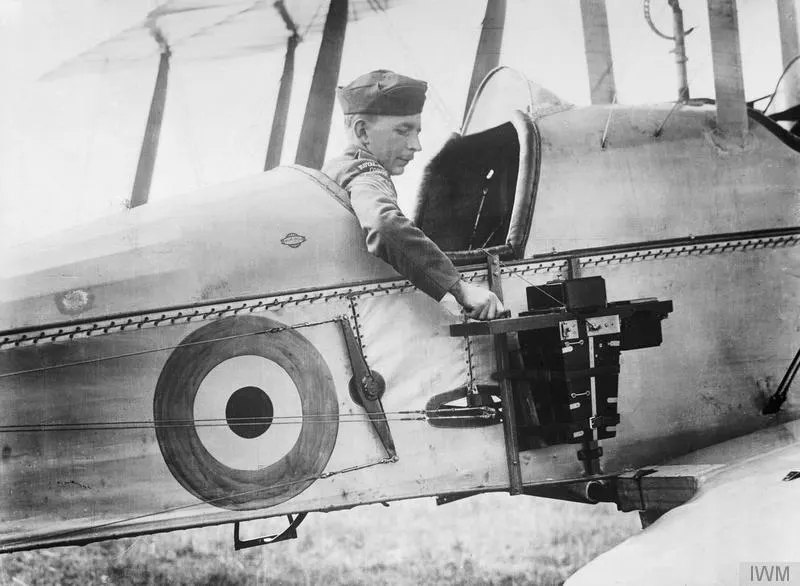
The Winchester Model 1907's most distinctive wartime role came from the air, not the trench. The United States Army Air Service Aircraft Armament Manual of the First World War described the Winchester self-loading rifle in .351 caliber as an auxiliary weapon sometimes carried in aircraft, fed from a five-round detachable magazine with a sixth round chambered6. France placed the first military order for the Winchester Model 1907 in October 1915, 300 rifles, followed by roughly 2,200 more through 1918, intended chiefly to arm aircraft and observation-balloon crews before machine guns became standard aircraft armament4,1. Great Britain bought around 120 Winchester Model 1907 rifles and 78,000 rounds of .351 SL ammunition between late 1914 and April 1916 for the Royal Flying Corps, some modified with an enlarged trigger guard and cocking piece so an observer wearing heavy flight gloves could operate the rifle4. Imperial Russia purchased roughly 500 Winchester Model 1907 rifles and 1.5 million rounds of ammunition in May 1916 through J.P. Morgan and Company, and Wikipedia's own sourcing also documents a smaller, photographically confirmed shipment to Montenegro's royal guard around the same period1. The United States armed its own 1st Aero Squadron with 19 Winchester Model 1907 rifles and 9,000 rounds, delivered to Columbus, New Mexico for the Pancho Villa Expedition against Pancho Villa's forces along the Mexican border1,4.
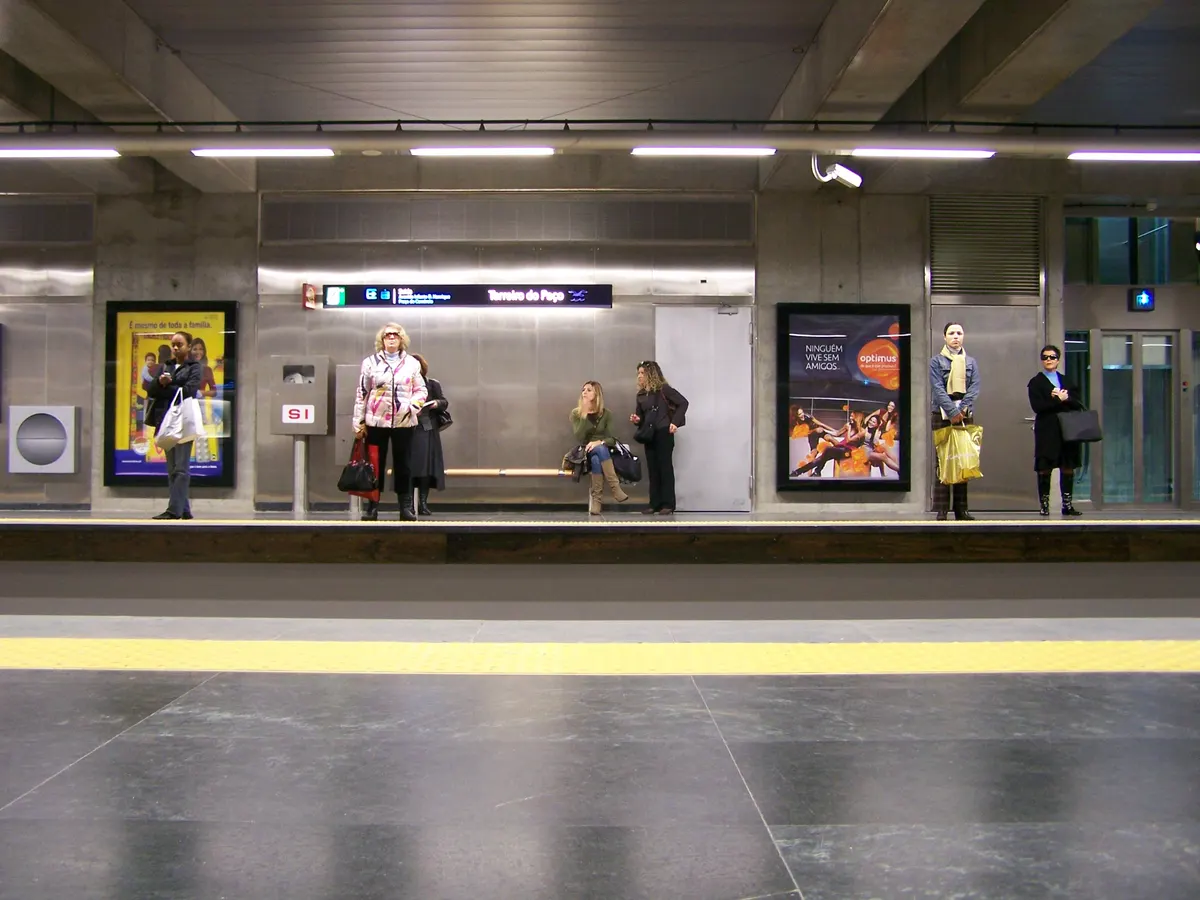
The Winchester Model 1907's link to a genuine act of political violence predates the First World War entirely. On 1 February 1908, Manuel Buiça, a dismissed army sergeant and trained marksman, stepped from a crowd in Lisbon's Terreiro do Paço square, drew a Winchester Model 1907 from under his coat, and shot King Carlos I of Portugal through the neck at close range, killing him almost instantly8,9. A second gunman, Alfredo Luís da Costa, mortally wounded the heir, Luís Filipe, moments later9. The double killing, remembered as the Lisbon Regicide, effectively ended Portugal's constitutional monarchy within two years9. It stands as one of the earliest documented uses of a semi-automatic rifle in a political assassination anywhere in the world, years before the Model 1907 saw its more famous wartime service.
By the 1930s the Winchester Model 1907's American story had turned criminal on both sides of the law. John Dillinger, Homer Van Meter, and other Depression-era bank robbers acquired Winchester Model 1907 rifles cut down, fitted with Cutts compensators and Thompson-style vertical foregrips, and illegally converted to fully automatic fire, weapons collectors and gun writers later nicknamed gangster gats7. Two of these modified rifles were among the guns seized when Dillinger was arrested in Tucson, Arizona, in January 19347. Conventional accounts credit San Antonio gunsmith Hyman Lebman with the conversions, though more recent research published in the firearms journal ARMAX has questioned whether Lebman personally built the specific rifles tied to Dillinger's circle, a genuine open question in the collector and historian community rather than a settled fact7.
Law enforcement adoption in the United States accelerated after the Kansas City Massacre of June 1933, in which four officers were killed in a shootout, prompting the newly reorganized Federal Bureau of Investigation to adopt the Winchester Model 1907 as one of its first semi-automatic patrol rifles10. The U.S. Border Patrol had already been carrying the Winchester Model 1907 along the Mexican border through the late 1920s, valuing its light weight and fast follow-up shots against smugglers and bootleggers operating out of vehicles, though Depression-era funding meant issue rifles were scarce and many patrolmen bought their own10. Winchester answered that law enforcement demand directly in 1935 with a dedicated police variant, featuring a non-adjustable rear sight, sling swivels, a larger magazine release, and the optional Krag-pattern bayonet mount1.
The Winchester Model 1907's clearest conflict role was as an early aircraft observer's weapon in World War I. France's aviation section carried it before synchronized machine guns became standard aircraft armament, using it to arm the second crewman in two-seat reconnaissance aircraft against enemy observation balloons and slow-moving early fighters4,1. Britain's Royal Flying Corps and Imperial Russia's own air arm bought smaller quantities for the identical role during the same 1914 to 1916 window, before heavier, belt-fed aircraft machine guns made a shoulder-fired auxiliary weapon obsolete in the air4,1. The United States' own use in World War I was smaller and closer to home. The 1st Aero Squadron carried Winchester Model 1907 rifles during the Pancho Villa Expedition into Mexico in 1916, one of the earliest instances of American military aviation carrying a dedicated small arm rather than relying only on personal sidearms1,4.
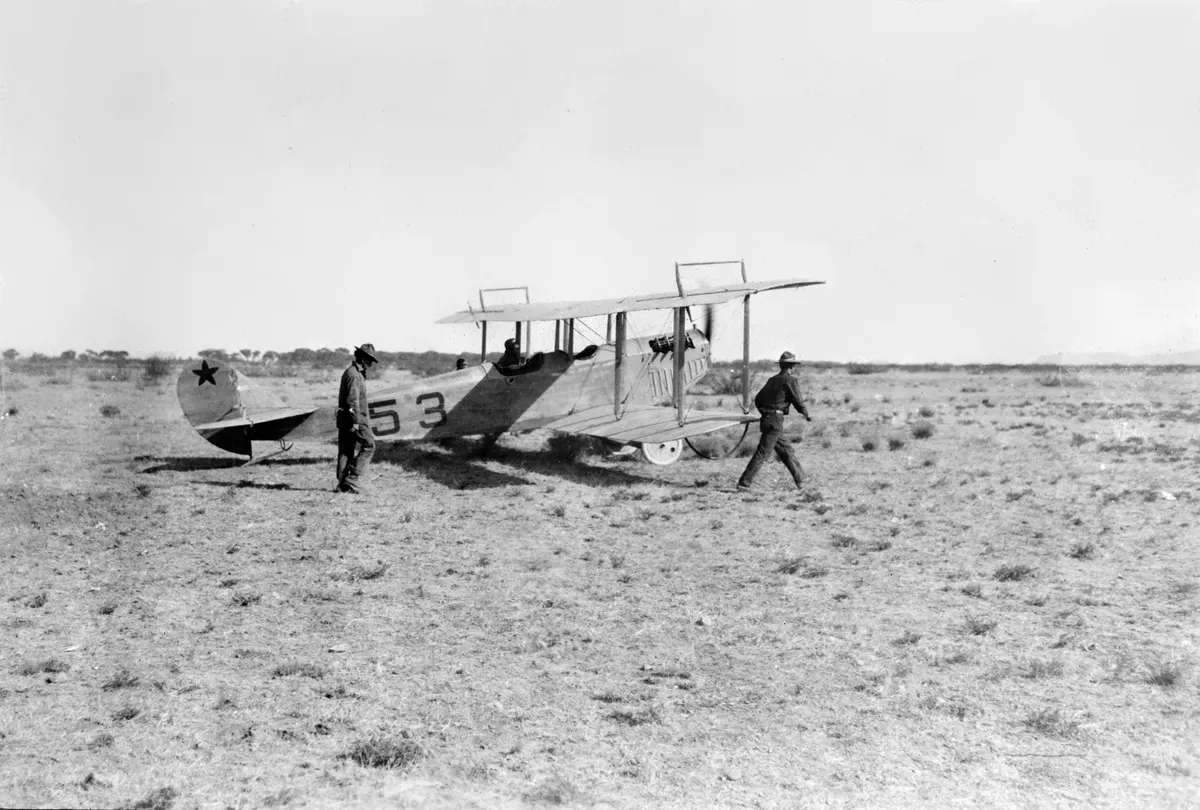
Along the Mexican border in the years after that expedition, the Winchester Model 1907's role shifted from wartime aviation to peacetime law enforcement, but the conflict-adjacent thread never fully broke. Border Patrol inspectors carried the rifle against armed smugglers and bootleggers through the late 1920s and into the 1930s, in an era when the border itself remained an active security and combat-adjacent zone in the years following the Mexican Revolution10. That progression, from an experimental aircraft weapon in a formal border expedition to a hand-me-down patrol rifle on the same border a decade later, is unusually well documented for a commercial sporting arm of its period.
The Winchester Model 1907 sat in the middle of a four-rifle self-loading family sharing the same basic blowback action across two decades of Winchester catalogs. The rimfire Winchester Model 1903 came first, aimed at plinking rather than serious use, and the underpowered Winchester Model 1905 followed it into centerfire cartridges that never satisfied hunters1. The Winchester Model 1907 corrected that cartridge problem, and the heavier Winchester Model 1910, chambered for the even more powerful .401 Winchester Self-Loading, rounded out the family for buyers who wanted genuine big-game power1.
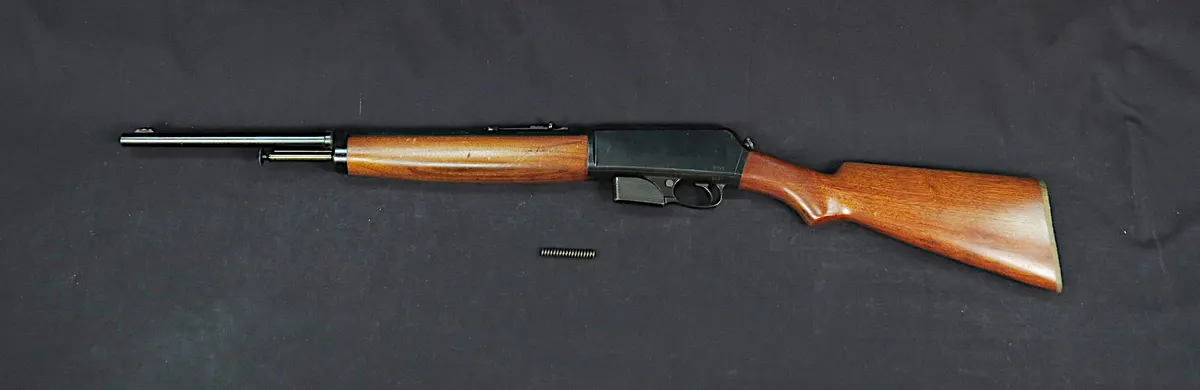
Within the Winchester Model 1907 line itself, Winchester's own records and modern references generally recognize three main production variants1,3. The plain-finish rifle was the standard commercial configuration sold from 1907 onward. The fancy-finish rifle added a semi-pistol grip and checkering on the forearm and wrist for buyers willing to pay more. The police rifle, introduced around 1935 as law enforcement became the Winchester Model 1907's dominant American customer base, featured a non-adjustable rear sight moved rearward on its dovetail, sling swivels, a larger magazine release, a thinner muzzle profile, and the optional Krag-pattern bayonet-lug that later failed government acceptance trials1. A small government test batch of roughly 1,000 police-configuration rifles with that bayonet mount was built for potential U.S. military acceptance around the start of World War II, but the weak bayonet lug caused the design to fail its field trials, and Winchester redirected the batch to state police and prison-guard sales instead of a military contract1.
No French full-automatic factory variant of the Winchester Model 1907 is confirmed by primary Winchester documentation, despite persistent secondary claims of a wartime 700-rounds-per-minute conversion for France. The one documented category of fully-automatic Winchester Model 1907 rifles is the illegal, gunsmith-built conversions associated with Depression-era criminal gangs in the United States during the 1930s, discussed above, a completely separate story from any wartime French contract1,7.


| Year | Buyer | Quantity | Amount | Present Value (2025) |
|---|---|---|---|---|
| 1916 |  Russia | 500 | — | — |
| 1915 |  France | 300 | — | — |
| 1914 |  United Kingdom | 120 | — | — |
France was the Winchester Model 1907's largest confirmed military customer, ordering roughly 2,500 rifles across 1915 to 1918 for its aviation section, a purchase driven directly by the need to arm aircraft observers before machine guns became standard airborne equipment4,1. The United Kingdom bought around 120 Winchester Model 1907 rifles for the Royal Flying Corps in the same 1914 to 1916 window, again primarily for observer use rather than ground combat4. Imperial Russia purchased roughly 500 rifles in 1916 through a private American finance house rather than a direct government-to-government sale, and Wikipedia's sourcing also documents Montenegro's royal guard carrying a small number around the same period1. The United States used the Winchester Model 1907 across several distinct roles, the 1st Aero Squadron during the Pancho Villa Expedition, the U.S. Border Patrol along the Mexican border through the late 1920s and 1930s, and the Federal Bureau of Investigation after the 1933 Kansas City Massacre, alongside numerous state and municipal police departments that bought the 1935 police variant into the postwar decades1,10.
Winchester's own database listing for the Winchester Model 1907 also names Italy among its wartime users. That specific claim was not corroborated by the primary sources checked for this article, Wikipedia's current sourcing lists France, the United Kingdom, Imperial Russia, the United States, and Montenegro rather than Italy, and it should be treated as unverified pending a clearer period source such as a Winchester shipping ledger or an Italian ordnance record.
Winchester's own self-loading catalog shaped the Winchester Model 1907's fate as much as any outside rival did. The Winchester Model 1905 had already opened the centerfire self-loading category, and buyers who had waited on that rifle's underpowered .32 and .35 Winchester Self-Loading cartridges switched to the Winchester Model 1907's .351 WSL almost immediately once it reached dealers, which is why the Model 1905 lasted barely fifteen years while the Winchester Model 1907 ran for fifty1,3.
Outside Winchester's own catalog, the Winchester Model 1907's closest American competitor in spirit was the Remington Model 8, John Browning's long-recoil design that reached the market in 1906, a year before the Model 19071. The two rifles solved the same commercial problem, a semi-automatic sporting rifle with enough power to matter, using opposite mechanisms. The Remington Model 8's barrel and bolt recoiled together before separating, letting Remington safely chamber cartridges up to the .35 Remington at velocities around 640 meters per second, meaningfully faster than the Winchester Model 1907's blowback-limited .351 WSL1. That mechanical difference produced a real role split, the Remington Model 8 was pitched more squarely at big-game hunters, while the Winchester Model 1907's lighter recoil impulse and detachable box magazine made it the rifle armies and police departments actually adopted for observer duty and patrol work.
| Rifle | Action | Cartridge | Muzzle velocity | Adopted by military/police |
|---|---|---|---|---|
| Winchester Model 1907 | Blowback | .351 WSL | ~570 m/s | France, UK, Russia, US, police |
| Remington Model 8 | Long-recoil | .35 Remington | ~640 m/s | Limited police use |
| Winchester Model 1910 | Blowback | .401 WSL | ~610 m/s | Civilian only |
The numbers explain why the Winchester Model 1907, not the more powerful Remington Model 8, became the rifle multiple governments actually bought during World War I. Aircraft observers and mounted patrolmen needed a light, controllable, magazine-fed weapon more than they needed maximum stopping power, and the Winchester Model 1907's blowback action delivered exactly that trade-off4,1.


What caliber does the Winchester Model 1907 use The Winchester Model 1907 was chambered only in the .351 Winchester Self-Loading cartridge, an intermediate-power round Winchester introduced alongside the rifle in 1906 and never offered in any other production Winchester model2,1.
How many Winchester Model 1907 rifles were made Winchester built 58,733 Model 1907 rifles between 1907 and 1957, making it the highest-production rifle in Winchester's early self-loading family1.
Is the Winchester Model 1907 still in service today No. The Winchester Model 1907 has not been in production since 1957 and no current military or police force issues it. Surviving examples, including former French, British, and Russian military contract rifles, are now collector pieces.
Was the Winchester Model 1907 used in World War I Yes. France, the United Kingdom, and Imperial Russia all purchased Winchester Model 1907 rifles between 1914 and 1918, primarily to arm aircraft observers and observation-balloon crews before machine guns became standard aircraft armament4,1.
What was the Winchester Model 1907's unit cost The Winchester Model 1907 sold new for around $28 in its plain-finish configuration, a 1907-era retail price rather than a modern valuation, with the fancy-finish version costing more1.
Did Bonnie and Clyde use the Winchester Model 1907 The primary sources checked for this article found no verified connection between Clyde Barrow and the Winchester Model 1907, and no evidence of a genuine Clyde Barrow letter to Winchester. The well-documented 1934 Clyde Barrow fan letter praising a manufacturer's product was addressed to Ford Motor Company about the Ford V-8 automobile, not to Winchester. The real Depression-era gangster connection to the Winchester Model 1907 runs through John Dillinger's gang and its illegally converted automatic gangster gats, not the Barrow gang, whose documented long guns were Browning Automatic Rifles7.
- "Winchester Model 1907", Wikipedia — en.wikipedia.org ↩
- ".351 Winchester Self-Loading", Wikipedia — en.wikipedia.org ↩
- "Winchester Model 1905, Model 1907 and Model 1910 SL rifles (USA)", Modern Firearms — modernfirearms.net ↩
- "Winchester Model 1907 Semi-Automatic / Full-Automatic Rifle / Carbine", Military Factory — militaryfactory.com ↩
- "Part I: Origins, Development & Early Adoption", Gold Country Treasures — goldcountrytreasures.com ↩
- "The aircraft use of Rifles & Pistols by the Royal Flying Corps", rifleman.org.uk — rifleman.org.uk ↩
- "Dillinger Gang's Winchester 1907 Self-Loader: The Lebman Conversion", Forgotten Weapons — forgottenweapons.com ↩
- "Two Gunshots That Changed the World: The Death of King Carlos I of Portugal & The Winchester 1907", GunsAmerica — gunsamerica.com ↩
- "Lisbon Regicide", Wikipedia — en.wikipedia.org ↩
- "A Look At the Patrol Rifle of Yesteryear", GunsAmerica — gunsamerica.com ↩
- "Winchester Model 1907", Internet Movie Firearms Database — imfdb.org ↩