

The Smith & Wesson Model 1940 Light Rifle is a 9x19mm Parabellum semi-automatic carbine that Smith & Wesson built for Britain's rearmament drive in 1939, and of the roughly 2,200 receivers the company started, only 1,227 were ever finished before the whole program collapsed.1,7 The company that designed it is better known today for revolvers and later for its own line of semi-automatic rifles, but in 1939 Smith & Wesson was a Depression-strained firm eager for any government work, and a British request for a compact self-loading arm looked like a lifeline.6 The rifle that resulted never fired a shot for either the country that ordered it or the country that built it.
- 20-round detachable magazine, well above rifle norms of 1939
- finely machined, tightly fitted for a rushed wartime contract
- chambered a cheap, plentiful pistol cartridge
- simple blowback action with few moving parts
- receiver could not survive full-power military 9mm ammunition
- downward-ejecting tube design made clearing stoppages awkward
- effective range far short of a genuine service rifle
- hand-machined construction unsuited to wartime mass production
Design work fell to Edward S. Pomeroy, the plant superintendent who doubled as chief designer at Smith & Wesson's Springfield works, and who filed the patent on the mechanism on June 28, 1939.1,6 What emerged was a straight blowback, open-bolt weapon firing from a 20-round detachable magazine, aimed squarely at the same operational gap that submachine guns like the Sten were built to fill.
Whether to call it a rifle, a carbine, or something closer to a submachine gun has never fully settled. Modern sources use all three terms, sometimes in the same sentence, and it is catalogued here under semi-automatic rifles specifically because its trigger group never offered automatic fire, the one mechanical trait that actually separates it from a true submachine gun of the period.
Roughly 1,010 of the finished rifles left the factory for United Kingdom trials, and the rest stayed in United States inventory, eventually reaching civilian collectors decades later.1,7 The Model 1940 Light Rifle is now among the rarest Smith & Wesson military products ever made, valued today for the story of its failure as much as for its scarcity.5 Searches for Smith and Wesson Model 1940 Light Rifle specifications and S&W Light Rifle cartridge mostly turn up the same handful of specialist and collector sources cited throughout this article, a reflection of how obscure the weapon remained even among World War II small arms enthusiasts.
The Smith & Wesson Model 1940 Light Rifle weighed about 4.08 kg (9 lb) unloaded and measured 812 mm (32 in) overall, built around a 248 mm (9.75 in) tapered barrel cut with twelve longitudinal flutes.1,4 The receiver was machined steel, described by one reviewer as of intricate shape and expensive to produce, while the stock and grip panels were molded from Tenite, an early cellulose-acetate plastic rather than wood.4,5 A 20-round box magazine loaded from the front of a forward housing that doubled as a foregrip, and the rear sight was a click-adjustable unit graduated from 50 to 400 yards, a range the cartridge itself could never really deliver.4
- First Production Year1939
- DesignerEdward S. Pomeroy
- Weight (Empty)4.08 kg
- Currently In ServiceNo
The most unusual feature was how the Model 1940 Light Rifle handled spent brass. Rather than ejecting cases out a side port like almost every other self-loading firearm, it routed them down through a vertical tube built into the magazine housing.5 That tube kept the action enclosed and tidy, but it also meant a shooter could not glance into the receiver to check the chamber or clear a jam without disassembling the housing itself, a real handicap in a combat weapon.
- Cartridge9x19mm Parabellum
- Calibre9 mm
- Case Length19 mm
- Calibre Classpistol
- RimfireNo
- Caseless AmmunitionNo
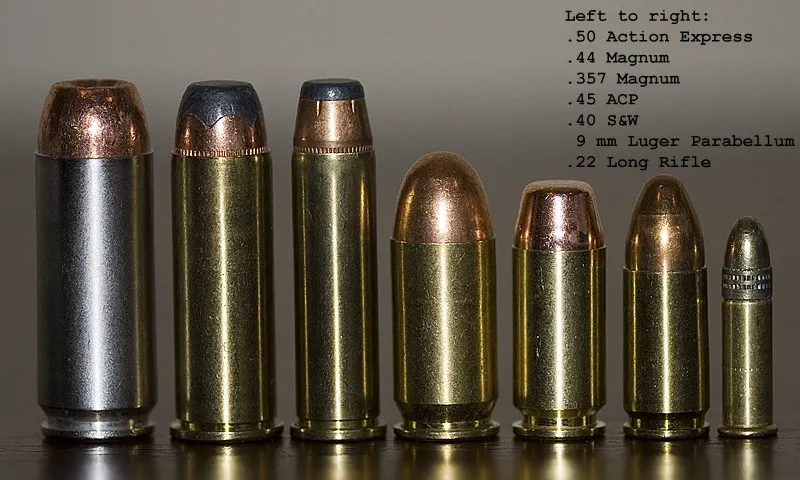
Cartridge and ballistics drove the whole program's collapse. Smith & Wesson designed and proof-tested the Model 1940 Light Rifle around commercial American 9x19mm Parabellum loads, roughly 125-grain bullets at about 350 m/s (1,150 ft/s) for around 460 J (340 ft-lbs) of muzzle energy.5 British service 9mm of the day ran far hotter, close to 1,350 to 1,400 ft/s and over 500 ft-lbs, because it had been standardized for use in actual submachine guns rather than a lightly built blowback rifle.5 Fired on the softer American loads it had been designed around, the Model 1940 Light Rifle behaved acceptably. Fired on British-specification ammunition during endurance testing, the threaded rear section of the receiver began cracking after as few as 1,000 rounds, well short of the 5,000-round standard the trial demanded.1,2,3
- Action TypeBlowback
- Fire Modessemi-automatic
- Select FireNo
- Feed SystemDetachable Magazine
- Magazine Capacity20
Smith & Wesson answered with a second version, retroactively labeled Mark II, that added an external steel sleeve over the weak section of the receiver.1,3 The sleeve doubled as a rotating bolt lock and replaced the Mark I's separate lever safety, and the earlier Mark I's cammed, floating firing pin was simplified to a fixed pin in the Mark II.3,4 The fix arrived too late to save the contract. Even the reinforced Mark II could not be pushed through full-scale British acceptance testing before the whole order was cancelled.1
- Muzzle Velocity350 m/s
- Muzzle Energy460
- Effective Range (point)90 m
- Sighting Range366 m
Effective range was the other structural weakness. The Model 1940 Light Rifle's 9x19mm Parabellum chambering was workable to roughly 90 to 100 yards, a fraction of the 300 yards the American .30 Carbine cartridge would soon deliver in the M1 carbine, a genuinely comparable light rifle concept fielded the same war.5 A rear sight calibrated out to 400 yards on a gun that struggled past 100 was, by more than one account, wishful engineering rather than a real capability.5
- Barrel Length248 mm
- Optic RailNo
- Iron SightsYes
- Threaded BarrelNo
- Overall Length812 mm
- Receiver Materialsteel
- Furniture Materialtenite
- Folding / Collapsing StockNo
- Bullpup LayoutNo
- Ambidextrous ControlsNo
- Total Production1,227
- Production Start1940
- Variants2
Smith & Wesson entered 1939 in poor financial shape, still working through the aftermath of the Depression, when the British government approached the company about a compact 9mm self-loading arm for its own forces.6 Edward S. Pomeroy completed the design that June, and the British Purchasing Commission, the body headed by the Canadian industrialist Arthur Purvis and charged with buying American war materiel using hard currency and gold reserves, advanced Smith & Wesson roughly 1 million dollars, equivalent to well over 17 million dollars today, to fund tooling and the first production run before extensive testing was even complete.1,2,6
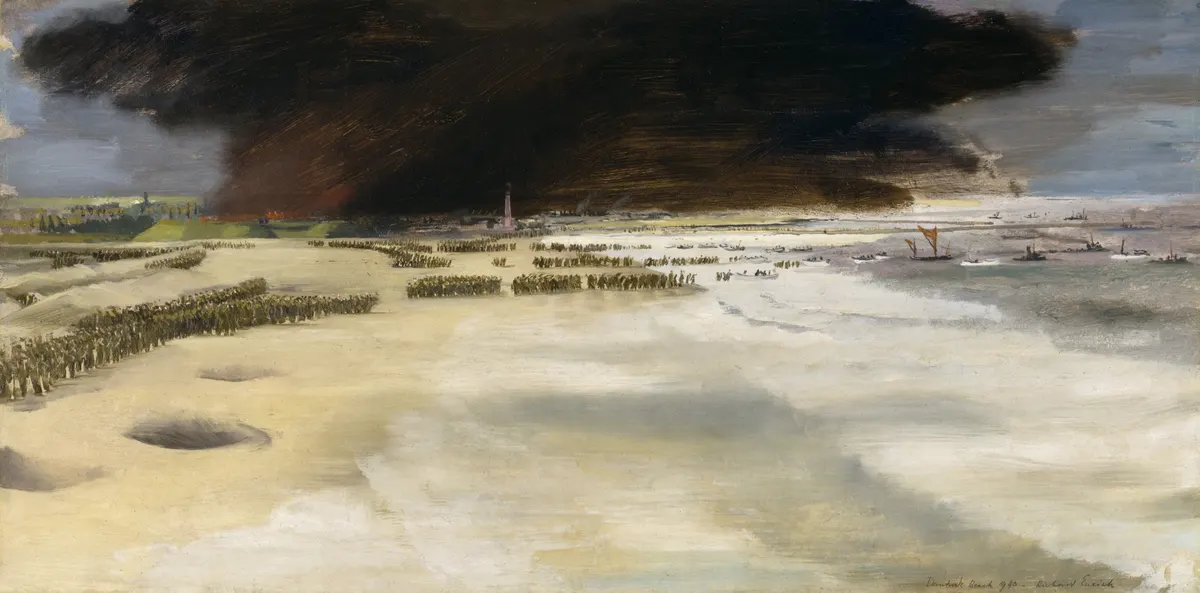
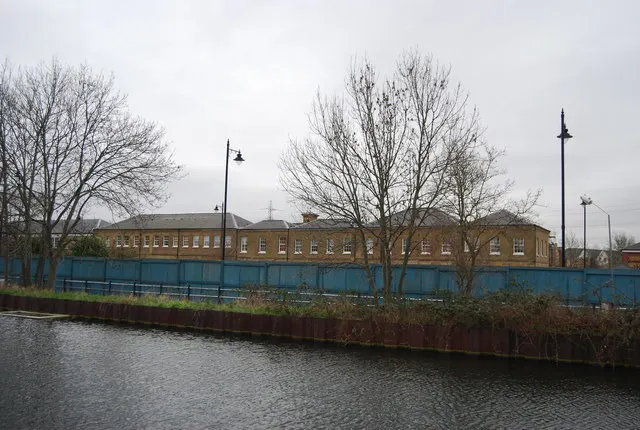
That kind of urgency became acute in the spring and summer of 1940. The catastrophic loss of equipment during the Dunkirk evacuation left the United Kingdom short of rifles, pistols and submachine guns of every description as the country braced for a possible invasion during World War II.3 Prototypes of the Model 1940 Light Rifle were shipped to England for testing at the Royal Small Arms Factory in Enfield during 1940.1
The Enfield trials went badly from the start. Testers found the design had effectively been proofed on the wrong ammunition, and cracked receivers began showing up well inside the required 5,000-round endurance run.1,2 Smith & Wesson rushed the sleeved Mark II into production to fix the problem, but by then Britain had already begun accepting the crude, cheap Sten submachine gun in enormous numbers, a weapon that solved the same shortage with stamped sheet steel rather than precision machining.3 The British government formally cancelled the Model 1940 Light Rifle contract after receiving about 1,010 rifles (60 prototypes, roughly 750 Mark I and about 200 Mark II) and demanded its advance back.1,7
United States ordnance officers at Aberdeen Proving Ground also examined the design and rejected it on their own grounds, since 9mm Parabellum was not a standard American service cartridge and the rifle offered no automatic-fire option that might have justified adopting a new pistol-caliber round.5 Smith & Wesson never resubmitted a select-fire version, and the Model 1940 Light Rifle program ended without ever equipping a single operational unit in either country.5
Surviving rifles stayed in Smith & Wesson's own inventory for decades. Only in the 1970s were the leftover Model 1940 Light Rifles reclassified as Curio and Relic items and released for sale, and the company reportedly sold 137 Mark I and about 80 Mark II examples to civilian collectors from that surplus stock.1 Today auction houses and price guides value well-preserved examples in the thousands of dollars, a striking outcome for a weapon that never passed a single military acceptance trial.8
Only two production variants of the Smith & Wesson Model 1940 Light Rifle exist, and the difference between them is entirely about surviving the receiver failure rather than any change in role or performance. The Mark I used the original thin-walled receiver, a cammed floating firing pin, and a separate lever-type manual safety on the right side of the receiver.3,4 The Mark II added the external steel reinforcing sleeve around the weak threaded section, switched to a simpler fixed firing pin, and folded the safety function into a rotating collar built into that same sleeve.3,4 About 750 Mark I and 200 Mark II rifles reached Britain before the contract ended, with a further split among the roughly 217 that never shipped.1
No third military variant followed. There was no attempt at a carbine-length sporting version, no police-market release matching the original pre-war concept that reportedly inspired Pomeroy's design, and no licensed production anywhere else.4,6 The entire run, Mark I and Mark II combined, came from a single production line at Smith & Wesson's own plant.
Mark II rifles are the scarcer of the two among today's surviving population, a direct echo of the original delivery numbers. Britain took roughly 200 Mark II rifles against about 750 Mark I rifles before the contract ended, and the same rough ratio carries through into the small pool that reached civilian collectors after the 1970s release.1,7


| Year | Buyer | Quantity | Amount | Present Value (2025) |
|---|---|---|---|---|
| 1939 |  United Kingdom | — | $1.0 M | $23.2 M |
No country ever formally adopted the Smith & Wesson Model 1940 Light Rifle for service. The United Kingdom is the only government that took meaningful delivery, receiving roughly 1,010 rifles for evaluation and troop trials under the British Purchasing Commission contract before rejecting the design outright.1,7 None of those rifles are known to have reached front-line units in any numbers before the cancellation, and no other Allied government placed a comparable order. Smith & Wesson itself retained the unshipped balance of the production run in the United States, where the rifles sat as company inventory rather than active-duty equipment until their release to collectors decades later.1
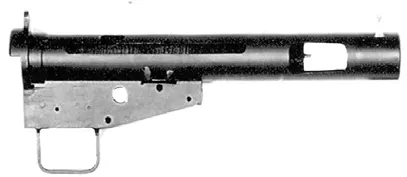
Britain solved the same 1940 shortage the Model 1940 Light Rifle was built for by adopting the Sten instead, a submachine gun stamped from sheet steel for a fraction of the machining cost of the Smith & Wesson design.3 Both weapons fired 9x19mm Parabellum from a similar magazine capacity, but the comparison ends at the cartridge. The Sten embraced full-automatic fire and crude, fast production specifically because Britain needed volume immediately, while the Model 1940 Light Rifle offered only semi-automatic fire from an expensive, precisely machined receiver that could not even survive the ammunition its buyer intended to use. Sten-type weapons are catalogued among machine pistols rather than semi-automatic rifles, underlining how close the Model 1940 Light Rifle sat to that category despite its different classification.
| Smith & Wesson Model 1940 Light Rifle | Sten Mk II | |
|---|---|---|
| Cartridge | 9x19mm Parabellum | 9x19mm Parabellum |
| Fire mode | Semi-automatic only | Select-fire |
| Weight (empty) | 4.08 kg | approx. 3.0 kg |
| Effective range | approx. 90 to 100 yd | approx. 100 to 150 yd |
The United States faced an almost identical procurement question in the same period and reached the opposite outcome with the M1 carbine. Both weapons were pitched as compact, lightweight light rifles for troops who did not need a full-power service rifle, and both used a magazine-fed, semi-automatic action. The M1 carbine's dedicated .30 Carbine cartridge, however, delivered roughly three times the effective range of 9mm Parabellum, and its rotating-bolt gas action proved durable enough that American Ordnance adopted it within about a year of first testing.5 Millions of M1 carbines went on to serve for decades, while the Model 1940 Light Rifle never equipped a single unit, a gap that traces directly back to the cartridge and mechanism choices made at the design stage rather than to any difference in manufacturing quality.


What cartridge does the Smith & Wesson Model 1940 Light Rifle use? The Model 1940 Light Rifle is chambered for 9x19mm Parabellum, the same pistol cartridge used in contemporary submachine guns like the Sten, not a proprietary rifle round.1,4
Why did Britain reject the Smith & Wesson Model 1940 Light Rifle? British testers found the receiver cracked after as few as 1,000 rounds of full-power British-specification 9mm ammunition, well short of the 5,000-round endurance standard, because Smith & Wesson had designed and proofed the gun on milder American commercial loads.1,2,3
How many Smith & Wesson Model 1940 Light Rifles were made? Company records describe roughly 2,200 receiver blanks started, with 1,227 rifles actually completed, of which about 1,010 were shipped to Britain across the Mark I and Mark II versions before the contract was cancelled.1,7
Is the Smith & Wesson Model 1940 Light Rifle a rifle or a submachine gun? Sources disagree. Its open-bolt, blowback, pistol-caliber design matches contemporary submachine guns, but because it never offered automatic fire it is generally catalogued as a semi-automatic carbine or light rifle rather than a true submachine gun.3,5
How much is a Smith & Wesson Model 1940 Light Rifle worth today? Surviving examples are rare enough that auction results and collector price guides commonly value well-preserved specimens in the thousands of dollars, reflecting both their scarcity and their status as a documented military failure.8
- "Smith & Wesson Model 1940 Light Rifle", Wikipedia — en.wikipedia.org ↩
- "The Model 1940 Light Rifle, Smith & Wesson's Beautifully Made Failure", American Rifleman — americanrifleman.org ↩
- "Smith & Wesson Light Rifle, Model 1940", Forgotten Weapons — forgottenweapons.com ↩
- "S&W Light Rifle Model 1940", Modern Firearms — modernfirearms.net ↩
- "The S&W Light Rifle, the little carbine that could", Sandboxx — sandboxx.us ↩
- "History of the S&W Model 1940 Light Rifle", Smith & Wesson Forum — smith-wessonforum.com ↩
- "Smith & Wesson Model 1940 Light Rifle", Guns.com — guns.com ↩
- "S&W Model 1940 Mark II Light Rifle w/Ex. Mag, Manual, Oiler", Rock Island Auction — rockislandauction.com ↩