


The Remington Model 552 Speedmaster stayed in Remington's catalog from 1957 to 2020, a 63-year production run that makes it one of the longest continuously offered rimfire rifles built in the United States.1 It is a blowback operated, tubular-magazine fed .22 rimfire semi-automatic rifle, chambered so that it cycles .22 Short, .22 Long, and .22 Long Rifle interchangeably from the same tube without any manual adjustment.2 Remington Arms, based in Ilion, New York, built the Speedmaster name across three broad generations of the design, the plain 552A, the checkered 552 BDL Deluxe, and the 552GS Gallery Special built for coin-operated shooting galleries.1,3
- .22 Short/Long/LR interchangeability from one tube
- Simple blowback action, few moving parts to fail
- Decades of factory and aftermarket parts support
- Light recoil, easy to shoot for beginners
- Bent or dented tube magazine disables the rifle entirely
- No detachable magazine, slower reload than box-fed rivals
- Feeding reliability drops on worn, well-used examples
- Long discontinued, no factory-new parts since 2020
Remington built the Model 552 as the successor to its own Model 550 and Model 550-1, which had used a patented floating chamber device invented by David Marshall Williams (better known as Carbine Williams) to let a rimfire blowback action digest three different cartridge lengths.4 The 552 dropped the floating chamber and reached the same .22 Short/.22 Long/.22 Long Rifle interchangeability through a revised blowback design instead, a change collectors still discuss as the defining difference between the two rifles.4,5
Within Remington's own rimfire lineup, the Model 552 ran in parallel with the synthetic-stocked remington-nylon-66 (1959 to the late 1980s) and later with the detachable-magazine remington-model-597 (introduced 1997), giving Remington three distinct .22 autoloader platforms on the market at once for roughly two decades.6,7 Outside Remington, the tube-fed Model 552 shares its market segment with the far more common ruger-10-22, whose detachable rotary magazine eventually became the industry standard for rimfire semi-automatic rifles and is the rifle most buyers researching Remington 552 specifications end up comparing it against.8
The Model 552 belongs to the broader family of American blowback semi-automatic-rifles, a category whose commercial roots trace back to the Winchester Model 1903, widely credited as the first commercially successful semi-automatic .22 rifle sold in the United States.9 Remington's own 551, 550, and 552 line followed decades later, refining a niche that Winchester had opened but that Remington eventually came to dominate through the Speedmaster name.
Is the Remington 552 Speedmaster still in production? No, Remington ended production in 2020 as the Model 552's parent company, Remington Outdoor Company, broke apart in bankruptcy and its historic Ilion, New York plant closed.10 Used and collector-market prices for a Remington 552 today typically run from around $200 for a well-worn example sold privately up to $600 or more for a clean BDL Deluxe, well below the rifle's final $707 list price shortly before it left the catalog.11,12
The Remington Model 552 Speedmaster is chambered for .22 Short, .22 Long, and .22 Long Rifle (5.6mm), fed from a tube built into the forend rather than a box or rotary detachable-magazine.2 Capacity depends on which cartridge is loaded, commonly cited as roughly 15 rounds of .22 Long Rifle, 17 rounds of .22 Long, and around 20 rounds of .22 Short, though at least one detailed hands-on review lists a slightly higher 22-round Short capacity, a minor discrepancy that has never been fully resolved between sources.3,13
- First Production Year1957
- Weight (Empty)2.61 kg
- Currently In ServiceNo
The action is a straightforward blowback design with a low-profile bolt handle on the left side of the receiver and a safety mounted through the trigger guard on the base 552A, later changed to a cross-bolt safety on the BDL Deluxe.3,14 The receiver itself is machined from cast aluminum alloy rather than steel, a lighter, corrosion-resistant choice that held throughout the model's 63-year run.5 Reported barrel length varies by source, most listings and Remington's own factory data give 22 inches (558.8mm), but a detailed hands-on test of a later production rifle measured the barrel at 21 inches (533mm) instead, suggesting Remington may have shortened the barrel at some point without every reference source catching the change.3
- Cartridge.22 LR
- Calibre5.6 mm
- Calibre Classrimfire
- RimfireYes
- Caseless AmmunitionNo
Reported empty weight sits around 2.6kg (5.75 lb) across most references, though the same hands-on test weighed its own rifle at closer to 2.5kg (5 lb 9 oz), a gap likely explained by ordinary variance between individual stocks rather than a running design change.2,3
- Action TypeBlowback
- Fire Modessemi-automatic
- Select FireNo
- Feed SystemTube
- Magazine Capacity15
- Safety Typetrigger guard
Sights are open, a white-bead front post and an adjustable rear notch, with a 3/8 inch dovetail machined into the receiver for mounting a scope, giving the Model 552 both iron-sights and an optic option from the factory.3 Stocks are American walnut throughout the line, plain and uncheckered on the base 552A, glossy and checkered with a raised cheekpiece on the 552 BDL Deluxe.2,14 Trigger pull on the tested example broke at just under four pounds, light enough for younger or first-time shooters, which was a large part of the rifle's appeal as a plinking and small-game gun for over six decades.3
- Muzzle Velocity334 m/s
- Effective Range (point)137 m
Muzzle velocity for period-correct standard-velocity .22 Long Rifle ammunition fired from a rifle-length barrel like the 552's runs close to 1,095 feet per second (about 334 m/s) for a 40-grain bullet, rising toward 1,600 fps with modern hyper-velocity 30-grain loads, figures drawn from general .22 LR rifle-barrel ballistics rather than a factory chronograph test specific to this rifle.15 Practical effective range for a rimfire semi-automatic rifle of this type is commonly cited around 150 yards, with most hunters and target shooters keeping shots inside 50 to 100 yards for reliable accuracy on small game.15
- Barrel Length558.8 mm
- Sight Typeopen sights and dovetail rail
- Optic RailYes
- Iron SightsYes
- Threaded BarrelNo
- Receiver Materialaluminum
- Furniture Materialwalnut
- Folding / Collapsing StockNo
- Bullpup LayoutNo
- Ambidextrous ControlsNo
- Production Start1957
- Production End2020
Remington introduced the Model 552 Speedmaster in 1957, with the earliest documented production dating to that spring.1,16 The rifle is credited to Remington engineers L.R. Crittendon and E.W. Hailston, working from the company's existing Model 550/550-1 platform rather than starting a clean-sheet design.1 The 550-1's floating chamber, patented by David Marshall Williams (Carbine Williams, later famous for his contribution to the M1 Carbine), let it fire three lengths of .22 rimfire ammunition from one tube, but the mechanism was prone to reliability problems including barrel bulging and a chamber that could seize under certain conditions.4
Remington's 1957 solution eliminated the floating chamber entirely and achieved the same multi-cartridge interchangeability through a revised blowback layout, ending Remington's need to keep paying Williams a per-rifle royalty on every 550-series rifle sold, according to long-running collector accounts of the switch.4 Whatever the exact commercial motive, the redesign worked well enough that Remington kept the core 552 mechanism essentially unchanged for six decades, changing cosmetic details and stock furniture far more often than the action itself.
Remington marked the surrounding cartridge tradition with a 1966 150th Anniversary edition, stamped with gold receiver markings to mark 150 years since Remington's founding in 1816, with roughly 6,500 units produced according to period dealer records.17 The base 552A configuration, plain walnut with a blued receiver and no checkering, ran from 1957 into 1988.2 A 552 BDL Deluxe followed with checkered walnut and a glossier finish, reappearing with a Monte Carlo comb around 1991 after reports of a short production gap between the 552A's end and the BDL's introduction, then reverting to a straight comb in 2017 after shooters complained the raised comb interfered with using the open sights properly.2

A dedicated 552GS Gallery Special variant, chambered for .22 Short only, was built specifically for coin-operated carnival and amusement-park shooting galleries, where patrons paid to fire Remington's low-powered, frangible Spatter-Less ammunition at metal targets roughly 20 feet away.18 Gallery guns took heavy daily use, so well-preserved surviving examples are relatively scarce and sought after by collectors today.18
What kept the Model 552 Speedmaster in Remington's catalog so much longer than most rimfire designs was less any single innovation than steady, low-cost demand across several overlapping markets, plinking, small-game hunting, gallery use, and a loyal repeat-buyer base, combined with a design mature enough by the 1960s that Remington saw little reason to replace it outright. Even after the ruger-10-22 launched in 1964 with a detachable rotary magazine that most of the market eventually preferred over any tube-fed rifle, Remington kept the 552 alive as a lower-volume, traditionalist alternative rather than retiring it in response.
Remington's own Model 597, launched in 1997 with a detachable box magazine explicitly aimed at competing with the Ruger 10/22, ran alongside the 552 for over twenty years without displacing it, and was itself discontinued around 2019, a year before the 552.7,19 The Model 552 finally left production in 2020, the same year Remington Outdoor Company entered its second Chapter 11 bankruptcy in three years and broke apart in a court-supervised, seven-buyer auction, with the Ilion, New York plant that had built every Model 552 ever made shutting down on October 2, 2020.10,20 No source directly documents Remington announcing the 552's end for a specific business reason, but the timing lines up closely enough with the plant closure that the two are almost certainly connected. The firearms-manufacturing side of the business restarted afterward as RemArms, but its relaunched rifle catalog dropped rimfire tube-fed autoloaders entirely, and the Model 552 has not returned to production since.21
The 552A is the base configuration, plain American walnut stock, no checkering, blued metal finish, produced from 1957 to 1988.2
The 552 BDL Deluxe adds checkered walnut, a glossier finish, and (depending on the production year) either a raised Monte Carlo comb (1991 to 2017) or a straight comb matching the base gun (2017 onward, and on some earlier production before the Monte Carlo comb was introduced).2 The BDL Deluxe also swapped the trigger-guard safety for a cross-bolt safety.14
The 552GS Gallery Special is the most specialized variant, chambered for .22 Short only and built for carnival and amusement-park shooting galleries rather than the hunting or plinking market the other 552 variants targeted.18 Its barrel started at roughly 23 to 23.5 inches and was shortened to about 21 inches around 1978 or 1979.18 It carries a plain, non-checkered walnut stock and an aluminum buttplate rather than the recoil pad used on hunting-oriented 552s, and genuine examples carry a patent-number stamp on the barrel that aftermarket replacement barrels lack, a detail collectors use to authenticate original guns.18 Because Gallery Special rifles were fired constantly by paying customers rather than carefully stored by an owner, surviving examples in good condition are comparatively rare on the collector market.
A 1966 150th Anniversary edition, with a gold-stamped receiver marking Remington's 1816 founding, was produced in limited numbers, with period dealer listings citing a figure around 6,500 units.17

The Remington Model 552 Speedmaster was sold almost entirely into the civilian sporting and hunting market in the united-states rather than to any military or police service, reflecting its role as a rimfire plinking, small-game, and gallery rifle rather than a service weapon.1,2 Secondhand listings occasionally describe individual rifles as former police department property, but this labeling applies loosely across several old Remington rimfire models and is not confirmed as a distinct, documented 552 program.
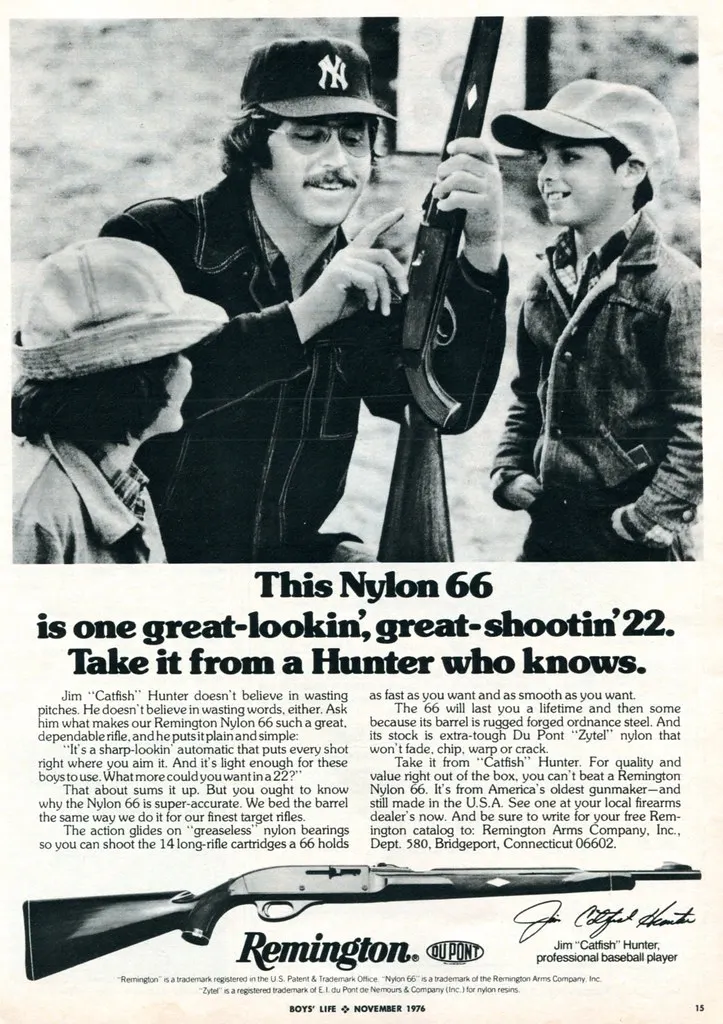
The Remington 552 Speedmaster and the remington-nylon-66 came from the same company within two years of each other, but solved the .22 autoloader problem in almost opposite ways. The 552 kept a traditional walnut stock and a tube magazine that could digest three cartridge lengths, while the Nylon 66 used one of the first mass-production synthetic stocks in American firearms history (DuPont Zytel nylon) paired with a larger 14-round .22 Long Rifle-only tube.6 Remington sold well over a million Nylon 66 rifles between 1959 and its own end of production around 1989 to 1991, a scale the 552 never matched, largely because the Nylon 66's lighter, weatherproof stock and lower price undercut the walnut-stocked 552 in the budget end of the market even as both rifles shared shelf space for three decades.6
Against the ruger-10-22, the comparison is really about magazine philosophy rather than raw specifications. Ruger's 10-round detachable rotary magazine, patented in 1964 and adapted from the older Savage Model 99's rotary concept, solved the persistent jamming problems that plague rimmed .22 Long Rifle cartridges in ordinary box magazines, while sitting flush inside the stock so it does not disrupt the rifle's balance the way a protruding box would.8 That design choice is widely credited as the single biggest reason the Ruger 10/22 went on to outsell every rival, including the Remington 552, with over seven million units built since 1964 and an aftermarket large enough that a complete 10/22 can be assembled without a single Ruger-made part.8 The Remington 552's tube, by contrast, still offers something the Ruger's rotary magazine cannot, true .22 Short and .22 Long interchangeability without buying a second magazine, but a bent or dented tube takes the whole rifle out of action in a way a spare rotary magazine never would for a 10/22 owner.
| Spec | Remington 552 Speedmaster | Ruger 10/22 |
|---|---|---|
| Feed system | Tube (Short/Long/LR) | 10-round detachable rotary (LR only) |
| Barrel length | ~21-22 in (533-559mm) | 18.5 in (470mm) |
| Weight, empty | ~2.6kg | ~2.27kg |
| Production span | 1957-2020 | 1964-present |
| Units built | Not officially disclosed | 7,000,000+ |


Is the Remington 552 Speedmaster still in production? No. Remington ended production of the Model 552 in 2020 as its parent company, Remington Outdoor Company, went through bankruptcy and closed the Ilion, New York plant that had built every 552 ever made.10
What caliber does the Remington 552 use? The Remington 552 Speedmaster is chambered for .22 rimfire ammunition and cycles .22 Short, .22 Long, and .22 Long Rifle interchangeably from the same tube magazine without any adjustment.2
How much is a Remington 552 Speedmaster worth today? Used and collector prices vary widely by condition, with plain examples commonly selling privately for around $200 to $275, GunBroker asking prices more often in the $325 to $460 range, and clean BDL Deluxe examples reaching $500 to $600 or more.11,12
How does the Remington 552 compare to the Ruger 10/22? The Remington 552 uses an older tube-magazine design that can fire three .22 rimfire cartridge lengths, while the Ruger 10/22 uses a 10-round detachable rotary magazine limited to .22 Long Rifle but far faster to reload and far more supported by today's aftermarket and gunsmiths.8
What is the effective range of the Remington 552? Like most .22 Long Rifle rifles, the Remington 552 is generally considered effective out to around 150 yards, with most shooters keeping small-game shots inside 50 to 100 yards for reliable accuracy.15
- "Model 552 Speedmaster", Remington Arms — remarms.com ↩
- "Remington Model 552", Wikipedia — en.wikipedia.org ↩
- "Remington 552 Review", Gunblast.com — gunblast.com ↩
- "Remington's 550 and 552, A Comparison", Rimfire Central forums — rimfirecentral.com ↩
- "Remington 552 receiver, aluminum or steel", Rimfire Central forums — rimfirecentral.com ↩
- "Remington Nylon 66", Wikipedia — en.wikipedia.org ↩
- "Model 597", Remington Arms — remarms.com ↩
- "Ruger 10/22", Wikipedia — en.wikipedia.org ↩
- "Winchester Model 1903", Wikipedia — en.wikipedia.org ↩
- "What Happened To Remington", AllOutdoor.com — alloutdoor.com ↩
- "Remington Speedmaster Model 552 Price and Historical Value", TrueGunValue — truegunvalue.com ↩
- "552 Speedmaster value", Rimfire Central forums — rimfirecentral.com ↩
- "Remington 552 Speedmaster .22 LR Rifle", Wholesale Hunter — wholesalehunter.com ↩
- "Remington 552 BDL Speedmaster", gundata.org — gundata.org ↩
- "The .22 LR, History and Performance", American Rifleman — americanrifleman.org ↩
- "What was the Remington 552 earliest production date", Rimfire Central forums — rimfirecentral.com ↩
- "Remington Model 552-A Speedmaster 150th Anniversary 1816-1966", Guns International — gunsinternational.com ↩
- "Speedmaster 552 GS Gallery Special", Rimfire Central forums — rimfirecentral.com ↩
- "Remington 597 Yellow Jacket review", Gun Mart — gunmart.net ↩
- "Remington confirms details of Chapter 11 bankruptcy", Guns.com — guns.com ↩
- "RemArms Guns Warranty", The Firearm Blog — thefirearmblog.com ↩