

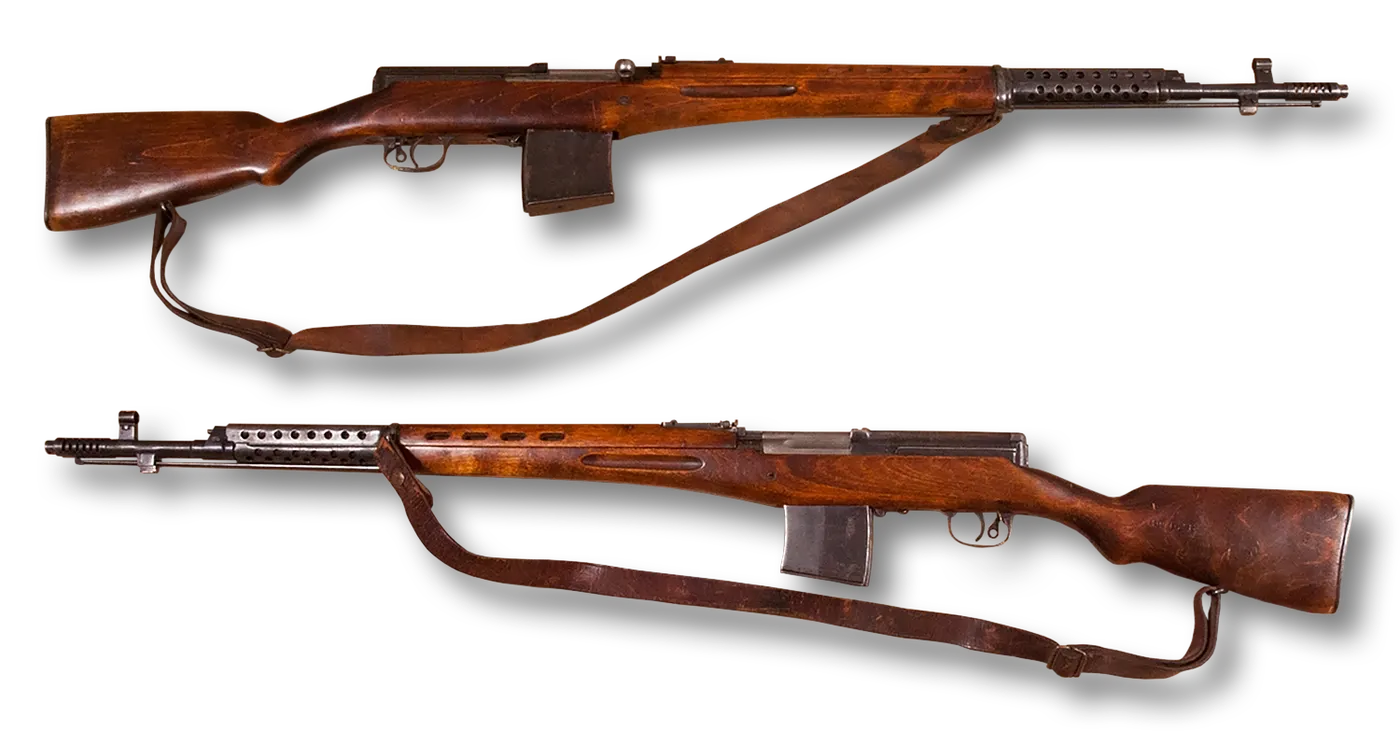

The Tokarev SVT-40 became the Soviet Union's main semi-automatic infantry rifle of World War II only after a rushed, year-long redesign forced by a failed combat debut against Finland. Its predecessor, the SVT-38, went into production at the Tula Arms Plant in 1939 and was issued to Soviet troops almost immediately for the Winter War, where cold weather, mud and poorly trained conscripts exposed nearly every weakness the design had.1,2 Soldiers reported the rifle jamming on frozen lubricant, magazines dropping free during movement, and a gas system that fouled quickly under field conditions.2 The Soviet high command ordered an emergency simplification rather than a new design, and the lightened, mechanically cleaned-up result entered production in mid-1940 as the SVT-40.1
- semi-automatic fire in a full-power 7.62x54mmR rifle
- detachable 10-round magazine, faster reload than a bolt-action
- influenced Germany's own Gewehr 43 gas system
- compact enough to double as a naval-infantry and NCO weapon
- fragile stock and receiver under sustained field use
- gas port and muzzle brake prone to fouling
- harder and slower to manufacture than the Mosin-Nagant
- sniper accuracy inconsistent compared to bolt-action rivals
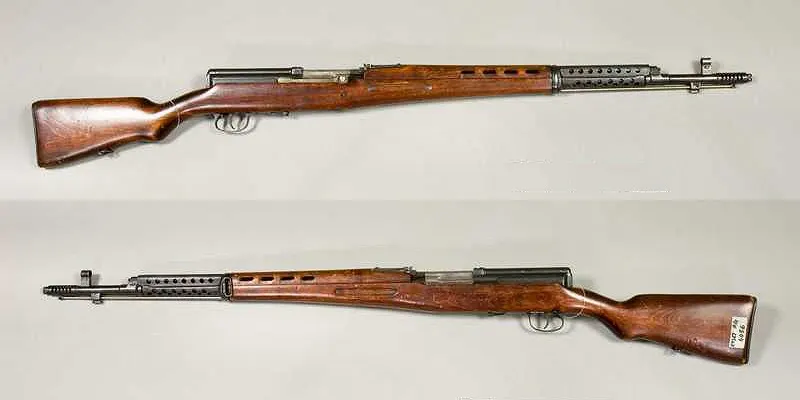
Designed by Fedor Tokarev, a veteran Tula gunsmith who had already given the Red Army its TT pistol, the SVT-40 was chambered for the same rimmed 7.62x54mmR cartridge as the older Mosin-Nagant bolt-action rifle it was meant to replace.1,3 It used a gas-operated short-stroke piston above the barrel driving a tilting bolt, fed from a detachable magazine holding 10 rounds, a mechanical layout that was unusual for a Soviet service rifle of the period and would later turn up, almost unchanged, in Germany's own semi-automatic rifle program.1,9
Soviet industry built roughly 1.6 million SVT-38 and SVT-40 rifles combined between 1939 and January 1945, split across factories at Tula and Izhevsk, which makes the SVT-40 one of the most numerous semi-automatic rifles of the Second World War despite a production run that was cut short twice by war conditions.1,4 A dedicated sniper version with a side-mounted PU scope accounted for roughly 51,000 of that total, and a select-fire derivative called the AVT-40 answered a wartime shortage of light machine guns by adding full-automatic fire to the same basic action.5,11 Both variants are covered in more detail below. The rifle's reputation today is decidedly mixed. Collectors and shooters generally regard it as a more ambitious and more failure-prone answer to the same problem the American M1 Garand and the German Gewehr 43 were trying to solve, and that reputation is grounded in real, well-documented reliability complaints from the soldiers who actually carried it in 1941 and 1942.2,13
The Short-Stroke Gas Piston and Tilting Bolt
The SVT-40's action taps propellant gas through a port near the muzzle into a short-stroke piston that rides above the barrel, driving an operating rod rearward to tilt the bolt out of locking recesses in the receiver.1,2 The system is self-regulating. A gas cutoff on later production rifles let a soldier bleed off excess gas in fouled or cold conditions, a refinement collector guides treat as one of the more sophisticated touches on an otherwise rushed wartime design.4 Muzzle velocity runs 830 to 840 meters per second, and the rifle carries an unusual fluted chamber (fluted only at the neck and shoulder of the cartridge) that eases extraction of the rimmed 7.62x54mmR case under gas pressure, a detail most gas rifles of the era did not need because they used rimless ammunition.2
- First Production Year1938
- Service Entry Year1940
- DesignerFedor Tokarev
- Weight (Empty)3.85 kg
- Currently In ServiceYes
- Notable UsersRed Army, Finnish forces, German forces, Soviet partisans, Czechoslovak forces, Estonian partisans, Italian partisans, North Korean forces, Russian and Ukrainian forces in Russo-Ukrainian War
The PU-Scope Sniper Variant and Its Reliability Problem
The sniper SVT-40 mounted a 3.5x21 PU telescopic sight on a slip-on rail machined into the receiver, the same optic that would later become far more famous on scoped Mosin-Nagant 91/30 rifles once Soviet snipers largely abandoned the semi-automatic sniper concept.12 The idea behind the SVT sniper rifle was sound on paper. A semi-automatic action would let a sniper take a faster follow-up shot than a bolt gun.
- Cartridge7.62×54mmR
- Calibre7.62 mm
- Case Length54 mm
- Calibre ClassRimmed bottleneck rifle
- RimfireNo
- Caseless AmmunitionNo

In practice the SVT-40's action shifted enough under recoil, and its accuracy varied enough rifle to rifle, that Soviet snipers increasingly preferred the heavier but more consistent scoped Mosin-Nagant instead.5,13
- Action TypeGas-Operated
- Fire ModesSemi-automatic
- Select FireNo
- Feed SystemDetachable Magazine
- Magazine Capacity10
- Trigger TypeSingle-stage
- Safety TypeManual safety
Sniper-rifle production ran exclusively through Tula's Factory No. 314. Monthly output climbed from just over 1,000 rifles in March 1941 to a peak of roughly 8,000 that September, then continued into 1942 from a relocated line before the specialized sniper receiver, with its milled scope rail, was quietly dropped in favor of standard rifles, and no more SVT snipers were built after that year.4,5
- Muzzle Velocity835 m/s
- Effective Range (point)500 m
- Effective Range (area)1,000 m
- Sighting Range1,000 m
Wartime Simplification Under Pressure
Early SVT-40 receivers were precision-machined with a finer finish than the rifles built after the Soviet arms industry was evacuated eastward in late 1941. From roughly September 1941 the trigger guard was widened, the muzzle brake was simplified from six vents per side to two, and stamped sheet-metal parts began replacing machined ones wherever the tolerance allowed.4,5 None of this fixed the rifle's core reliability complaints. It just made the SVT-40 faster and cheaper to build at a moment when the Soviet Union badly needed rifles of any kind, and it is one reason surviving wartime examples vary noticeably in finish and fit depending on the year and factory stamped on the receiver.4
- Barrel Length625 mm
- Sight TypeAdjustable iron sights, PU scope (sniper variant)
- Optic RailYes
- Iron SightsYes
- Threaded BarrelNo
| Spec | SVT-38 (1939 to 1940) | SVT-40 (1940 to 1945) |
|---|---|---|
| Weight, empty | approx. 4.0 kg | 3.85 kg |
| Magazine release | rigid catch, prone to snagging | folding catch |
| Muzzle brake | none | fitted |
| Handguard | two-piece | one-piece |
The two rifles share the same gas system, the same 7.62x54mmR chambering and the same 625mm barrel, and the changes between them are almost entirely about weight and field durability rather than ballistics.1,4
- Overall Length1,226 mm
- Receiver MaterialSteel
- Furniture MaterialWood
- Folding / Collapsing StockNo
- Bullpup LayoutNo
- Ambidextrous ControlsNo
- ModularityLimited (sniper variant with scope mount)
- Total Production1,600,000
- Production Start1940
- Production End1945
- Variants2
Fedor Tokarev and the Search for a Soviet Semi-Automatic Rifle
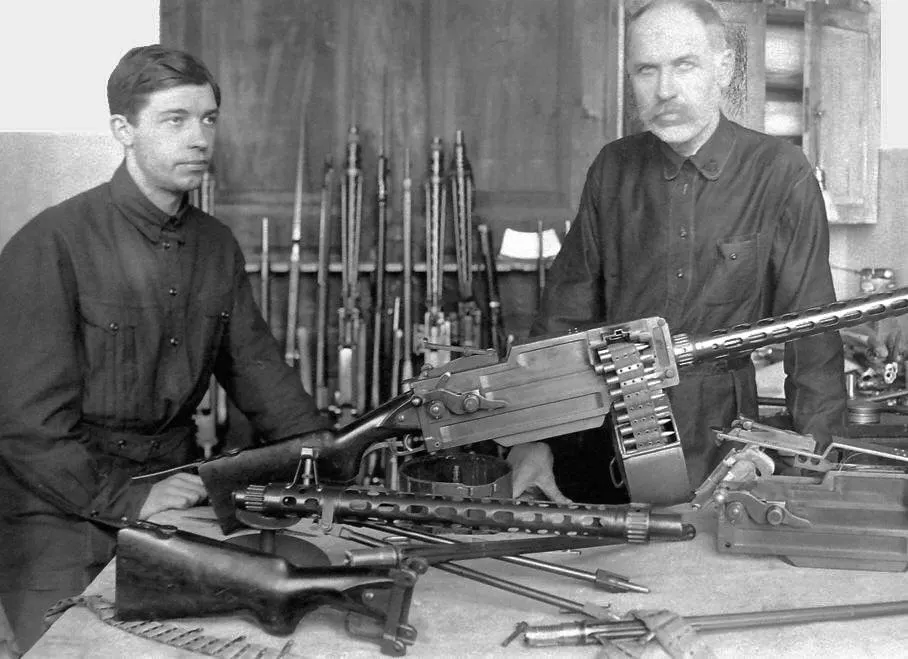
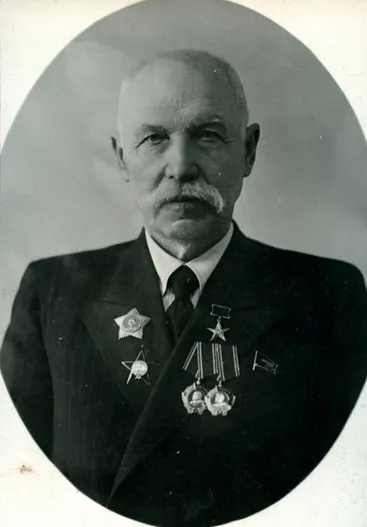
Fedor Tokarev was already in his sixties when he won the competition that produced the SVT. Born in 1871 in a Cossack village, he trained as a blacksmith and gunsmith before becoming an army ordnance officer, and by the 1920s he was working at the Tula arsenal where he had already designed the Maxim-Tokarev light machine gun and the TT pistol that replaced the old Nagant revolver as the Red Army's sidearm.3 The Soviet military had been chasing a semi-automatic infantry rifle since the mid-1920s, motivated partly by reports from the Spanish Civil War about the firepower advantage of self-loading rifles.2 Sergei Simonov's AVS-36 was adopted first, in 1936, but its complexity and a tendency toward uncontrollable automatic fire pushed the Red Army back into open competition, and Tokarev's simpler, semi-automatic-only entry won out in 1938.2

Tokarev remained a working designer into old age. He later received the Hero of Socialist Labor award and the USSR State Prize for his career output, sat as a deputy of the Supreme Soviet from 1937 to 1950, and saw his son Nikolai Tokarev go on to design Soviet machine guns and anti-aircraft guns of his own.3 None of that recognition changed the basic problem the Red Army still faced in the late 1930s, a standing requirement for a semi-automatic rifle that could be built in the millions rather than the tens of thousands the AVS-36 had managed.2
Tokarev's rifle, designated the SVT-38, began production at Tula in 1939, with a second production line starting at Izhevsk later that year.1
The Red Army had barely finished issuing the new rifle to front-line units when the Winter War against Finland broke out in November 1939, and the SVT-38 immediately failed the kind of test no factory trial can fully replicate. Finnish accounts and Soviet after-action reports converge on the same complaints. It was too long, its balance was awkward, its ten-round magazine sometimes fell out on its own, and its gas port clogged with the wrong combination of cold weather and poor-quality ammunition.2,7
Basic infantry doctrine of the period expected riflemen to rely on aimed single shots at longer range, and commanders questioned whether the SVT-38's added mechanical complexity was worth the burden for conscripts who often had only weeks of training before being sent into a war fought largely in waist-deep snow.7
Redesign Into the SVT-40 and the Rush to Mass Production
Combat reports from the Winter War reached Tokarev's design bureau quickly, and the rifle was reworked rather than replaced. Production of the SVT-38 halted in April 1940 after roughly 150,000 had been built, and the lightened, cleaned-up SVT-40 took its place on the line that July.1 The new rifle kept the same gas system and cartridge but added a folding magazine catch so the magazine could no longer be knocked loose, a lighter one-piece handguard, and lightening cuts around the trigger guard.1 Roughly 70,000 SVT-40s were finished by the end of 1940, and production accelerated fast enough that by the time Germany invaded the Soviet Union in June 1941 the SVT-40 was already a common sight in front-line Red Army rifle companies, particularly among naval infantry, guards units and non-commissioned officers who were trusted with a more complex weapon than the standard-issue Mosin-Nagant.1,13
Operation Barbarossa, Collapse and the Return of the Mosin-Nagant
The German invasion in June 1941, Operation Barbarossa, destroyed Soviet stockpiles and factories at a pace no rearmament program could absorb. Hundreds of thousands of SVT-40s were lost, captured or abandoned in the encirclements of 1941, and Tula's SVT production line itself had to be evacuated eastward that autumn as German forces closed on the city.1,4 Faced with a choice between rebuilding a complex, high-precision rifle line from scratch or simply restarting simpler Mosin-Nagant production, the Soviet leadership chose the bolt-action rifle. Izhevsk was ordered to prioritize Mosin-Nagant output in 1942, and SVT-40 production fell from its 1941 peak to roughly 264,000 rifles that year before continuing to decline until it was formally ended in January 1945, by which time total SVT-38 and SVT-40 output stood at close to 1.6 million.1,4
Wartime demand for automatic firepower, and a chronic shortage of light machine guns, led the Soviets to convert the SVT-40's action into the select-fire AVT-40 starting in May 1942.11 The AVT-40 fired at roughly 750 rounds per minute on full automatic, but the same action that struggled with semi-automatic reliability proved even less suited to sustained automatic fire. Soviet testing found AVT-40 barrels burning out after as few as 200 to 250 rounds of continuous automatic fire, and the rifle was effective mainly in short bursts rather than as a genuine machine-gun substitute.11 It was pulled from production in the summer of 1943 after roughly 500,000 had been built, with most surviving rifles quietly restricted to semi-automatic use in the field.11
The Winter War and the Eastern Front of World War II
The SVT-38 and SVT-40's combat history runs almost entirely through the Eastern Front. The Winter War against Finland (1939 to 1940) was the SVT-38's brutal proving ground, and it directly shaped the SVT-40 that followed it into wider Red Army service.2,7 Once Operation Barbarossa began, the SVT-40 armed a meaningful share of Soviet infantry, though its share of front-line issue shrank steadily as combat losses and factory evacuations pushed the Soviet Union back toward the Mosin-Nagant.1
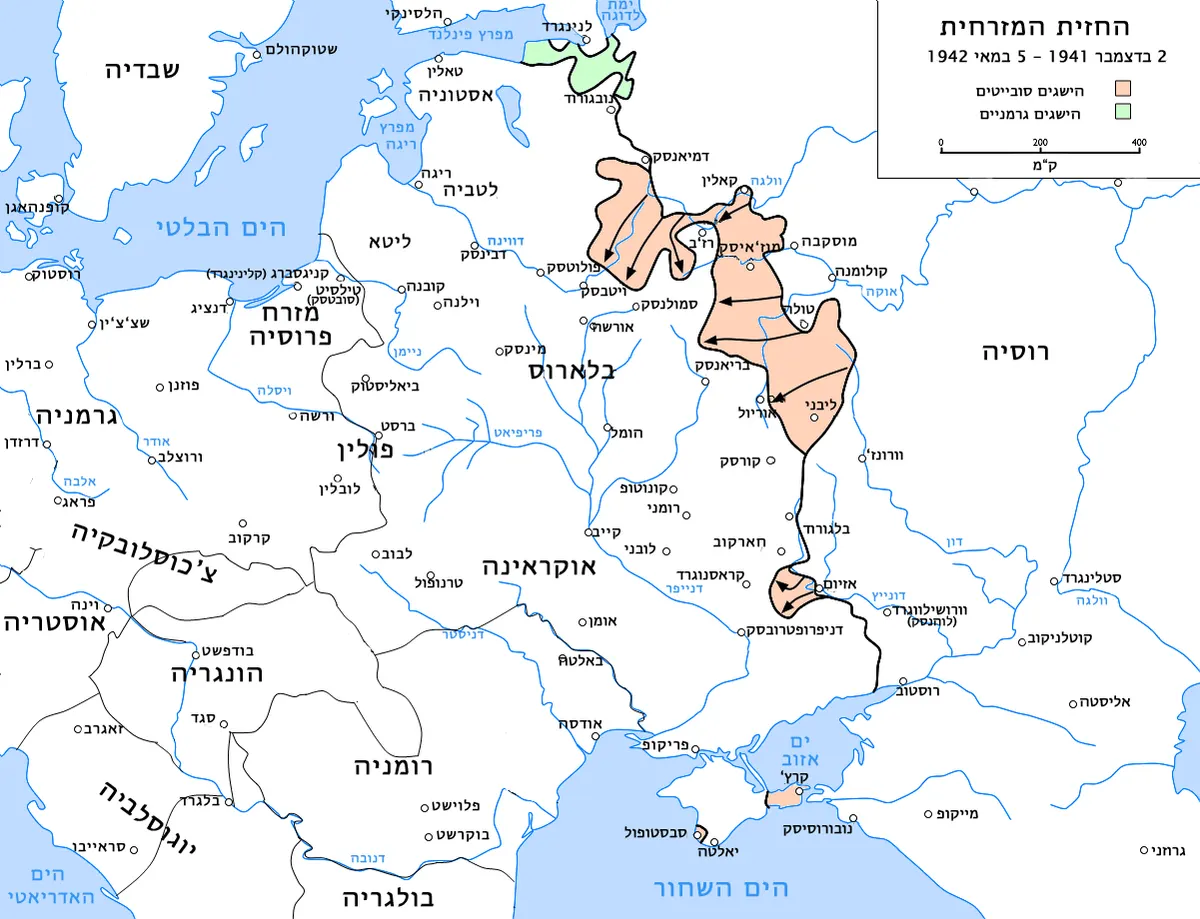
Soviet naval infantry in particular kept the SVT-40 in wide use through battles such as the Siege of Sevastopol and the fighting around Stalingrad, where its faster rate of aimed fire suited close urban combat better than a bolt-action rifle.13
The SVT-40 tended to reach specific soldiers rather than entire units. Squad leaders, NCOs and naval infantry rated more technically capable received it preferentially over ordinary riflemen, a deliberate rationing driven as much by the rifle's higher production cost and maintenance demands as by any doctrine about who most needed the extra firepower.13
Captured Use by Finland and Germany
Both of the Soviet Union's main opponents on this front ended up fielding captured SVTs of their own. Finland took roughly 3,000 SVT-38s during the Winter War and captured a further 17,000 or more SVT-38s, SVT-40s and AVT-40s in the opening stages of the Continuation War against the Soviet Union in 1941.7 Finnish front-line soldiers liked the extra firepower enough to take captured Tokarev rifles into their own use immediately and, by some accounts, took hundreds home as war trophies, but the Finnish Army's own ordnance department documented much less flattering results after sustained field use, recording cracked stocks on almost every returned rifle, bent or fractured receivers, and chronic extraction failures from chamber fouling.7

Germany captured far larger numbers still, formally designating the SVT-38 and SVT-40 as the Selbstladegewehr 258(r) and Selbstladegewehr 259(r) and reissuing them to German troops, in some cases in preference to Germany's own early semi-automatic rifles, partly because the SVT-40 could still mount a bayonet, which the early Gewehr 43 could not.1,13
Photographic evidence places captured SVT-40s in German infantry hands as late as 1943, well after the Wehrmacht's own Gewehr 43 had begun reaching front-line units in numbers of its own.1
Postwar Service in Korea and Vietnam
The SVT-40's combat career did not end in 1945. A limited number reached the Korean People's Army of North Korea from Soviet stockpiles before the Korean War broke out in 1950, giving North Korean troops a semi-automatic edge over some of their own bolt-action-armed adversaries in the war's early, chaotic months.14 Chinese-supplied SVT-40s later turned up in the hands of Viet Cong fighters during the Vietnam War, often modified with improvised stocks and other field repairs to survive jungle conditions, decades after the rifle had left frontline Soviet service.1 By the time of the 2022 Russian invasion of Ukraine, the rifle's active military role had shrunk to a curiosity. Ukraine still held roughly 10,000 serviceable SVT-40s in long-term storage as of the early 2010s, and a small number reportedly saw limited use with territorial defense volunteers in the war's opening weeks, though sourcing on the scale of that use is thin and mostly anecdotal.1
The core SVT family covers a small number of distinct configurations rather than a sprawling variant tree. The SVT-38 is the original, heavier production model built from 1939 to April 1940. The SVT-40 is the lightened, simplified rifle that replaced it and accounts for the great majority of surviving rifles today. Alongside the standard infantry rifle, Tula built the dedicated sniper SVT-40 with its side-mounted PU scope rail, produced only from 1941 to 1942 before the specialized receiver was dropped.4,5
The most significant derivative is the battle rifle-classified AVT-40, which added a fire selector and a slightly reinforced stock to allow bursts of full-automatic fire from the same basic action.11 A carbine-length variant known as the SKT-40 was also submitted to Soviet trials in 1940 alongside a competing Simonov design, but neither carbine was accepted for service, and the SKT-40 never reached mass production.1
Unlike the assault rifle era that followed it, in which a single Kalashnikov-pattern receiver spawned an enormous global family of assault rifles, the SVT's own variant tree stayed small and entirely Soviet, and none of its direct mechanical descendants reached service after the war ended. Every configuration described above, standard rifle, sniper rifle and AVT-40, shared the same receiver, the same 7.62x54mmR chambering and the same short-stroke gas system, which is part of why wartime armorers could convert between roles with comparatively simple parts swaps rather than treating each as a separate weapon.1,4


The Soviet Union was always the SVT-40's primary operator, issuing it widely through 1941 and 1942 before the Mosin-Nagant reclaimed priority, and Russian and other post-Soviet stocks of the rifle persisted in reserve for decades afterward.1 Captured-weapon use by Finland and Germany during World War II has already been covered above. Poland and Czechoslovakia received small numbers of Soviet-supplied SVT-40s after 1945 as part of broader postwar rearmament with Soviet-pattern equipment, though neither adopted it as a primary service rifle.1
North Korea fielded a limited number during the Korean War, and Vietnam saw Chinese-supplied examples reach Viet Cong hands during the Vietnam War, as described above.1,14 Ukraine inherited a substantial reserve stock after the collapse of the Soviet Union in 1991, most of which remained in storage rather than active issue.1
Comprehensive operator records for Soviet-era small arms transfers are thinner than they are for tanks or aircraft. Much of what is known about SVT-40 issuance abroad comes from surviving rifles, period photographs and unit-level accounts rather than complete government transfer paperwork, which is why exact dates and quantities for some of the smaller postwar recipients above remain approximate.
The SVT-40's most technically interesting rival is not a Soviet weapon at all. Germany built its own Gewehr 43 directly off the back of captured SVT-40s recovered on the Eastern Front, and the resemblance between the two rifles' gas systems is close enough that it is usually described as a straightforward copy rather than a parallel invention.9,10 Walther's engineers took the SVT-40's short-stroke gas piston, mated it to their own G41(W) receiver, and produced a rifle that solved the reliability problems Germany's earlier, gas-port-less G41 designs had struggled with.9 The SVT-40 and Gewehr 43 share the same core operating principle, but they diverge at the bolt. The SVT-40 tilts its bolt to lock, while the Gewehr 43 uses a flapper-locking bolt borrowed from a different wartime design, and the two rifles also differ in caliber, with the Soviet rifle chambered for the rimmed 7.62x54mmR and the German rifle for the rimless 7.92x57mm Mauser.9
Set against the American M1 Garand, the comparison is more about doctrine than mechanism. Both rifles equipped their armies as general-issue semi-automatic infantry weapons at roughly the same moment in the war, but the Garand's simpler, more robust operating rod system and its famously reliable eight-round en-bloc clip gave American infantry a semi-automatic rifle they could trust in sustained combat, something Soviet troops frequently could not say about the SVT-40 in its early production years.13 The Soviet Union never matched America's ability to fully re-equip its infantry with a semi-automatic rifle during the war, and the fact that the Mosin-Nagant bolt-action rifle rather than the SVT-40 remained the Red Army's most numerous rifle throughout World War II says as much about Soviet industrial capacity in 1941 and 1942 as it does about the SVT-40's own design flaws.1
| Rifle | Cartridge | Feed | Locking method |
|---|---|---|---|
| SVT-40 | 7.62x54mmR | 10-round detachable box | tilting bolt |
| Gewehr 43 | 7.92x57mm Mauser | 10-round detachable box | flapper-locking bolt |
| M1 Garand | .30-06 Springfield | 8-round en-bloc clip | rotating bolt |


What caliber does the SVT-40 use? The SVT-40 is chambered for the 7.62x54mmR rimmed rifle cartridge, the same round used in the Mosin-Nagant rifle and, later, the SVD Dragunov designated marksman rifle.1
How does the SVT-40 rifle work? It is a gas-operated semi-automatic rifle. A short-stroke piston above the barrel taps propellant gas to tilt the bolt out of its locking recesses and cycle a new round from a 10-round detachable box magazine.1,2
Is the SVT-40 still in service anywhere? Not as a standard-issue rifle for any regular military. Small reserve stocks persisted into the 2020s in Ukraine and parts of the former Soviet Union, and isolated examples have surfaced with militia and territorial defense forces, but no state armed force treats it as front-line equipment.1
How much does an SVT-40 cost today? On the modern collector market, original wartime SVT-40 rifles generally sell for $800 to $2,500 depending on condition, matching parts and factory markings, with exceptional matching examples reaching over $3,000 at auction.15
What is the difference between the SVT-40 and the SVT-38? The SVT-38 is the heavier, original 1939 production rifle. The SVT-40 is the lightened 1940 redesign with a folding magazine catch and a simplified handguard, built in far greater numbers after the SVT-38's Winter War failures forced the change.1,4
- "SVT-40", Wikipedia — en.wikipedia.org ↩
- "SVT-40: The Soviet Standard Semiauto from WW2", Forgotten Weapons — forgottenweapons.com ↩
- "Fedor Tokarev", Wikipedia — en.wikipedia.org ↩
- "SVT-40 Tokarev semi-auto rifle", m9130.info — m9130.info ↩
- "Guide to SVT-40 sniper rifles", m9130.info — m9130.info ↩
- "Finnish Army 1918-1945, Rifles Part 4", Jaegerplatoon — jaegerplatoon.net ↩
- "Gewehr 43: The German Semi-Automatic Rifle Inspired By the Soviet SVT-40", War History Online — warhistoryonline.com ↩
- "Gewehr 43", Forgotten Weapons — forgottenweapons.com ↩
- "AVT-40 Testing Report", Forgotten Weapons — forgottenweapons.com ↩
- "PU scope", Wikipedia — en.wikipedia.org ↩
- "Russian Sniper Rifle, Mosin, SVT-40, and Eastern Front Mayhem", Rock Island Auction — rockislandauction.com ↩
- "7.62mm Tokarev Semiautomatic Rifle SVT40", Korean War Online — koreanwaronline.com ↩
- "SVT 40 New and Used Price, Value, and Trends", TrueGunValue — truegunvalue.com ↩