


Sturm, Ruger & Co. put the Ruger XGI in its dealer catalog for three straight years, gave it a retail price of $425, ran advertisements in national gun magazines, and never delivered a single rifle to a paying customer.1,3 The XGI is a semi-automatic rifle chambered in .308 Winchester or .243 Winchester, built by scaling up the company's own Ruger Mini-14 into a full-power rifle caliber, and it belongs to the same semi-automatic rifles category the Mini-14 itself occupies.1 Ruger announced the rifle at the SHOT Show in January 1985 aimed squarely at police departments, then quietly shelved the entire project within the year after prototypes could not meet the company's own accuracy standard.3
- compact .308 alternative to full length service rifles
- M14/M1A pattern magazine compatibility
- Garand derived gas system, familiar to Mini-14 shooters
- genuine rarity, strong collector interest today
- investment cast receiver prone to cracking
- accuracy Ruger itself judged unacceptable
- required hand fitting Ruger's production line could not support
- never sold commercially, no factory parts or warranty support
The design borrowed heavily from Ruger's existing Mini-14 and, one step further back, from the M1 Garand that inspired it. The XGI used a gas-operated action with a rotating bolt, fed from a 5 round detachable magazine built to interchange with M14 and Springfield Armory M1A pattern magazines, and it carried a one piece hardwood stock, a metal lined fiberglass handguard and a rubber buttpad.1,6 None of that mattered commercially. By most surviving accounts, fewer than 100 rifles were ever fully assembled out of roughly 350 receivers and partial builds that Ruger put into inventory before pulling the plug.4
Ruger's own reasoning for building the XGI in the first place is straightforward. Police departments across the United States were adopting the Mini-14 through the early 1980s, and Ruger wanted a full power .308 companion rifle for SWAT teams who needed more range and penetration than a .223 carbine but did not want the roughly 10 pound service rifles then on the market, guns like the Heckler & Koch G3 or full size FN FAL pattern rifles.2 That business case was sound. The engineering execution was not, and the story of why the XGI never shipped is more interesting than the rifle itself would have been if it had reached dealers.
The Ruger XGI's action is a scaled up version of the gas-operated rotating bolt mechanism Ruger already used in the Mini-14, itself adapted from the M1 Garand service rifle.1 Chambering options were .308 Winchester (7.62x51mm) as the primary caliber, with a .243 Winchester version advertised for the hunting market.1,3 Both used the same 5 round detachable box magazine, and period sources describe aftermarket combination magazines that fit both the XGI and M14 or M1A pattern rifles, though no dedicated XGI magazine ever reached mass production either.6
- First Production Year1984
- Weight (Empty)3.4 kg
- Currently In ServiceNo
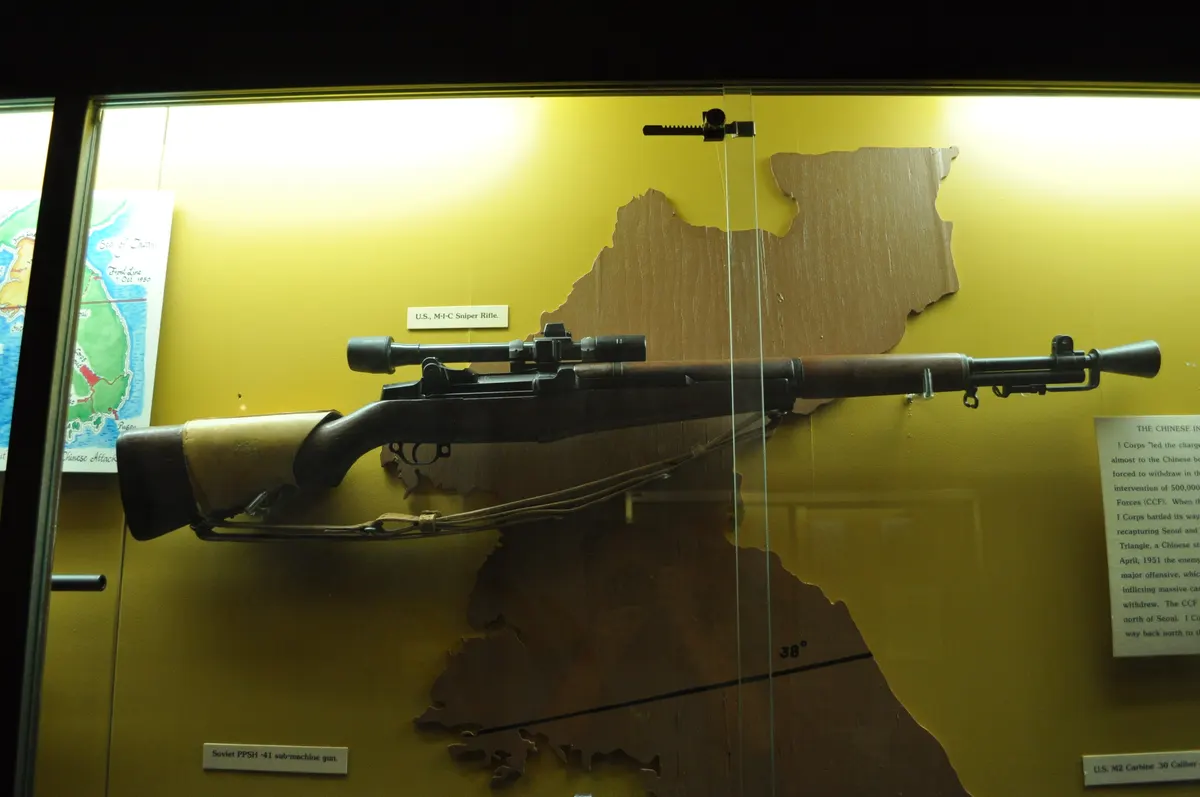
Because the rifle never reached a finished factory specification sheet, exact dimensions vary between the sources describing prototype and pre-production examples. Catalog and period press figures put the XGI at under 8 pounds (about 3.4 kg) unloaded and roughly 39 inches (about 99 cm) overall, with a barrel described as an inch and a half longer than the 18 inch barrel on a comparable Springfield Armory M1A Scout length carbine, putting it in the neighborhood of 19.5 inches (about 50 cm).7 Those figures should be read as approximate rather than an official spec sheet.
- Cartridge.308 Winchester or .243 Winchester
- Calibre7.62 mm
- RimfireNo
The receiver is where the project actually broke. Ruger built the XGI receiver as an investment casting, the same manufacturing process the company used successfully on the Mini-14 and later on the Springfield Armory M1A, but multiple accounts from people connected to the factory describe XGI receivers cracking during endurance testing, in one telling after roughly 5,000 to 6,000 rounds.3,6 Combined with accuracy that reportedly would not tighten past the first shot once the barrel warmed up, and a rifle that Ruger's own production staff said required too much hand fitting to build economically, the XGI's problems were mechanical rather than conceptual.3,6
- Action TypeGas-Operated
- Fire Modessemi-automatic
- Select FireNo
- Feed SystemDetachable Magazine
- Magazine Capacity5
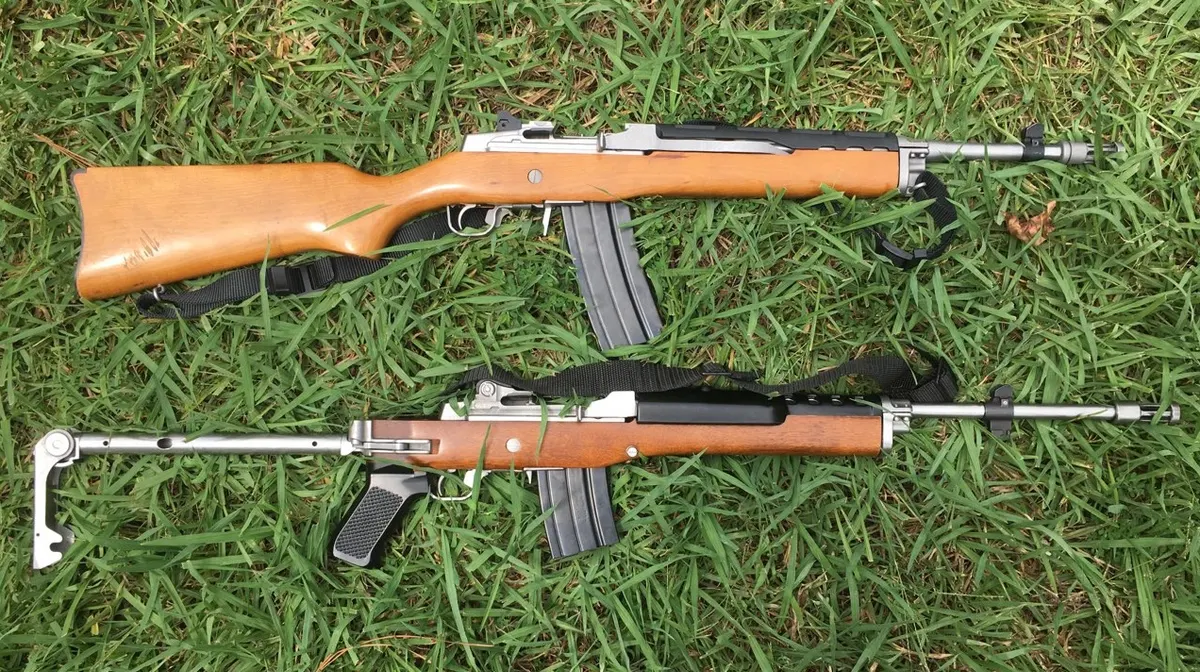
The furniture, at least, was never in question. Every surviving XGI kept the one piece hardwood stock, metal lined fiberglass handguard and rubber buttpad shown in the original catalog photos, sighted with plain iron sights rather than any optic mount.1 The result, on paper, was a rifle positioned as a lighter alternative to full size 7.62 NATO rifles without giving up much of the ergonomics familiar to existing Mini-14 owners. In practice, Ruger could not make that paper design shoot to its own accuracy standard, and no XGI ever left the factory with a serial number assigned to a retail customer.3
- Barrel Length495 mm
- Sight Typeiron sights
- Iron SightsYes
- Overall Length990 mm
- Receiver Materialinvestment-cast steel
- Furniture Materialhardwood stock, metal-lined fiberglass handguard, rubber buttpad
- Total Production350
- Production End1985
- Unit Cost425 USD
Sturm, Ruger & Co. began developing the XGI around 1984, a decade after the Ruger Mini-14 had proven there was a market for a compact, semi-automatic, Garand derived rifle sold at civilian and police department prices.1 The company introduced the select-fire AC-556 carbine and the GB-series Mini-14 to police customers around the same period, and paired that push with a new P-85 pistol aimed at the same law enforcement buyers, so the XGI fit a deliberate strategy of expanding Ruger's footprint in police sales rather than a one-off experiment.1
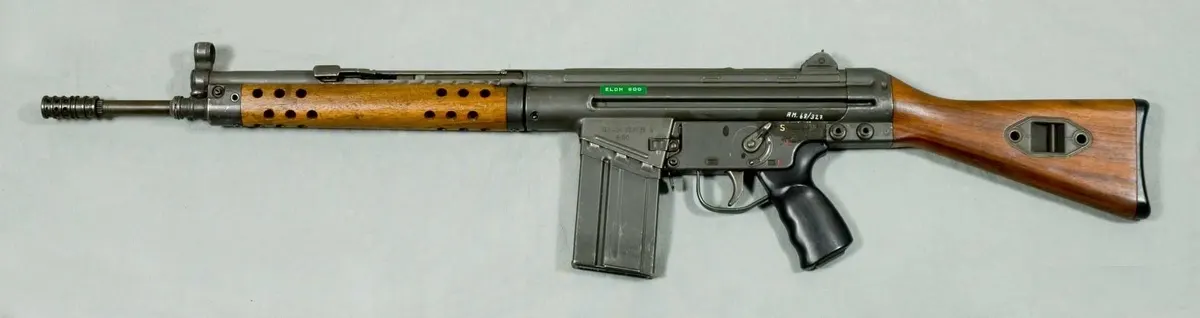
Ruger unveiled the XGI at the SHOT Show in January 1985 and ran it in the company's law enforcement catalog that year at a listed price of $425, with press coverage following in American Survival Guide in March 1985 and SWAT Magazine in April 1985.1,3 Sales staff had reason for optimism. Many of the police departments already carrying the Mini-14 were logical customers for a .308 companion rifle, and nothing else on the market matched the XGI's advertised combination of light weight and 7.62mm power.
That optimism did not survive contact with the endurance range. Ruger's own testing found the XGI's accuracy inconsistent from shot to shot and worse once the barrel heated up, and the investment cast receiver reportedly began cracking after a few thousand rounds of hard use.3,6 According to accounts from people connected to the factory during the project, an aftermarket barrel stiffening device called the Accu-Strut, made by an outside supplier, noticeably improved the rifle's accuracy when factory staff tried it during testing.3
William B. Ruger, the company's founder, refused to ship a rifle carrying another company's fix bolted onto his own design. Rather than accept that compromise, he shelved the XGI project entirely around June or July of 1985.3
What survived that cancellation is what makes the XGI a genuine collector curiosity rather than a forgotten catalog entry. Forum accounts describing factory visits put roughly 350 XGI receivers and partially built rifles in storage, split between the .308 Winchester and .243 Winchester chamberings, with fewer than 100 ever fully assembled into complete, functioning rifles.4 Recorded serial numbers reportedly ran as high as the 800-01449 range, though that figure describes the serial sequence rather than a confirmed total production count.4
Ruger sold at least one complete example at a company auction on August 7, 2007, serial number 800-01250, for $8,020, a price that reflects genuine scarcity rather than any service record, since the XGI never had one.5 A handful of prototypes are reported to remain in Ruger's own company museum collection, while forum visitors in the early 2000s described the remaining warehoused stock later being relocated and, by some accounts, eventually scrapped.3,4
The XGI existed only as two caliber options rather than a family of named models the way the Mini-14 spawned the AC-556, Ranch Rifle and Mini-30. Ruger advertised a .308 Winchester version aimed at police departments and general purpose shooters and a .243 Winchester version aimed at deer hunters, and period sources describe both calibers among the roughly 350 receivers and partial rifles built before cancellation.1,4
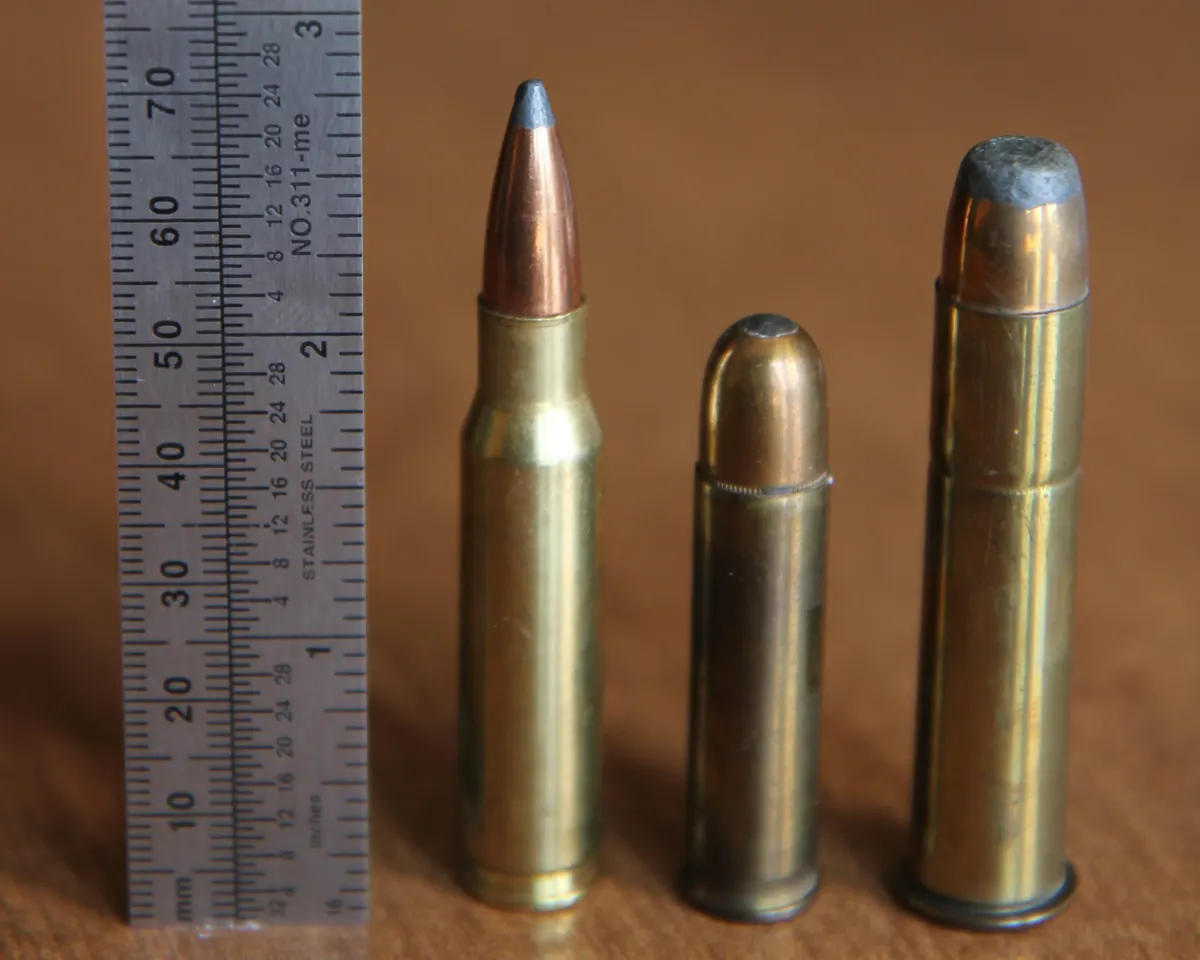
The .243 Winchester chambering never had a separate marketing identity of its own beyond being described as the lighter recoiling option for hunters, and Ruger's catalog copy treated it as an alternative loading of the same rifle rather than a distinct product.
Neither caliber variant ever received a model designation beyond the chambering itself, and no XGI carbine, target or law-enforcement-specific configuration reached even the prototype stage before Ruger ended the project.3
The Springfield Armory M1A answers almost the same design question the XGI tried to answer, a semi-automatic .308 Winchester rifle built around a Garand family gas system for civilian and police buyers, and the two rifles' results could not diverge more sharply. Where the XGI shipped zero commercial units, the M1A has been in continuous production since 1971, and forum tracking of its serial number ranges puts total production above 300,000 rifles.8 The core engineering difference explains a lot of that gap. The M1A carries over the actual M14's tilting bolt action essentially unchanged from a proven military design, while the XGI's Garand-derived rotating bolt action and investment cast receiver were a new engineering effort that Ruger's own production line never finished solving.9
| Trait | Ruger XGI (reported) | Springfield Armory M1A (Standard) |
|---|---|---|
| Cartridge | .308 Winchester / .243 Winchester | 7.62x51mm NATO / .308 Win |
| Action | Gas-operated, rotating bolt | Gas-operated, tilting bolt |
| Magazine | 5 round detachable, M14/M1A pattern compatible | 5 or 10 round detachable |
| Unloaded weight | approx 7.5 to 8 lb (3.4 kg) | approx 9.3 lb (4.2 kg) |
| Commercial units sold | 0 | 300,000+ |
Price tells a similar story in reverse. Ruger listed the XGI at $425 in its 1985 catalog, a figure never actually charged to any retail customer, while a complete surviving example now commands thousands of dollars at auction purely as a collector rarity.3,5 The XGI's closer relative inside Ruger's own catalog, the Ruger Mini-14 it was scaled up from, remains in continuous production decades later, underlining that the XGI's failure was specific to its own .308 scale-up rather than any flaw in the underlying Garand-derived action itself.1

Is the Ruger XGI a real rifle or just a rumor? It is real. Sturm, Ruger & Co. built roughly 350 receivers and partial rifles between about 1984 and 1985, fewer than 100 of them fully assembled, before canceling the project. It simply never reached a retail counter.1,4
What caliber does the Ruger XGI use? Ruger advertised the XGI in .308 Winchester as the primary chambering, with a .243 Winchester version aimed at hunters.1
Why was the Ruger XGI never put into production? Prototype rifles suffered accuracy problems Ruger could not resolve to its own standard, along with an investment cast receiver prone to cracking under sustained firing and a design that required more hand fitting than Ruger's production line could support economically. William B. Ruger canceled the project rather than accept an aftermarket fix from an outside supplier.3,6
How many Ruger XGI rifles were made? Estimates put total receivers and partial builds at roughly 350, split between .308 Winchester and .243 Winchester, with fewer than 100 fully assembled into complete rifles.4
How much is a Ruger XGI worth today? A complete, documented example sold at a Ruger company auction in 2007 for $8,020, and surviving examples remain sought after by collectors given how few were ever fully assembled.5
Is the Ruger XGI still in production? No. Ruger shelved the project around mid-1985 and never resumed it. It should not be confused with any current Ruger .308 rifle offering.3
- "Ruger XGI", Wikipedia — en.wikipedia.org ↩
- "Ruger's rifle that never was, the hard hitting XGI", Last Stand on Zombie Island — laststandonzombieisland.com ↩
- "Ruger. XGI", RugerForum.com — rugerforum.com ↩
- "Does anyone know about the Ruger XGI?", RugerForum.com — rugerforum.com ↩
- "Ruger Auctioning Rare XGI Model", Perfect Union — perfectunion.com ↩
- "Ruger XGI", Canadian Gun Nutz — canadiangunnutz.com ↩
- "Ruger's rifle that never was, the hard hitting XGI", Ruger Talk Forums — rugertalk.com ↩
- "How many Springfield Armory, Inc. M-1A rifles have been made?", M14 Forum — m14forum.com ↩
- "Springfield Armory M1A", Wikipedia — en.wikipedia.org ↩