

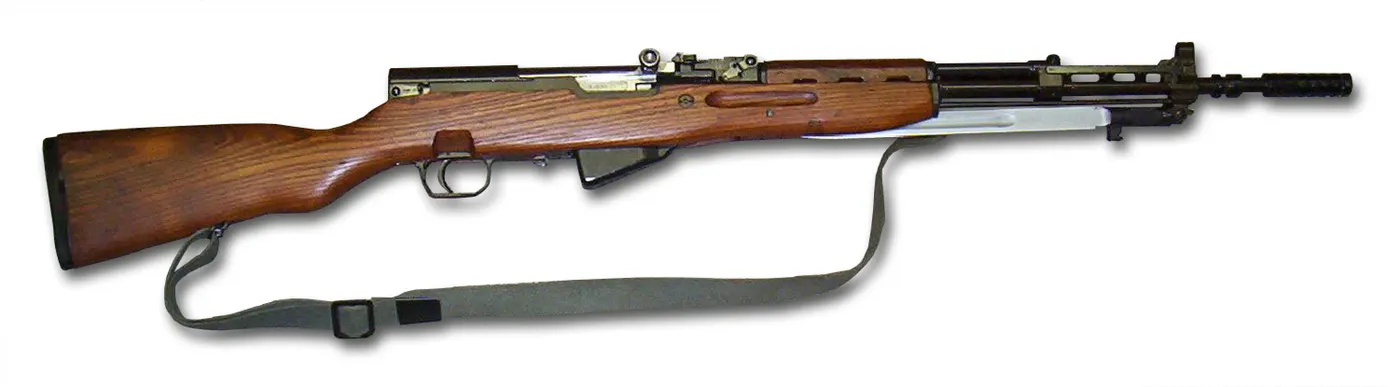
The Zastava M59/66 is a 7.62x39mm semi-automatic carbine built in Yugoslavia as a licensed derivative of the Soviet SKS, distinguished from every other SKS-pattern rifle by a permanently attached 22mm grenade-launcher spigot fitted to the muzzle.1 Yugoslav troops nicknamed it the papovka, from poluautomatska puška (semi-automatic rifle), and the name stuck across the region long after the rifle itself left first-line service.2 Zastava Arms built the design at its Kragujevac plant, then part of Yugoslavia and today's Serbia, after Belgrade obtained manufacturing rights to the Soviet SKS in 1957.1,3
- integral 22mm rifle-grenade launcher, unique among SKS-pattern rifles
- simple, low-parts-count short-stroke gas system inherited from the SKS
- cheap and abundant on the surplus and collector market
- folding bayonet and rugged stamped-steel construction
- no chrome-lined bore, worse long-term corrosion resistance than most licensed SKS lines
- fixed 10-round magazine, slow to reload compared with detachable-magazine rifles
- semi-automatic only, superseded quickly once select-fire rifles arrived
- heavier than a standard SKS because of the added grenade-launcher hardware
Mechanically the Zastava M59/66 is close to a stock SKS, sharing the same short-stroke gas piston, tilting bolt and fixed 10-round magazine, but Yugoslav engineers changed enough of the design that it is usually treated as its own weapon rather than a straight copy.2 The grenade launcher is the headline difference. A second, quieter change is that Yugoslav production skipped the chrome bore lining common to most other licensed SKS lines, a cost-saving decision that traded corrosion resistance for a cheaper receiver run.4 Zastava built roughly 234,060 rifles across the whole M59 and M59/66 family between the early 1960s and 1986, a run large enough that the type remains one of the most common SKS-pattern rifles on Western surplus and collector markets today.1 It belongs to the wider semi-automatic rifles category that dominated infantry small arms in the years between bolt-action service rifles and the select-fire assault rifle.
Zastava kept the Zastava M59/66 in Yugoslav service through the 1960s and 1970s before the indigenous Zastava M70 replaced it as the standard infantry rifle, and the older carbine has since settled into ceremonial, reserve and second-line roles across the Balkans and a scattering of export customers in Africa and the Middle East.1,5
Built under a 1957 Soviet manufacturing license for the SKS, but Yugoslav engineers added an indigenous 22mm grenade-launcher system, folding ladder sight and gas cutoff valve in 1966, and separately dropped the chrome bore lining used by most other licensed SKS producers. More than a straight license copy, short of a fully indigenous design.
A Grenade Launcher Built Into the Muzzle
The feature that defines the Zastava M59/66 is a spigot-type rifle grenade launcher permanently fixed to the muzzle, doubling as the rifle's muzzle brake.2 Firing a grenade means rotating a gas cutoff knob on the side of the gas block to its top position, which shuts off the flow of propellant gas to the piston and simultaneously releases a folding ladder sight calibrated for grenade ranges.2 With the launcher, Yugoslav troops fired the Yugoslav 22mm M60 series of rifle grenades, including an anti-tank warhead and a slimmer anti-personnel type, both propelled off the muzzle by a blank cartridge stored inside the grenade's hollow tail under a plastic plug.6 Official Yugoslav figures credited the launcher with an effective reach of about 150 meters against armored vehicles and roughly 300 meters against infantry, well short of a dedicated antitank weapon but useful for an infantry section without one.6
- First Production Year1961
- Service Entry Year1961
- DesignerMilan Ćirić, Božidar Blagojević, Miloš Ostojić, and Milan Vasiljević
- Weight (Empty)4.1 kg
- Currently In ServiceYes
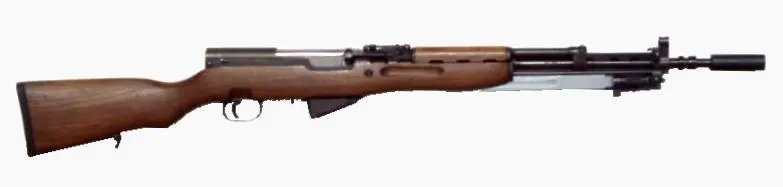
Away from the grenade launcher, the Zastava M59/66 works exactly like the gas-operated SKS it was licensed from. Propellant gas tapped from the barrel drives a short-stroke piston, which strikes a separate tappet that in turn shoves the bolt carrier rearward to cycle the tilting-bolt action.2 The rifle feeds from an internal magazine holding 10 rounds of 7.62x39mm ammunition, loaded from a stripper clip pressed into guides above the open bolt or one round at a time, and the hinged floorplate opens by hand for quick unloading and cleaning.2 Muzzle velocity runs to roughly 735 m/s, U-notch iron sights are graduated from 100 to 1,000 meters, and Yugoslav doctrine credited the rifle with an effective range near 500 meters, somewhat more generous than the Soviet SKS's own 400-meter figure though both share the same cartridge and similar ballistics.1,2 Barrel length runs to 550 mm including the grenade-launcher device, overall length is 1.12 meters with the bayonet lug's folding blade bayonet closed, and the rifle weighs 4.1 kg empty, noticeably heavier than a plain SKS because of the added muzzle hardware.1,2
- Cartridge7.62×39mm
- Calibre7.62 mm
- Case Length39 mm
- Bullet Weight7.9 g
- RimfireNo
- Caseless AmmunitionNo
The Rubber Buttplate and Stamped-Steel Receiver
The Zastava M59/66's stock is wood, fitted with a rubber recoil-cushioning buttplate not found on the Soviet original, over a machined-steel receiver with a detachable top cover.2 Locking is handled the same way as on the Soviet SKS, with a rear bolt lug dropping into a recess in the receiver floor when the action is in battery, and the bolt-hold-open mechanism has no separate manual release, requiring the shooter to work the charging handle to drop the bolt after the last round.2 A dedicated Para-sniper version fitted a Zrak On-2 4x telescope on a side-mounted base for improved mid-range precision, a rare option among SKS derivatives that normally relied on iron sights alone.2
- Action TypeGas-Operated
- Fire ModesSemi-automatic
- Select FireNo
- Feed SystemInternal Magazine
- Magazine Capacity10
- Practical Rate of Fire35
- Muzzle Velocity735 m/s
- Effective Range (point)500 m
- Sighting Range1,000 m
- Barrel Length550 mm
- Rifling Grooves4
- Iron SightsYes
- Total Production234,060
- Production Start1961
- Production End1986
From a 1957 Soviet License to an Indigenous Grenade Launcher
Yugoslavia obtained manufacturing rights to the Soviet SKS from Moscow in 1957, part of the broader normalization of Soviet-Yugoslav relations after the earlier Tito-Stalin split.1 Milan Ćirić led the Yugoslav engineering program from 1957 to 1959 that adapted the design for domestic production at the Crvena Zastava factory in Kragujevac, and the resulting M59 carbine entered production in 1961, running until 1967 for a total of 52,069 rifles without any grenade-launching capability.1,3 In 1966 a separate design team, Božidar Blagojević, Miloš Ostojić and Colonel Milan Vasiljević, added the integral 22mm grenade launcher spigot and folding ladder sight that turned the plain M59 into the Zastava M59/66.3
Production of the Zastava M59/66 and the improved M59/66 A1 (fitted with luminous night sights) ran from 1966 to 1971 for the Yugoslav People's Army, totaling 132,081 rifles, after which domestic orders stopped but export production of the A1 continued into 1986.1 Added to the earlier M59 run, total Yugoslav SKS-pattern production across the whole family reached the 234,060 figure most sources cite for the line.1
Replaced by the Zastava M70 Within a Decade of First Issue
The Yugoslav People's Army fielded the Zastava M59/66 as its standard infantry rifle through the 1960s and into the 1970s, but doctrine soon shifted toward giving every rifleman select-fire capability, a requirement the semi-automatic-only M59/66 could never meet.1 The indigenous Zastava M70, a Yugoslav-built Kalashnikov-pattern rifle, entered production in 1970 and gradually took over first-line issue, pushing the M59/66 into reserve, territorial-defense and training roles by the early 1980s.1,5
That shift to reserve status did not end the rifle's usefulness. Large quantities sat in territorial-defense armories across every Yugoslav republic through the 1980s, and those same depots became the source for most of the rifle's later combat appearances once Yugoslavia itself began breaking apart in 1991.8
Fighting Somali Armor in the Ogaden War
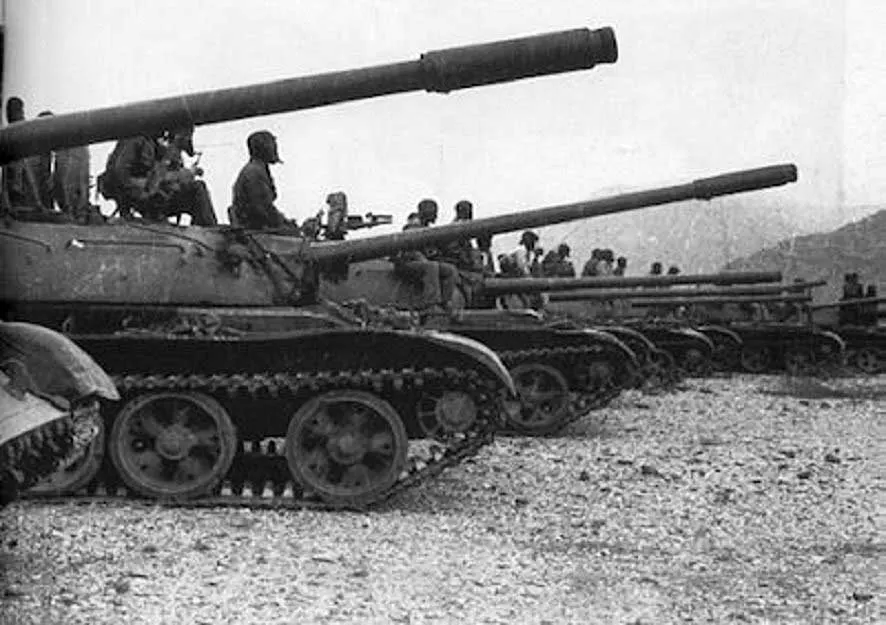
Second-line units of the Ethiopian Ground Forces fielded the Zastava M59/66 alongside original Soviet SKS carbines during the Ogaden War of 1977 to 1978, when Somali armored columns pushed into Ethiopia's Ogaden region before a Soviet-backed counteroffensive drove them back out.5,9 Ethiopia's Yugoslav-sourced rifles were already outdated by the standards of the mechanized fighting around them, but they remained serviceable second-line equipment for an army fighting a large conventional war on short notice.5
Ambushing Casspirs in Namibia's Bush War

The South African Border War produced the Zastava M59/66's best-documented combat role. Namibia's People's Liberation Army of Namibia (PLAN) received an unknown but substantial number of M59/66s and Yugoslav 22mm M60 rifle grenades as military aid, staging most operations from bases across the border in Angola.1,6 PLAN insurgents loaded the M59/66 with the M60 anti-tank grenade, aimed at the engine block or wheels of South African Casspir armored personnel carriers, and used the slimmer M60 AP1 anti-personnel grenade against dismounted troops.6 By the later stages of the war, PLAN organized its sections around this pairing deliberately, with roughly equal numbers of fighters carrying an M59/66 with rifle grenades and an RPG-7 with rocket-propelled grenades in every larger unit.6
A Common Rifle on Both Sides of the Iran-Iraq War
Yugoslavia was one of Iraq's largest Cold War arms suppliers, selling close to two billion dollars of weapons to Baghdad through the 1980s Iran-Iraq War even as Belgrade kept commercial arms ties open with Iran at the same time.7 Sourcing for the Zastava M59/66 specifically inside Iraqi service is thinner than for Ethiopia or Namibia, but Iraq is listed among the rifle's former operators, consistent with the broader flow of Yugoslav small arms into the Iraqi military during that period.1
The Yugoslav Wars Break Up the Rifle's Home Arsenal
When Yugoslavia dissolved between 1991 and 1992, Territorial Defense stockpiles holding thousands of Zastava M59/66s were split among the emerging successor states, and the rifle saw scattered service in the fighting that followed, including the Croatian War of Independence phase of the wider Yugoslav Wars.8 Some Bosnian fighters went further and modified their M59/66s in the field to fire fully automatically, a conversion the design was never engineered for and one that stressed parts meant for semi-automatic cycling only.10
The 1998 war drama Savior, set among militia fighters during the Bosnian War, features Zastava M59/66 rifles among the Yugoslav-pattern small arms carried by its characters, a rare screen appearance for a rifle otherwise absent from most Cold War-era war films built around the more famous SKS and AK-47.14

 Zastava M59/66
The Plain M59, the M59/66, and the Night-Sighted A1
The unmodified M59 came first, built from 1961 to 1967 without any grenade-launching hardware and totaling 52,069 rifles, essentially a Yugoslav-built SKS in all but chrome bore lining.1 The M59/66 added the integral 22mm grenade launcher and folding ladder sight starting in 1966. The M59/66 A1 followed after 1970 with flip-up tritium or painted-phosphorus night sights in place of the standard iron sights, and it was the A1 that stayed in export production the longest, running until roughly 1986.1,2 A dedicated Para-sniper variant fitted the Zrak On-2 4x scope described above, intended for designated marksmen rather than general infantry issue.2
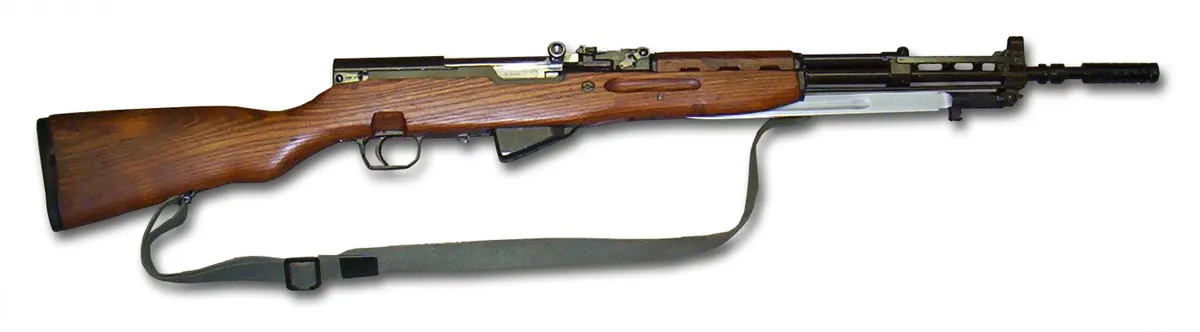
Civilian-market examples imported into North America from the early 1990s onward were often altered to comply with import law, with the bayonet lug ground off or the grenade launcher removed entirely, and these demilitarized versions remain some of the most affordable SKS-pattern rifles collectors can buy today.7 Compared with China's far larger Type 56 family, the Zastava M59/66's variant tree is small, built around one core mechanical addition rather than the dozens of stock and magazine configurations Norinco produced.11


The Yugoslav People's Army operated the Zastava M59/66 as its standard infantry rifle from the mid-1960s into the early 1980s, after which the Zastava M70 took over first-line issue and the older carbine moved into reserve and Territorial Defense stocks.1,5 After Yugoslavia's breakup, its successor states inherited those stocks and mostly retained the rifle for ceremonial duty. Serbia issues it to the Guard of the Serbian Armed Forces, Croatia to its Honour Guard, Slovenia to its Guards Unit, Montenegro to its Honour Guard Company, North Macedonia to its Ceremonial Guard Battalion, and Bosnia and Herzegovina to the honour units of both its federal armed forces and the Republika Srpska interior ministry.1
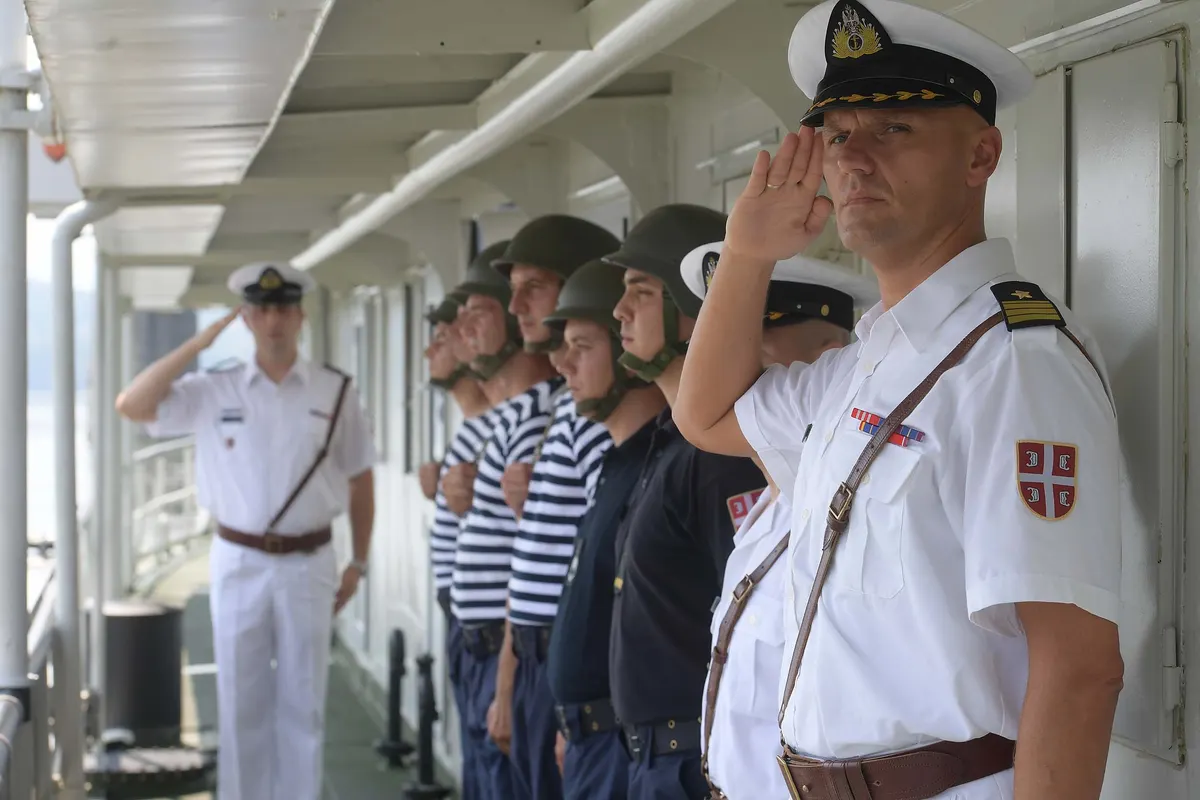
Outside the Balkans, Zambia and Bangladesh are still listed as current operators of the type in reserve or second-line roles, while Ethiopia, Angola, Iraq and Namibia's PLAN forces are former operators whose rifles were retired, lost in combat, or replaced by newer weapons after independence or regime change.1,5,6
The Zastava M59/66's closest technical relative is not a rival design at all but its own parent, the Soviet SKS it was built under license to replicate, which makes their comparison less about competing engineering choices and more about what Yugoslavia changed and why. Both rifles share the same short-stroke gas system, the same 10-round fixed magazine loaded by stripper clip, and near-identical ballistics from the 7.62x39mm cartridge, so the real differences are additions rather than redesigns.1,12 Yugoslavia's engineers bolted on the integral grenade launcher, dropped the chrome bore lining, and added a rubber buttplate, changes that made the M59/66 heavier and cheaper to produce at the cost of some long-term durability against corrosion.2,4
| Spec | Zastava M59/66 | SKS (Soviet) |
|---|---|---|
| Cartridge | 7.62x39mm | 7.62x39mm |
| Weight (empty) | 4.1 kg | 3.85 kg |
| Effective range | 500 m | 400 m |
| Grenade launcher | Integral 22mm spigot | None |
| Chrome-lined bore | No | Yes |
Every figure in that table is sourced above in Specs and Design.1,13
The Zastava M59/66's other real point of comparison is the rifle that replaced it at home, the Zastava M70. Where the M59/66 offered a grenade launcher bolted onto an otherwise unchanged SKS action, the M70 was a full Kalashnikov-pattern redesign with select-fire capability and a 30-round detachable box magazine, giving Yugoslav riflemen the automatic fire the M59/66 could never provide.1,12 That single difference decided the argument inside the Yugoslav People's Army the same way it had decided the SKS-versus-AK-47 argument in the Soviet Union two decades earlier, and it is why the M59/66's active service life ran barely a decade before reserve status took over.1


Is the Zastava M59/66 still in service today Only in reserve, ceremonial and second-line roles. Several former Yugoslav republics still issue it to honor guard units, and Zambia and Bangladesh retain small numbers, but no country fields it as a first-line combat rifle anymore.1,5
What is different between the Zastava M59/66 and a regular SKS The Zastava M59/66 adds a permanently attached 22mm rifle-grenade launcher at the muzzle, a folding ladder sight for grenade ranges, and a gas cutoff valve, while dropping the chrome bore lining most other licensed SKS producers kept.1,2
What caliber does the Zastava M59/66 use The Zastava M59/66 is chambered for the 7.62x39mm intermediate cartridge, the same round used in the SKS and the AK-47, firing at approximately 735 m/s from its 550 mm barrel.1,2
How does the Zastava M59/66's grenade launcher work A shooter rotates a gas cutoff knob on the gas block to shut off gas flow to the piston and release a folding grenade sight, then fires a rifle grenade off the muzzle spigot using a blank cartridge, with an effective reach of roughly 150 meters against armor and 300 meters against infantry.2,6
How much is a Zastava M59/66 SKS worth today Prices vary by condition and import history, with demilitarized civilian imports missing the grenade launcher or bayonet generally selling cheaper than complete examples with both features intact, though exact current pricing depends heavily on the individual seller and rifle's paperwork.7
Who made the Zastava M59/66 and when Zastava Arms built the Zastava M59/66 at its Kragujevac factory in Yugoslavia, with the grenade-launcher variant entering production in 1966 under a design team led by Božidar Blagojević, Miloš Ostojić and Colonel Milan Vasiljević, building on the earlier plain M59 that Milan Ćirić's team had adapted from the Soviet SKS starting in 1957.1,3
- "Zastava M59/66", Wikipedia — en.wikipedia.org ↩
- "The Zastava M.59 and M.59/66 carbine, the Yugo SKS (Yugoslavia)", Modern Firearms — modernfirearms.net ↩
- "Zastava's First Kalashnikov, The M64", The Firearm Blog — thefirearmblog.com ↩
- "Famous Yugoslav Papovka semi-automatic carbine or PAP M59", Balkan War History — balkanwarhistory.com ↩
- "Zastava M59 PAP (Papovka) Semi-Automatic Service Rifle", Military Factory — militaryfactory.com ↩
- "South African Border War", Wikipedia — en.wikipedia.org ↩
- "List of Yugoslavian M59 & M59/66 Importers", SKS Files — sks-files.com ↩
- "Uncovering The Legacy Of The Yugoslavian SKS: A Storied Cold War Relic", Centerfire Systems — centerfiresystems.com ↩
- "Ogaden War", Wikipedia — en.wikipedia.org ↩
- "SKS M59/66, Bosnian select-fire conversion", Partisan Rifles — partisanrifles.weebly.com ↩
- "Type 56 carbine / Chinese SKS carbine / Chicom SKS (PR China)", Modern Firearms — modernfirearms.net ↩
- "Explaining the Yugoslav / Zastava M70 Series of Rifles", Forgotten Weapons — forgottenweapons.com ↩
- "SKS", Wikipedia — en.wikipedia.org ↩
- "Savior", Internet Movie Firearms Database — imfdb.org ↩