


Czechoslovakia armed its infantry in 1952 with a self-loading rifle built around a cartridge no other Warsaw Pact member used, the 7.62×45mm, at a time when Moscow expected every satellite army to converge on Soviet-pattern ammunition. The vz. 52 rifle (Samonabíjecí puška vzor 52, meaning self-loading rifle model 52) was the result, a gas-operated semi-automatic service rifle designed by brothers Jan and Jaroslav Kratochvíl at Česká zbrojovka Strakonice and put into mass production at Česká zbrojovka Uherský Brod.1 It became the standard rifle of the Czechoslovak People's Army through most of the 1950s, one of the last genuinely national small-arms designs fielded by a semi-automatic rifle producing country before the vz. 58 locked Czechoslovak infantry firepower onto the Soviet 7.62×39mm standard for good.
- tilting-bolt gas action, avoids a rotating bolt entirely
- 7.62×45mm cartridge outperforms the 7.62×39mm it was replaced by
- integral folding bayonet, no separate part to lose
- stripper-clip and detachable-magazine reloading
- chrome-plated bore and chamber on later production
- non-standard cartridge isolated Czechoslovak logistics within the Warsaw Pact
- birch-wood stocks prone to swelling and cracking near the bayonet mount
- persistent first-shot accuracy deviation never fully solved in production
- service life cut short after only about seven years
The vz. 52's own 7.62×45mm cartridge outperformed the Soviet 7.62×39mm M43 round in raw ballistics, delivering a 760 m/s muzzle velocity against the Soviet round's roughly 710 m/s from a comparable barrel.2 That advantage did not survive contact with Warsaw Pact politics. After Czechoslovakia formally joined the pact in 1955, Soviet pressure to standardize ammunition across allied armies forced a rechambering of the design to 7.62×39mm, redesignated vz. 52/57.1 The mechanically unrelated vz. 58, chambered for 7.62×39mm from the outset and capable of select-fire, replaced both versions of the vz. 52 in front-line service within two years of the caliber change.
Roughly 236,952 vz. 52 rifles in the original 7.62×45mm chambering left Czechoslovak factories between 1952 and 1957, with a further batch of vz. 52/57 rifles produced afterward at Uherský Brod, though the two production runs are frequently rounded up in popular references to roughly a million total vz. 52 rifles, a figure the detailed factory ledgers do not fully support.3 Is the vz. 52 rifle still in service anywhere today? No standing army fields it. Surplus and refurbished examples of the vz. 52 and vz. 52/57 still circulate in the collector market, prized for the unusual tilting-bolt action and the folding bayonet, with clean specimens now commanding well over the low four figures in United States sales.4
The Kratochvíl Tilting Bolt and Annular Gas Piston
The vz. 52 rifle locks its breech with a two-lugged block that tips downward out of engagement, an unusual variant of the gas-operated tilting-bolt family. Most rifles that tilt the bolt to unlock (the Soviet Simonov SKS among them, and later the FN FAL) tip the block rearward. The vz. 52's block tips forward instead, an arrangement Jan and Jaroslav Kratochvíl worked out specifically to keep the receiver short.1 Gas is bled from a pair of ports roughly midway down the barrel into an annular short-stroke piston, a metal sleeve that wraps around the barrel itself rather than sitting in a separate tube above or below it, as on the SKS or the FN FAL. Wrapping the piston around the barrel keeps the reciprocating mass close to the bore axis and reduces muzzle rise, at the cost of a more complex, harder-to-machine part.3
- First Production Year1952
- Service Entry Year1952
- DesignerJan and Jaroslav Kratochvíl
- Weight (Empty)4.14 kg
- Currently In ServiceNo
Reaching that action into production very nearly broke the factories tasked with building it. Považské strojárne in Považská Bystrica held the initial production contract but lacked the trained machinists and precision tooling the tilting-bolt geometry demanded, and its output was so far behind schedule that the Ministry of Defense reassigned most of the work to Uherský Brod in July 1952.3 Even there, the receiver's locking insert kept shifting rearward under proof-firing pressure until engineers switched to welding it in place rather than just pressing and pinning it, one of the hundreds of modifications made to the production drawings between 1953 and 1955.3
- Cartridge7.62×45mm
- Calibre7.62 mm
- Case Length45 mm
- Bullet Weight8.5 g
The rifle's 10-round, staggered-column magazine is detachable for cleaning and maintenance, but soldiers were issued only two magazines each and were expected to reload from five-round stripper clips through a guide milled into the bolt carrier, the same practical logic behind the SKS's fixed magazine.1 Sights are open iron sights with a hooded post up front and a tangent-adjustable notch at the rear, graduated from 100 out to 900 or 950 meters depending on the production run, feeding an official maximum range figure of 2,000 meters that reflects the bullet's flight, not any realistic point of aim.1
- Action TypeGas-Operated
- Select FireNo
- Feed SystemDetachable Magazine
- Magazine Capacity10
The Folding Bayonet That Cracked Stocks
An integral, non-removable bayonet folds flush into a channel cut along the right side of the stock when stowed and swings forward and locks when a release lever on the left side of the forend is pressed.5 The bayonet was not the rifle's original design intent, and the folding, fixed-to-the-rifle configuration was reportedly specified at Soviet advisers' insistence in place of an earlier detachable blade, echoing the same non-removable-bayonet doctrine the Soviets pushed onto the SKS around the same period.3 An early production fault let the extended bayonet fold shut unexpectedly under recoil until a redesigned locking key corrected it.3
- Muzzle Velocity760 m/s
- Effective Range (point)650 m
- Maximum Range2,000 m
The bayonet turned out to be one of the rifle's real mechanical weak points. The wood is noticeably thin through the center of the stock and at the wrist, and any lateral force transmitted through the fixed bayonet during a thrust concentrates directly on that thinnest, weakest section, a flaw collectors and armorers still flag on surviving examples.6 Wood supply added a second, unrelated stock problem. A domestic walnut shortage forced a switch to imported Soviet birch after 1955, and birch swelled badly in humid conditions, at one point swelling enough to jam the buttplate shut over the rifle's built-in accessory compartment. The fix was a two-piece double buttplate, a removable outer plate over a second plate permanently fixed to the stock.3 A knurled thread protector at the muzzle doubles as an attachment point for a blank-firing device once removed, the closest thing the vz. 52 has to a dedicated muzzle device.5
- Barrel Length520 mm
- Rifling Grooves4
- Sight TypeOpen iron sights
- Iron SightsYes
- Furniture Materialwalnut or beech
- Total Production336,427
- Production Start1952
- Production End1959
- Variants1
From the 7.5mm Ostrý Náboj to the 7.62×45mm Cartridge
Czechoslovakia's postwar arms planners initially wanted to standardize with the Soviet Union outright, but Moscow would not share the technical data behind its own new-generation rifles and machine guns while it was still working through production problems with the AK itself.3 Left without a partner, engineer Alois Farlík at Zbrojovka Brno began independent cartridge work in late 1946, starting from a 7.5×45mm design (the Z-47, later Z-49) before Czechoslovakia's Military Technical Institute lengthened and reshaped it into the 7.62×45mm vz. 52 round, finalized in 1950.2 The new cartridge was a deliberately pragmatic adaptation of the existing 7.5mm case rather than a clean-sheet Soviet copy, resized just enough to standardize the bullet diameter while keeping the ballistic work Czechoslovak engineers had already done.3 Three competing rifle prototypes went forward in spring 1950, and by autumn only the Strakonice-designed ČZ 493, the ancestor of the vz. 52, remained in development.3 The Czechoslovak army formally adopted the finished Samonabíjecí puška vzor 52 on March 20, 1952.3
Production Chaos at Považská Bystrica and Uherský Brod
The vz. 52's early manufacturing history was rough enough that a detailed factory retrospective later described the whole program as a troublemaker for everyone involved.3 Považské strojárne delivered only a fraction of its 1952 target, and full-rate production shifted almost entirely to Česká zbrojovka Uherský Brod (then operating under its wartime designation, Závody přesného strojírenství), which had to halt its own anti-aircraft machine gun line to absorb the workload.3 Acceptance climbed only slowly as quality problems were worked out, from 360 rifles accepted in 1953 to 11,314 in 1954, 48,435 in 1955, and 58,318 in 1956, before tapering off as the 1957 caliber change approached.3 By the factory's own ledgers, total vz. 52 production in 7.62×45mm reached 236,952 rifles, a considerably more modest number than the round million figure that circulates in general references today, and one worth treating with real caution given how directly it comes from the plant's own accounting.3
Soviet Pressure and the vz. 52/57 Conversion
Czechoslovakia's entry into the Warsaw Pact in 1955 brought renewed Soviet insistence on ammunition standardization across the alliance, and in spring 1957 the Czechoslovak army agreed to rechamber the design for the Soviet 7.62×39mm round.1 Rather than retrofitting rifles already in the field, Uherský Brod built the converted rifles fresh, widening the magazine well, altering the bolt face and chamber for the shorter Soviet case, and tuning the gas system down for the lower-pressure cartridge, while original 7.62×45mm rifles already issued were left untouched and remained in parallel service.4 Roughly 99,475 vz. 52/57 rifles were built this way between 1957 and September 1959, all at Uherský Brod, easily identified today by a flat magazine floorplate against the earlier magazine's upward-bent front lip.4 Converted rifles are also distinguishable by a chrome-lined bore and chamber added during the changeover, a finish absent from the original run.5
Replacement by the vz. 58
The vz. 52/57 barely had time to reach front-line units before it was obsolete. Czechoslovakia adopted the vz. 58 the same year the last vz. 52/57 rifles left the production line, and while the vz. 58 resembles the Kalashnikov family in outward silhouette, it uses a completely different, Czechoslovak-designed locking and hammer system with no mechanical relation to the AK-47.7 Both vz. 52 variants were withdrawn from Czechoslovak first-line service well before the 1960s were out, pushed into reserve stocks and, increasingly, into the export pipeline that carried them well beyond Central Europe.1
The vz. 52's most consequential combat use came nowhere near Czechoslovakia. Egypt received Czechoslovak-brokered Soviet-bloc weaponry, small arms included, as part of the September 1955 Egyptian-Czechoslovak arms deal, an agreement that reshaped the regional balance of power ahead of the 1956 Suez Crisis and armed Egypt's forces during it.8
The rifle's second major moment came in Cuba. Large quantities of vz. 52 and vz. 52/57 rifles reached Fidel Castro's revolutionary government from September 1959, arming both the regular Revolutionary Army and the Milicias de Tropas Territoriales territorial militia during the consolidation of power that followed the Cuban Revolution.9 Alongside the FN FAL, the vz. 52 became one of the two most common rifles in Cuban government hands, and Cuban forces carried it into the defense against the Bay of Pigs invasion in April 1961, when CIA-backed exile brigade Brigada de Asalto 2506 landed at the Bahía de Cochinos.9
Export deliveries continued for years after Czechoslovakia itself had moved on to the vz. 58. Angola took delivery of roughly 12,000 vz. 52-family rifles in 1975, arming factions in the opening year of the Angolan Civil War, and breakaway Biafran forces inside Nigeria received a smaller shipment of around 820 rifles in 1967 during the Nigerian Civil War.1
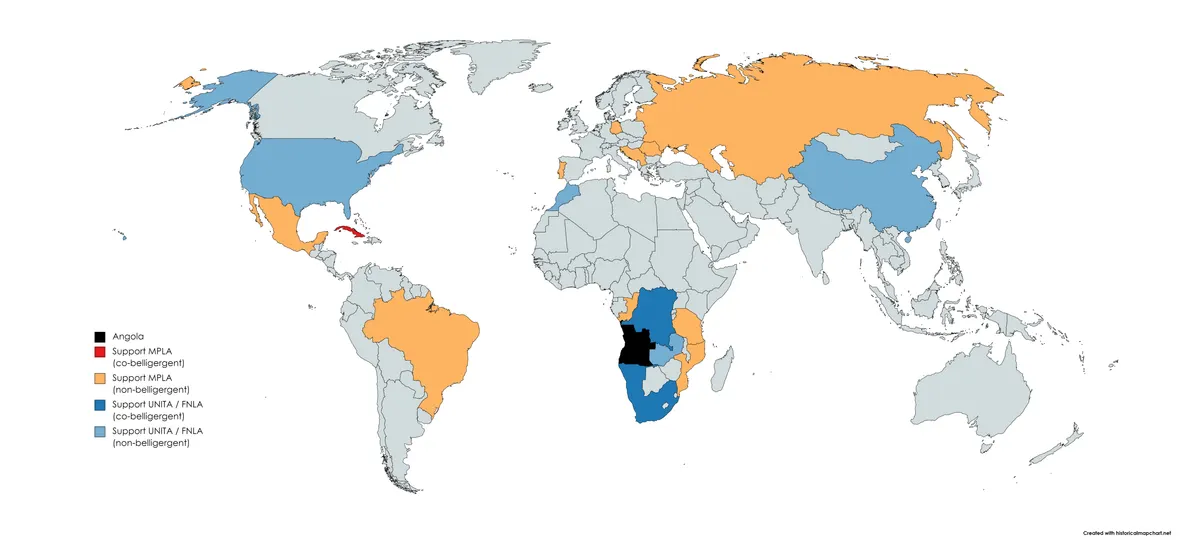
Smaller numbers turned up with forces in Syria, Lebanon, Israel, Indonesia, and Yemen, spreading a Czechoslovak-designed rifle chambered for a cartridge no other Warsaw Pact state ever adopted into conflicts across Africa and the Middle East for two more decades after its home country had retired it.1
The vz. 52 is the original 1952 production rifle, chambered for the indigenous 7.62×45mm cartridge, built at both Považská Bystrica and Uherský Brod between 1952 and 1957 to a factory total of 236,952 rifles.3 The vz. 52/57 is the 1957-1959 rechambering to Soviet 7.62×39mm, built new (not converted from existing stock) exclusively at Uherský Brod to a total of about 99,475 rifles, distinguishable by its flat magazine floorplate and chrome-lined bore.4 Both variants share the same tilting-bolt, annular-piston action and the same folding bayonet, and both remained in parallel Czechoslovak service until the vz. 58 replaced them outright.1 No further factory variants followed, though the roughly seven-year production run and the mid-run caliber switch left enough parts variation (stock wood, sight graduation, bayonet lock hardware) that collectors treat individual production years almost as sub-variants in their own right.4


| Year | Buyer | Quantity | Amount | Present Value (2025) |
|---|---|---|---|---|
| 1975 |  Angola | 12,000 | — | — |
| 1972 |  Lebanon | 2 | — | — |
| 1968 |  Qatar | 10 | — | — |
| 1967 |  Nigeria | 820 | — | — |
| 1965 |  Kuwait | — | — | — |
| — |  Cuba | 400,000 | — | — |
| — | Angola | 12,000 | — | — |
| — | Nigeria | 820 | — | — |
| — | Kuwait | — | — | — |
| — | Lebanon | 2 | — | — |
| — | Qatar | 10 | — | — |
Czechoslovakia (the modern Czech Republic as legal successor) fielded the vz. 52 and vz. 52/57 as its standard infantry rifle from 1952 until the vz. 58 took over at the end of the 1950s.1 Exported and surplus examples went on to see extended service or storage with Cuba (from 1959), Egypt (from the mid-1950s), Angola (from 1975), Nigeria (from 1967, via Biafra), Israel, Indonesia, Syria, Lebanon, Yemen, and a scatter of other Cold War client states across Africa, the Middle East and Latin America, none of which retain it as an active-issue weapon today.1
The vz. 52 rifle's natural rival is not a Czechoslovak contemporary at all but the Soviet SKS, the rifle it was explicitly designed to avoid copying. Both are Cold War, gas-operated, fixed-round-count self-loaders built to bridge the gap between a bolt-action past and an assault-rifle future, and both lost their frontline roles to select-fire, detachable-box-magazine rifles within a decade of adoption (the SKS to the AK-47, the vz. 52 to the vz. 58). Where they diverge is the locking geometry and the politics behind the cartridge. The SKS tips its bolt rearward and feeds from a fixed magazine loaded by stripper clip only, a simpler, cheaper design Soviet industry could turn out by the millions. The vz. 52 tips its bolt forward, a rarer solution, and pairs it with a true detachable magazine that still accepts the same clips, mechanically more capable but far harder to manufacture, exactly the complexity that crippled Považské strojárne's production run in 1952 and 1953.3
The cartridge gap tells the more interesting story. Czechoslovakia's own 7.62×45mm genuinely outperformed the Soviet 7.62×39mm the SKS was built around, with a meaningfully higher muzzle velocity and flatter trajectory out of a similar barrel length.2 Adopting the SKS's cartridge would have meant admitting the Soviet round was simply better. It was not. Czechoslovakia converted to 7.62×39mm anyway, in 1957, because Warsaw Pact logistics needed every member firing the same ammunition far more than any single army needed the marginally better round, a procurement decision driven by alliance politics rather than ballistics.

What caliber is the vz. 52 rifle chambered in? The original vz. 52 fires the Czechoslovak-designed 7.62×45mm cartridge. Rifles converted from 1957 onward, redesignated vz. 52/57, fire the Soviet-standard 7.62×39mm round used across the rest of the Warsaw Pact.1
How does the vz. 52 rifle's action work? It is a gas-operated semi-automatic rifle using an annular short-stroke piston wrapped around the barrel to drive a bolt carrier that tilts the breechblock forward to unlock, an unusual variant of the tilting-bolt family most other rifles of the era used in reverse.1,3
Is the vz. 52 rifle still in service? No. Czechoslovakia retired it by the early 1960s in favor of the vz. 58, and none of its later Cold War operators, including Cuba, Egypt, Angola and Nigeria, field it as a current-issue weapon today. Surviving examples exist mainly in collector and surplus circulation.1,4
What replaced the vz. 52 rifle? The select-fire vz. 58, a mechanically distinct Czechoslovak rifle that only superficially resembles the AK-47, replaced both the vz. 52 and the rechambered vz. 52/57 in Czechoslovak service starting in 1959.7
How much does a vz. 52 rifle cost today? As a military-issue arm it was never sold commercially at the time. On today's collector market in the United States, surplus examples have sold from around $600 in worn condition up to $1,500 or more for well-preserved specimens, reflecting genuine scarcity rather than any official unit price.4
- "vz. 52 rifle", Wikipedia — en.wikipedia.org ↩
- "7.62×45mm", Wikipedia — en.wikipedia.org ↩
- "The Troublemaker, a Complicated Story of the Czechoslovak Model 52 Self-Loading Rifle", Small Arms Defense Journal — sadefensejournal.com ↩
- "Czech vz.52/57, The SKS We Have At Home", Forgotten Weapons — forgottenweapons.com ↩
- "Vz.52 and Vz.52/57", Modern Firearms — modernfirearms.net ↩
- "Misc. Review, Czech Vz52 Rifle, Assembly & Disassembly", Arizona Response Systems — arizonaresponsesystems.com ↩
- "vz. 58", Wikipedia — en.wikipedia.org ↩
- "Egyptian-Czechoslovak arms deal", Wikipedia — en.wikipedia.org ↩
- "List of equipment of the Cuban Revolutionary Armed Forces", Wikipedia — en.wikipedia.org ↩