

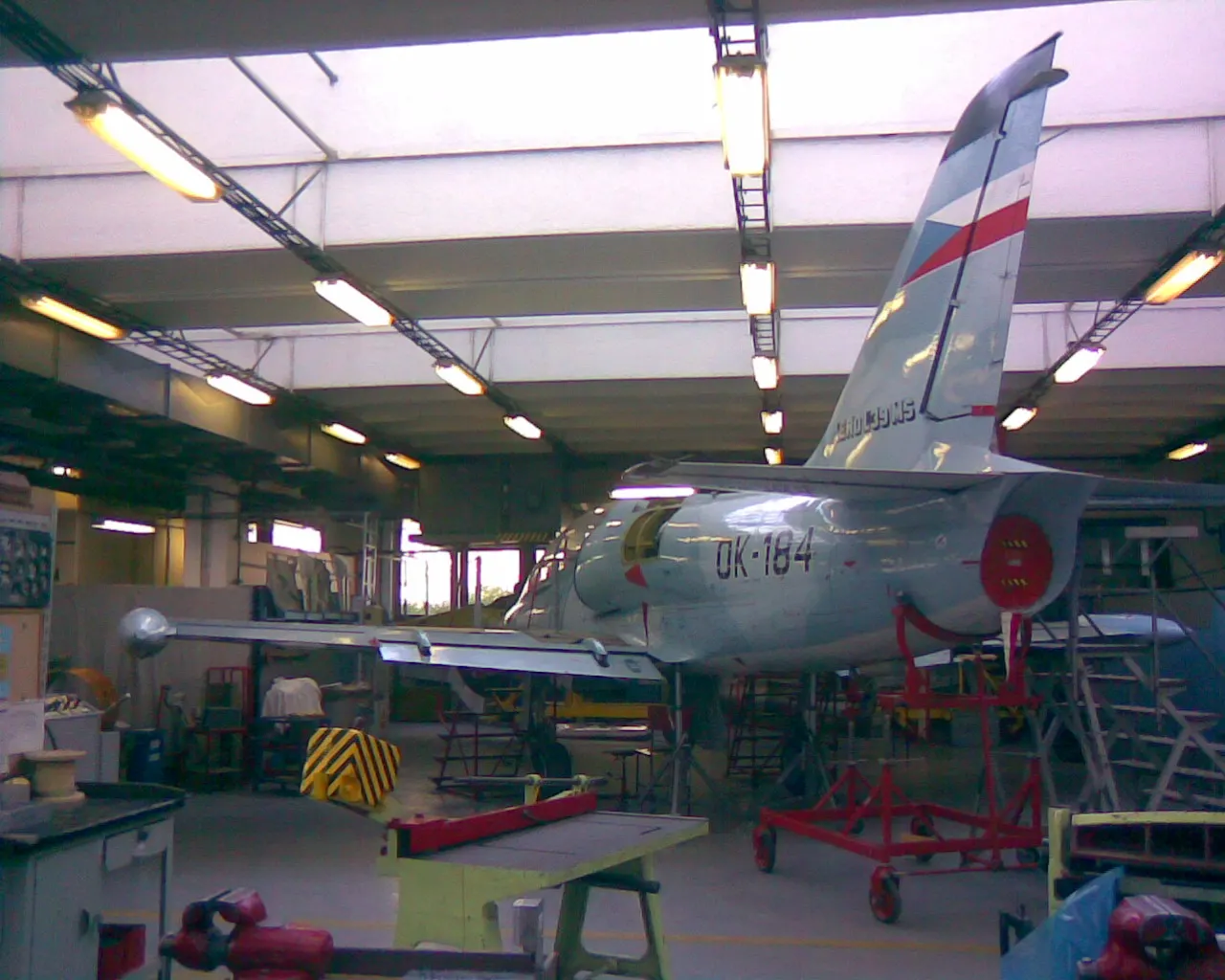

The Aero L-59 Super Albatros is a strengthened, more powerful derivative of the Aero L-39 Albatros, built by the same manufacturer, Aero Vodochody, at the same Odolena Voda plant.1 It began as the internal designation L-39MS ("Modernization Super"), first flying on 30 September 1986, and was renamed L-59 only after Aero Vodochody decided mid-development to make it a combined trainer and light-attack aircraft rather than a pure trainer upgrade.1
- Nearly 30 percent more thrust than the base L-39, with genuine light-attack payload
- Strengthened landing gear and airframe built for the higher operating weight
- Modern head-up display versus the original L-39 cockpit
- Retains the L-39's proven low-wing, tandem-seat handling
- Produced in far smaller numbers than the L-39, so spares are scarcer
- Egypt's largest customer fleet saw little use and was mostly stored by 1999
- Superseded commercially within a decade by the more Western L-159 ALCA
- Never built the broad, multi-continent operator base the L-39 achieved
The changes were a more powerful Lotarev DV-2 turbofan, a lengthened and reinforced fuselage with a longer nose, strengthened landing gear, and a modernized cockpit built around a head-up display.1,2 Together they pushed maximum take-off weight from the L-39's roughly 4,700 kg to about 7,000 kg, and lifted top speed from around 750 km/h to a commonly cited 865 to 872 km/h.1,4
Total production settled at roughly 80 airframes between 1986 and 1996: six for the Czechoslovak Air Force, an export batch for Egypt as the L-59E, and twelve for Tunisia as the L-59T. A fourth variant, the L-59F with Elbit avionics and a Honeywell/ITEC F124 engine, was proposed but never built.1 Sources disagree on the exact Egyptian figure, giving 48, 49, or as many as 69 aircraft, but all agree Egypt received by far the largest single batch.1,4 The L-59's lengthened fuselage and attack-capable systems later fed directly into the L-159 ALCA, making it the bridge between the Cold War-era trainer and Aero Vodochody's post-1989 combat jet.
The Lotarev/Progress DV-2 and the Airframe Built to Carry It
The Ivchenko-Lotarev bureau at Zaporizhzhia, the same lineage behind the L-39's Ivchenko AI-25TL, developed the DV-2 as a more powerful derivative of that engine, first running it in 1987.2 Rated at around 21.6 kN against the AI-25TL's roughly 16.87 kN, the DV-2 was built not in Ukraine but under license at Považské Strojárne Letecké Motory (PSLM) in Považská Bystrica, Slovakia, making it a cross-border Czechoslovak-Ukrainian program even before the country that ordered it split in two.2,3
- İlk Uçuş1986
- Hizmete Giriş Yılı1992
- Mürettebat (koltuk)2
- Eğitim Uçağı Tipiİleri pilot eğitimi ve silah eğitimi
- HizmetteEvet
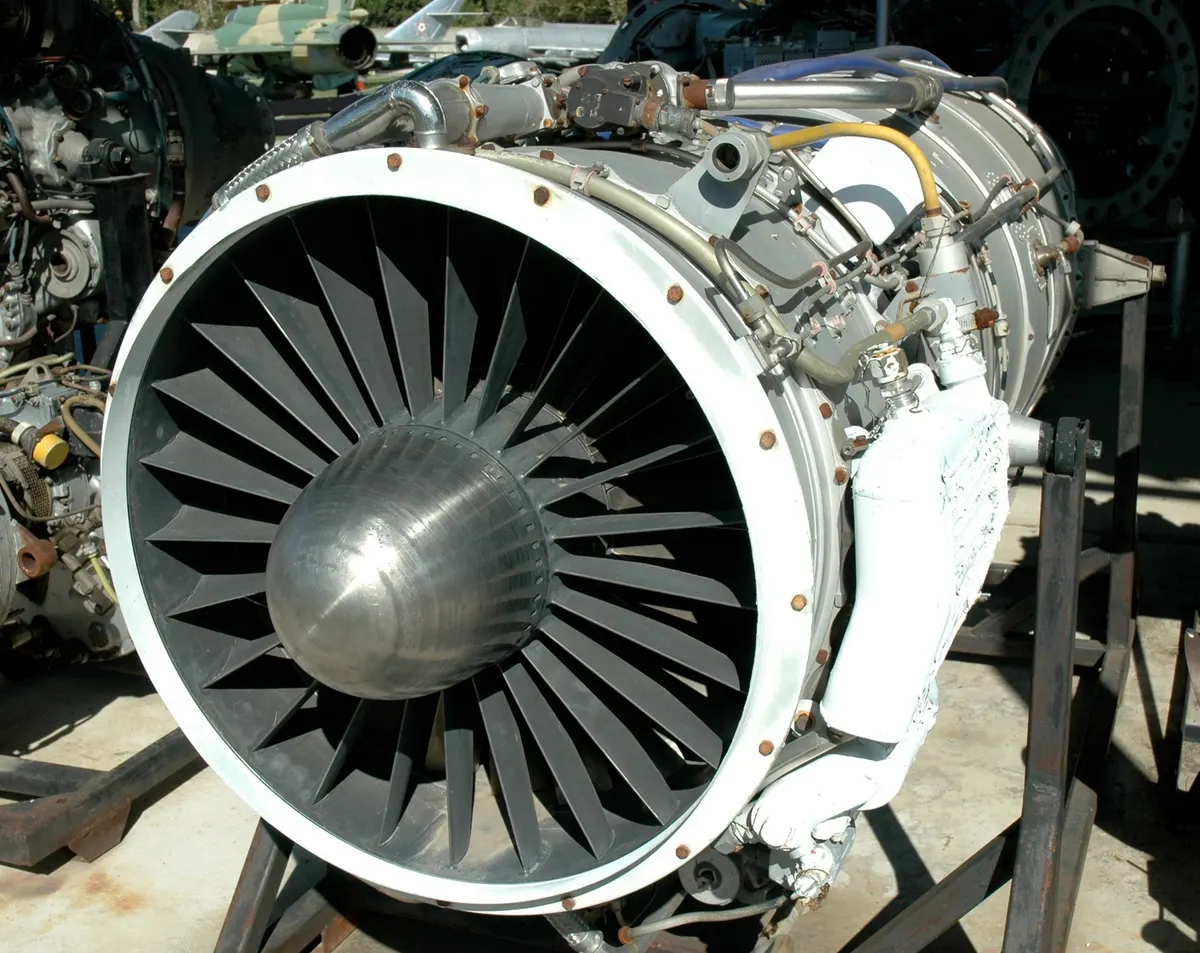
To absorb that extra thrust, Aero Vodochody lengthened the fuselage, gave it a longer nose, and fitted reinforced undercarriage for the higher operating weight.1,4 Dimensionally the two aircraft stay close, 12.20 m long against the L-39's roughly 12 m, with an identical 9.54 m wingspan.
- Motor TipiLotarev DV-2
- İtki21,6
So the real differences show up in the operating numbers rather than the outward silhouette, which is why photos of the two types are often mislabeled interchangeably online.1
- Azami Hız872 km/sa
- Hizmet Tavanı11.800 m
- Menzil2.000 km
Cockpit, Cannon, and the Shift Toward Light Attack

A head-up display (a Flight Visions F-200 on Egyptian aircraft) and added multifunction displays replaced part of the L-39's analog panel, though a full glass cockpit was reserved for the non-production L-139 demonstrator and later the L-159.1,4
- Kokpit DüzeniTandem iki koltuklu
- Cam KokpitEvet
- Gömülü SimülasyonHayır
- Hafif Taarruz KabiliyetliEvet
- Silah İstasyonları4
- Fırlatma KoltuklarıEvet
Combined with a single GSh-23L 23mm cannon in a centerline pod and four underwing hardpoints, the changes turned an incremental trainer upgrade into a genuine light-attack aircraft.1,4
- Uzunluk12,2 m
- Kanat Açıklığı9,54 m
- Yükseklik4,77 m
- Maks Kalkış Ağırlığı7 kg
Egyptian aircraft additionally needed an improved digital engine control system from the American firm AlliedSignal after early reliability problems with the DV-2 installation.1
- Toplam Üretim80
- Kullanıcılar4
The L-59's airframe, final assembly, and most cockpit systems were built by Aero Vodochody in Czechoslovakia, exactly as with the L-39.1 The largest change in sourcing was the Lotarev DV-2 engine: designed by the Ivchenko-Lotarev bureau in Zaporizhzhia, Ukraine, but manufactured under license at Považské Strojárne in Slovakia, making the powerplant a joint Ukrainian-Slovak product rather than a purely domestic one.2,3 The Egyptian export variant added a further foreign layer, an American Flight Visions head-up display and, later, an AlliedSignal engine-control unit brought in to fix reliability problems.4
- Üretim Başlangıcı1986
- Üretim Bitişi1996
- Operasyonel DurumÜretimi durdu, hizmette
From an Upgraded Trainer to a Light-Attack Redesign
Aero Vodochody began the L-39MS program in the 1980s as a straightforward engine upgrade of the L-39, then broadened the specification mid-development into a combined trainer and light-attack aircraft, adding the cannon pod, hardpoints, and reinforced structure before the prototype's first flight on 30 September 1986.1 The redesignation to L-59 followed that shift in mission. Series deliveries began with six aircraft for the Czechoslovak Air Force between 1992 and 1993, a small domestic batch that validated the design ahead of export orders.1
When Czechoslovakia dissolved on 1 January 1993, those six aircraft split four to the new Czech Air Force and two to Slovakia.1 Egypt became the type's first and largest export customer, taking delivery of its L-59E batch in 1993 and 1994 as an intended lead-in trainer for its F-16 and Mirage 2000 pilots; early DV-2 reliability problems prompted the AlliedSignal fix, but even afterward the fleet reportedly flew little and was largely mothballed by the late 1990s.1
Tunisia's twelve L-59Ts, delivered in 1995 and 1996, took the opposite path, becoming by far the type's most actively flown fleet.1
Bridging Toward the L-159 ALCA
The L-59's lengthened fuselage and attack-capable systems became the structural basis for the L-159 ALCA, whose single-seat L-159A first flew on 2 August 1997 with avionics integration handled by Boeing.1 The unbuilt L-59F, pairing Elbit avionics with a Honeywell/ITEC F124 engine, pointed the same direction: Aero Vodochody was already looking west for its next generation of systems before the L-159 made that shift definitive.
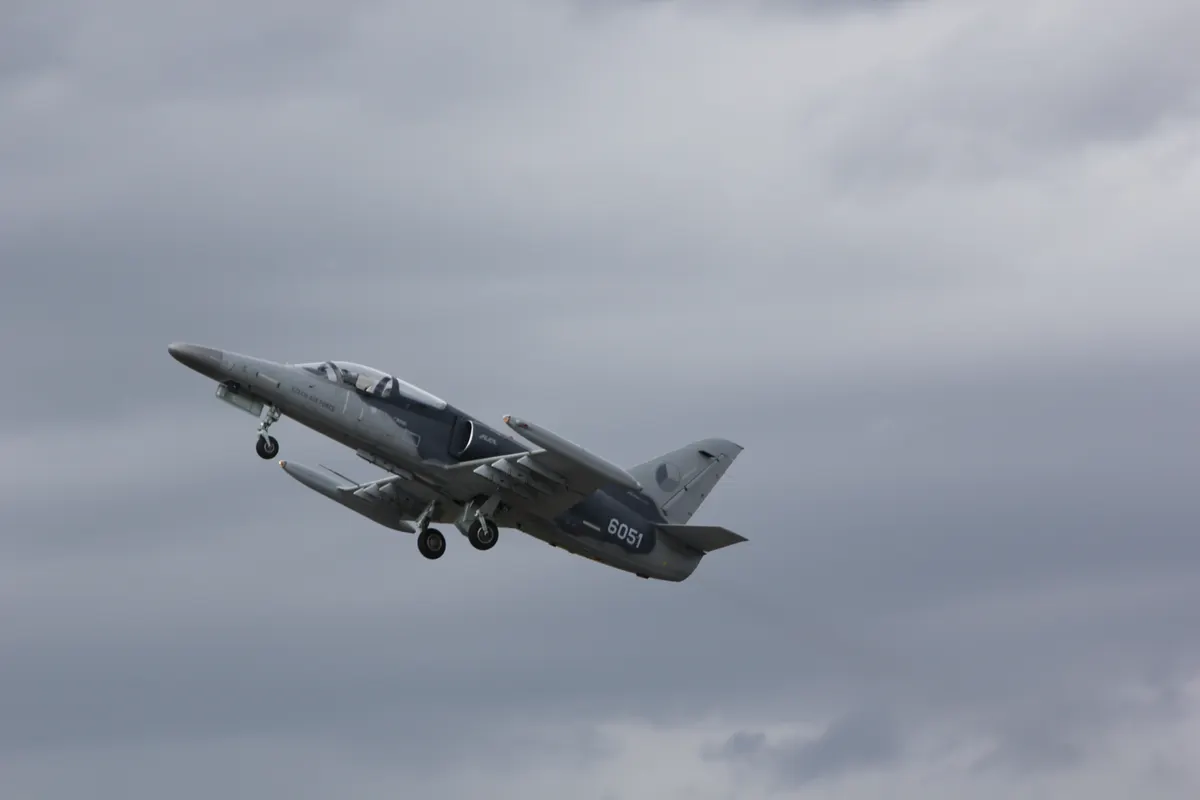
Production of the L-59 itself ended in 1996, and by the early 2010s Aero Vodochody offered only spares and service-life extension for the roughly 80 built, a far thinner support base than the L-39's nearly 2,900-strong fleet ever needed.1
That thin support base is one reason the L-59 never spread beyond its original four operators the way the L-39 did, leaving its later career defined by the fortunes of just two active fleets, Egypt's and Tunisia's, rather than any broad export success of its own.
Tunisia's Border Patrols and the Chaambi Counter-Insurgency
Tunisian L-59Ts saw their first operational use during the First Libyan Civil War in 2011, flying armed patrol missions along the border as the conflict next door threatened to spill over.1
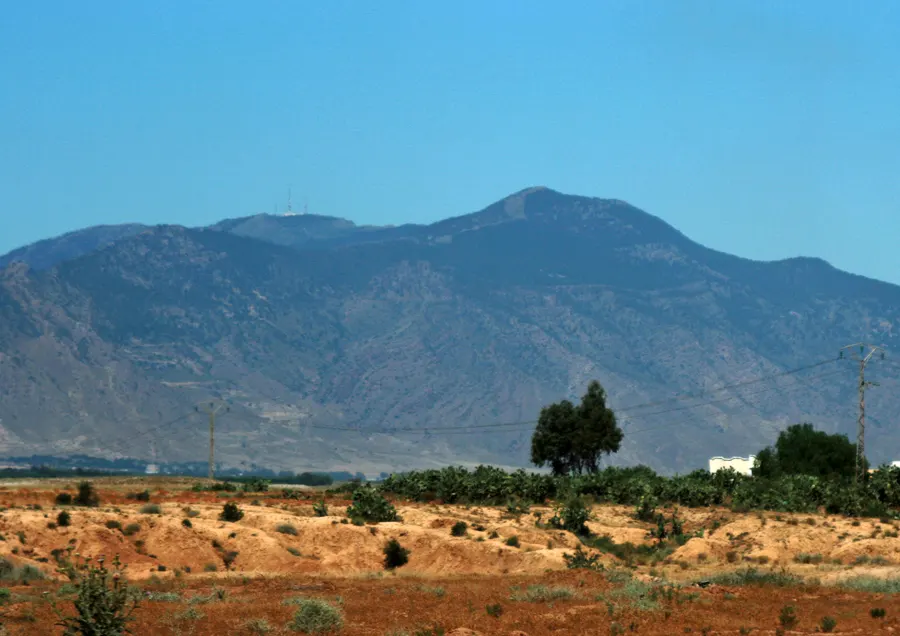
Their most direct combat role came in April 2014, flying reconnaissance and counter-insurgency strikes in the Mount Chaambi region against Ansar al-Sharia and al-Qaeda-linked militants, using exactly the cannon and hardpoint fit added when the design shifted to light attack.1,4
No comparable combat record exists for the Czech, Slovak, or Egyptian fleets; the type's only sustained use in anger has come from the one customer that kept flying it hardest.
The base L-59, originally the L-39MS, is the six-aircraft Czechoslovak batch that established the type before any export order existed.1 The L-59E is the Egyptian export version, built around the Flight Visions HUD and later fitted with the AlliedSignal engine control unit, and remains the largest single production batch despite its short operational career.1,4

The L-59T is the Tunisian export version, twelve aircraft that went on to become the type's only fleet with a substantial combat and border-patrol record.1
The proposed L-59F, pairing Elbit avionics with a Honeywell/ITEC F124 engine, was never built, but its Western-sourced systems anticipated the direction of the subsequent L-159, which shares the L-59's fuselage but is different enough in avionics and role to count as its own aircraft.1


Four states have operated the L-59 family: the Czech Republic and Slovakia, which inherited the original six-aircraft Czechoslovak batch in 1993, Egypt, and Tunisia.1 The Czech and Slovak fleets never grew beyond that inherited handful, a minor role alongside each country's larger L-39 inventories.
Egypt's export batch, intended as its principal lead-in trainer for F-16 and Mirage 2000 pilots, instead became the type's least-used fleet, left in storage by around 1999 with no clearly documented reactivation since.1
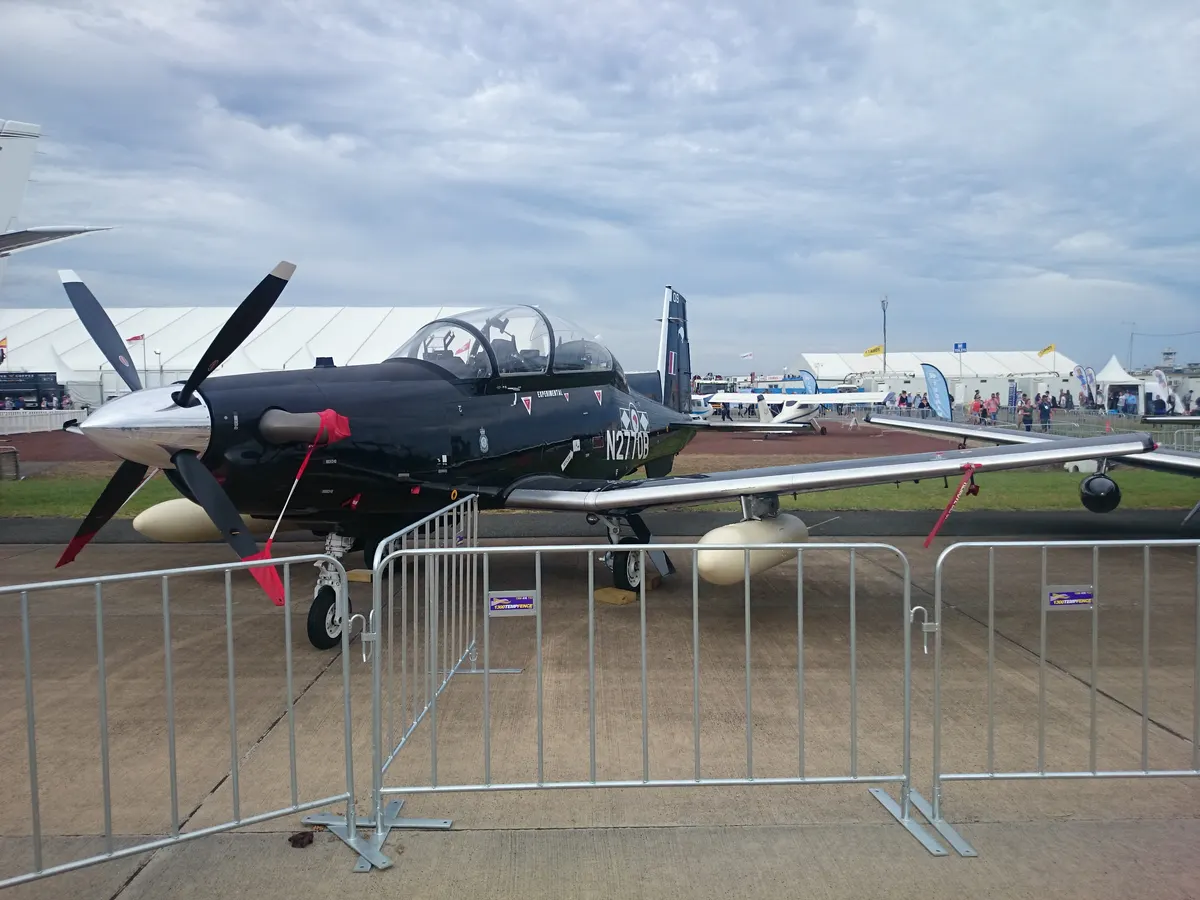
Tunisia has been the family's defining operator, flying its L-59Ts continuously from 1995 into the 2020s. By 2022 the fleet had shrunk to around nine airworthy aircraft.
That year Tunisia signed a 136 million dollar contract with Textron for eight Beechcraft T-6C Texan II turboprops to replace the ageing L-59Ts; the final T-6C was delivered in August 2023, closing out the L-59's three-decade run as Tunisia's advanced trainer.5,6
The L-59 Versus the Base L-39
The DV-2's roughly 21.6 kN of thrust against the AI-25TL's 16.87 kN is a real gain, letting the L-59 carry a cannon pod, four hardpoints, and heavier structure while still reaching a higher top speed.1,2 But that structure pushed empty weight up by several hundred kilograms, so the performance margin over the L-39 is narrower than the raw thrust increase alone suggests.
| Spec | L-39 (base) | L-59 |
|---|---|---|
| Engine thrust | about 16.87 kN | about 21.6 kN |
| Max take-off weight | about 4,700 kg | about 7,000 kg |
| Top speed | about 750 km/h | about 865 to 872 km/h |
The other trade-off is scale. The L-39 became the most-produced jet trainer in history, nearly 2,900 built for over 44 operators; the L-59, despite being the more capable airframe on paper, was built only about 80 times for four, a gap driven more by timing, it arrived as the Warsaw Pact's bulk-purchasing structure was collapsing, than by any shortcoming in the design.1
The L-59 Versus Its Own Successor, the T-6C Texan II
When Tunisia opened its advanced-trainer competition around 2020, Aero Vodochody itself bid, but lost to Textron's Beechcraft T-6C Texan II, a turboprop rather than a jet.5 That reflects a market shift: turboprop trainers cost markedly less per flight hour than any turbofan jet, and modern syllabi push jet introduction later than the 1980s model of stepping cadets directly into a light-attack jet.5,6 The L-59 remains the faster, more heavily armed aircraft, but Tunisia's own procurement decision shows raw performance was not the deciding factor once operating cost and a shrinking spares pool entered the calculation.


What are the L-59 Super Albatros's specifications? A tandem two-seat jet trainer 12.2 m long with a 9.54 m wingspan, powered by a Lotarev DV-2 turbofan rated around 21.6 kN, maximum take-off weight about 7,000 kg, top speed 865 to 872 km/h, service ceiling 11,800 m, and range up to about 2,000 km.1,4
How does the L-59 differ from the L-39? It swaps the L-39's Ivchenko AI-25TL for the more powerful DV-2, adds a lengthened fuselage, strengthened undercarriage, a head-up display, and a cannon pod plus four hardpoints, turning a pure trainer into a trainer and light-attack aircraft.1,2
How many L-59s were built? Roughly 80 between 1986 and 1996: six for Czechoslovakia, an export batch for Egypt (sources vary between 48 and 69 aircraft), and twelve for Tunisia, plus the never-built L-59F.1
Is the L-59 still in service? Only marginally. Tunisia replaced its remaining roughly nine airworthy L-59Ts with T-6C Texan II turboprops delivered through 2023, and Egypt's fleet has largely sat in storage since around 1999.1,5,6
Why did Egypt barely use its L-59E fleet? Early aircraft suffered poor DV-2 reliability, requiring an American AlliedSignal engine-control fix; even afterward, utilization stayed low and most of the fleet was in storage by around 1999, a puzzling outcome for what was meant to be the flagship export customer.1
- "Aero L-59 Super Albatros", Wikipedia — en.wikipedia.org ↩
- "Lotarev DV-2", Wikipedia — en.wikipedia.org ↩
- "Slovaks look to fighter deal to revive DV-2 turbofan", FlightGlobal — flightglobal.com ↩
- "Aero L-59 Super Albatros Advanced Trainer / Light Strike Aircraft", Military Factory — militaryfactory.com ↩
- "Aero Vodochody and Textron compete for Tunisian advanced trainer contract", Military Africa — military.africa ↩
- "Textron delivers final Beechcraft T-6C Texan II turboprop military trainer aircraft to Tunisia", Military Africa — military.africa ↩