


The Fuji T-1A is the initial production version of the Fuji T-1 Hatsutaka, Japan's first postwar domestically designed jet, and the only sub-variant powered by an imported engine rather than a Japanese one.1 The later T-1B used the homegrown Ishikawajima-Harima J3; the T-1A flew on a British Bristol Siddeley Orpheus Mk 805 turbojet rated at 17.79 kN (4,000 lbf), fitted because the domestic engine was not ready when Fuji's airframe was.1,2 Forty-six T-1As were built, out of 66 T-1s in total, the larger of the type's two production batches.1
- Orpheus gave it the type's strongest thrust-to-weight of any Hatsutaka sub-variant
- fastest and highest-climbing Fuji T-1 version built
- proven, mature British engine with a known service record elsewhere
- largest production batch of the type (46 of 66 airframes)
- dependent on imported spares and a foreign supply chain for its entire service life
- no upgrade path once J3-IHI-7-powered T-1Cs appeared; airframes aged out earlier
- thrust still modest next to contemporary imported jet trainers
- fewer preserved survivors than the longer-serving T-1B/T-1C fleet
Production ran from 1960 into 1962, with deliveries to the 13th Flying Training Wing beginning that same year, before the J3-powered T-1B followed in 1962 and 1963.3,4 The two variants are structurally identical, distinguished by what sits in the tail, and that one substitution left them with noticeably different performance and different retirement dates.2,3
The Bristol Orpheus Stopgap and Its Performance Edge Over the T-1B
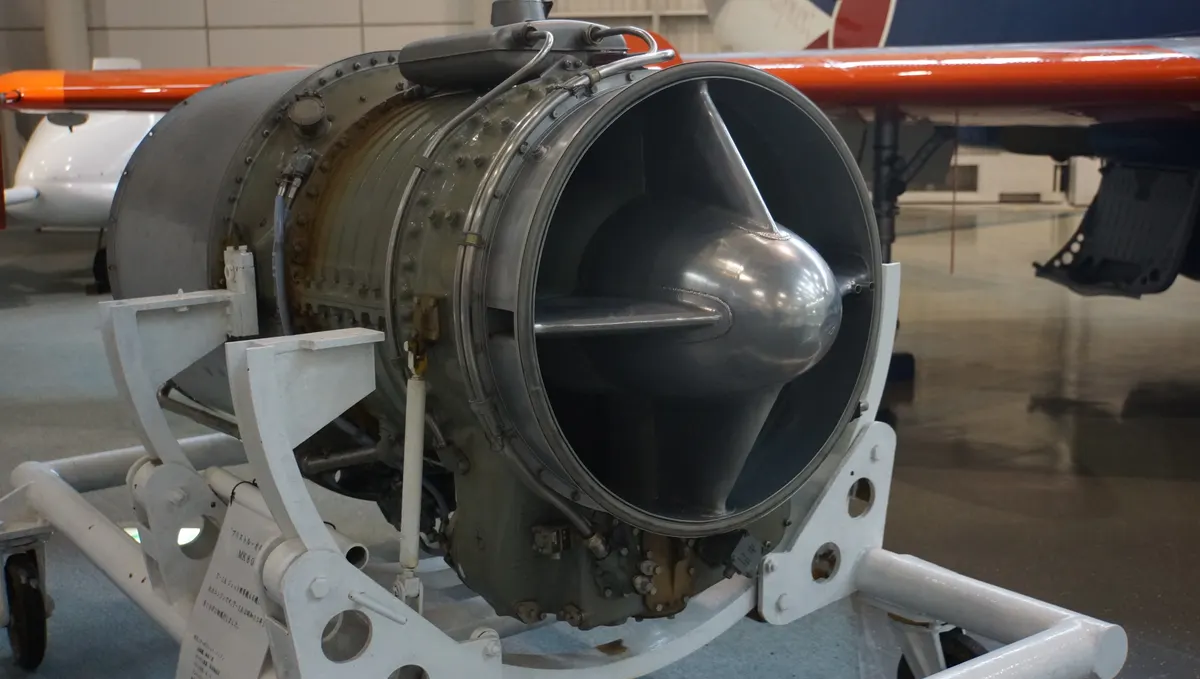
Fuji's swept-wing airframe was ready before Ishikawajima-Harima's J3 turbojet, so the first 46 production aircraft flew instead on an imported Bristol Siddeley Orpheus Mk 805, the same engine family used in the Fiat G91 and Folland Gnat.1,2 Rated at 17.79 kN, the Orpheus gave the T-1A a documented top speed of about 925 km/h (575 mph) at 6,100 m, a service ceiling near 14,400 m, and a climb rate of roughly 33 m/s.2 The later T-1B, built around the far weaker 11.77 kN J3-IHI-3, reached only about 827 km/h, a ceiling near 12,000 m, and a climb rate of about 24 m/s, on the same airframe.1,2
- İlk Uçuş1958
- Hizmete Giriş Yılı1962
- Mürettebat (koltuk)2
- Eğitim Uçağı TipiOrta seviye jet eğitim uçağı
- HizmetteHayır
In other words, the "stopgap" import was also the better performer: the domestic J3 closed Japan's dependence on a foreign engine, but at a cost in thrust, since the T-1B was both heavier (2,845 kg empty against 2,420 kg) and less powerful.2
- Motor TipiBristol Siddeley Orpheus Mk 805 turbojet
- İtki17,79
Fuji Heavy Industries built the T-1A's airframe, tooling, and final assembly entirely in-house at its Utsunomiya plant, the same facility that had produced license-built Beechcraft T-34A Mentors a few years earlier.1 The one major imported component was the engine itself, the Bristol Siddeley Orpheus Mk 805, sourced directly from the manufacturer in the United Kingdom; Rolls-Royce (which absorbed Bristol Siddeley in 1966) did not open its first Japanese sales office until 1964, two years after T-1A production had ended.5 Weighted for the engine's outsized share of an aircraft's value, the T-1A sits meaningfully lower in domestic content than the J3-powered T-1B that followed it.1
Airframe and Armament Shared With the Rest of the Family
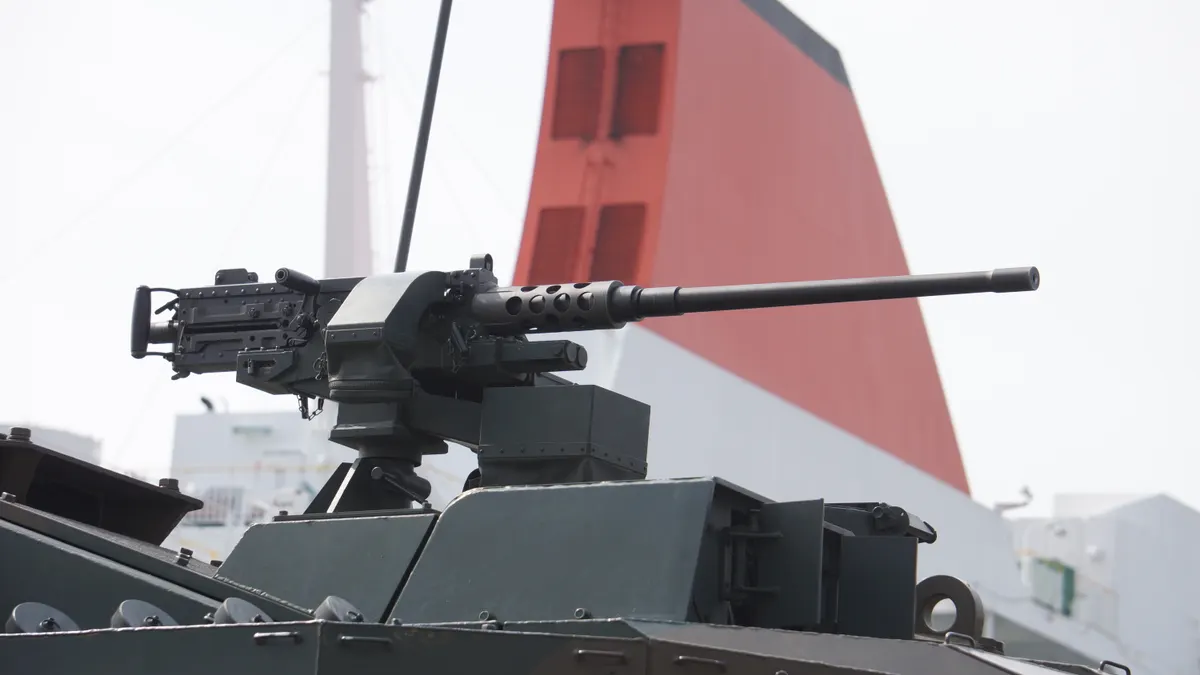
Beyond the powerplant, the T-1A carried the same 12.7 mm Browning M53-2 nose gun and two underwing pylons for practice Sidewinders, rockets, or small bombs as every other Hatsutaka sub-variant, since these were fixed features of Fuji's 1956 design rather than anything tied to engine choice.1 The tandem cockpit and swept wing were likewise common to the whole family; only the extra Orpheus thrust behind the pilots' seats set the T-1A apart in the air.2
- Azami Hız800 km/sa
- Seyir Hızı600 km/sa
- Hizmet Tavanı12.000 m
- Menzil1.300 km
- Tırmanma Hızı25 m/sn
- G Limiti7,33
- Havada/Görevde Kalış Süresi2,5
Because the two shared every system except the engine, the 13th Flying Training Wing flew T-1As and T-1Bs side by side out of Ashiya for decades as one fleet.3,4
- Kokpit DüzeniTandem iki koltuklu
- Silah İstasyonları0
- Fırlatma KoltuklarıEvet
- Uzunluk12,12 m
- Kanat Açıklığı10,5 m
- Yükseklik4,1 m
- Maks Kalkış Ağırlığı5.000 kg
- Toplam Üretim46
- Hizmetten Çıkış Yılı2006
- Üretim Başlangıcı1962
- Üretim Bitişi1963
- Operasyonel DurumHizmet dışı
A Production Run Squeezed Between Two Engine Programs
Fuji began delivering T-1As to the 13th Flying Training Wing, still based at Utsunomiya before its 1962 move to Ashiya, from 1960 onward, with the run of 46 airframes (construction numbers 05-5807 through 25-5846) completed by mid-1962, entirely inside the gap between the type's 1958 prototype flight and the J3 engine's readiness.3,4
Two recorded losses illustrate the ordinary hazards of a jet trainer's working life rather than anything specific to the Orpheus: one T-1A (05-5809) crashed near Chikushino in July 1972, and another (15-5830) ditched into the sea in February 1965.3
A Shorter Front-Line Life Than Its Domestic-Engined Sibling
Because the T-1A could not be re-engined with the later J3-IHI-7 the way surviving T-1Bs were upgraded into T-1Cs, its airframes had no path to modernization; JASDF records show T-1As being progressively withdrawn between 1990 and 2001, ahead of the T-1C-converted aircraft that carried the whole Hatsutaka program to its 2006 retirement.3,1 The 13th Flying Training Wing's own conversion to the Kawasaki T-4, completed across 1999 and 2001, marks roughly where T-1A flying ended in practice.4
The T-1A is one half of a paired engine trial Fuji's 1956 airframe was designed to accommodate either way. Two hand-built prototypes tested the candidate engines before the design froze, and the Orpheus-powered aircraft was ready first, entering production as the T-1A while Ishikawajima-Harima kept refining the J3.1,2 Once the J3-IHI-3 matured, Fuji built 20 T-1Bs between June 1962 and June 1963, structurally identical but carrying the domestic engine the program had aimed for.1
A number of surviving T-1Bs were later re-engined again as the T-1C, fitted with the improved 13.72 kN J3-IHI-7, but this upgrade path never touched the Orpheus-powered T-1A fleet.1

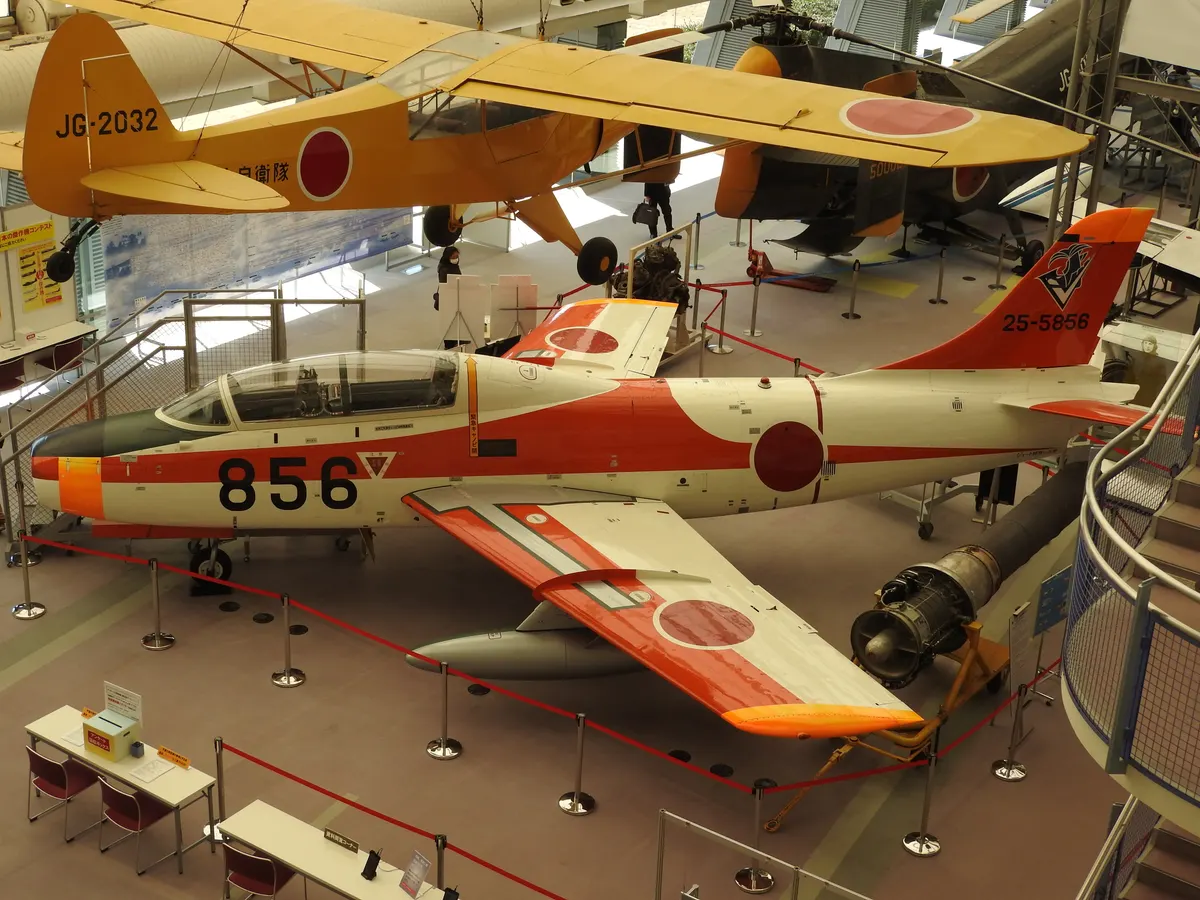
The Japan Air Self-Defense Force was the T-1A's only operator, flying it exclusively through the 13th Flying Training Wing at Ashiya Air Base as the intermediate step between primary propeller trainers and frontline jet conversion.4 No T-1A was ever exported.1
A handful of retired airframes survive as static displays, including examples at Hamamatsu Air Base and Hofu Air Base, a modest footprint next to the longer-serving T-1B/T-1C fleet.3
The most useful comparison for the T-1A is not an outside rival but its own sibling, the T-1B, since the two isolate the cost of Japan's early-1960s engine substitution more cleanly than any cross-country matchup could. Both share the same wing, weight class, and mission; only the engine and the resulting mass differ. On paper the T-1A comes out ahead on every axis: about 100 km/h faster, roughly 2,400 m higher ceiling, and nearly 40 percent quicker to climb than the T-1B.2 That the JASDF pressed ahead with the heavier, slower J3-powered version anyway reflects a priority that had nothing to do with performance: finishing the domestic engine program was the point of the whole T-1 exercise.1
| Spec | Fuji T-1A | Fuji T-1B |
|---|---|---|
| Engine | Bristol Siddeley Orpheus Mk 805, 17.79 kN2 | Ishikawajima-Harima J3-IHI-3, 11.77 kN1 |
| Empty weight | 2,420 kg2 | 2,845 kg2 |
| Top speed | ~925 km/h2 | ~827 km/h2 |
| Service ceiling | ~14,400 m2 | ~12,000 m2 |
The Lockheed T-33A that eventually squeezed the whole program's production run is a secondary comparison here, since that decision affected both T-1 sub-variants equally.


How many Fuji T-1A aircraft were built? Forty-six, out of 66 Fuji T-1s in total; the remaining 20 were T-1Bs with the domestic Ishikawajima-Harima J3 engine.1
What engine did the Fuji T-1A use? A British Bristol Siddeley Orpheus Mk 805 turbojet rated at 17.79 kN (4,000 lbf), imported because Japan's own J3 engine was not yet ready for production.1,2
Fuji T-1A vs T-1B, what was the performance difference? The Orpheus-powered T-1A was faster (about 925 versus 827 km/h), climbed faster (about 33 versus 24 m/s), and reached a higher ceiling (about 14,400 versus 12,000 m) than the domestic-engined T-1B, despite sharing the same airframe.2
Is the Fuji T-1A still in service? No. T-1As were progressively withdrawn between 1990 and 2001, ahead of the T-1C-converted T-1Bs that carried the program to its final 2006 retirement.3,1
What does "Hatsutaka" mean? "First hawk" (初鷹), the name applied to the whole Fuji T-1 family, T-1A included.1
- "Fuji T-1", Wikipedia — en.wikipedia.org ↩
- "Fuji T-1 - Specifications", flugzeuginfo.net — flugzeuginfo.net ↩
- "Fuji T-1 series", Forgotten Jets, Warbirds Resource Group — forgottenjets.warbirdsresourcegroup.org ↩
- "13th Flight Training Wing (JASDF)", Wikipedia — en.wikipedia.org) ↩
- "Rolls-Royce Defence in Japan", Rolls-Royce — rolls-royce.com ↩