


The Boeing Skyfox was a twin-turbofan rebuild of the Lockheed T-33 Shooting Star, developed by a small California start-up in the early 1980s and later marketed, briefly and unsuccessfully, by Boeing. Only one aircraft was ever completed; it first flew on 23 August 1983 at Mojave Airport, and the program ended without a single production sale.1,2
- Twin turbofans cut fuel burn sharply versus the T-33's single turbojet
- Reused roughly 70 percent of a cheap, plentiful existing airframe
- Modern nose, canopy, and avionics improved cockpit visibility
- Genuine light-attack payload capacity on a trainer-class airframe
- Never secured a single firm production order
- Only one prototype ever built; no operational or fleet experience
- Built on donor airframes that were already decades old
- Lost repeatedly to newer, purpose-built jets seen as more prestigious
The idea came from former test pilot Russell O'Quinn, who in 1982 formed Flight Concepts Incorporated with a team of retired Lockheed engineers, including original T-33 designer Irvin Culver.4 Their proposal kept roughly 70 percent of an existing T-33 or Canadair CT-33 airframe but discarded its single, aging turbojet for two externally mounted Garrett TFE731-3A turbofans, promising far better fuel economy on a cheap, plentiful donor airframe.1,4
Boeing bought exclusive marketing rights in 1986, betting its sales reach could turn a strong demonstrator into orders. It could not: every air force that looked seriously at new or refurbished trainers in the 1980s bought something else instead.1,4
Twin Garrett TFE731 Turbofans Replace a Single Aging Turbojet

Flight Concepts removed the T-33's centerline engine and fitted two Garrett TFE731-3A turbofans, about 3,700 lbf each, externally on the lower rear fuselage.1,2 Combined, the pair produced roughly 7,400 lbf, about 60 percent more thrust than the original engine while weighing 17 percent less and burning some 45 percent less fuel.2 The completed prototype reached about 505 knots (935 km/h), a 50,000-foot ceiling, a 7,500 ft/min climb rate, and an internal-fuel range near 1,960 nautical miles (3,630 km).1
- İlk Uçuş1983
- Mürettebat (koltuk)2
- Eğitim Uçağı TipiTemel eğitim uçağı
- HizmetteHayır
Beyond propulsion, the airframe gained inboard wing leading-edge extensions, winglets in place of the T-33's tip tanks, a one-piece windshield, a reshaped, more pointed nose for better forward visibility, and new tail surfaces with a mid-set tailplane, all on the T-33's original wing.1,2 A rated 6,000 lb of external stores across underwing hardpoints supported the aircraft's secondary marketing as a light-attack and forward air control platform, not just a trainer.1
- Motor TipiGarrett TFE731-3A
- İtki7.400
Boeing's pitch leaned on operating economics: fuel and maintenance savings from the conversion, it argued, could modernize a trainer fleet for a fraction of the cost of buying new aircraft.2,3
- Azami Hız935 km/sa
- Hizmet Tavanı15.240 m
- Menzil3.629,92 km
- Tırmanma Hızı38,1 m/sn
- G Limiti7,33
Domestic Content
The conversion was designed and marketed by American firms: Flight Concepts, then Skyfox Corporation, in Mojave, California, followed by Boeing Military Airplane Company from 1986.1,4 The new Garrett TFE731-3A turbofans and conversion avionics were both American-built.1,2 The one exception was the airframe: the prototype's retained structure came from a Canadair-built CT-133 originally delivered to the Royal Canadian Air Force, so that aircraft's core was Canadian even though everything added to it was American.1,4
- Kokpit DüzeniTandem
- Cam KokpitHayır
- Gömülü SimülasyonHayır
- Hafif Taarruz KabiliyetliEvet
- Silah İstasyonları2
- Fırlatma KoltuklarıEvet
- Uzunluk14,021 m
- Kanat Açıklığı11,582 m
- Yükseklik3,658 m
- Maks Kalkış Ağırlığı7.364,196 kg
- Toplam Üretim1
- Kullanıcılar0
- Hizmetten Çıkış Yılı1997
- Üretim Başlangıcı1982
- Üretim Bitişi1997
- Operasyonel Durumsadece prototip, statik sergiye restore edildi
Flight Concepts and a Bid to Modernize the T-33
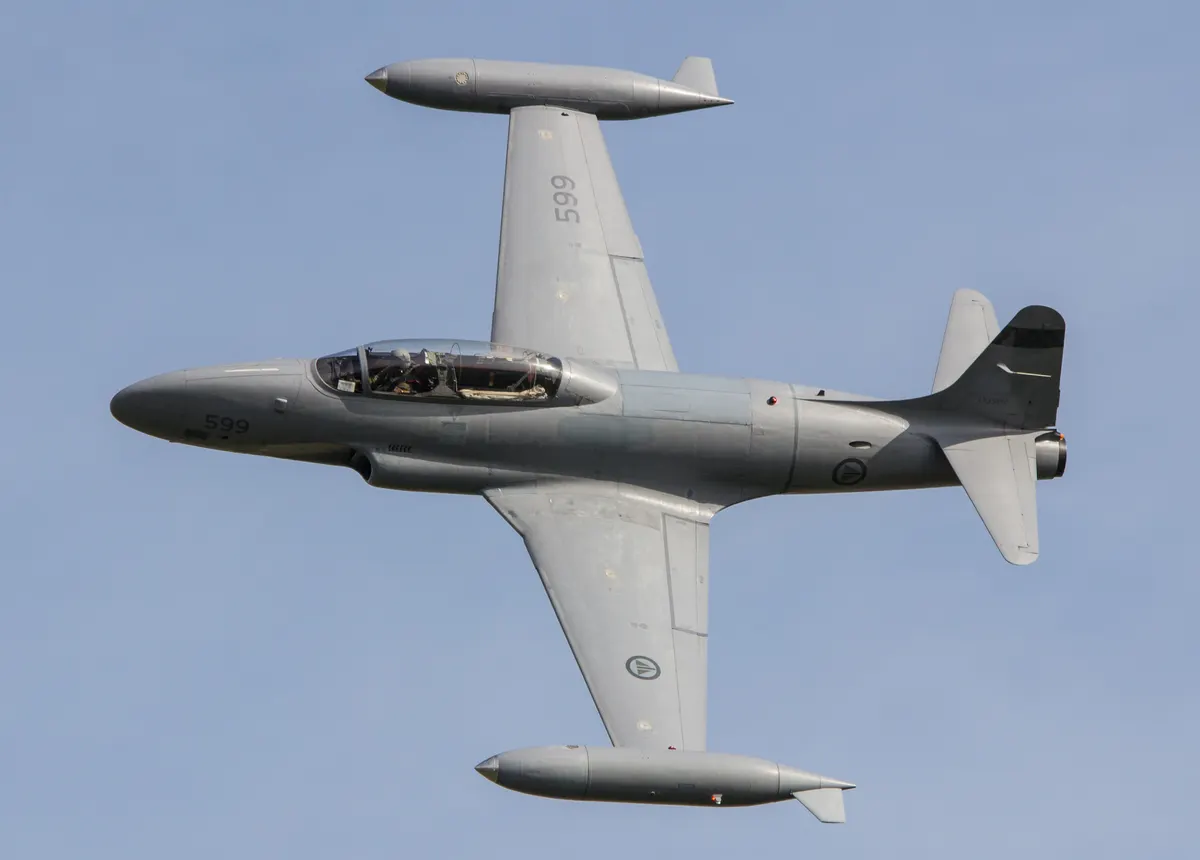
Russell O'Quinn's proposal, backed by about 1.25 million dollars from investor Gilman Hill, became Flight Concepts Limited Partnership in 1982, staffed partly by retired Lockheed engineers from the original T-33 program.4 The pitch: replace a tired engine and worn systems on an existing airframe rather than buy an entirely new jet.

The prototype, converted from former RCAF airframe serial 21160 and registered N221SF, first flew on 23 August 1983 at Mojave, flown by Skip Holm, a Vietnam combat pilot and Reno air racer who later flight-tested Lockheed's F-117.1,6
The company was soon renamed Skyfox Corporation, and in 1986 Boeing Military Airplane Company bought exclusive rights to market and produce the conversion, hoping its reputation could succeed where the small start-up alone had not.1,3
Airshows, "Airwolf," and Customers Who Never Signed
Through the mid-to-late 1980s Boeing showed the Skyfox at air shows across the American Southwest, offered either as a complete Boeing conversion or a kit a customer's own depot could apply to its existing T-33s. The prototype's best-known public appearance, though, was fictional: it played a top-secret, Soviet-bound superplane in "Daddy's Gone a Hunt'n," a 1984 episode of the television series Airwolf.3,4
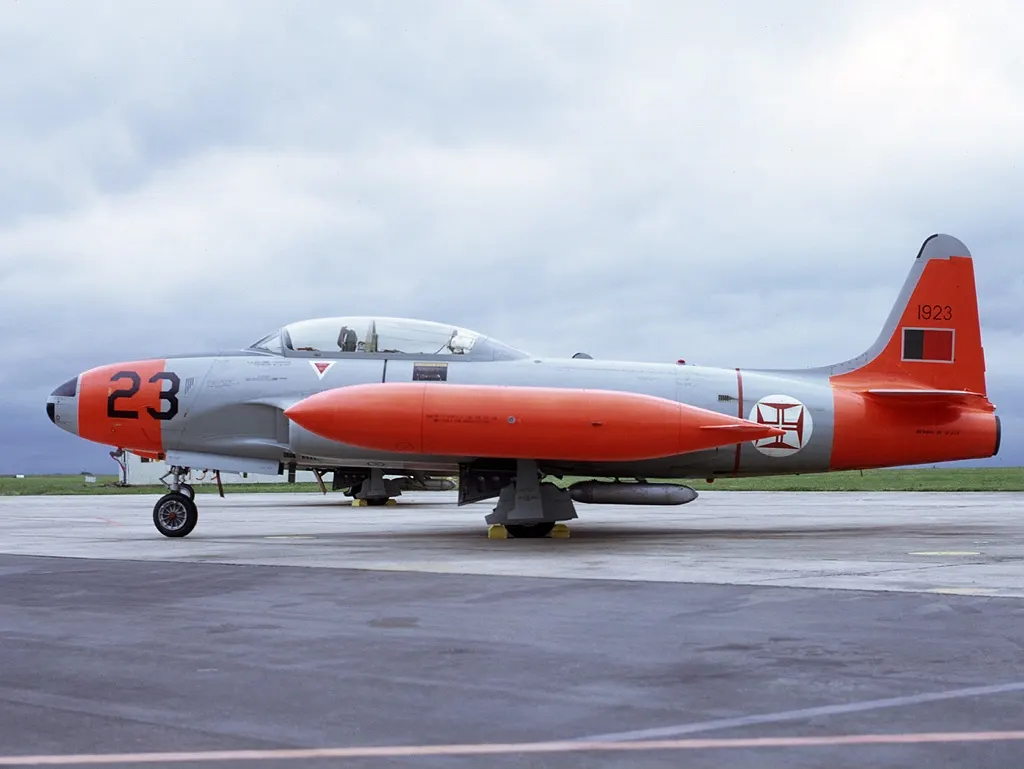
Portugal came closest, signing a letter of intent for 20 kits with OGMA's Alverca depot lined up to perform the work, but it never became a firm contract.1 The US Air Force, Bolivia, and Ecuador reportedly examined the concept without committing.7 One analysis argued the real obstacle was psychological more than technical: air forces shopping for trainers in that era favored aircraft marketed as clean-sheet designs, such as the BAE Hawk or Pilatus PC-9, even where the Skyfox cost substantially less.4 Unable to build a program around one uncommitted air force, Boeing terminated its agreement with Skyfox Corporation in 1987.4
Decay in Oregon and Restoration at Palm Springs
With no orders to fill, the prototype's flying career wound down through the 1990s; most sources treat 1997 as the program's effective end. It then sat outdoors at what is now Rogue Valley International-Medford Airport, Oregon, engines and cowlings stripped, for more than two decades.5 In 2021 O'Quinn's family donated it to the Palm Springs Air Museum, which restored it as a static grey-and-white display piece rather than an airworthy aircraft.5
No production variant of the Skyfox ever existed beyond the single flying demonstrator. Boeing's commercial offering split into two configurations on paper, a complete converted aircraft or a customer-applied kit, but both were sales models for identical engineering rather than distinct airframe variants, and neither produced a second aircraft.1,3

The Skyfox never had an operator; no air force took delivery of a converted aircraft or a kit, and the prototype remained a company demonstrator throughout its flying life.1 The closest the program came was Portugal's unfulfilled letter of intent, alongside uncommitted interest from the US Air Force, Bolivia, and Ecuador.1,7
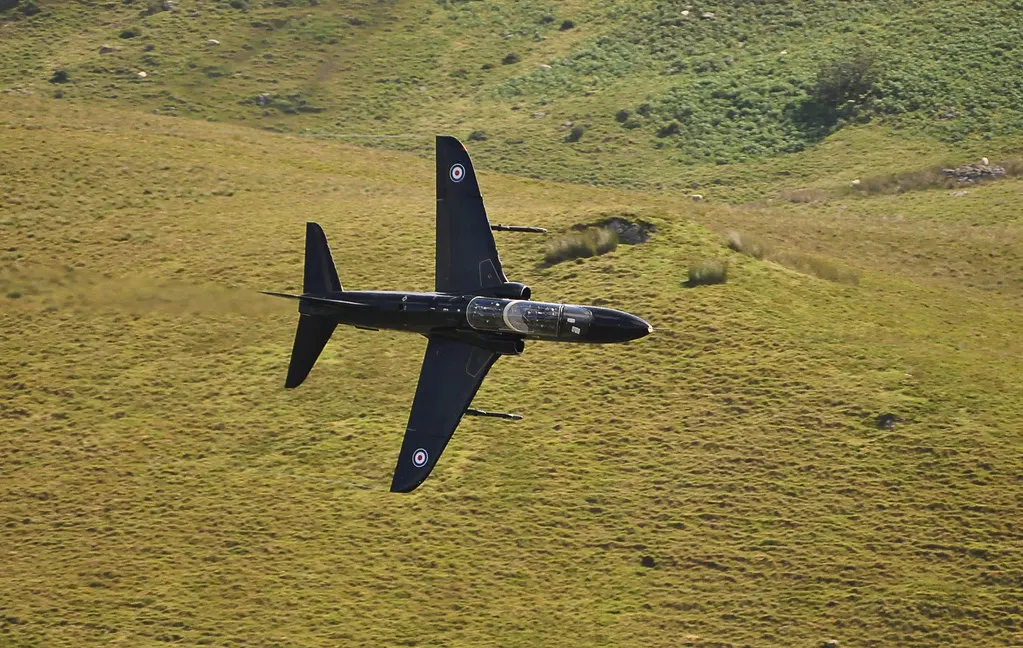
Air forces retiring T-33s in the 1980s generally replaced them outright, buying newer jets like the BAE Hawk or turboprops like the Pilatus PC-9 instead.4,7 That preference, more than any shortfall in the Skyfox's own performance, explains why the type never entered service anywhere.
Portugal's OGMA depot, the only organization positioned to build Skyfox kits under license, shelved its own conversion plan once the Skyfox Corporation-Boeing agreement collapsed, closing the last realistic path to a first operator.1,4
Skyfox vs. the T-33 It Was Built From
Because the Skyfox retained most of its donor airframe, the closest comparison is with the aircraft it modified. Swapping the single turbojet for two Garrett TFE731-3A turbofans cut fuel burn by an advertised 45 percent and added roughly 60 percent more thrust, letting designers reshape the tail, wingtips, and nose without touching the proven wing.1,2 What the swap could not fix was the age of the structure underneath: the airframe was already thirty-five years old by 1983, a fatigue and parts-support problem a re-engine program does not solve the way an all-new design does.
Skyfox vs. BAE Hawk and Pilatus PC-9
Against the aircraft that actually won trainer contracts in the 1980s, the Skyfox's case was economic rather than aerodynamic. The single-engine BAE Hawk is faster and backed by a mature production line and a combat-capable derivative the Skyfox could not match; the turboprop Pilatus PC-9 undercut it from the other direction, trading speed for lower fuel burn and a reputation as a modern trainer.8,9 Air forces choosing between the three consistently preferred a purpose-built option over a rebuilt 1950s airframe.


How many Boeing Skyfox aircraft were built?
Only one. The prototype, converted from an ex-RCAF Canadair CT-133 Silver Star and registered N221SF, first flew on 23 August 1983; no second aircraft was ever completed.1,5
Is the Skyfox still flying today?
No. Its flying career ended by the late 1990s, and after more than two decades in outdoor storage it was restored by the Palm Springs Air Museum as a static display following a 2021 donation.5
What was the Boeing Skyfox's top speed?
About 505 knots (935 km/h), with a 50,000-foot service ceiling, achieved after replacing the T-33's single turbojet with two Garrett TFE731-3A turbofans.1
How is the Skyfox different from the standard Lockheed T-33?
It kept roughly 70 percent of the T-33 or CT-33 airframe, including the original wing, but replaced the single Allison J33 or Rolls-Royce Nene turbojet with two Garrett TFE731-3A turbofans and added winglets, a new nose and canopy, and new tail surfaces.1,2
Why did the Boeing Skyfox program fail?
It never secured a firm order. Portugal signed a letter of intent for 20 kits but never finalized it, and the US Air Force, Bolivia, and Ecuador all examined the concept without committing; Boeing terminated its agreement with Skyfox Corporation in 1987 rather than build a program around one uncommitted customer.1,4,7
- "Boeing Skyfox", Wikipedia — en.wikipedia.org ↩
- "Grounded Dreams: Boeing Skyfox, Reviving the Legacy of the T-33 Shooting Star", Vintage Aviation News — vintageaviationnews.com ↩
- "The Boeing Skyfox: Fantastic Follow-On Or Fanciful Flop?", AvGeekery — avgeekery.com ↩
- "Sexy Beast", Vintage Wings of Canada — vintagewings.ca ↩
- "Palm Springs Air Museum Completes Boeing Skyfox Restoration", Vintage Aviation News — vintageaviationnews.com ↩
- "Skip Holm", Wikipedia — en.wikipedia.org ↩
- "Boeing Skyfox Advanced Jet Trainer Proposal", Military Factory — militaryfactory.com ↩
- "BAE Systems Hawk", Wikipedia — en.wikipedia.org ↩
- "Pilatus PC-9", Wikipedia — en.wikipedia.org ↩