



J.P. Sauer & Sohn made its first firearm in 1751, in the Thuringian gunmaking town of Suhl, and spent the next two and a half centuries building bolt-action hunting rifles and, during the World War II years, tens of thousands of Karabiner 98k service rifles for the Wehrmacht.1 The company did not build a self-loading sporting rifle of its own until 2006, when it launched the Sauer 303 (marketed as the S 303), a gas-operated semi-automatic hunting rifle purpose-built for the fast-paced European driven hunt.2 It remains one of the newer entries in the broader semi-automatic rifles category, arriving decades after most of the American and Soviet designs that define the leaf.
- recoil and muzzle rise cut by roughly 30 percent versus a comparable bolt gun
- interchangeable barrels across seven factory calibers
- Silent Cocking System lets a hunter carry loaded but uncocked
- cold-hammer-forged, free-floating barrel rated under 1 MOA
- roughly double the retail price of a Browning BAR in the same class
- standard magazine holds only 2 rounds (5-round option sold separately)
- cannot be broken down as simply as a double rifle or some rival autoloaders
The Sauer 303 ships from the factory in Germany, at Isny im Allgäu, in seven factory chamberings ranging from 7x64mm up to 9.3x62mm, covering .308 Winchester, .30-06 Springfield, 8x57mm IS, .300 Winchester Magnum and .338 Winchester Magnum as well.3 A stripped rifle weighs 3.25 to 3.35 kg depending on barrel length and stock material, with barrels offered at 510 mm or 560 mm.1 Sauer's own literature frames the 303 as a semi-automatic alternative to a double rifle, built for hunters who need a fast, safe follow-up shot on running boar rather than a single unrepeatable barrel.2
J.P. Sauer & Sohn is itself part of a small cluster of premium hunting-arms brands. It partnered with the Swiss firm SIG in 1976 to create SIG Sauer, and since 2000 has belonged to L&O Holding, the private group founded by Michael Lüke and Thomas Ortmeier that also owns Blaser and Mauser's hunting-rifle line.4 That ownership link matters for how the Sauer 303 is positioned in the market. Its closest corporate sibling for the same driven-hunt customer is a bolt-action rifle from a company under that same holding roof.
The Sauer Gas System and Silent Cocking Mechanism
The Sauer 303's action uses an under-barrel gas-operated system Sauer calls the Smart Tube, a sleeve around the rear of the barrel that carries the gas port on its underside.2 Sauer's stated goal was to keep the barrel itself free of any brazed or bolted gas block, so the forward two-thirds of the barrel floats completely free of the stock and gas hardware, which the company argues preserves bolt-action-like accuracy despite the added mass and moving parts of a self-loading action.2 The factory claims groups under 1 MOA from the cold-hammer-forged barrel, though real-world results vary. One long-term owner reported groups in the 1.2 to 2 inch range at 100 yards with handloaded 165-grain Barnes TTSX bullets, closer to good hunting accuracy than to match-rifle precision.5
- İlk Üretim Yılı2006
- Hizmete Giriş Yılı2006
- Tasarımcıj_p_sauer_sohn
- Ağırlık (Boş)3,25 kg
- Halen HizmetteEvet
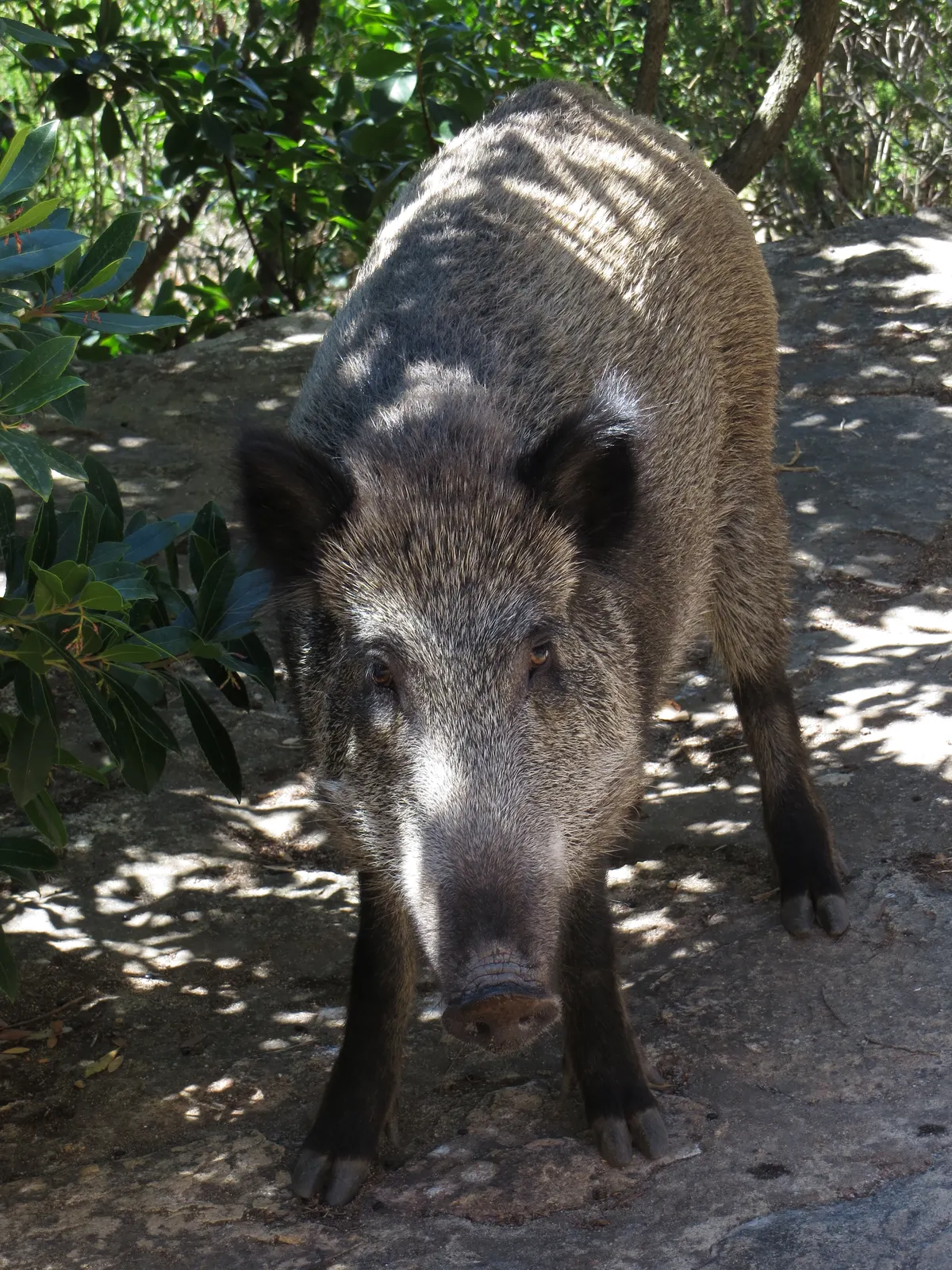
The rifle's signature feature is the Silent Cocking System, abbreviated SCS. A hunter can walk a driven-hunt line with a round chambered but the striker uncocked, then thumb the cocking slide on the bolt shroud back and slowly forward until it locks, without the metallic click a conventional bolt or hammer makes.6 An IntraLock firing-pin block keeps the striker from reaching the primer unless the breech is fully closed, and a triangular cursor safety on the tang, described by reviewers as the first use of that safety style on a production semi-automatic rifle, works the same internal hammer safety.6 Sauer's own operating manual lists the trigger at roughly 1,300 grams, though an early production-run trigger tested by an American reviewer broke at a crisper 1.98 lb (about 900 g), with minimal creep either way.5,7 Sauer built the 303's standard detachable magazine to hold just 2 rounds. The company's own reasoning is that two follow-up shots, plus the round already chambered, cover nearly every running shot a driven hunt actually calls for, and a 5-round magazine is sold separately for hunters shooting from a fixed stand instead.6
- Fişek7x64mm_308_win_30_06_300_win_mag_8x57mm_is_338_win_mag_9_3x62mm
- Kenar AteşlemeliHayır
Sauer marketed the 303 purely as a civilian hunting arm, and no armed force or police agency is known to have adopted or trialed it. The nearest it gets to a martial pedigree is corporate rather than mechanical. Its maker built Karabiner 98k rifles for the German military eight decades earlier, under the same Sauer name.
- Mekanizma TipiGazlı
- Seçmeli AtışHayır
- Besleme SistemiÇıkarılabilir Şarjör
- Şarjör Kapasitesi2
- Tetik Tipisingle_stage
Interchangeable Barrels and the Seven-Caliber Lineup
The Sauer 303's barrel is designed to be swapped by the owner rather than a gunsmith, using the factory Torx tools supplied with the rifle, which is the mechanical basis for the seven-caliber lineup.8 According to Sauer's own operating instructions, the 7x64mm, .30-06 Springfield, 8x57mm IS and 9.3x62mm chamberings share a common bolt face and magazine body, so converting between them is a barrel change alone.8 Moving to the shorter .308 Winchester case or to the belted-magnum .300 Winchester Magnum and .338 Winchester Magnum chamberings needs a caliber-specific bolt head and magazine as well as a barrel, since Sauer sells the magazines themselves as seven separate caliber-marked parts rather than one universal unit.3 That is a narrower conversion system than the fully modular bolt-action Blaser R8, which swaps barrel, bolt head and magazine as a single assembly across a much wider caliber range, but it still lets one Sauer 303 receiver cover boar-hunting calibers up to dangerous-game-capable 9.3x62mm without buying a second rifle.
- Namlu Uzunluğu510 mm
- Optik RayıEvet
isiMount Scope Rail, Stock Materials and the Artemis Variant
Sauer fits the 303 with its own isiMount rail, a quick-release scope mount using rotating levers that is meant to return a riflescope to zero after it is removed and reinstalled, useful for a hunter who wants to swap optics between a driven-hunt red dot and a longer stand-hunting scope without re-zeroing each time.4 Furniture options run from laser-grain walnut on the entry Select model to a synthetic stock on the Classic XT and an adjustable thumbhole stock on the Synchro XT, with a wood-and-aluminum Hybrid model sitting between them.9
- Toplam Uzunluk1.065 mm
- Gövde Malzemesi (Receiver)steel
In 2018 Sauer extended the line with the Artemis, a variant built around a stock shape derived from measurements of more than 2,000 women, shortening the reach to the trigger by roughly two centimeters and shrinking the buttstock and grip to suit a smaller shooter without changing the rifle's action or calibers.10 It is a rare case in the hunting-rifle market of a manufacturer re-engineering the stock geometry itself for female shooters rather than simply offering a shorter length of pull.
- Üretim Başlangıcı2006
Two ejectors, rather than the single ejector common on most semi-automatic actions, throw the spent case clear on every cycle, a detail Sauer added specifically to keep hulls from lingering in the action during a fast string of shots at a running animal.2 The barrel and receiver are both made at the Isny factory, the receiver CNC-machined and the barrel cold-hammer forged with a chrome-lined bore for corrosion resistance and extended service life.9
Suhl's Oldest Gunmaker and a 255-Year Wait for a Self-Loader
Lorenz Sauer founded the original Sauer firearms business in 1751 in Suhl, then part of the Duchy of Saxe-Hildburghausen, a town already known across Central Europe for its concentration of gunsmiths.1 Johann Paul Sauer took over management in 1835 and, with his own son (also named Lorenz), renamed the firm J.P. Sauer & Sohn in 1840, the name the company still carries.1
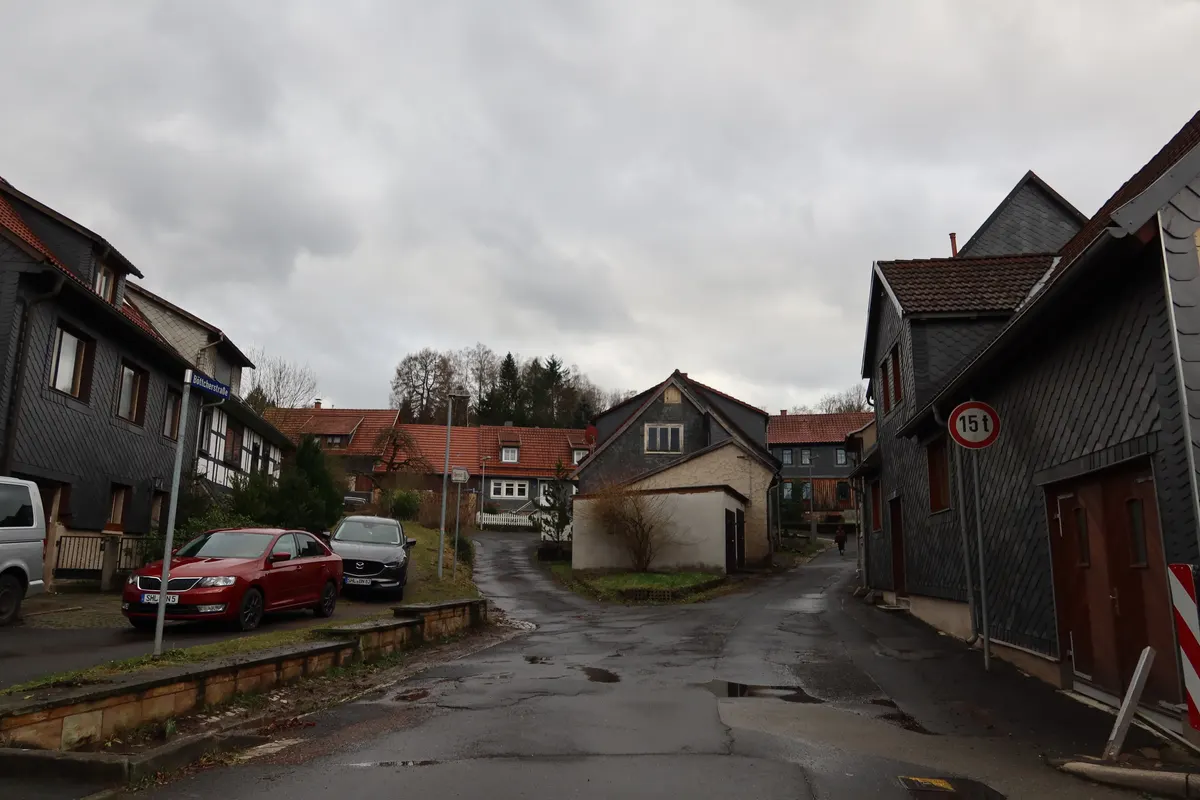
The company expanded well beyond Suhl by the late 1800s, adding a Berlin sales branch in 1884 as its sporting and military rifle business grew.1 By the 1930s it employed roughly 1,450 workers, and once war began it became one of the manufacturers producing the bolt-action Karabiner 98k for German forces, alongside the M30 Luftwaffe drilling, a combination rifle-and-shotgun survival gun issued to aircrews.1
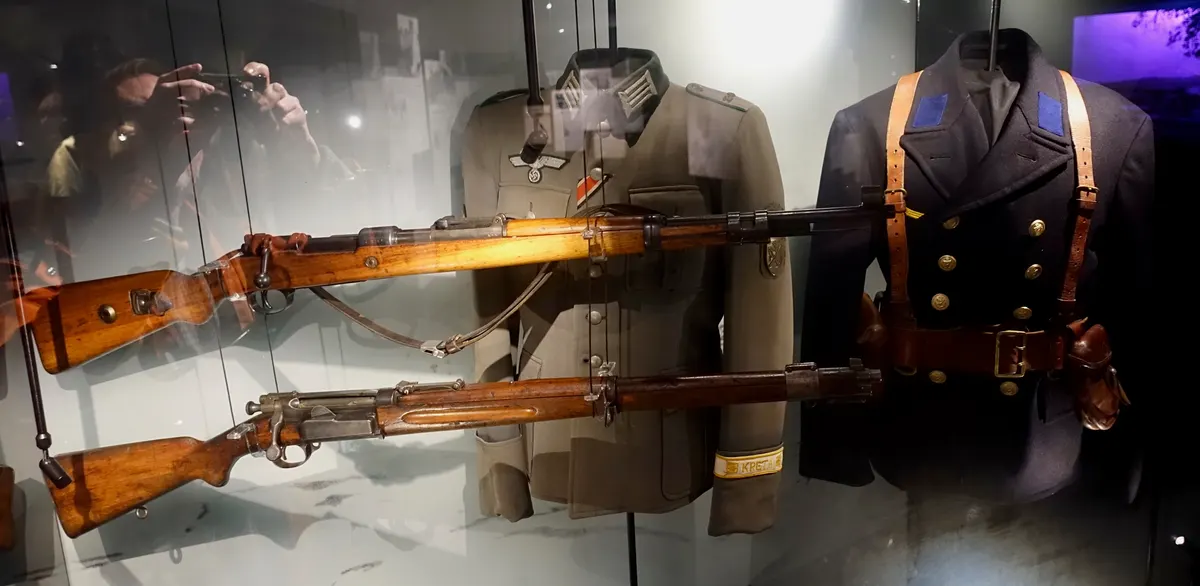
Suhl ended up on the Soviet side of the postwar division of Germany, and the East German state nationalized the original factory into the VEB combine system.1 Rolf-Dietrich Sauer relocated the family firm west, re-establishing it in Düsseldorf in 1951 and then in Eckernförde on the Baltic coast the following year, before a further move south to Isny im Allgäu in Bavaria, where the company still builds every Sauer 303 today.1 It took until 1976 for Sauer to gain an international arms partner, when its West German operations combined with the Swiss firm SIG to found SIG Sauer. Ownership changed again in 2000, when L&O Holding bought the whole SIG civilian-arms portfolio, folding J.P. Sauer & Sohn in alongside Blaser and Mauser's sporting-rifle line under one private ownership group.4

None of that history involved a self-loading rifle. Sauer stayed a bolt-action-only maker for its entire 255-year history until its engineers introduced the Sauer 303 in 2006, timed to a period of rising demand from German and Austrian driven-hunt organizers for a faster-cycling rifle that still looked and handled like a classic Sauer sporting gun.2
The 303 has stayed in continuous production and update since, with the Select, Classic XT, Synchro XT, Hybrid and Artemis variants all still listed as current models on Sauer's own site as of 2025.9 Used examples regularly change hands at European and North American gun auctions, and the model carries its own entry in the Blue Book of Gun Values, a sign of how firmly it has settled into the secondary hunting-rifle market less than two decades after launch.13
- S 303 Select the base production model, with a laser-grain walnut stock and standard trigger, sold as the entry point into the line.9
- S 303 Classic XT the same action in a rugged synthetic stock aimed at rough field use rather than a wood finish.9
- S 303 Synchro XT built around an adjustable thumbhole stock with a height-adjustable comb, aimed at hunters who want a more tactical grip angle without leaving the wood-and-walnut Sauer look entirely behind.9
- S 303 Hybrid combines a Grade 6 walnut buttstock and forend with elastomer inserts at the cheekpiece, grip and forend for a firmer hold in wet weather.11
- S 303 Artemis the women's-specific variant, with the shortened, narrower ErgoCompact stock developed from measurements of over 2,000 women hunters.10
Sauer also sells the closely related bolt-action Sauer 202 carbine alongside the 303, sharing the same monolithic, take-down two-piece stock concept and the same seven-caliber magazine range, but built around a six-lug rotating bolt rather than the 303's gas-operated action, aimed at hunters who prioritize single-shot precision over rapid follow-up shots.8 All Sauer 303 variants share the same interchangeable-barrel system and Silent Cocking mechanism. The differences between them are almost entirely in stock material, shape and finish rather than in the underlying action.
Pricing has long tracked those same tiers. A 2009 Guns Magazine review grouped the early lineup into Classic, Elegance and Individual price bands, with the entry Classic model listed around 3,999 USD at the time.5 Sauer's current Select-to-Hybrid range still follows that same low-to-high tiering by wood grade and stock finish, rather than by any change to the action itself.

The bolt-action Blaser R8 and the Sauer 303 are built by sister brands under the same L&O Holding ownership, and both are aimed at exactly the same German and Austrian driven-hunt customer, which makes this pairing closer to an internal product rivalry than a random matchup of two hunting rifles. Where the Sauer 303 trades some bolt-action precision for a faster second shot and roughly 30 percent less felt recoil, the Blaser R8 keeps the single-shot accuracy driven-hunt purists still prefer and offers its own tool-free straight-pull caliber conversion across an even wider range of chamberings than the 303's seven.4 A hunter choosing between the two inside the same corporate family is really choosing between two answers to the same problem. One is a semi-automatic action that fires faster, the other a straight-pull bolt some shooters still trust more on a single decisive shot.
Outside the L&O group, American and Italian owners most often cross-shop the Sauer 303 against the Browning BAR, a longer-running semi-automatic hunting rifle line built in Belgium and not currently represented as its own weapon record in this leaf. Forum reports from owners of both rifles describe the Sauer 303 as the more accurate and better-triggered of the two, with a noticeably higher retail price, while the Browning is lighter and easier to field-strip for cleaning.12 That trade-off, precision and trigger quality against weight and simplicity, comes up in nearly every driven-hunt forum thread that compares the two rifles.
| Sauer 303 | Blaser R8 | |
|---|---|---|
| Action | gas-operated semi-automatic | straight-pull bolt-action |
| Standard magazine | 2 rounds | varies by caliber, typically higher |
| Barrel change | tool-assisted, caliber-grouped | tool-free, single assembly |
| Recoil vs comparable bolt gun | roughly 30% lower | baseline |


What caliber is the Sauer 303 rifle chambered in? The Sauer 303 ships in seven factory calibers, 7x64mm, .308 Winchester, .30-06 Springfield, 8x57mm IS, .300 Winchester Magnum, .338 Winchester Magnum and 9.3x62mm, with barrel swaps covering the whole range on one receiver.3
How does the Sauer 303's semi-automatic action work? It uses a gas-operated system built around a free-floating barrel and an under-barrel Smart Tube gas cylinder, paired with a manually operated Silent Cocking System that lets a hunter carry the rifle chambered but uncocked until game appears.2,6
Is the Sauer 303 still in production? Yes. As of 2025, Sauer's Select, Classic XT, Synchro XT, Hybrid and Artemis variants remain current catalog models, nearly two decades after the line launched in 2006.9
How much does a Sauer 303 rifle cost? Pricing has always sat at the high end of the semi-automatic hunting-rifle market, roughly double a comparable Browning BAR, with the base Classic model listed around 3,999 USD when Guns Magazine reviewed it in early 2009, and current used and new prices varying widely by caliber, wood grade and market.5,12
What is the Sauer 303's magazine capacity? The standard magazine holds 2 rounds. Sauer's reasoning is that two follow-up shots plus the round already chambered cover nearly every driven-hunt shot, with an optional 5-round magazine available for stand hunting.6
- "Sauer & Sohn", Wikipedia — en.wikipedia.org ↩
- "Sauer 303", J. P. Sauer & Sohn — sauer.de ↩
- "S 303 Magazines", J. P. Sauer & Sohn — sauer.de ↩
- "SIG Sauer", Wikipedia — en.wikipedia.org ↩
- "The newish Sauer S 303 semi-auto rifle", The Firearm Blog — thefirearmblog.com ↩
- "Sauer 202 e 303 carbines: go hunting with style", all4shooters — all4shooters.com ↩
- "Sauer 303 Operating and Safety Instructions", J. P. Sauer & Sohn (archived manual text) — archive.org ↩
- "Sauer 303", Wikipedia — en.wikipedia.org ↩
- "Sauer 303 Select", J. P. Sauer & Sohn — sauer.de ↩
- "Sauer Artemis, a woman's weapon", J. P. Sauer & Sohn — sauer.de ↩
- "J.P. Sauer & Sohn 303 Hybrid .30-06 Semi Auto", GunPost — gunpost.ca ↩
- "Sauer 303 Vs Browning BAR?", robsoft.nu hunting forum — forum.robsoft.nu ↩
- "J.P Sauer MODEL 303 For Sale - Price and Used Value", Blue Book of Gun Values — bluebookofgunvalues.com ↩