


Remington Arms built the Model 597 to replace its own troubled Model 522 Viper, a rifle recalled after its plastic bolt deformed under sustained fire.1 The Remington Model 597 entered production in 1997 as a blowback-operated, rimfire semi-automatic rifle chambered in .22 Long Rifle and .22 Winchester Magnum Rimfire, with a .17 HMR version added in 2002.1,2 It uses a detachable magazine feeding from a steel two-rail bolt guide system that Remington marketed as tighter tolerance than the tip-up receiver of its main United States rival, the Ruger 10/22.3 Remington built the Model 597 at plants in Ilion, New York, and later Mayfield, Kentucky, until announcing discontinuation of the line in 2019.2
- Accurate out of the box, often beating the 10/22 in group size
- Steel two-rail bolt guide, tighter than a stamped receiver
- Threaded-barrel AAC-SD variant, suppressor ready from the factory
- Chambered in three rimfire calibers from one action
- Early plastic magazines caused chronic feeding failures
- .17 HMR version recalled in 2009 over case ruptures
- Aftermarket ecosystem far smaller than the Ruger 10/22's
- Factory trigger widely criticized as heavy and gritty
The Remington 597's specifications place it squarely in the budget sporting-rimfire class: a 2.49 kg unloaded weight, a 508 mm (20 inch) standard barrel, and a 10-round detachable box magazine for .22 LR (8 rounds in the magnum chamberings).2,4 Despite that modest positioning, the rifle built a reputation for two contradictory things at once, better out-of-box accuracy than the 10/22 in most reviewer testing, and a persistent, well-documented run of feeding and extraction complaints tied mostly to its early magazines.5,6 Both threads run through the Remington 597's history and still shape how collectors and shooters describe the rifle today.
Remington positioned the Model 597 as a direct, cheaper answer to the Ruger 10/22's dominance of the American rimfire market, and the rifle's history cannot really be separated from that rivalry.7 It also arrived at a moment when Remington's rimfire line badly needed a rifle that worked. The 522 Viper's recall had damaged confidence in the brand's semi-automatic .22s, and the 597's steel-guided bolt and revised magazine geometry were built specifically to fix what had gone wrong with the Viper.1 Whether it fully succeeded is one of the more debated points among rimfire shooters, covered in detail below.
The Remington 597's blowback action is mechanically simple, a free-floating bolt held closed by spring pressure and its own mass, with no locking mechanism, the same operating principle used by the vast majority of .22 LR semi-automatics including the Ruger 10/22 and the Remington Nylon 66.2 What distinguishes the 597's action is its bolt guide, two hardened steel rails set into the receiver that keep the bolt tracking straight rather than riding on the receiver walls directly, a detail Remington's own product literature and independent reviewers both single out as unusually well-machined for a rifle in this price bracket.3,5
- İlk Üretim Yılı1997
- Hizmete Giriş Yılı1997
- Ağırlık (Boş)2,49 kg
- Halen HizmetteHayır
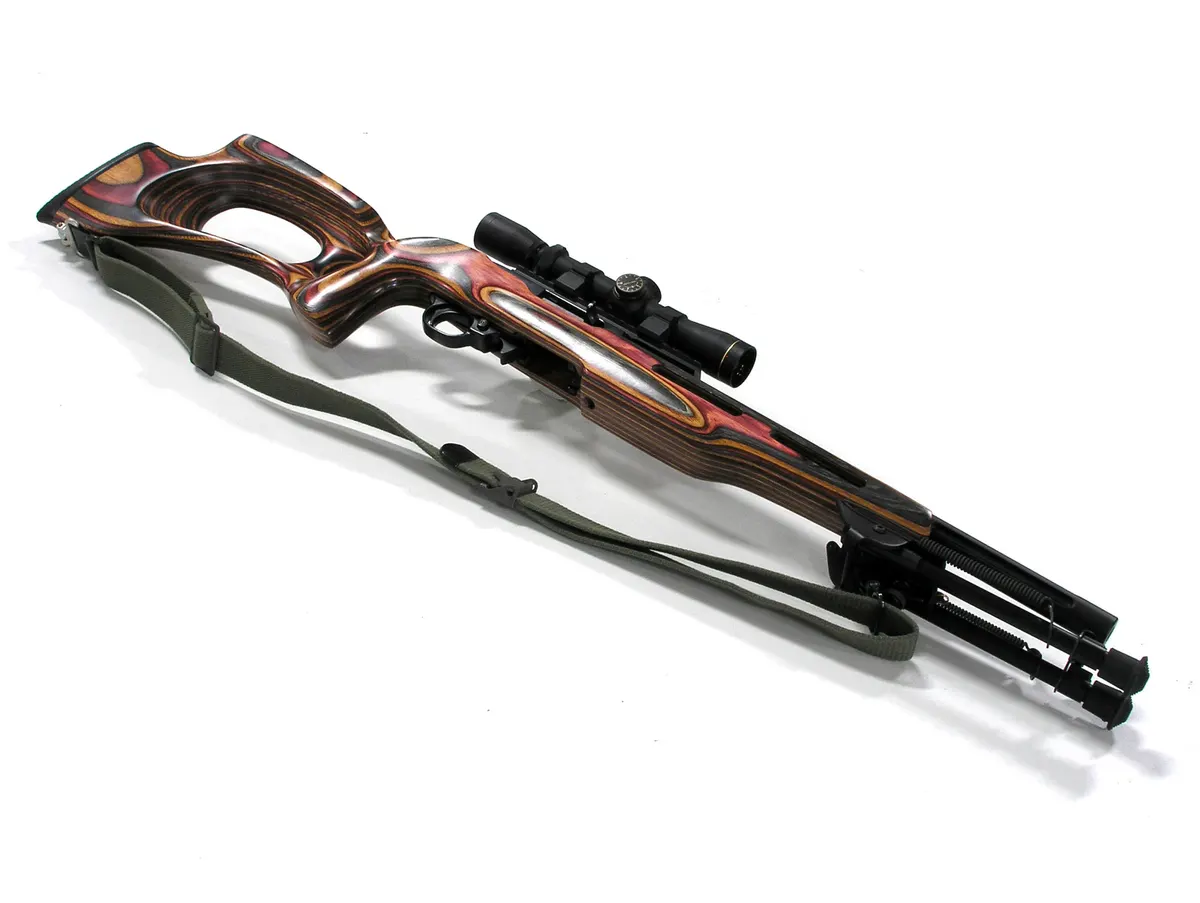
Barrel length runs 508 mm (20 inches) on the standard sporter, with a shorter 419 mm (16.5 inch) heavy barrel on the HB (Heavy Barrel) and VTR (Varmint Target Rifle) variants.8 Weight sits at 2.49 kg (5.5 lb) for the standard synthetic-stock rifle, rising with the laminate-stock and heavy-barrel models.2,4 Overall length is about 1,016 mm (40 inches).2 The rifle ships with iron sights and a factory-drilled optic rail (an 11mm dovetail with pre-tapped Weaver-style holes), so the Remington 597's iron sights and scope base come as one package rather than requiring separate gunsmithing.2
- Fişek.22 LR, .22 WMR, .17 HMR
- Çap5,6 mm
- Çap Sınıfıkenar ateşlemeli
- Kenar AteşlemeliEvet
- Kovansız MühimmatHayır
The Remington 597's magazine went through four distinct generations across its production run. The first-generation magazine, molded plastic, was the rifle's single most criticized component, prone to feeding failures once loaded past three or four rounds.6,9 A second-generation investment-cast aluminum-alloy magazine arrived around 2000 and was a clear improvement, and Remington kept refining the design through a black-coated fourth generation intended to smooth feeding further.9 Reviewers and forum members consistently identify magazine generation, more than any other single factor, as the difference between a Remington 597 that runs reliably and one that does not.6,9
- Mekanizma TipiBlowback (Geri İtmeli)
- Atış Modlarıyarı otomatik
- Seçmeli AtışHayır
- Besleme SistemiÇıkarılabilir Şarjör
- Şarjör Kapasitesi10
A factory AAC-SD variant added a 16.5 inch threaded barrel (1/2-28 thread pitch) with a thread protector, making that model suppressor-ready straight from Remington rather than requiring an aftermarket gunsmith to thread the muzzle.10 Stock material spans black synthetic on the base rifle to brown laminated hardwood on the LS (Laminated Stock) models, both free-floated on the heavy-barrel variants to improve accuracy.3,8 The factory trigger pull is commonly measured around 5.5 lb on the standard model and a lighter, better-finished 3.2 lb on the HB variant, a spread reviewers frequently flag as inconsistent for a single product line.5
- Namlu Çıkış Hızı383 m/sn
- Azami Menzil150 m
- Namlu Uzunluğu508 mm
- Nişangah TipiDemir nişangah ve optik rayı
- Optik RayıEvet
- Açık NişangahEvet
- Dişli NamluEvet
- Kabza/Dipçik Malzemesisentetik ve lamine ahşap
- Katlanır / Toplanır DipçikHayır
- Bullpup DüzeniHayır
- Çift Yönlü KumandalarHayır
- Modülerliksınırlı yan sanayi desteği
- Susturucuya HazırEvet
- Süngü TakozuHayır
- Entegre BipodHayır
- Bombaatar KabiliyetliHayır
- Gaz PistonluHayır
- Üretim Başlangıcı1997
- Üretim Bitişi2019
Remington introduced the Model 597 in 1997 as the direct successor to the Remington Model 522 Viper, itself the semi-automatic rimfire that had replaced the older Remington Nylon 66 in 1993.1 The Viper's plastic bolt deformed under sustained firing and locked shut, and its polymer magazines fed poorly, problems severe enough that Remington effectively recalled and replaced Viper rifles with 597s rather than fix the Viper design in place.1 The 597 addressed the Viper's specific failure, the heat-sensitive plastic bolt was gone, replaced by a steel bolt riding the twin-rail guide system, but the rifle inherited a version of the Viper's other weakness almost immediately, unreliable plastic magazines that drew the same kind of owner complaints the Viper had generated a few years earlier.1,6
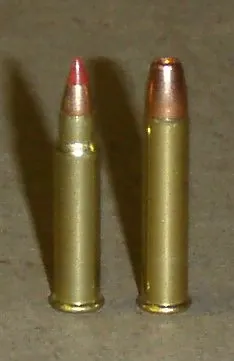
Remington expanded the Model 597 line through the early 2000s, adding the .17 Hornady Magnum Rimfire chambering in 2002 and a growing family of heavy-barrel, laminated-stock, and magnum variants.2,8 That expansion ended abruptly in August 2009, when Remington and its ammunition supplier Cascade Cartridge Inc (CCI) issued a joint safety notice warning that certain lots of .17 HMR ammunition were not suitable for use in semi-automatic firearms, the Model 597 chambered for .17 HMR chief among them, after reports that rifles could rupture or discharge case fragments toward the shooter.11,12 Remington told owners to stop firing the rifle immediately, offered free return shipping, and issued $200 or $250 replacement-firearm coupons depending on stock type, plus $10 ammunition coupons per returned box.13 A federal class action followed, alleging Remington's recall notice understated the danger and that the company had sold the defective combination for years before acting.14 The .22 LR and .22 WMR chamberings were not part of the recall and continued in production.2
The Remington 597 remained in Remington's catalog through the company's 2017 bankruptcy and change of ownership, before Remington's firearms division announced the line's discontinuation in 2019, ending a 22-year production run.2,15 Reviewers writing after the discontinuation generally attribute it less to any single defect than to accumulated reputation damage from the magazine and .17 HMR problems, combined with the Ruger 10/22's much stronger sales and a Remington product strategy that shifted rimfire production toward its Marlin subsidiary.15
The base Remington 597 ships with a black synthetic stock, blued 20 inch barrel, iron sights, and a factory scope rail, chambered in .22 LR.8 The 597 Magnum is the same rifle rebuilt around the longer, higher-pressure .22 WMR case, with an 8-round magazine and a slightly heavier bolt to handle the increased pressure.8 The short-lived 597 HMR chambered the .17 HMR cartridge from 2002 until the 2009 recall ended that version entirely.11
The 597 LS (Laminated Stock) and 597 LS HB (Laminated Stock, Heavy Barrel) models pair a brown laminated hardwood stock with a heavier, free-floated barrel for improved accuracy, produced from 2005 onward.8 The 597 HB (Heavy Barrel) uses a 16.5 inch bull barrel with a Weaver rail and a lighter factory trigger, and reviewers consistently rate it the most accurate stock configuration in the line.5,16 The 597 VTR (Varmint Target Rifle) broke furniture convention entirely, pairing a shortened heavy barrel with an AR-15-style pistol grip and collapsible stock, sold only through Gander Mountain and the Ellett Brothers dealer network from 2009.8 The 597 AAC-SD added the factory-threaded 16.5 inch barrel described above, aimed squarely at the suppressor market.10
Aftermarket support for the Remington 597 grew steadily even after the factory line ended. JARD built drop-in trigger assemblies with pull weights as light as 1 lb, Tandemkross produced extended controls and trigger kits, Volquartsen supplied replacement hammers and extractors, and stock makers including Boyds and ProMag's Archangel line offered AR-style and adjustable target-stock conversions.17,18 That aftermarket, while real, never approached the scale built around the Ruger 10/22, a point covered in depth in the Comparison section below.7


The Remington 597 was never adopted as a military or police service weapon anywhere. It is a civilian sporting and training rifle, sold almost entirely through the commercial firearms retail channel in the United States, with additional export distribution into Canada and other markets with active civilian .22 LR markets.2 Its main institutional use case was informal, .22 LR semi-automatics like the 597 and the Ruger 10/22 are staples of civilian marksmanship instruction programs (the Appleseed rifle marksmanship program is the best documented example), youth shooting sports, small-game and varmint hunting, and pest control, rather than any government-issued role.7
The Ruger 10/22 outsold the Remington 597 by a wide margin over their overlapping production years, and that sales gap is the real story behind the single sharpest difference between the two rifles, the size of their aftermarket ecosystems.7 Ruger's rotary-magazine action turned into the platform of choice for custom rimfire builders decades before the 597 existed, and by the time Remington's rifle reached the market, the 10/22 aftermarket already covered nearly every category of part, barrels, stocks, triggers, bolt handles, receivers machined from billet aluminum.7,19 The Remington 597's aftermarket, built later and on a smaller sales base, covers the same broad categories today through makers like JARD, Tandemkross, and Boyds, but with a fraction of the model choice.17,18
That is not the same as saying the Remington 597 is the weaker rifle out of the box. Reviewers testing both side by side, including at Appleseed-style rifle marksmanship events, have repeatedly found the 597 more accurate as-shipped, a difference several attribute to the 597's steel bolt-guide rails against the 10/22's simpler tip-up receiver and looser factory tolerances.5,7 The tradeoff is reliability history, the Ruger 10/22 built its reputation on being nearly jam-proof from its rotary magazine, while the Remington 597's early plastic magazines gave it a lasting reputation for feeding failures that later metal-magazine generations only partly repaired.6,9
| Remington 597 (.22 LR) | Ruger 10/22 | |
|---|---|---|
| Action | Blowback, steel bolt-guide rails | Blowback, tip-up receiver |
| Magazine | 10-round detachable box (4 generations) | 10-round detachable rotary |
| Barrel length | 508 mm (20 in) | 470 mm (18.5 in) |
| Weight, empty | 2.49 kg (5.5 lb) | 2.27 kg (5.0 lb) |
| Aftermarket parts market | Real, smaller | Largest in the rimfire category |
Both rifles remain common answers to the same search a new rimfire shooter runs, is the Remington 597 or the Ruger 10/22 the better first .22 rifle, and the honest answer from most long-term owners is that it depends on whether the buyer wants a rifle to shoot as-is or a rifle to build on.7 The Marlin Model 795, a simpler tube-fed rimfire competing in the same price bracket, occupies a third lane below both, cheaper than either but without the Remington 597's accuracy edge or the Ruger 10/22's parts support.7


Is the Remington 597 still in production? No. Remington discontinued the Model 597 line in 2019 after 22 years of production, though used and new-old-stock rifles remain widely available on the secondary market.2,15
Is the Remington 597 reliable? It depends heavily on which magazine generation the rifle uses. Early plastic magazines caused frequent feeding failures, while the later metal-bodied magazines paired with clean, quality ammunition run reliably in most owner reports.6,9
What calibers does the Remington 597 come in? The Remington 597 was chambered in .22 Long Rifle and .22 Winchester Magnum Rimfire from 1997, with a .17 HMR version added in 2002 and recalled in 2009.2,11
How much does a Remington 597 cost today? As a discontinued rifle, Remington 597 pricing now runs through the used market, generally in the low hundreds of dollars depending on variant and condition, well below the price of comparable new-production rimfire semi-automatics.15
Remington 597 vs Ruger 10/22, which is the better rifle? The Remington 597 tends to test more accurate out of the box, while the Ruger 10/22 has a far larger aftermarket for anyone planning to customize the rifle. Neither answer is universal, and the choice usually comes down to whether the buyer wants to shoot the rifle as delivered or build on it.7
- "Remington Model 522 Viper", Wikipedia — en.wikipedia.org ↩
- "Remington Model 597", Wikipedia — en.wikipedia.org ↩
- "Remington 597 Review, Reliability, Accuracy, Accessories and More", ProArmory — proarmory.com ↩
- "Remington 597 Review, Our Take On This 22LR", Gun University — gununiversity.com ↩
- "Gun Review, Remington 597 Heavy Barrel", The Truth About Guns — thetruthaboutguns.com ↩
- "6 Remington 597 Problems Uncovered, Solutions Inside", RedDotVibe — reddotvibe.com ↩
- "Remington 597 vs Ruger 10/22, Expert Breakdown and Comparison", Ruger1022.com — ruger1022.com ↩
- "Remington Model 597 Rimfire Rifles", Chuck Hawks — chuckhawks.com ↩
- "Remington 597 Review, Best Upgrades and Accessories", rem870.com — rem870.com ↩
- "Remington 597 22 Long Rifle ACC-SD Threaded Barrel", Wholesale Hunter — wholesalehunter.com ↩
- "Safety Advisory for .17 HMR Semi-Autos", American Rifleman — americanrifleman.org ↩
- "Why Remington Recalled the .17 HMR Model 597", The Firearm Blog — thefirearmblog.com ↩
- "Remington 597 Rifles and .17 HMR Ammunition Recall", Guns Holsters and Gear — gunsholstersandgear.com ↩
- "Defective Remington 597 17 HMR Semiautomatic Rifle Class Action Lawsuit", Top Class Actions — topclassactions.com ↩
- "Remington 597 Problems That New Buyers Should Know About", GunAnalyst — gunanalyst.com ↩
- "Remington 597 Stainless HB TVP No. 80852 22 LR", Gun Tests — gun-tests.com ↩
- "JARD Trigger Kit for Remington 597", JARD Inc — jardinc.com ↩
- "Remington Model 597 Parts", Midwest Gun Works — midwestgunworks.com ↩
- "Ruger 10/22 vs Remington 597", The Hunting Gear Guy — huntinggearguy.com ↩