


The Berkut carbine (Cyrillic Беркут, meaning golden eagle) is unusual among semi-automatic rifles for how many different cartridges one basic action was built to fire. Depending on which of its variants a buyer chose, the same gas-operated platform came chambered in 7.62x39mm (Berkut-1), .308 Winchester (Berkut-2), 7.62x54mmR (Berkut-2M), or the big-game 9x53mmR round (Berkut-3), a spread of calibers rarely offered across one carbine family anywhere in the world.1 It was designed in Tula by Vasily Petrovich Gryazev, the same engineer already known for the VSK-94 sniper rifle and for the Gryazev-Shipunov GSh-30-1 aircraft autocannon, and it entered serial production in 1998 at the state-owned KBP Instrument Design Bureau in Russia.2
- compact two-piece takedown with a detachable stock
- chrome-lined barrel and rotating bolt built to military tolerances
- four cartridge options across one basic platform
- good bench accuracy from a hunting-grade barrel
- never matched the low price of the SKS or Saiga
- non-adjustable trigger
- scope rail mounting drew complaints from some owners
- low overall production volume compared to rival carbines
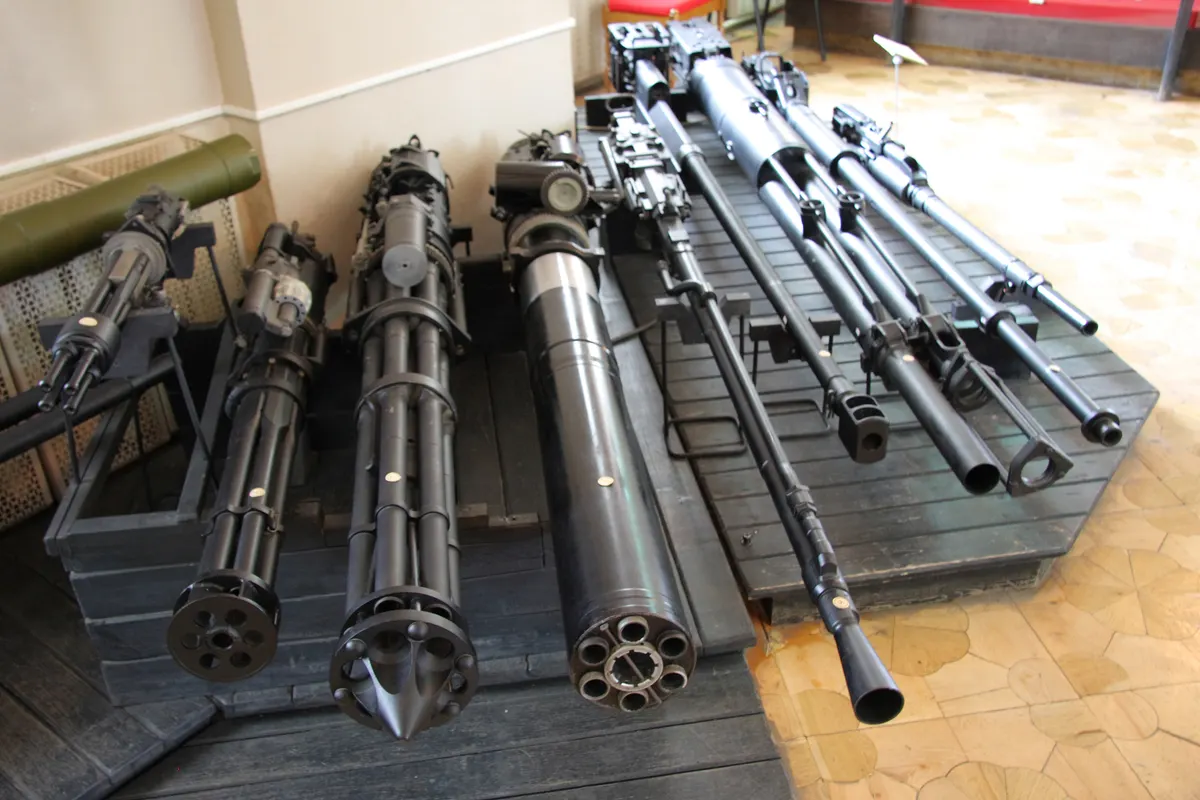
The Berkut family came out of the same Tula design house responsible for some of the more specialized firearms in Soviet and Russian service, the TsKIB SOO sporting-arms bureau, which today operates as a branch of KBP itself.3 Gryazev split his career between artillery-caliber automatic cannon work with Arkady Shipunov and small-arms projects for the civilian and law-enforcement market, and the Berkut sits on the small-arms side of that career alongside the 9A-91 compact assault rifle, the PP-90M1 submachine gun, and the GSh-18 pistol.2
The gas-operated action and a detachable-magazine feed put the Berkut in direct competition with a crowded field of Russian civilian hunting carbines converted from military rifle designs, including the SKS, the Saiga, and the Vepr.4 Unlike those cheaper alternatives, the Berkut was priced and built as the higher-cost option, a hunting rifle aimed at buyers willing to pay for a shorter, lighter, military-grade action rather than a converted mass-production service rifle.5
The Short-Stroke Gas Piston Behind the VSK-94 Sniper Rifle
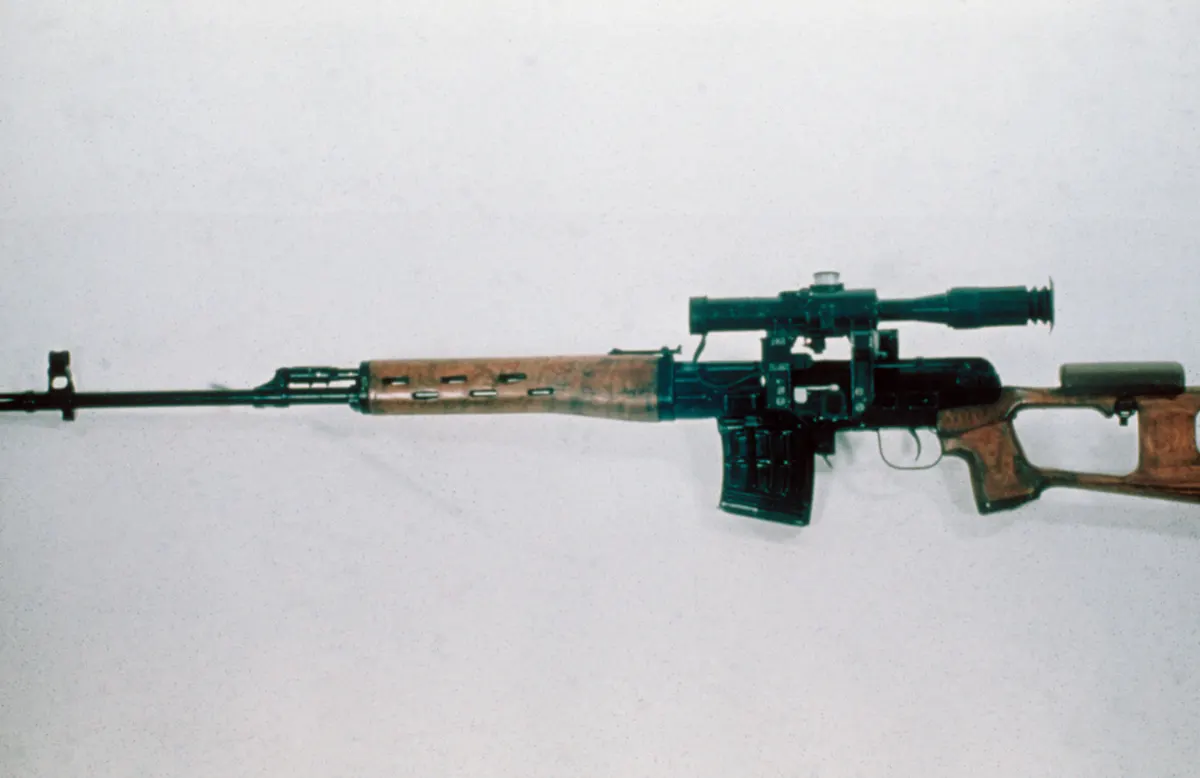
The Berkut's action began life as part of the same design effort that produced the VSK-94 sniper rifle at TsKIB SOO in the mid-1990s.6 It uses a short-stroke gas piston driving a rotating bolt locked by four lugs, a chrome-lined bore, and a receiver built to the same manufacturing tolerances KBP applied to its military rifle work, features that separated the Berkut from cheaper carbines built around stamped AK-pattern receivers.7 The bolt design and general layout borrow directly from the SVD-family sniper rifle work Gryazev's bureau had already carried out, which is why reviewers repeatedly describe the Berkut as handling like a shortened, lightened military sniper action rather than a hunting rifle built from scratch.6
- Tasarımcıv_p_gryazev
- Ağırlık (Boş)3,9 kg
- Halen HizmetteEvet
- Önemli KullanıcılarBelarus, Rusya Federasyonu
Testing before civilian release reportedly involved the Ministry of Internal Affairs, evaluating the mechanism for possible special-unit use before Gryazev's team refined it into a purely civilian hunting product.6 That background shows in details a pure sporting-gun designer would rarely include, among them an ambidextrous flag-type safety for left-handed hunters and a non-adjustable trigger carried over largely unchanged from the sniper-rifle program.8
- Fişek7.62x39mm (Berkut-1) / .308 Winchester-7.62x51mm NATO (Berkut-2) / 7.62x54mmR (Berkut-2M) / 9x53mmR (Berkut-3)
- Çap7,62 mm
- Kovan Uzunluğu53,7 mm
- Çap Sınıfıavcılık
- Kenar AteşlemeliHayır
- Kovansız MühimmatHayır
Four Cartridges Built Onto the Same Basic Carbine
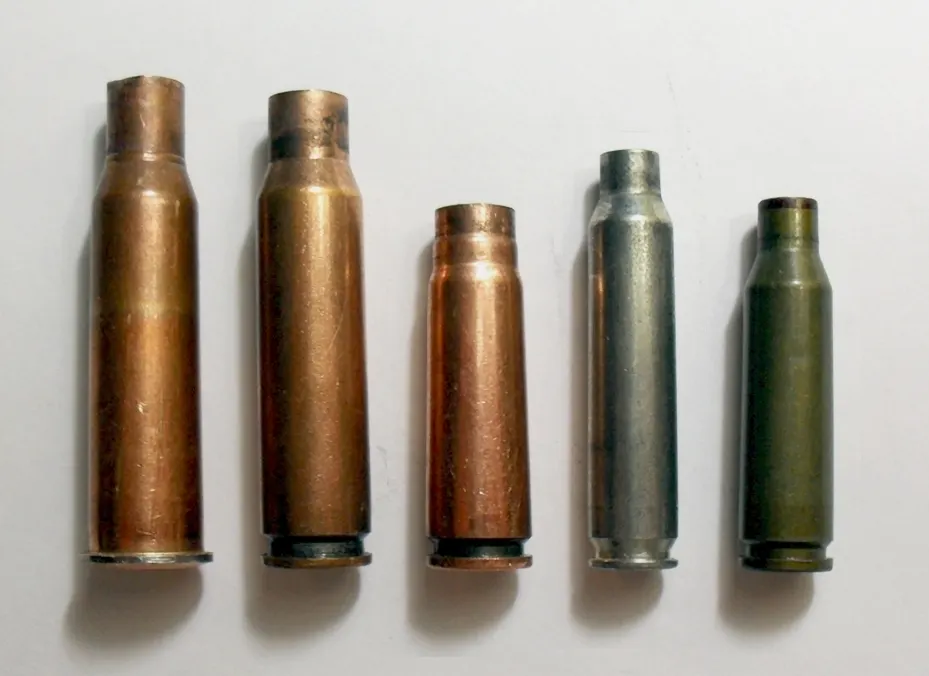
The first production version, Berkut-1, was chambered in the ubiquitous 7.62x39mm intermediate round and discontinued fairly quickly, unable to compete against the already-saturated Russian market for 7.62x39mm carbines built from cheaper SKS and AK-pattern actions.10 Berkut-2 and Berkut-2-1 followed in .308 Winchester (7.62x51mm NATO), a chambering aimed partly at export buyers and partly at Russian hunters who wanted a Western-pattern cartridge.1 The most commercially successful line, Berkut-2M and Berkut-2M-1, was chambered in the domestic 7.62x54mmR round, the same cartridge fired by the SVD and the Mosin-Nagant rifle family, and it remains the variant most often seen in Russian gun shops today.1
- Mekanizma TipiGazlı
- Atış Modlarıyarı otomatik
- Seçmeli AtışHayır
- Besleme SistemiÇıkarılabilir Şarjör
- Şarjör Kapasitesi5
Berkut-3 and Berkut-3-1 were built around the 9x53mmR cartridge, a rimmed, bottlenecked big-game round developed in the Soviet Union during the 1950s by necking up the 7.62x54mmR case to take a bullet roughly 9mm across.11 That cartridge had already armed Soviet-era big-game carbines like the bolt-action Los and the semi-automatic Medved, and giving the Berkut its own 9x53mmR chambering let KBP market a Berkut variant specifically for boar, elk, and bear rather than smaller game.11 A one-off experimental Berkut-4, built as a bullpup conversion in .308 Winchester, never entered production at all and is covered separately under Variants below.7
- Namlu Enerjisi2.800
- Etkili Menzil (nokta)200 m
- İsabet1
Sights, Optics Rail, and a Two-Piece Takedown Stock
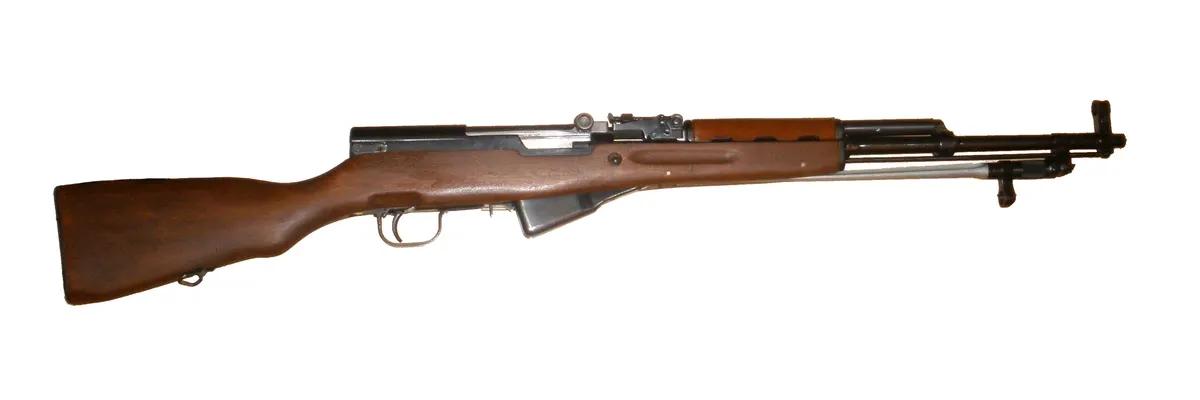
The Berkut measures roughly 1,130mm (44.5in) overall with a 620mm (24.4in) barrel, 56mm wide and 183mm tall without a scope mounted, and weighs about 3.9 kilograms (8.6lb) unloaded.12 It ships with a flip-up rear sight graduated for 150m and 300m, a front post, and a side-mounted dovetail rail for optics, giving the rifle both iron sights and an optic rail out of the box.12 The 7.62x54mmR chambering uses rifling with a 1 turn in 260mm twist rate, tighter than the SVD-pattern military twist, chosen to stabilize the heavier bullets favored for hunting rather than the lighter military ball ammunition the same case was designed around.12
- Namlu Uzunluğu620 mm
- Yiv Adımı1:260mm
- Nişangah TipiAçık nişangah, dürbün
- Optik RayıEvet
- Açık NişangahEvet
The stock is a detachable two-piece wood design, typically walnut or beech, that lets the carbine break down into a compact case for transport, with later production runs also offering synthetic or tactical-pattern stock options.7 On the range, the Berkut-2M has produced 20 to 35mm four-shot groups at 100 meters with quality 7.62x54mmR hunting ammunition, translating to roughly 0.7 to 1.2 MOA, respectable precision for a semi-automatic hunting carbine.4 Field reviewers rate its practical hunting range at around 200 meters, while noting that group sizes open up considerably, to around 35cm, when pushed out to 400 meters under field rather than bench-rest conditions.6
- Toplam Uzunluk1.130 mm
- Kabza/Dipçik Malzemesiahşap
- Katlanır / Toplanır DipçikHayır
- Bullpup DüzeniHayır
- Modülerlikçıkarılabilir dipçik
- Bombaatar KabiliyetliHayır
- Gaz PistonluEvet
- Üretim Başlangıcı1998
- Varyantlar4
- Genişlik56 mm
- Yükseklik183 mm
From a TsKIB SOO Sniper-Rifle Bureau to a Civilian Hunting Carbine
Gryazev and his team at TsKIB SOO began developing what became the Berkut in the mid-1990s, during the broader post-Soviet push to convert Tula's military design capacity into commercially viable civilian products.6 Early development reportedly explored a 9x39mm subsonic chambering before settling on the far more commercially popular 7.62x39mm for the first production version, a decision that still left Berkut-1 competing directly against dramatically cheaper carbines already dominating that caliber in Russian gun shops.6
Serial production formally began in 1998 at KBP's Tula plant, and Russian arms show judges awarded the carbine Gold and Platinum quality marks in Moscow in 2000, an early sign that industry reviewers rated its build quality well above the budget end of the market it was competing in.12 The Berkut never approached the sales volumes of the SKS or Saiga. It still built a specific reputation among Russian hunters for reliability and ergonomics, helped by a genuine sniper-rifle program standing directly behind its action rather than a converted service rifle.4
A Gold-Medal Carbine, a Kalashnikov Gift, and a Crowded Market
Despite the awards and the Kalashnikov connection, the Berkut struggled commercially through the 2000s and 2010s. Reviewers writing well over a decade after its launch described it bluntly as non-standard and expensive, losing repeat sales to the SKS, the Tigr, and the Saiga, all of which undercut it on price while offering broadly comparable field performance.4
Part of the problem was timing. The Berkut reached Russian gun shops in 1998 just as Saiga-pattern AK-based hunting carbines were expanding rapidly across the same civilian market, giving budget-minded hunters yet another cheap alternative on top of the long-established SKS.4
Hunters who bought the Berkut anyway typically cited its compact takedown, chrome-lined bore, and sniper-rifle-grade fit and finish as the reasons, even while acknowledging the SKS and Saiga did the same basic job for a fraction of the price.4 Production never stopped entirely, and retail listings as recent as December 2023 show the Berkut-2M-1 still selling new, starting from around 60,000 rubles, evidence that KBP kept the line in limited production rather than discontinuing it outright.5
That tension between a genuinely well-built rifle and a market unwilling to pay a premium for it defines most of the Berkut's commercial history.
Berkut-1 was the first production model, chambered in 7.62x39mm with a 10-round magazine, and it was withdrawn from the lineup once it became clear the Russian market for that caliber was already saturated by cheaper SKS and Saiga-pattern carbines.10 Berkut-2 and its five-round-magazine sibling Berkut-2-1 followed in .308 Winchester, aimed at hunters wanting a Western chambering with easy access to imported ammunition.1
Berkut-2M and Berkut-2M-1, chambered in domestic 7.62x54mmR, became the best-selling and longest-running versions, offered with either a 5-round or a 10-round SVD-pattern box magazine.12 Berkut-3 and Berkut-3-1, in 9x53mmR, targeted big-game hunters going after boar, elk, and bear, and remain more commonly found on the secondary market today than the .308 Winchester versions.5 Finally, Berkut-4 was a single experimental bullpup conversion in .308 Winchester, hand-built in 2004 purely as a presentation piece for Mikhail Kalashnikov rather than as a prototype for series production, and it never spawned a production bullpup version of the carbine.7


The Berkut's real user base has always been Russian civilian hunters buying through ordinary sporting-goods retailers rather than any government agency.4 The Ministry of Internal Affairs reportedly evaluated the mechanism informally during early development, but that was a design-validation exercise rather than a formal adoption, and no Russian security service has ever issued the Berkut as standard equipment.6 Some retailer listings outside Russia describe the carbine circulating among hunters in Belarus as well, though that claim rests on thin, largely tertiary sourcing and should be treated with caution rather than as a confirmed export market.
The Berkut-2M Against the Military SVD Dragunov It Grew Out Of
Both the Berkut-2M and the military SVD Dragunov fire the same 7.62x54mmR cartridge from a gas-operated action with a chrome-lined bore, and both were built in Russia around the idea of a precision-grade semi-automatic rifle rather than a mass-issue infantry weapon.9 The SVD itself was designed by Yevgeny Dragunov at the Izhmash plant in Izhevsk (now part of Kalashnikov Concern) and adopted by the Soviet military in 1963, and Izhmash later sold a civilian version under the name Tigr starting in 1992, six years before the Berkut reached Russian gun shops.9 The SVD's current standard rifling twist, one turn in 240mm, was tightened from an original 320mm twist in 1975 to stabilize armor-piercing and tracer ammunition, and the civilian Tigr kept the older, looser 320mm twist because it suits heavier hunting bullets better than military ball ammunition does.13 The Berkut-2M's own 260mm twist sits between those two figures, evidence that Gryazev tuned the VSK-94-derived barrel specifically around civilian hunting loads rather than borrowing either military specification outright.12
| Spec | Berkut-2M | SVD Dragunov |
|---|---|---|
| Cartridge | 7.62x54mmR | 7.62x54mmR |
| Rifling twist | 1:260mm | 1:240mm (1:320mm pre-1975) |
| Muzzle velocity | not confirmed | ~830 m/s |
| Muzzle energy | ~2,800 J | ~3,375 J (7N14) |
| Adopted / production start | 1998 (civilian) | 1963 (military) |
| Manufacturer | KBP | Izhmash / Kalashnikov Concern |
The Tigr's roughly 3,500 joules of muzzle energy against the Berkut-2M's approximately 2,800 joules reflects a real mechanical difference rather than just marketing, since the SVD-derived action was built around full-power military loads from the start while the Berkut's shorter, lighter action was tuned down somewhat for civilian handling.9 In practice that meant the Tigr held a reputation as the harder-hitting, longer-ranged option for serious big-game work, while the Berkut sold on compactness, a takedown stock, and a lower overall weight that made it easier to carry through a full day in the field.4 Neither rifle ever displaced the far cheaper SKS or Saiga from the mass end of the Russian hunting-carbine market, and both occupy the same higher-cost, military-pedigree niche within the broader semi-automatic rifles category rather than competing head to head with budget options.4


What is the Berkut rifle? The Berkut is a Russian semi-automatic hunting carbine family designed by Vasily Gryazev and built by KBP in Tula since 1998, based on the mechanism of the VSK-94 sniper rifle.6
What caliber does the Berkut carbine use? Depending on the variant, the Berkut fires 7.62x39mm (Berkut-1), .308 Winchester (Berkut-2), 7.62x54mmR (Berkut-2M), or 9x53mmR (Berkut-3), the last a Soviet-designed big-game round necked up from the 7.62x54mmR case.1
Is the Berkut rifle still in production? Retail listings from December 2023 show the Berkut-2M-1 still available new from around 60,000 rubles, so limited production has continued well past its 1998 launch, even though sales volumes have always been modest next to rivals like the SKS.5
How does the Berkut carbine compare to the Tigr? Both are Tula-designed civilian carbines built from military sniper-rifle actions chambered in 7.62x54mmR, but the Tigr predates the Berkut by six years, is built by Izhmash rather than KBP, and produces noticeably more muzzle energy from its SVD-derived action.9
Who designed the Berkut rifle? Vasily Petrovich Gryazev, the Tula engineer better known for co-designing the GSh-series aircraft autocannons with Arkady Shipunov, also led the small-arms design work behind the Berkut, the VSK-94 sniper rifle, and the 9A-91 compact assault rifle.2
How much does a Berkut carbine cost? As of December 2023, a new Berkut-2M-1 started at roughly 60,000 rubles, positioning it well above the SKS and Saiga on price within the Russian hunting-carbine market.5
What is the difference between the Berkut-2 and Berkut-3? The Berkut-2 is chambered in .308 Winchester for medium game and export-style ammunition access, while the Berkut-3 is chambered in the larger 9x53mmR cartridge specifically for boar, elk, and bear.11
- "Berkut rifle", Wikipedia — en.wikipedia.org ↩
- "Грязев Василий Петрович", rus.team — rus.team ↩
- "TsKIB SOO", Wikipedia — en.wikipedia.org ↩
- "Вепрь, беркут и скс", Охотники.ру — ohotniki.ru ↩
- "Карабин «Беркут» - характеристика, цена, отзывы", Guns.club — guns.club ↩
- "Carbine Berkut, review, design options and owner reviews", Knifesburg — knifesburg.ru ↩
- "Беркут (карабин)", Wikipedia — ru.wikipedia.org) ↩
- "Gryazev-Shipunov GSh-30-1", Wikipedia — en.wikipedia.org ↩
- "Izhmash Kalashnikov TIGR-SVD 7,62x54r 620mm", Artilharia6 — artilharia6.com ↩
- "Berkut carbine", Grokipedia — grokipedia.com ↩
- "9×53mmR", Wikipedia — en.wikipedia.org ↩
- "Беркут карабин - характеристики, фото, ттх", Armoury-Online — armoury-online.ru ↩
- "SVD (rifle)", Wikipedia — en.wikipedia.org) ↩