

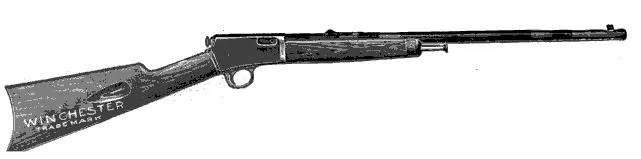

Two years before Winchester Repeating Arms Company brought out its own centerfire follow-up, the Winchester Model 1905, and roughly three years before Remington Arms reached the market with a rival design, the Remington Model 8, the Winchester Model 1903 became the first semi-automatic rifle of any kind sold commercially in the United States1,4. It is a blowback operated .22 rimfire sporting rifle, produced from 1903 to 1932, and its own designer, Thomas Crossley Johnson, patented the underlying blowback mechanism, US Patent 681,481, in April 1901 and saw it granted that August. The timing matters, Johnson's work was already well underway when Winchester's nineteen-year partnership with John Browning collapsed in January 1902 over a royalty dispute11. The Winchester Model 1903 became Winchester's proof that it could still design and sell a genuinely new category of rifle without Browning's name attached to it.
- First semi-automatic rifle of any kind sold commercially in the US
- Reliable blowback cycling once loaded with the correct ammunition
- Ten-round tubular magazine, generous for a 1903 sporting .22
- Flat-sided, snag-free profile with no external hammer
- Genuinely successful, outsold every other Winchester self-loader combined
- Proprietary .22 Winchester Automatic cartridge locked owners to one ammunition source
- First 5,000 rifles left the factory with no safety mechanism at all
- Modest 320 m/s muzzle velocity limited it to plinking and small game
- Cartridge scarcity today makes shooting an original example a real commitment
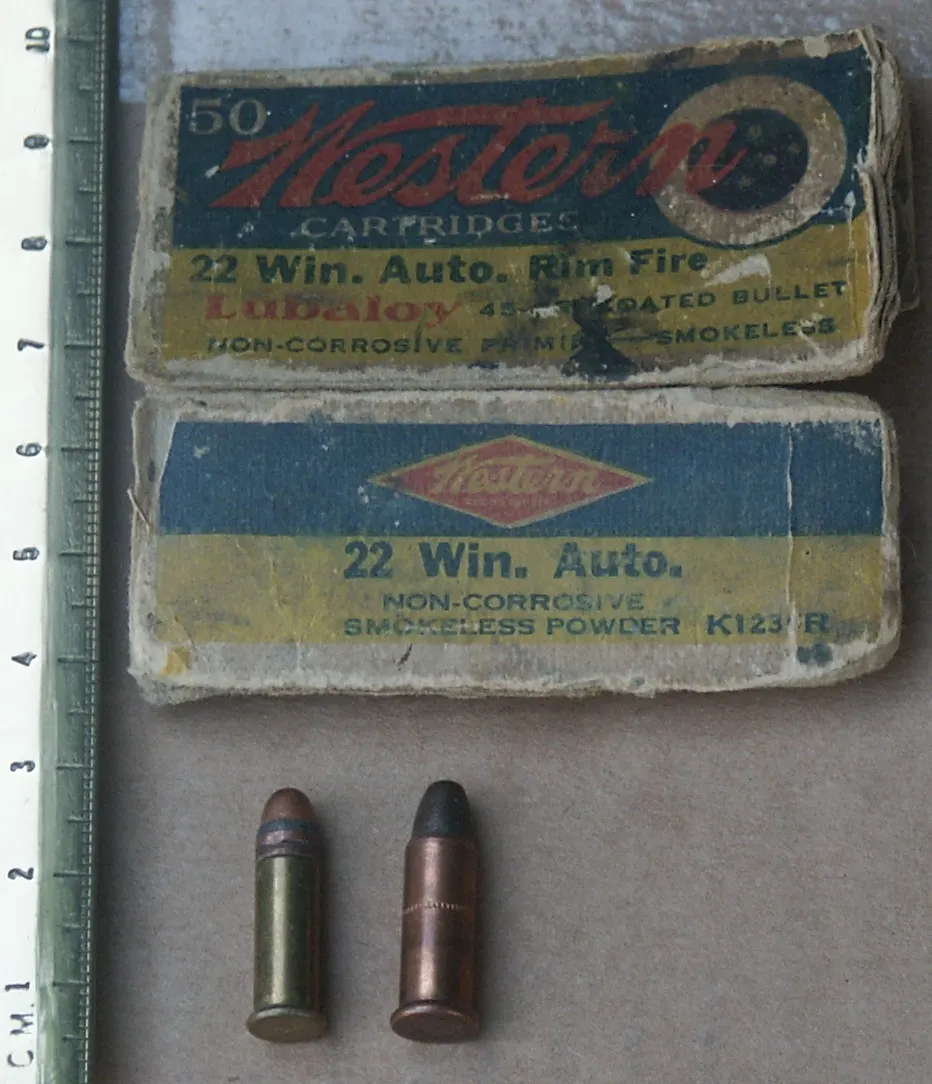
What made the Winchester Model 1903 unusual, and what still shapes how collectors think about it today, is its cartridge. Johnson designed a new .22 Winchester Automatic round specifically for the rifle's blowback action, and he made it deliberately non-interchangeable with the .22 Short, Long, and Long Rifle rounds already on the market2. The .22 Winchester Automatic case runs about 16.9mm long with a rim diameter of roughly 7.9mm, just enough larger than standard .22 rimfire dimensions that it cannot be chambered in any other .22 rimfire rifle, and standard .22 ammunition cannot be chambered in the Model 1903 either2. That was not an accident or a mistake, black powder .22 rimfire loads were still common in 1903, and their residue would quickly foul an unlocked blowback breech that depended on a clean, consistent smokeless burn to cycle reliably2,4. Making the cartridge physically impossible to mix up with the wrong ammunition was Winchester's solution to a real mechanical problem, but it also meant the Winchester Model 1903 could never simply switch to whatever .22 ammunition happened to be on a store shelf.
Winchester built roughly 126,000 Model 1903 rifles before ending production in 1932, though a handful of sources put the true figure nearer 123,000 once late parts-built runs are separated out1,4. That total dwarfs the Winchester Model 1905, the centerfire self-loader Johnson scaled up from the same basic action two years later, and it made the Winchester Model 1903 by far the most commercially successful of the four rifles in Winchester's early self-loading family1. The rifle sits at the founding edge of the semi-automatic rifles category in the United States, a class of arms the buying public still viewed warily in 1903, one more reason Winchester's own catalog language leaned on self-loading and automatic only in careful, reassuring terms rather than emphasizing rapid fire6.
A Balanced Blowback Bolt With No Locking Breech
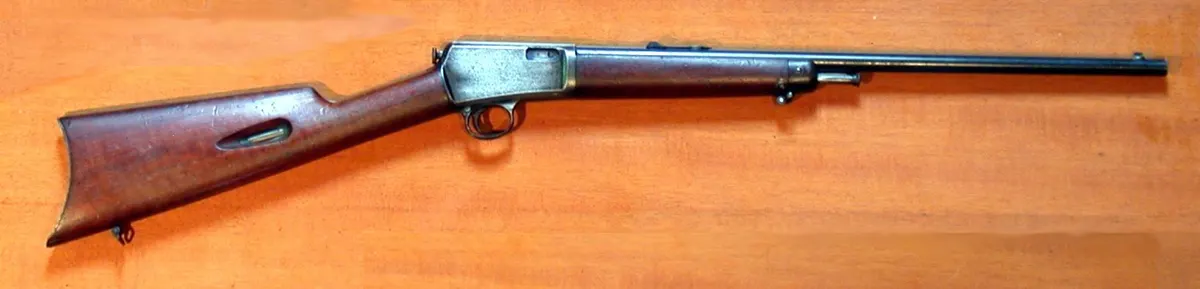
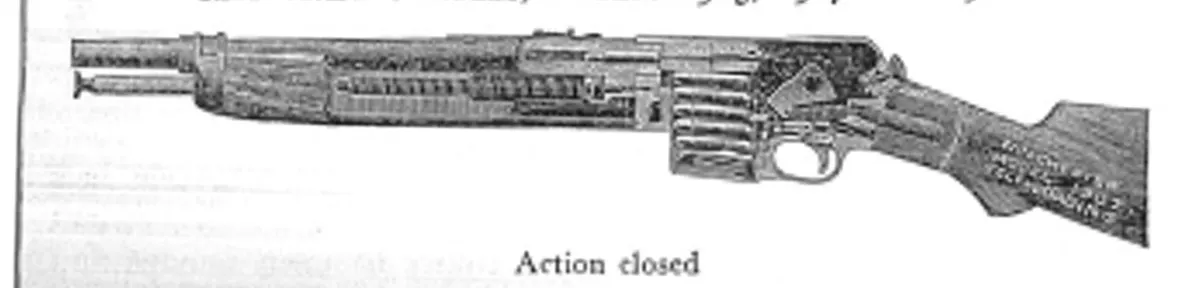
The Winchester Model 1903's action is a direct blowback design with no rotating bolt, no locking lugs, and no gas system. The breech bolt is held closed only by spring pressure and by its own carefully proportioned mass, what period Winchester literature called a balanced breech bolt, sized so the bolt does not begin moving rearward until the .22 Winchester Automatic bullet has already left the barrel4. A forward-mounted charging plunger sits below the barrel and looks deliberately like a cleaning rod, a design choice Johnson made so the whole rifle would have completely flat sides with nothing protruding to snag on brush or clothing4. There was no bayonet lug, no separate cocking handle, and no exposed hammer, the Winchester Model 1903 was built purely as a sporting and plinking arm from the outset.
- İlk Üretim Yılı1903
- TasarımcıT. C. Johnson
- Ağırlık (Boş)2,72 kg
- Ağırlık (Yüklü)3,18 kg
- Halen HizmetteHayır
Ammunition fed from a 10-round tubular magazine built into the buttstock, loaded through a slotted opening on the side of the stock rather than from the muzzle end, a detail that distinguished the Winchester Model 1903 from the tube-fed lever guns already familiar to American shooters4. The tubular-magazine held a full ten rounds, generous capacity for a rimfire sporting rifle of the era. Winchester specified a 20-inch barrel, an overall length of about 37 inches, and a weight of 2.72kg empty rising to 3.18kg loaded, light enough for one-handed carry over a day of plinking or squirrel hunting1. The receiver was steel and the stock and forend were walnut, and the whole rifle used a quick single-screw takedown, the same basic feature Johnson carried forward into the Winchester Model 1905, Winchester Model 1907, and Winchester Model 1910 built on the same patent9.
- Fişek.22 Winchester Automatic
- Çap5,6 mm
- Kovan Uzunluğu16,9 mm
- Çap Sınıfıkenar ateşlemeli
- Mermi Ağırlığı2,92 g
- Kenar AteşlemeliEvet
- Kovansız MühimmatHayır
The Proprietary .22 Winchester Automatic Cartridge
Johnson's .22 Winchester Automatic fired a 45-grain lead bullet at roughly 320 to 322 m/s for about 150 joules of muzzle energy from the Model 1903's 20-inch barrel2, modest numbers even by the standards of a 1903 rimfire sporter but entirely adequate for the small game and paper targets the rifle was actually built to shoot. Winchester loaded the cartridge with smokeless powder exclusively and used inside-lubricated bullets to keep fouling down, both choices aimed squarely at protecting the unlocked blowback action from the kind of buildup that black powder .22 ammunition of the period would have caused2.
- Mekanizma TipiBlowback (Geri İtmeli)
- Atış Modlarıyarı otomatik
- Seçmeli AtışHayır
- Besleme SistemiTüp Şarjör
- Şarjör Kapasitesi10
- Emniyet Tipiçapraz mandal
That deliberate incompatibility is exactly what makes an original Winchester Model 1903 harder to own and shoot today than it would otherwise be. The cartridge went out of mainstream production decades ago, and for most of the late twentieth century, working ammunition survived only as increasingly scarce original factory boxes traded among collectors4. Small specialty runs have since appeared, Aguila Ammunition currently lists a limited-edition .22 Winchester Automatic load made specifically for the Model 1903, and boutique importers such as Old Western Scrounger have periodically offered similar reproduction ammunition8. Without that niche supply chain, a Winchester Model 1903 would be effectively a display piece rather than a shooter, a direct commercial consequence of Johnson's original cartridge decision playing out more than a century later.
- Namlu Çıkış Hızı320 m/sn
- Namlu Enerjisi150
- Etkili Menzil (nokta)50 m
- Namlu Uzunluğu508 mm
- Nişangah Tipimekanik nişangah
- Optik RayıHayır
- Açık NişangahEvet
- Dişli NamluHayır
- Kabza/Dipçik Malzemesiceviz
- Katlanır / Toplanır DipçikHayır
- Bullpup DüzeniHayır
- Çift Yönlü KumandalarHayır
- Susturucuya HazırHayır
- Süngü TakozuHayır
- Entegre BipodHayır
- Bombaatar KabiliyetliHayır
- Gaz PistonluHayır
- Toplam Üretim126.000
- Üretim Başlangıcı1903
- Üretim Bitişi1932
- Varyantlar2
Thomas Crossley Johnson joined the Winchester Repeating Arms Company as a draftsman in 1885 and spent nearly fifty years there, eventually becoming Winchester's chief designer3. His blowback patent, US 681,481, filed in April 1901 and granted that August, became the foundation not just for the Winchester Model 1903 but for the entire family of Winchester self-loading rifles that followed it, the centerfire Winchester Model 1905, Winchester Model 1907, and Winchester Model 1910 were all developed from the same base patent, first used to protect the rimfire Model 1903 and only later extended to cover larger, more powerful chamberings9. Johnson's design work on the rifle predated the public break between Winchester and John Browning, whose nineteen-year run of selling nearly every major firearm design to the company ended in January 1902 after Winchester refused Browning's request for a per-gun royalty on his new autoloading shotgun11. Winchester's introduction of the Model 1903 in March of the following year, an entirely in-house design credited to Johnson rather than to Browning, arrived at a moment when the company badly needed to prove it did not depend on Browning's inventions to stay competitive3,11.
Commercially, the Winchester Model 1903 succeeded where its later centerfire siblings largely did not. It sold well enough across nearly three decades in the catalog, reaching roughly 126,000 units by the time production ended in 1932, that Winchester kept the basic action in production far longer than the Model 1905, Model 1907, or Model 1910 individually managed1. Two grades left the New Haven factory, a plain-finish standard rifle with a straight grip that made up the great majority of production, and a checkered, pistol-grip Deluxe or Fancy grade that Winchester's own 1911 catalog priced at nearly double the standard rifle's cost, a premium steep enough that collectors today confirm very few buyers actually ordered it7.
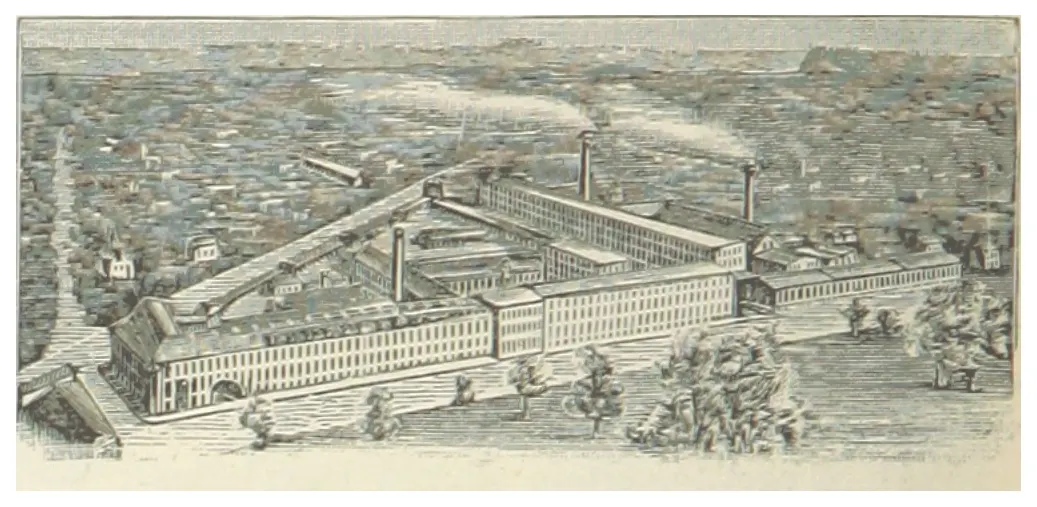
The Winchester Model 1903 also picked up an unusual wartime role it was never designed for. During the First World War, the United Kingdom's Royal Flying Corps bought batches of the rifle, strapped to a Lewis gun with brass mounts and wood blocks and fired through a mechanical link tied to the Lewis gun's own trigger, as a low-cost, low-recoil way to train aircrew gunners in aerial deflection shooting before they ever fired a real machine gun in the air5. Over half a million rounds of .22 Winchester Automatic ammunition accompanied the first British shipment alone, with monthly contracts for 300,000 more rounds following as the training program expanded, and by the later years of the war this sub-caliber training role had become the rifle's main use in British service5. France separately purchased Model 1903 rifles for similar training purposes, and military-marked survivors from both countries, stamped with British Broad Arrow ownership marks or R.A.F. on the receiver, remain identifiable and collectible today5.
Winchester ended Model 1903 production in 1932 as demand shifted decisively toward rifles that used ordinary, universally available .22 ammunition. The direct replacement, a reworked version of the same basic action rechambered for the standard .22 Long Rifle cartridge, arrived the following year, though it carried a new model designation of its own rather than staying a Model 1903 variant, closing out the cartridge experiment Johnson had started three decades earlier4.
The Winchester Model 1903 was cataloged in two production grades that shared the identical blowback action and .22 Winchester Automatic chambering. The standard grade used a plain, uncheckered walnut stock with a straight grip and accounted for the overwhelming majority of the roughly 126,000 rifles built7. The Deluxe (Fancy) grade added a checkered walnut pistol-grip stock and forend and, per Winchester's own 1911 Catalogue No. 77, cost close to double the standard rifle's price, a premium that kept Deluxe-grade production a small minority of the total run and makes surviving examples noticeably more valuable to collectors today7.
No formal military variant of the Winchester Model 1903 was ever adopted, despite its wartime training role with the Royal Flying Corps, the rifles Britain and France bought were commercial production guns pulled into service rather than a purpose-built military pattern5. Within Winchester's own catalog, the Model 1903 sat at the small-caliber end of a four-rifle self-loading family built on Johnson's shared 1901 patent, the centerfire Winchester Model 1905 followed in 1905 with a detachable box magazine and the .32 and .35 Winchester Self-Loading cartridges, and the Winchester Model 1907 and Winchester Model 1910 pushed the same basic mechanism into progressively more powerful proprietary chamberings through the 1910s9. Winchester's own engineers effectively conceded the original .22 Winchester Automatic cartridge's limits in 1933, when a redesigned version of the Model 1903's action was rechambered for the far more common .22 Long Rifle round and sold under a new model name, decisively outselling the original over its own long production run4.


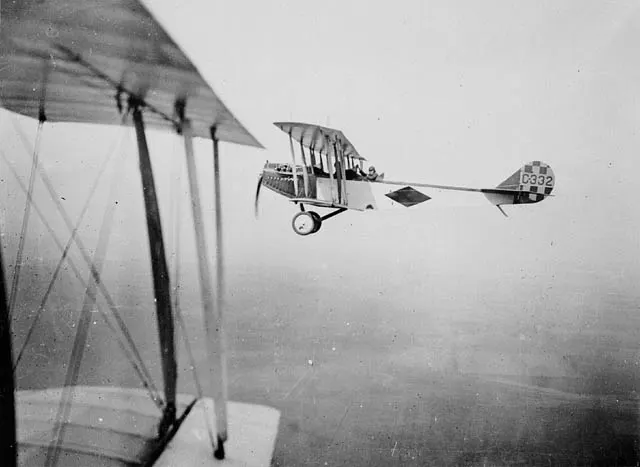
The Winchester Model 1903 was a civilian sporting and plinking rifle first and never saw formal adoption by any nation's armed forces. Its only institutional military use came as a training aid, the United Kingdom's Royal Flying Corps and later Royal Air Force fitted purchased examples to Lewis guns for aerial gunnery instruction during the World War I years, and France bought a separate batch of rifles for similar training purposes5. In the United States, the Model 1903 stayed strictly a commercial product sold through Winchester's own dealer network to hunters, plinkers, and shooting galleries rather than to any government purchaser1.
Johnson's own later work on the same base patent makes the most useful comparison for the Winchester Model 1903, not a rival company's rifle. The Winchester Model 1907 used the identical blowback principle scaled up for the centerfire .351 Winchester Self-Loading cartridge, and it shows exactly what changed and what stayed the same as Johnson moved from a .22 rimfire plinking gun to a rifle meant for deer-sized game. Both rifles share the flat-sided profile, the forward charging plunger, and the single-screw takedown that trace back to US Patent 681,481, but where the Winchester Model 1903 was aimed at the widest possible civilian market, the Model 1907 chased a narrower, harder-power niche and sold roughly 58,700 rifles over fifty years, less than half the Model 1903's total despite a longer production run9.
| Rifle | Cartridge | Muzzle velocity | Production total |
|---|---|---|---|
| Winchester Model 1903 | .22 Winchester Automatic | ~320 m/s | ~126,000 |
| Winchester Model 1907 | .351 WSL | ~564 m/s | ~58,700 |
The deeper throughline runs forward more than fifty years to the Remington Nylon 66, introduced in 1959 as another mass-market .22 rimfire blowback semi-automatic with its own magazine tucked into the buttstock10. Remington's engineers learned the lesson Winchester's Model 1903 had already taught the industry the hard way, the Nylon 66 chambered plain, universally available .22 Long Rifle ammunition rather than any proprietary round, and it went on to sell more than a million rifles between 1959 and 1991, an order of magnitude beyond anything the Winchester Model 1903 or its centerfire siblings ever achieved10. Is the Winchester Model 1903 still relevant to that story? Only as the cautionary counter-example, the rifle proved a self-loading .22 could sell in real volume, while its own proprietary cartridge quietly capped how long that volume could keep growing.


What caliber does the Winchester Model 1903 use The Winchester Model 1903 was chambered only in the proprietary .22 Winchester Automatic cartridge, a rimfire round Winchester designed exclusively for this rifle and made deliberately non-interchangeable with standard .22 Short, Long, and Long Rifle ammunition2.
How many Winchester Model 1903 rifles were made Winchester built approximately 126,000 Model 1903 rifles between 1903 and 1932, though some references cite a slightly lower total near 123,000 once late parts-built runs are excluded1,4.
Is the Winchester Model 1903 still in service today No. The Winchester Model 1903 was a commercial sporting and plinking rifle, not a standard military-issue arm. Its only institutional use was as a Royal Flying Corps gunnery-training aid during World War I, and it has not been in production since 19325.
How does the Winchester Model 1903's self-loading action work The Winchester Model 1903 uses a simple blowback action with a balanced breech bolt, meaning the bolt's mass is proportioned to the .22 Winchester Automatic cartridge so it stays closed until the bullet has already left the barrel, with no locking lugs or gas system involved4.
Why is Winchester Model 1903 ammunition so hard to find Winchester deliberately designed the .22 Winchester Automatic cartridge to be physically incompatible with standard .22 rimfire ammunition, and mainstream production ended decades ago. Small specialty runs from makers such as Aguila Ammunition keep a limited supply available to collectors today8.
What replaced the Winchester Model 1903 A 1933 redesign of the same basic action, rechambered for the standard .22 Long Rifle cartridge and sold under a new model name, replaced the Winchester Model 1903 and went on to outsell it substantially over its own long production run4.
- "Winchester Model 1903", Wikipedia — en.wikipedia.org ↩
- ".22 Winchester Automatic", Wikipedia — en.wikipedia.org ↩
- "John Browning's Contemporaries: The Guns of T.C. Johnson", TheFirearmBlog — thefirearmblog.com ↩
- "Winchester Model 1903", Gun Wiki (Fandom) — guns.fandom.com ↩
- "Winchester Auto and Winder rifles in British WW1 and WW2 wartime use", rifleman.org.uk — rifleman.org.uk ↩
- "Winchester Model 1903 - History", Homestead Firearms — homesteadfirearms.com ↩
- "1903 Winchester Deluxe", Winchester Arms Collectors Association Forum — winchestercollector.org ↩
- "22 Win Auto - Limited Edition for the Winchester Rifle Model 1903", Aguila Ammunition — aguilaammo.com ↩
- "Winchester Model 1907", Wikipedia — en.wikipedia.org ↩
- "Remington Nylon 66", Wikipedia — en.wikipedia.org ↩
- "The Browning and Winchester Connection", High Caliber History — highcaliberhistory.com ↩