

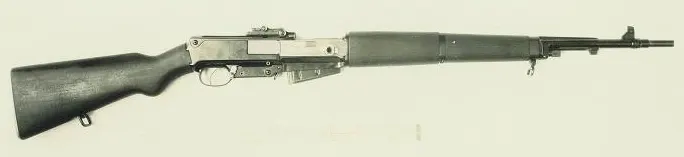

The ZH-29 is a Czechoslovak semi-automatic rifle designed by Emanuel Holek at Zbrojovka Brno and finalized in 1929. It belongs to a small group of interwar semi-automatic rifles that actually reached series production rather than staying a trials prototype, and it did so nearly a decade before the American M1 Garand entered service.1 The ZH-29 chambered the full power 7.92x57mm Mauser cartridge, though Zbrojovka Brno also offered it in 7x57mm, 7.62mm, and 6.5mm variants for export customers who used different service calibers.2
- tilting-bolt locking, strong and compact for a full-power cartridge
- adjustable gas regulator for different ammunition and climates
- interchangeable-parts precision machining, fine pre-war Czech craftsmanship
- flexible caliber and magazine options for export customers
- extremely high unit cost for the era
- punishing recoil from a lightweight, very straight stock
- never won a domestic adoption contract
- production run too small to build real logistics or spares support
Only about 500 to 510 rifles were ever completed, most of them sold abroad rather than issued to Czechoslovak troops.3 China was by far the largest buyer, and Chinese warlord and Nationalist forces carried the ZH-29 and its refined sibling, the ZH-32, into the opening years of the Second Sino-Japanese War.1 Smaller batches went to Ethiopia, Lithuania, and Thailand. Despite this scattered international interest, the ZH-29 was never adopted as a mass domestic service rifle by Czechoslovakia itself, and its high machining cost is the single most repeated reason cited for its commercial failure.2
The rifle's tilting-bolt gas-operated action is its most historically significant feature. It is one of the earliest gas-operated tilting-bolt designs to leave the workbench and reach limited series manufacture, and Soviet engineers studying captured Czechoslovak small arms after the war are credited with pointing Mikhail Kalashnikov toward the ZH-29's trigger and fire-control layout while he was reworking the AK-46 prototype into the production AK-47.1 That connection, more than its own modest sales record, is why the ZH-29 still gets cited in firearms history today.
The ZH-29's action runs on a gas-operated, long-stroke piston tapped from a port on the right side of the barrel, feeding an L-shaped operating slide that rides the full length of the receiver.3 What makes the rifle unusual is how the bolt locks. Instead of rotating or tilting vertically like the later German StG 44, the ZH-29's bolt swings sideways and locks into a recess cut into the left wall of the receiver.3 To make that geometry work, Holek offset the barrel slightly out of square with the receiver axis, then compensated by angling the front sight to the right and the rear sight to the left so the two still lined up on target.3 It is a visually strange rifle for exactly this reason, and the crooked barrel line is usually the first thing a collector notices.
- İlk Üretim Yılı1929
- TasarımcıEmanuel Holek
- Ağırlık (Boş)4,5 kg
- Halen HizmetteHayır
- Önemli KullanıcılarÇin Cumhuriyeti, Etiyopya, İtalya Krallığı, Japon İmparatorluğu, Litvanya, Tayland
An adjustable gas regulator lets the shooter rotate a plug that masks the gas port to different degrees, tuning the system for different ammunition pressures or fouling conditions, a refinement not every contemporary self-loader offered.3 The rifle weighs 4.5 kg empty, measures 1,150 mm overall, and carries a 545 mm barrel wrapped in a ribbed aluminum handguard that doubled as a heat sink, an unusual material choice for a 1920s military rifle.2 Muzzle velocity with the 7.92x57mm loading reached roughly 808 m/s, with an effective point-target range cited at around 350 m.1
- Fişek7.92x57mm Mauser
- Çap7,92 mm
- Kovan Uzunluğu57 mm
- Çap Sınıfı7.92mm
- Kenar AteşlemeliHayır
- Kovansız MühimmatHayır
Feeding comes from a detachable box magazine, loaded from 5, 10, or 25-round options depending on customer order, an unusually broad spread for a single rifle design in this period.2 The magazine catch uses two spring-loaded pieces that let the magazine drop straight in, rather than the nose-in, rock-back motion common on many contemporary box-fed rifles.3 Bolt hold-open is tied into the hammer, the follower blocks the bolt from closing on an empty magazine, and the shooter has to pull the trigger once to release the held-open bolt before the next pull actually fires, a small but distinctive quirk of Holek's fire-control design.2 Sights are plain iron sights, with no provision for optics, consistent with the rifle's late-1920s origin.
- Mekanizma TipiGazlı
- Atış Modlarıyarı otomatik
- Seçmeli AtışHayır
- Besleme SistemiÇıkarılabilir Şarjör
- Şarjör Kapasitesi5
Manufacturing quality was genuinely high. Only the buttplate, magazine body, and magazine floorplate were stamped, everything else on the ZH-29 was a machined part, giving the rifle tight tolerances and a reputation among today's collectors for fine pre-war Czechoslovak workmanship.3 That same machining intensity drove the unit cost well above contemporary bolt-action service rifles, and multiple sources single out price as the decisive reason the ZH-29 never won a large government contract.2 Felt recoil is also widely described as punishing for the rifle's weight, attributed to its very straight stock profile sending more recoil energy back into the shooter's shoulder and cheek than a more sharply dropped stock would.3
- Namlu Çıkış Hızı808 m/sn
- Etkili Menzil (nokta)350 m
- Namlu Uzunluğu545 mm
- Nişangah Tipimekanik nişangah
- Optik RayıHayır
- Açık NişangahEvet
- Dişli NamluHayır
- Toplam Uzunluk1.150 mm
- Katlanır / Toplanır DipçikHayır
- Bullpup DüzeniHayır
- Çift Yönlü KumandalarHayır
- Susturucuya HazırHayır
- Entegre BipodHayır
- Bombaatar KabiliyetliHayır
- Gaz PistonluEvet
- Üretim Başlangıcı1929
- Üretim Bitişi1938
- Varyantlar3
Emanuel Holek was born on September 27, 1899 in Malé Nepodřice, in the Písek district of Bohemia, and died in Brno on June 17, 1982.4 He came from a family of gunsmiths. His older brothers Václav and František Holek were themselves prominent designers at Zbrojovka Brno, and the three collaborated on the ZB vz. 26 light machine gun even as Emanuel pursued his own line of self-loading rifles.4 Before joining Zbrojovka Brno in April 1927, Holek had already designed a self-loader called the HB (Holek-Beneš) while working at Ceska Zbrojovka's Strakonice plant.4
At Zbrojovka Brno, Holek worked through a sequence of prototypes he designated H, H.2, H.3 (also called Z.III), and Z between 1927 and 1929, refining the tilting-bolt gas system with each iteration.5 The ZH-29 designation itself stands for Zbrojovka Holek, marking 1929 as the year the design reached its finalized, production-ready form.1 Unlike his earlier experimental models, the ZH-29 and its 1932 refinement, the ZH-32, actually crossed into limited series manufacture, a genuine achievement after years of prototypes that never got that far.5 Holek then spent much of 1926 to 1939 traveling Europe and beyond on acquisition trips, personally demonstrating the ZH rifles and ZB machine guns to potential foreign buyers.4
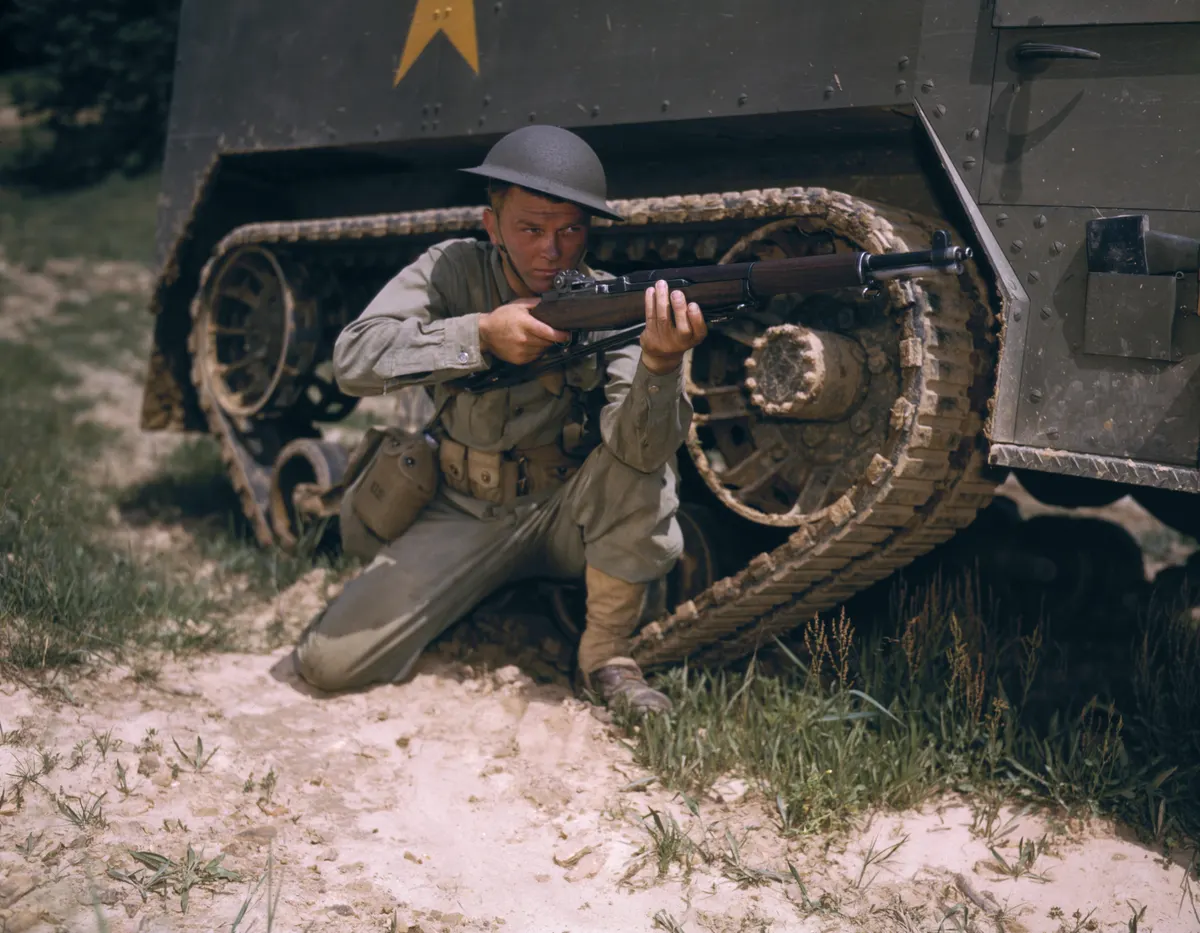
In the early 1930s, Zbrojovka Brno adapted a ZH-29 to fire the experimental American .276 Pedersen cartridge and submitted it to United States Army trials at Aberdeen Proving Ground, placing it alongside John Pedersen's own toggle-locked rifle and the early M1 Garand in the competition to replace the M1903 Springfield.6 Early results were reportedly promising, but the Great Depression cut funding for the whole .276 caliber program, the Army eventually standardized on the Garand in .30-06, and the ZH-29 trial simply lapsed rather than being decisively beaten on the range.6
Production itself ran in limited batches from 1929 through roughly 1938, when Zbrojovka Brno's export-driven small run of ZH-series rifles ended, not long before the German occupation of Czechoslovakia halted independent Czechoslovak arms development entirely.2 The rifle never returned to production afterward.
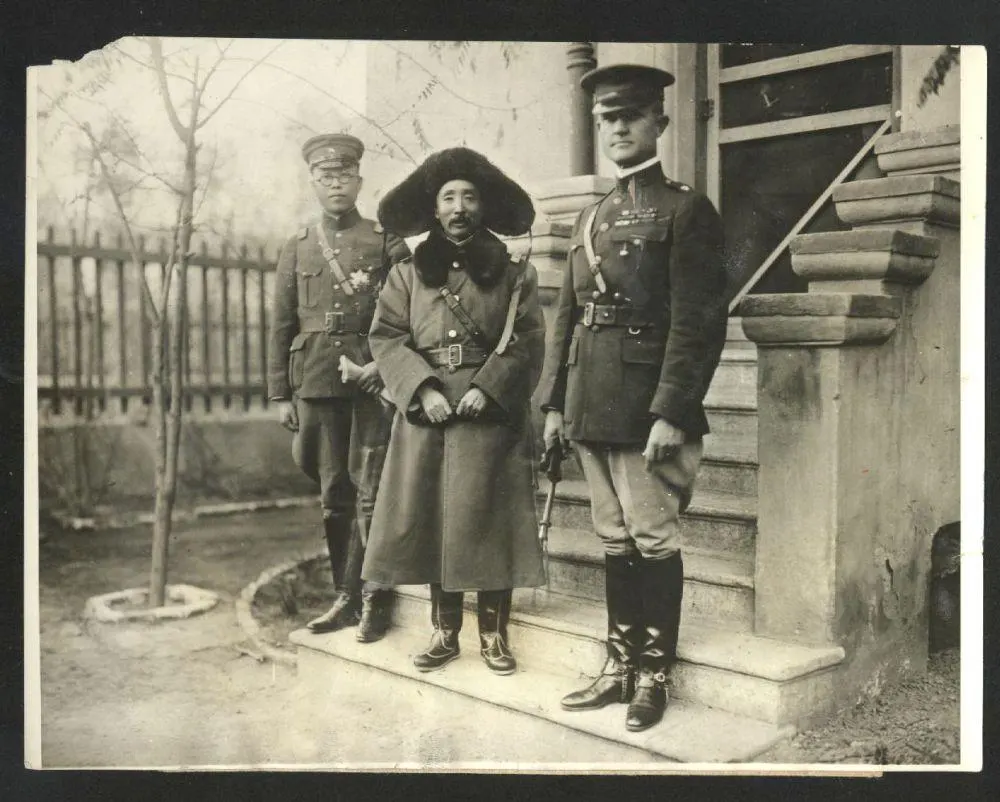
China absorbed the bulk of ZH-29 production. Zbrojovka Brno's own archival export records show roughly 285 combined ZH-29 and ZH-32 rifles delivered into China and Manchuria, including about 150 ZH-29s and 100 ZH-32s bound for forces once under the warlord Zhang Zuolin, plus a further 33 ZH-32s for provincial troops in Guangdong.1 Some of these rifles were still in Chinese hands when the Second Sino-Japanese War began in 1937, issued to elements of the National Revolutionary Army.1 Sources disagree on how much actual fighting the ZH-29 saw. One assessment argues it is unlikely the rifles saw real combat use once the war escalated, since surviving Chinese ZH-29 stocks were tiny next to the mass of Mauser-pattern rifles Chinese forces fielded by then, while other accounts describe scattered use by Chinese troops through the war's early years.1 Given the rifle's small numbers in Chinese service to begin with, any combat use was almost certainly limited to isolated units rather than a general-issue weapon.
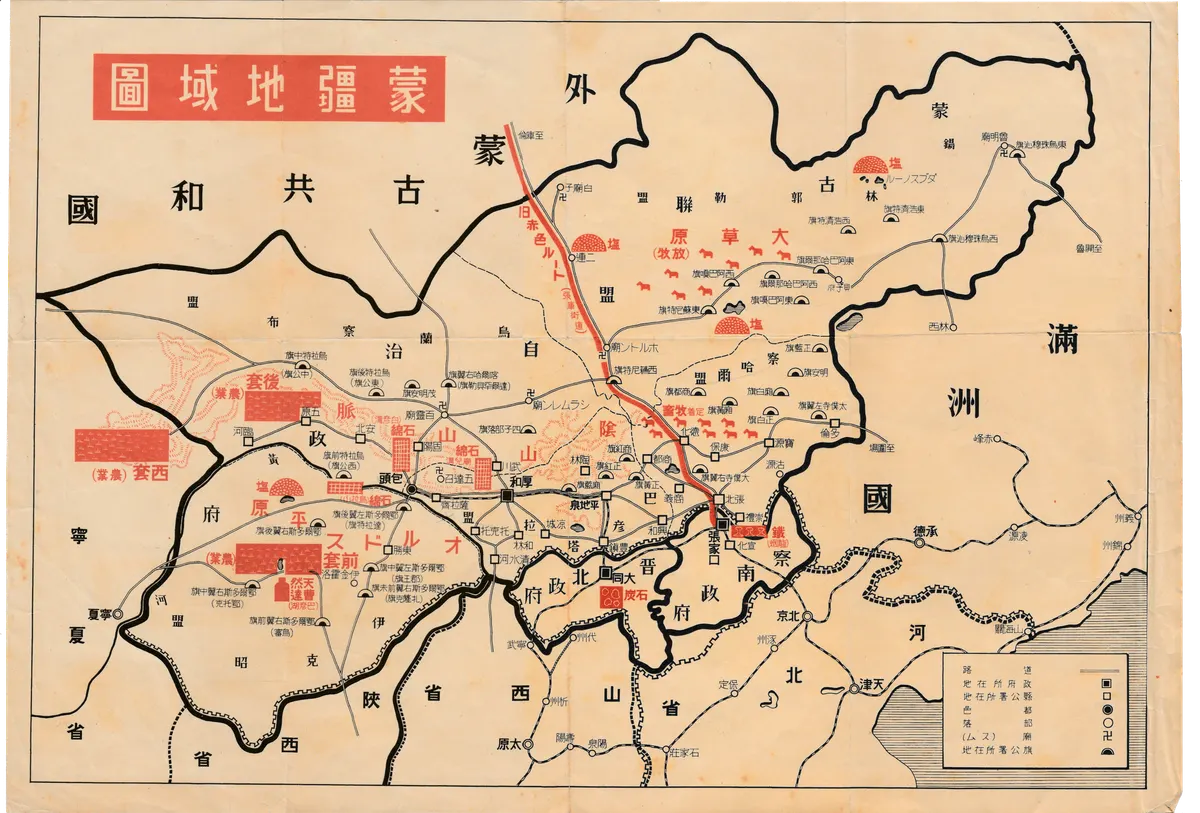
Ethiopia was the other significant wartime user. Around 100 ZH-32 rifles reached the Ethiopian Imperial Guard before the Second Italo-Ethiopian War broke out in 1935, giving at least a portion of Emperor Haile Selassie's elite guard units access to a modern self-loading rifle against the invading Italian army.1 Kingdom of Italy forces captured a portion of that Ethiopian stock during the conquest, which is the likeliest route by which ZH-series rifles later turn up in Italian hands rather than any direct Italian purchase from Zbrojovka Brno.1 Separately, examples reached the Empire of Japan as captured or acquired weapons out of China, and Japanese engineers reportedly built at least one experimental prototype copy drawn from those captured Chinese examples, associated with the Mukden arsenal before 1932.1
The ZH-32 is the ZH-29's direct successor, introduced in 1932 under Holek's continued design leadership to address reliability and handling complaints from the original model while keeping the same gas-operated, tilting-bolt architecture.5 The ZH-32 accounts for most of the Ethiopian contract and a share of the later Chinese deliveries, which means many rifles marketed loosely as ZH-29s in surviving photographs and export paperwork are technically the refined ZH-32 pattern.1 Holek carried the same basic mechanism further still into the ZH-37 and ZH-39 prototypes later in the decade, though neither reached the production numbers of the ZH-29/ZH-32 pair.4
Beyond the ZH-32, Zbrojovka Brno's own trial history includes the .276 Pedersen-caliber variant built specifically for the American Aberdeen Proving Ground trials in the early 1930s, and export-configuration rifles chambered in 7x57mm, 7.62mm, and 6.5mm for buyers whose armies used those cartridges rather than the German-pattern 7.92x57mm Mauser.2 No dedicated carbine, sniper, or automatic-fire derivative of the ZH-29 is documented, the rifle stayed a fixed-configuration semi-automatic design across its whole production run.


 Tayvan
 Etiyopya
 Litvanya
Taiwan (recorded here for the pre-1949 Republic of China period) was the ZH-29's largest single customer, with roughly 210 rifles confirmed delivered around 1930 to 1931 for Chinese Nationalist and warlord forces, later joined by ZH-32 deliveries.3 Ethiopia's Imperial Guard fielded around 100 ZH-32 rifles from 1930 onward.1 Lithuania purchased roughly 50 rifles for police use around 1929 to 1930.3 The Czech Republic, representing interwar Czechoslovakia, received sample rifles for army trials in 1929 but never placed a service order.3 Thailand also received trial rifles around 1930, though no confirmed purchase contract survives in the sources reviewed here, only a documented evaluation batch.1
A full decade separates the French RSC 1917 from the ZH-29, yet both rifles chase the same goal, a full-power-cartridge semi-automatic infantry rifle built around a locked, gas-operated breech rather than the blowback or straight-pull systems that dominated earlier self-loader attempts.6 Manufacturing philosophy is where they diverge. The RSC 1917 was a wartime rush job, adapted from existing Lebel-pattern production lines under enormous 1917 schedule pressure, while the ZH-29 was a peacetime, over-engineered product built with no comparable urgency, correspondingly higher machining standards, and a correspondingly higher price tag that eventually killed its commercial prospects.2
Against the Pedersen rifle, the comparison is more direct because the two actually shared a cartridge during the .276 caliber trials. Pedersen's design locks through a toggle mechanism and feeds from 10-round en-bloc clips, a completely different operating principle from the ZH-29's tilting bolt and detachable box magazine.6 Neither rifle won the US Army contract. The Great Depression starved the whole .276 caliber program of funding before either could be fairly proven against the other, and the U.S. Army's eventual choice of John Garand's .30-06 design ended both foreign entries' chances at once.6
| Rifle | Locking system | Feed | Cartridge tested |
|---|---|---|---|
| ZH-29 | Tilting bolt (gas-operated) | 5/10/25-round detachable box | 7.92x57mm Mauser, .276 Pedersen trial variant |
| Pedersen rifle | Toggle-locked | 10-round en-bloc clip | .276 Pedersen |
| RSC 1917 | Locked breech (gas-operated) | 5-round en-bloc clip | 8mm Lebel |
Set against the M1 Garand that actually won US adoption, the ZH-29's real weakness was never the mechanism, contemporary engineers who examined it respected the tilting-bolt system enough that it later informed Soviet fire-control thinking on the AK-47. Its weakness was economics. Garand production benefited from a single, well-funded government customer standardizing on one design at scale, while the ZH-29 depended on winning a string of small, price-sensitive foreign contracts one at a time, a business model that could never generate the volume needed to bring its own machining costs down.


What caliber does the ZH-29 rifle use? The standard ZH-29 chambers 7.92x57mm Mauser, the same rifle cartridge used in the German Mauser 98k. Zbrojovka Brno also built export variants in 7x57mm, 7.62mm, and 6.5mm, and a one-off .276 Pedersen version for United States Army trials.2
How does the ZH-29 rifle work? The ZH-29 is gas-operated, tapping propellant gas from the barrel to drive a long-stroke piston that unlocks a bolt tilting sideways into the left wall of the receiver, an unusual locking geometry that also forced Holek to offset the barrel slightly out of line with the receiver.3
Is the ZH-29 rifle still in service anywhere? No. Production ended by the late 1930s and no ZH-29 or ZH-32 rifles remain in active military service anywhere today. Surviving examples are collector pieces, valued in the tens of thousands of dollars at auction for well-preserved specimens.7
How rare is the ZH-29 rifle today? Very rare. Total production across the ZH-29's whole run is estimated at only around 500 to 510 rifles, and most of those were exported into China and Ethiopia where wartime losses further thinned surviving numbers, making it one of the scarcer collectible semi-automatic military rifles of the interwar period.3
What is the ZH-29 rifle's connection to the AK-47? Soviet engineers who studied captured Czechoslovak small arms after World War II are credited with steering Mikhail Kalashnikov toward the ZH-29's trigger and fire-control layout while he redesigned the AK-46 prototype into the production AK-47, making the ZH-29 an indirect ancestor of the AK-47's fire-control group rather than of its gas system.1
- "ZH-29", Wikipedia — en.wikipedia.org ↩
- "ZH-29", Modern Firearms — modernfirearms.net ↩
- "Czech ZH-29 rifle", Forgotten Weapons — forgottenweapons.com ↩
- "Emanuel Holek", Encyklopedie dějin města Brna — encyklopedie.brna.cz ↩
- "Samonabíjecí puška ZH 29", Vojenský historický ústav Praha — vhu.cz ↩
- "Meet the 3 Rifles the U.S. Army Bought (But Never Used in Battle)", The National Interest — nationalinterest.org ↩
- "Rare and Highly Desirable Czech CZ ZH-29 Semi-Automatic Rifle", Morphy Auctions — auctions.morphyauctions.com ↩