

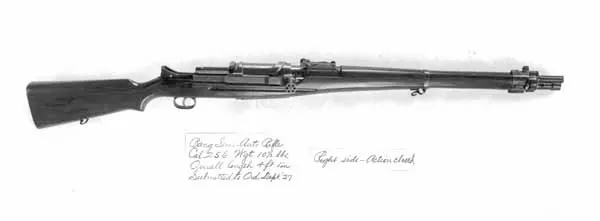

The M1922 Bang rifle lost its contest for the United States Army's next infantry rifle years before the more famous three-way finish between John Garand and John Pedersen ever reached its final vote. Designed by the Danish engineer Søren Hansen Bang, the rifle used an unusual gas-operated blow-forward system built around a sliding cup at the muzzle rather than a drilled gas port in the barrel, and Springfield Armory's own internal verdict on the design was already written down in 1922, a full ten years before Army Chief of Staff Douglas MacArthur settled the Garand-Pedersen argument in 1932.1 Bang's rifle is one of the earliest semi-automatic rifles any government formally tested, and its muzzle-trap principle helped point the way toward the very gas-trap system the early M1 Garand used in production.2
- no barrel drilling needed, avoiding early corrosive-primer gas fouling inside the bore
- favorable early impressions from Springfield Armory staff in 1919 and 1911
- lighter recoiling .256 caliber chambering by the 1922 to 1927 trials
- mechanically distinct from both rival Garand and Pedersen designs, genuinely novel engineering
- sliding muzzle cup fouled easily and added real mechanical complexity
- thin barrel and hollowed stock (needed to match the M1903 Springfield's weight) caused overheating
- Army's own internal Hatcher-Bang derivative was formally dropped as early as 1922
- never adopted by any army, so no combat record or spare-parts base ever existed
Bang began developing his blow-forward system as early as 1903 and built his first complete rifle in 1909, chambered for Denmark's own 6.5x55mm Krag service cartridge and financed by the Dansk Rekylriffel Syndikat, a Danish syndicate formed to sell Danish small arms designs abroad.3 A .30-caliber Model 1911 version went to the United States War Department that same year, and two examples reached Springfield Armory for evaluation, making the Bang rifle, by Forgotten Weapons' account, the first genuinely successful self-loading rifle design the U.S. Army ever tested.3 By 1922 the refined Model 1922 Bang rifle itself had been rechambered to a smaller .256 caliber cartridge, roughly 6.5mm, sometimes called the .256 Bang and built on the same Krag-pattern case Bang had used since 1909.4
Ordnance officers at Springfield Armory liked the basic Bang principle enough to keep experimenting with it well after Bang's own 1911 submission, building at least two in-house derivatives during the early 1920s before setting the whole concept aside in favor of Garand's rival mechanism.2 The M1922 Bang rifle's own trial record overlaps almost exactly with the Pedersen rifle's better-known story, since Bang, John D. Pedersen, and John Garand were all developing separate self-loading rifles for the same Ordnance Department requirement, and at points during the mid-1920s all three men had prototypes under active evaluation at once.2
Bang's own design never got a serious chance to win, however. The United Kingdom's Automatic-Rifle Committee tested Bang-supplied rifles chambered in 6.5x55mm and 7.65x54mm and rated the design among the best it evaluated, yet Britain kept its bolt-action Lee-Enfield rather than commit to any semi-automatic rifle at all.4 Denmark itself, Bang's own homeland, never formally adopted his design either, and continued fielding the older bolt-action Krag-Jørgensen rifle until the German occupation of 1940 ended independent Danish rifle production.5
The Muzzle-Trap Gas System Behind the M1922 Bang Rifle
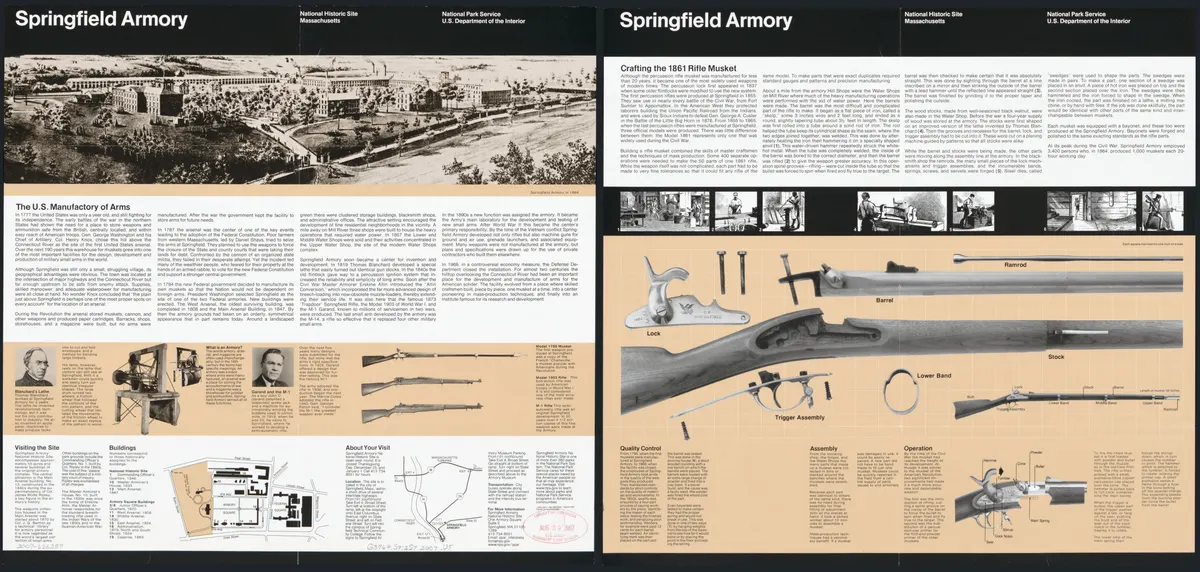
The M1922 Bang rifle's action worked in reverse of how most gas-operated rifles behave. A sliding cup fitted over the muzzle caught expanding propellant gas the instant the bullet cleared the barrel, and that gas pressure pushed the cup forward rather than driving anything rearward.6 A wire or rod linkage carried that forward motion back through a small seesaw lever, converting it into a pulling force on a piston connected to the rotating bolt, camming the bolt open and cycling the action.6 Firearms historians classify this blow-forward seesaw arrangement as mechanically distinct from, and considerably more complex than, the simpler gas trap system that later powered the earliest production M1 Garand rifles, which tapped gas into a stationary muzzle cap and bled it straight rearward onto a piston with no linkage reversal required.6 Sources genuinely disagree on how directly the two systems relate. One detailed technical account credits Bang's 1909 to 1920 rifles as the actual origin of the gas-trap principle itself, while another treats Bang's own blow-forward linkage as a separate, more cumbersome ancestor that Garand's team simplified rather than copied outright.7
- Ağırlık (Boş)4,1 kg
- Ağırlık (Yüklü)4,6 kg
Whatever the exact line of descent, the same broad gas-trap family of ideas that Bang refined also touched other, unrelated rifles and machine guns of the era. Wikipedia's account of the Bang rifle traces a similar blow-forward operating principle back to the French Puteaux and St. Étienne machine guns of the 1900s and forward to the German Gewehr 41 of the Second World War, a rifle Germany built specifically to avoid drilling its barrel, and which suffered from the same fouling-prone muzzle cap that had already doomed Bang's own design two decades earlier.2
- Fişek.256 Bang (6.5mm Krag)
- Çap6,5 mm
- Çap Sınıfıorta güçlü
- Mermi Ağırlığı150 g
- Kenar AteşlemeliHayır
- Kovansız MühimmatHayır
The M1922 Bang rifle fed from a fixed internal magazine loaded from the top of the receiver rather than a detachable box or an en bloc clip, and it used plain iron sights throughout its testing life.4 Ordnance's own weight ceiling for any semi-automatic infantry rifle required it to weigh no more than the existing bolt-action M1903 Springfield, itself only about 3.9 kilograms (8 pounds 11 ounces) unloaded, and meeting that ceiling forced Bang's team into a noticeably thin barrel and a hollowed-out stock.9 Those two compromises produced exactly the failure mode Ordnance testers worried about, rapid overheating and visible charring of the wood furniture during sustained firing, a problem that dogged the M1922 Bang rifle through both its 1919 and later 1927 trials.4
- Mekanizma TipiGazlı
- Seçmeli AtışHayır
- Besleme SistemiSabit Şarjör
From .30-06 to .256, the M1922 Bang Rifle's Changing Cartridge
The M1922 Bang rifle's caliber history is unusually tangled even by the standards of 1920s trial rifles. Bang's original 1909 model was built in Denmark's 6.5x55mm Krag cartridge, the 1911 U.S. submission was rechambered to .30-06 Springfield to match existing American ammunition stocks, and the definitive Model 1922 variant returned to a 6.5mm-class round, the .256 caliber cartridge built on the same Krag-pattern case.4 That shift toward a lighter, less punishing cartridge mirrored, almost exactly, the parallel argument John Pedersen was making for his own .276 Pedersen round during the very same Ordnance trials, years before either idea reached the boards that eventually chose .30-06 for the production Garand.10 Britain's separate evaluation added yet another two chamberings, 6.5x55mm and 7.65x54mm, neither of which ever went into production either.4
- Namlu Çıkış Hızı820 m/sn
- Etkili Menzil (nokta)500 m
- Namlu Uzunluğu610 mm
- Açık NişangahEvet
From Copenhagen to Springfield Armory, 1909 to 1919
Søren Hansen Bang was a master mechanic from Copenhagen and, as a subject of the Danish king, worked with backing from the Dansk Rekylriffel Syndikat to bring his blow-forward gas system to market internationally rather than through the Danish government alone.3 He filed his first American patent, No. 901,143, in 1908 for what the filing called a device for automatic firing of self-loading arms, and completed his first working rifle the following year chambered for Denmark's own 6.5x55mm Krag cartridge.3
Two Model 1911 examples, rechambered to .30-06 Springfield, went to Springfield Armory for formal evaluation and made, in the words of one detailed retrospective, a genuinely positive impression on the staff there.3 Bang returned in person for renewed Ordnance Department field trials in 1919, personally demonstrating an improved rifle and setting up the more intensive round of testing that would follow through the 1920s.4
The Hatcher-Bang Variants and the Army's Own 1922 Verdict
Springfield Armory liked Bang's basic operating principle enough to keep developing it independently of Bang himself. Around 1920, Colonel James Hatcher, the brother of Major General Julian Hatcher, the same Ordnance officer whose later writing preserved much of the Pedersen rifle's own story, built an in-house derivative that Ordnance records call the Hatcher-Bang rifle, keeping Bang's muzzle sleeve system but reworking the rest of the mechanism.2 A more robust Model 1921 Hatcher-Bang .30-caliber version followed, explicitly intended, in Ordnance's own words, to keep the principle and main mechanical features of the Bang gun while fixing its balance, handling, and manufacturing difficulties.2
That internal verdict, dated to 1922, is easy to overlook next to the more famous 1932 showdown between Garand and Pedersen, but it means Bang's design was actually the first of the era's three main self-loading rifle contenders to be formally set aside by U.S. Ordnance, a full decade before MacArthur's veto ended the .276 Pedersen argument.
The .256 Bang and a Second Chance, 1925 to 1928
Bang's own work did not end with Springfield Armory's 1922 verdict. The refined .256 Bang chambering kept the M1922 Bang rifle in the conversation as a candidate for the Army's eventual contract through 1925, 1926, 1927, and into 1928, running in parallel with the later stages of the Garand-Pedersen competition even after Ordnance's own in-house Hatcher-Bang effort had already stopped.4 Bang personally returned for one more round of U.S. Army trials in 1927, but the resubmitted rifle proved too similar to his earlier design to generate any renewed serious interest from Ordnance testers.3
The United Kingdom ran its own separate evaluation through its Automatic-Rifle Committee, testing Bang-built rifles chambered in both 6.5x55mm and 7.65x54mm and rating the design among the strongest submissions the committee reviewed.4 Even that praise went nowhere. Britain stayed with the bolt-action Lee-Enfield through the interwar years, and no government anywhere ever placed a production order for a Bang rifle in any caliber.4 By the time Ordnance formally chose Garand's .30-06 design in the 1930s, the M1922 Bang rifle and its .256 caliber cartridge had already faded from serious consideration, remembered mainly as the earliest of the era's three self-loading rifle designs to fall out of contention rather than the last.
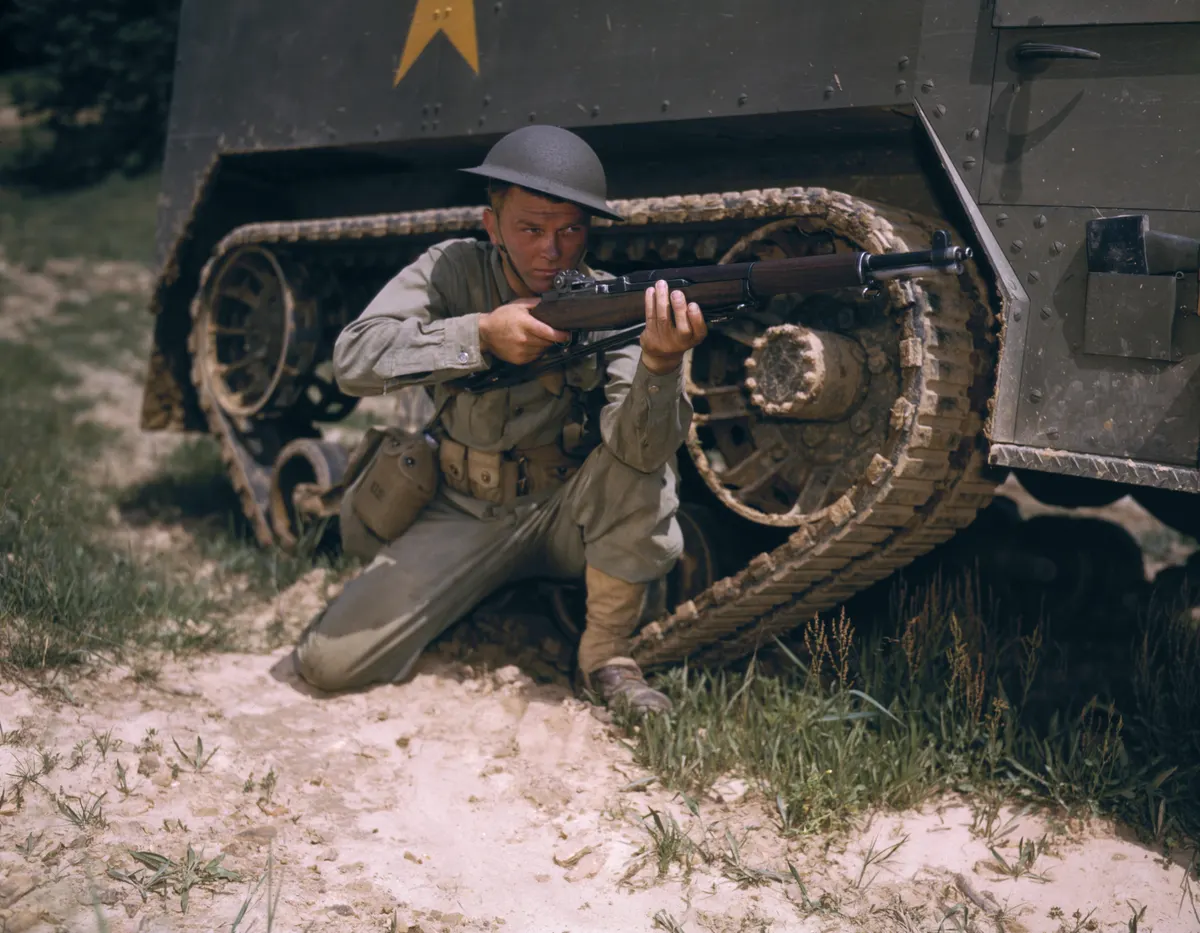
Garand's own production rifle briefly used a muzzle-cap gas-trap system directly comparable in spirit to Bang's approach before Springfield Armory replaced it with a simpler drilled gas port in 1940, a reminder that the basic muzzle-trap idea Bang spent nearly two decades refining never fully disappeared from American rifle development even after his own design lost.8
No document confirms Garand's team copied Bang's linkage directly. Ordnance engineers who had already spent years evaluating Bang's rifles were the same people judging Garand's early gas-trap prototypes, and the M1922 Bang rifle's own trial history runs directly underneath that later chapter of the M1 Garand's development.
The M1922 Bang rifle was the culmination of a line of prototypes rather than a single fixed design. The original Model 1909 was built in Denmark and chambered for the 6.5x55mm Krag cartridge.3 The Model 1911, rechambered to .30-06 Springfield for the U.S. War Department submission, was the version Springfield Armory first evaluated.3 Springfield Armory's own in-house Hatcher-Bang derivatives, built around 1920 and 1921 by Colonel James Hatcher, kept Bang's muzzle sleeve system inside a reworked receiver and stock.2 The definitive Model 1922 variant, the subject of this article, returned to a 6.5mm-class .256 caliber cartridge and represents the design as it stood through the 1925 to 1928 trials.4 A parallel set of British trial rifles, built for the Automatic-Rifle Committee in 6.5x55mm and 7.65x54mm chamberings, rounds out the small handful of documented Bang rifle variants.4


No army ever adopted the M1922 Bang rifle for issue, and every recorded example of the design was a government trial rather than active service. The United States Army evaluated Bang's rifles at Springfield Armory across three distinct rounds of testing, in 1911, 1919, and again in 1927, alongside a separate internal Hatcher-Bang development effort through 1920 to 1922, before choosing Garand's design instead.2 The United Kingdom's Automatic-Rifle Committee tested Bang-supplied rifles in 6.5x55mm and 7.65x54mm and rated the design favorably without recommending adoption, keeping the bolt-action Lee-Enfield in first-line service instead.4 Denmark, Bang's own homeland, never conducted a documented formal military trial of his rifle at all and continued fielding the bolt-action Krag-Jørgensen until the German occupation of 1940.5
The M1922 Bang Rifle vs the M1 Garand, Who Actually Came First
Bang's own operating system predates Garand's by more than a decade, and the two men's rifles were tested at the very same Springfield Armory across overlapping years before Garand's design won.2 The real difference was mechanical simplicity rather than raw performance. Garand's tappet actuator, the mechanism Ordnance explicitly cited when shelving the Bang system in 1922, avoided the seesaw linkage that made Bang's blow-forward action harder to manufacture and more sensitive to fouling.2 The M1 Garand that eventually reached troops in 1936 also briefly used a muzzle-cap gas-trap system of its own before Springfield Armory abandoned it for a simpler drilled gas port in 1940, evidence that the broader problem Bang had wrestled with for years, keeping a muzzle-mounted gas system both reliable and easy to build, was never fully solved by anyone until the barrel-port approach won out entirely.8
| Spec | M1922 Bang Rifle | M1 Garand |
|---|---|---|
| Action | Blow-forward muzzle-trap, rotating bolt | Gas-operated (later gas-port), rotating bolt |
| Cartridge | .256 caliber (6.5mm), earlier .30-06 | .30-06 Springfield |
| Feed | Fixed internal magazine | 8-round en bloc clip |
| Adopted | Never | January 1936 |
The M1922 Bang Rifle vs the Pedersen Rifle, Two Different Ways to Avoid Garand's Solution
Where the Garand comparison is about timing, the Pedersen rifle comparison is about mechanism choice. Both Bang and Pedersen tried to solve the same problem, a reliable self-loading rifle that did not depend on a drilled gas port, without copying Garand's eventual approach at all. Pedersen chose a delayed blowback toggle-lock action that needed specially waxed ammunition to function safely, while Bang chose a gas-operated muzzle-trap system that needed no special ammunition but demanded far more precise, fouling-prone machining at the muzzle.6 Both designs lost to Garand's simpler rotating-bolt mechanism, but Bang's system was rejected first, in 1922, years before Pedersen's toggle-lock design lost its own final trial in 1931 and MacArthur vetoed the .276 caliber project outright in 1932.2


What is the M1922 Bang rifle? The M1922 Bang rifle is a semi-automatic trial rifle designed by the Danish engineer Søren Hansen Bang, tested by the U.S. Army's Ordnance Department through the 1920s as a candidate to replace the bolt-action M1903 Springfield.1
Why was the M1922 Bang rifle rejected? Springfield Armory's own Ordnance Department concluded in 1922 that John Garand's simpler tappet actuator system offered more promise than Bang's blow-forward muzzle-trap mechanism, and Bang's 1927 resubmission was judged too similar to the earlier design to change that verdict.2
What cartridge did the M1922 Bang rifle use? The definitive Model 1922 version used a .256 caliber (roughly 6.5mm) cartridge built on the same Krag-pattern case as Bang's earlier 1909 Danish rifle, while earlier U.S. trial examples were chambered in .30-06 Springfield.4
How does the M1922 Bang rifle's gas system work? A sliding cup at the muzzle catches propellant gas after the bullet exits the barrel and is pushed forward by that gas, and a seesaw linkage converts that forward motion into a rearward pull on the rotating bolt, cycling the action without any hole drilled in the barrel.6
Did Denmark ever adopt the Bang rifle? No. Despite Søren Bang being Danish and building his first prototype for the Danish 6.5x55mm Krag cartridge, no documented formal Danish military trial ever took place, and Denmark kept the bolt-action Krag-Jørgensen rifle until the German occupation of 1940.5
Is the M1922 Bang rifle related to the M1 Garand? The two designs share evaluators rather than a mechanism. The same Springfield Armory Ordnance staff tested both across overlapping years, and the M1 Garand's own early production rifles briefly used a muzzle-cap gas-trap system conceptually close to the one Bang had spent nearly two decades refining.8
How rare is an original M1922 Bang rifle today? Very. Only a small number of trial examples were ever built across all of Bang's variants, and surviving rifles are preserved mainly in institutional collections such as the Springfield Armory National Historic Site rather than in general private circulation.1
- "Bang M1922 rifle", Wikipedia — en.wikipedia.org ↩
- "Experimental semi-automatic rifles, 1919-1931", Springfield Armory National Historic Site, U.S. National Park Service — nps.gov ↩
- "Danish Bang rifle", Forgotten Weapons — forgottenweapons.com ↩
- "The Bang Rifle, Exploring the Blow Forward System", GAT Daily — gatdaily.com ↩
- "Krag-Jorgensen", Wikipedia — en.wikipedia.org ↩
- "Operating Systems 201, Bang vs. Gas Trap", The Firearm Blog — thefirearmblog.com ↩
- "Actions, Gas Operated, Gas Trap", Firearms History, Technology and Development — firearmshistory.blogspot.com ↩
- "Gas Trap M1 Garand", Forgotten Weapons — forgottenweapons.com ↩
- "M1903 Springfield", Wikipedia — en.wikipedia.org ↩
- ".276 Pedersen", Wikipedia — en.wikipedia.org ↩