

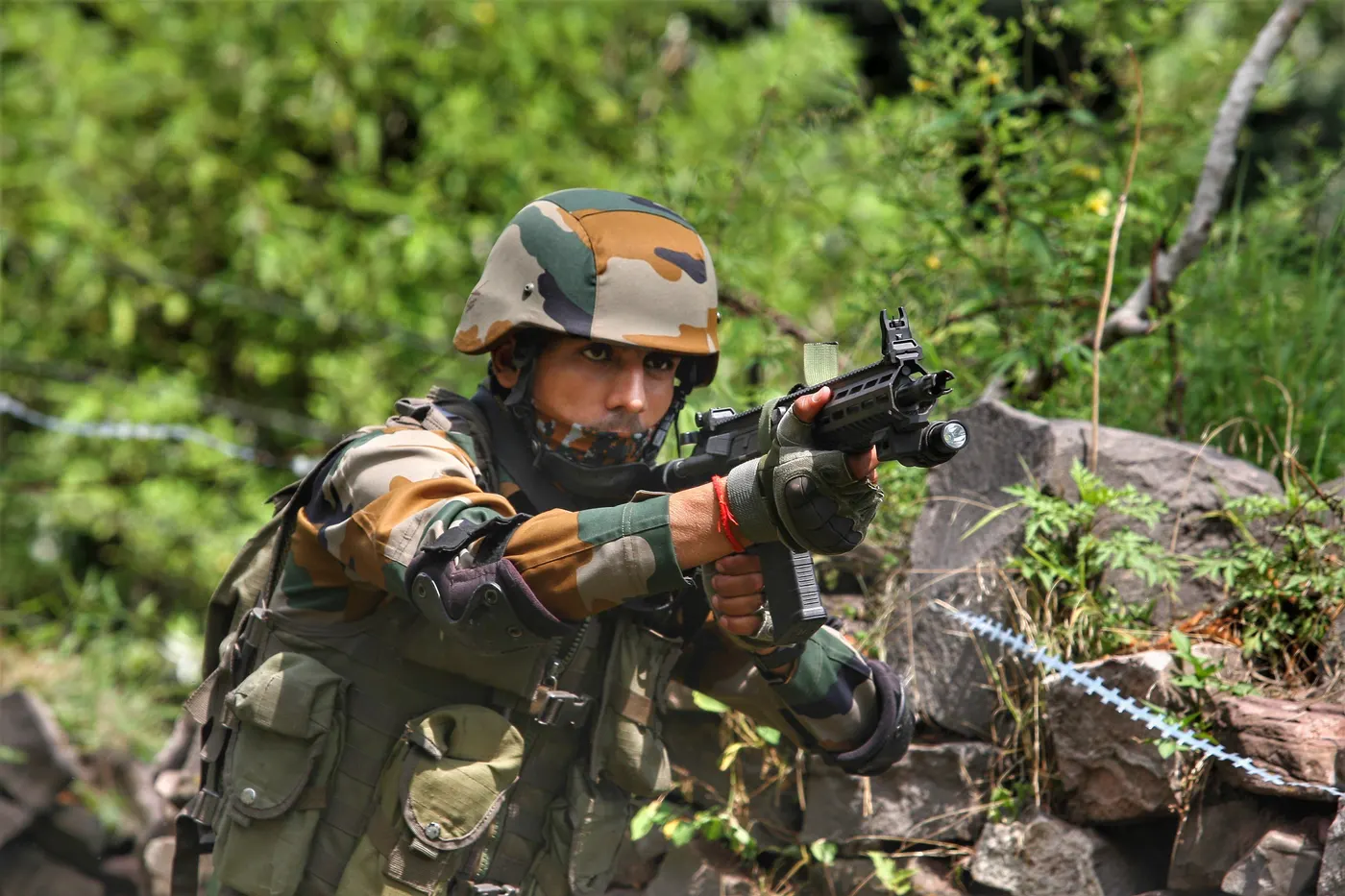

The SIG716 is a 7.62x51mm NATO battle rifle built on the AR-10 pattern, made by SIG Sauer Inc in Newington, New Hampshire, and manufactured at the company's Exeter, New Hampshire plant. SIG Sauer unveiled it at the 2010 SHOT Show alongside its 5.56mm sibling, the SIG516, aiming both rifles at the same growing market segment, piston-driven AR-pattern rifles built to compete with the Heckler & Koch HK417, the LWRC REPR, and POF-USA's own gas-piston AR-10 designs1. Where direct-impingement AR-10-pattern rifles like the SR-25 vent propellant gas straight into the bolt carrier, the SIG716 uses a short-stroke gas piston (a pushrod) to drive a rotating bolt, keeping hot, carbon-laden gas out of the action.
- Short-stroke piston keeps carbon fouling out of the action
- Four-position gas valve tunes for suppressed or adverse-condition fire
- Feeds standard AR-10/SR-25-pattern magazines, no proprietary mag
- Proven at large scale through Indian military contracts
- Standard fire selector is not ambidextrous
- Heavier than direct-impingement AR-10 rivals of similar barrel length
- No confirmed combat-deployment record as of this writing
A common assumption connects the 716 to SIG's older 550/556 rifle series. The actual engineering history runs through a different door entirely. Wikipedia's account of the SIG516 program credits the design to Robert Hirt and Chris Sirois, two engineers with direct Heckler & Koch backgrounds. Hirt worked on the HK416 program at H&K before SIG Sauer recruited him specifically to build, in the company's own words, an improved version of the HK416, pairing him with SIG's Sirois1,2. That collaboration produced the SIG516 first, and the same pair later built the SIG716 and, afterward, the SIG MCX and MPX platforms. The SIG716's engineering roots trace to HK416 development talent, not to any older SIG rifle.
For most of its first decade the SIG716 lived mainly in the American commercial, law-enforcement, and export catalog rather than in any single flagship military contract. That changed in 2019, when India signed a fast-track order for over 72,000 rifles, and changed again in 2024 with a follow-on order that brought total Indian commitments past 145,000 rifles, making the Indian Armed Forces by a wide margin the SIG716's largest confirmed military operator. That story anchors the Operators section below.
The core of the SIG716 is its operating system. A short-stroke gas piston, sometimes called a pushrod system, taps propellant gas near the front of the barrel and uses it to push a separate operating rod rearward, which in turn cycles a seven-lug-style rotating bolt. Gas and carbon fouling stay largely confined to a small piston chamber rather than being blown back into the bolt carrier group, the chief complaint leveled at direct-impingement AR-10 designs after extended firing3. SIG built in a four-position adjustable gas valve, with settings for normal use, adverse conditions (heavy fouling, extreme cold, or a dirty rifle), suppressor use, and a gas-off position for manual cycling or single-shot function checks. That suppressor setting matters in practice, a piston system already produces less back-pressure through a can than a direct-impingement gun, and the adjustable valve lets a suppressed shooter dial out the extra gas a can otherwise pushes back at the face11.
- İlk Üretim Yılı2010
- Hizmete Giriş Yılı2019
- TasarımcıRobert Hirt and Chris Sirois (SIG Sauer)
- Ağırlık (Boş)4,2 kg
- Halen HizmetteEvet
- Önemli KullanıcılarIndia (Army, Navy, Air Force)
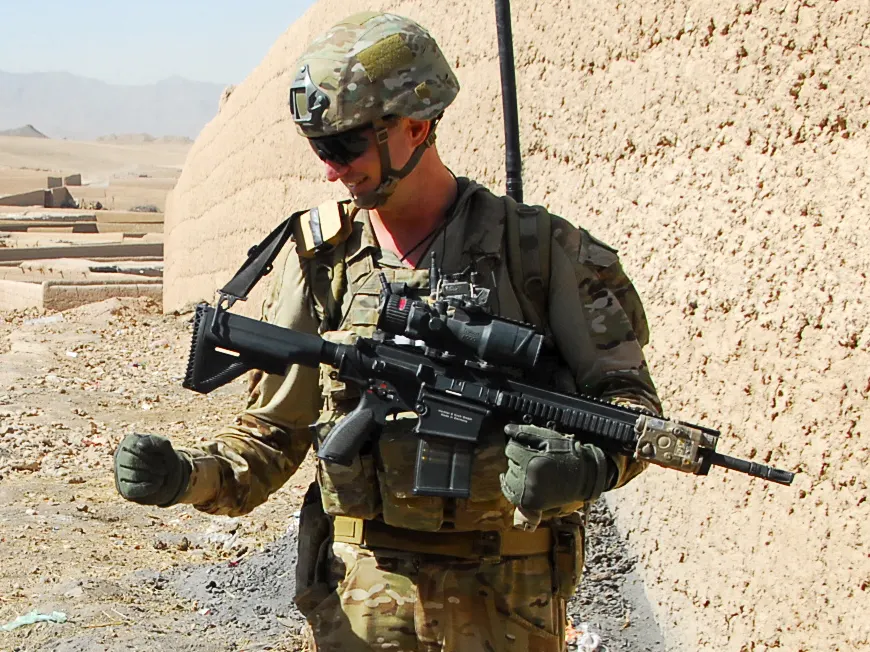
The receiver set is machined from 7075-T6 aircraft-grade aluminum forgings, hardcoat anodized black, with AR-10/AR-15-family controls that any AR-pattern shooter recognizes immediately. The magazine release is ambidextrous, but the standard fire selector is a conventional one-sided AR lever, so the rifle is best described as partially ambidextrous rather than a fully ambidextrous design. Feeding comes from AR-10/SR-25-pattern detachable box magazines, most commonly the 20-round Magpul PMag LR/SR or Armalite's own AR-10 Gen 2 magazine, with a 10-round option for magazine-capacity-restricted states. That choice matters more than it sounds, SIG did not invent a proprietary magazine for the 716, so owners and armorers can draw from the same magazine pool that already supports the SR-25, the LaRue OBR, and other AR-10-pattern 7.62mm rifles.
- Fişek7.62x51mm NATO / .308 Winchester
- Çap Sınıfı7.62mm rifle
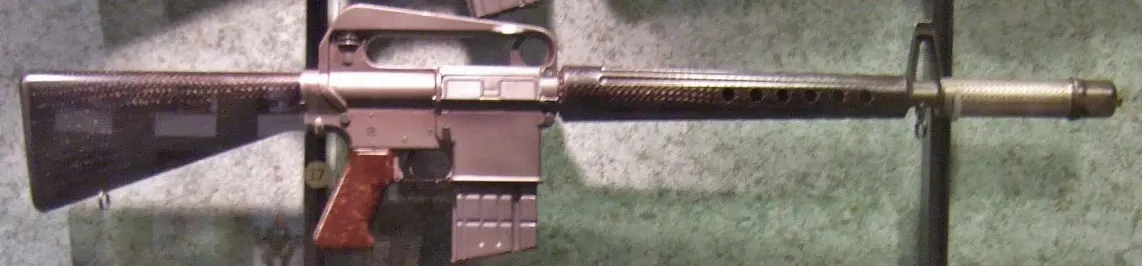
Sighting is handled by a full-length Picatinny top rail integral to the upper receiver, with a quad-Picatinny handguard on early production and an M-LOK handguard on later 716i and Tread-branded commercial models. Most configurations ship with folding flip-up front and rear iron sights as a fallback under the optic of the shooter's choice3. Barrel length and profile vary sharply by variant, from a 16-inch carbine barrel on the Patrol rifle up to an 18 or 20-inch match-grade barrel on the precision-oriented DMR models, a difference addressed in detail below.
- Mekanizma TipiGazlı
- Besleme SistemiÇıkarılabilir Şarjör
- Şarjör Kapasitesi20
SIG has updated the 716 line at least once since its 2010 introduction, current commercial production carries the G2 designation, with running changes to the handguard (from quad Picatinny to M-LOK) and minor updates to the trigger and furniture. The core short-stroke piston system and 7075-T6 receiver forging have stayed constant across those production updates3.
- Etkili Menzil (nokta)600 m
- Namlu Uzunluğu406 mm
- Yiv Adımı1-in-10 in
- Optik RayıEvet
- Toplam Uzunluk950 mm
- Gövde Malzemesi (Receiver)7075-T6 aluminum forging, anodized
- Çift Yönlü KumandalarHayır
- Susturucuya HazırEvet
- Gaz PistonluEvet
- Üretim Başlangıcı2010
- Birim Maliyet2.100 USD
SIG Sauer entered the piston-driven AR-10 market relatively late. Knight's Armament's SR-25 had already defined the direct-impingement 7.62mm AR-10 niche since the 1990s, and by the late 2000s Heckler & Koch's HK417 and LWRC's REPR had staked out the piston-driven side of the same market, both marketed on reduced fouling and better performance when suppressed. SIG's response was to bring Robert Hirt, fresh off HK416 development, into a joint project with in-house engineer Chris Sirois. The pair's brief was straightforward, build a modernized AR-pattern rifle that kept the reliability advantages of a piston system while trimming the parts count and proprietary tooling of the HK416 design1,2. The 5.56mm SIG516 came first, and the 7.62mm SIG716 followed as the scaled-up sibling, both unveiled together at the 2010 SHOT Show1.
A detail that matters for anyone tracing SIG Sauer's corporate structure, the company that built the SIG716 is legally and operationally separate from its European namesakes. SIG Sauer Inc has operated independently from SIG Sauer GmbH (Germany) since 2000, when both firms, along with the Swiss SIG Sauer AG, were placed under the German holding group L&O Holding9,10. SIG Sauer GmbH's own German manufacturing operations closed in 2020, a full decade after the SIG716 had already been designed and put into production entirely within the American subsidiary9. The rifle's development, tooling, and manufacture are a US story from the outset, run out of Newington and Exeter, New Hampshire, not a Swiss or German one.
For most of the 2010s the SIG716 built a following in the American commercial market and among law enforcement agencies drawn to its patrol-length 16-inch barrel and precision-oriented DMR variants, without a single large flagship military contract to its name. That changed decisively in 2019, when the SIG716 became the rifle at the center of India's biggest recent infantry re-equipment program, discussed fully in Operators below.
The rifle's cultural footprint outside the firearms press is thin but real.
Beyond that in-game appearance, no verifiable appearance in a mainline Call of Duty or Battlefield title turned up in sourcing for this article, so this entry stands on its own rather than being padded with weaker claims.
The baseline SIG716 Patrol is the configuration most reviewers and most military buyers mean when they say SIG716, a 16-inch, 1-in-10-twist barrel, an unloaded weight around 9.3 pounds, an overall length of roughly 37.4 inches with the Magpul collapsible stock extended, a quad-Picatinny or later M-LOK handguard, and a retail price historically around $2,1003.
The SIG716 Precision, also sold as the SIG716 DMR or DMR G2, trades the Patrol's carbine barrel for an 18 or 20-inch match-grade barrel, a Magpul PRS adjustable stock, a Magpul MIAD grip, and a two-stage match-grade Geissele trigger. Weighing roughly 12.3 pounds empty and priced near $2,970 at MSRP, it is built for the designated-marksman role rather than close-quarters carbine work4. Factory ammunition from its 18-inch barrel clocks around 2,650 feet per second (roughly 808 meters per second), and reviewers testing it with quality optics and match ammunition report reliable hits out to 800 to 1,000 yards, well past what the shorter Patrol carbine is built for4.
A later, cost-reduced line badged SIG716i and SIG716i Tread departs from the rest of the family in one important respect, it drops the piston system entirely in favor of direct impingement, the same operating principle used by the SR-25 and the rifles the original 716 was built to compete against. The 716i is correspondingly lighter, around 8.5 pounds against the G2 Patrol's 9.5, uses a fixed rather than adjustable gas block, and sells for roughly $1,400 to $1,700, well under the piston-equipped Patrol and DMR models. It is aimed squarely at price-conscious civilian buyers rather than the military and law-enforcement market the piston rifles serve.
Because the 716i swaps out the one feature that defines the rest of the SIG716 range, its short-stroke piston, it is best understood as a separate commercial product sharing the 716 name rather than a drop-in substitute. Specifications for weight, barrel length, and cost quoted throughout this profile describe the original piston-driven SIG716/DMR family rather than the direct-impingement 716i.

 Hindistan
The Indian Armed Forces are, by a wide margin, the SIG716's largest and best-documented military operator. In February 2019, India's Ministry of Defence signed a fast-track procurement contract for 72,400 SIG716 rifles, intended to replace aging INSAS rifles and give infantry a harder-hitting 7.62mm option against the 5.56mm INSAS and the AK-47 pattern rifles fielded by regional rivals5,6. The order split 66,400 rifles to the Army, 4,000 to the Air Force, and 2,000 to the Navy6. The first lot of 10,000 rifles arrived in India in December 2019 and went to the Army's Northern Command, the formation responsible for the mountainous, high-tension border regions facing Pakistan and China5.
SIG Sauer announced a second, larger order in August 2024, an additional 73,000 SIG716 rifles, citing what the company called successful fielding and overwhelming soldier acceptance of the first tranche7,8. Combined, the two contracts bring India's total SIG716 commitment to 145,400 rifles once deliveries complete, a scale no other confirmed operator approaches7. That single customer relationship, spanning two separate contracts five years apart, is the SIG716's defining service story to date.
Claims that US special operations units, including Navy SEAL/DEVGRU elements, use the SIG716 circulate online but do not hold up under scrutiny. The documented rifles associated with those units are the HK416 as the primary carbine, the Mk18 CQBR, and the SR-25/Mk13 family for designated-marksman and sniper roles, no credible primary source ties the SIG716 itself to DEVGRU or SEAL Team service. Similarly vague claims about unnamed German special-forces units or unspecified American police departments trace back to low-quality aggregator sites without a primary source and are not treated as fact here. The well-documented service picture for the SIG716 is a rifle developed in 2010 for the commercial, law-enforcement, and export market that later became a flagship foreign-military rifle almost entirely on the strength of India's two large orders.
For SIG Sauer, the two India contracts stand well above any single domestic commercial or law-enforcement order the SIG716 has landed. That scale gives India's fielding experience outsized weight in any broader read on the platform's reliability record, even though the manufacturer has not published unit-level readiness or failure-rate figures from the deployment itself.
The SIG716's identity within the 7.62mm AR-10-pattern category is defined almost entirely by its choice of operating system. Knight's Armament's SR-25, and the many AR-10-pattern rifles built on the same operating principle including the LaRue OBR, use direct impingement, venting gas straight back into the bolt carrier. That approach is simpler, lighter, and has a two-decade head start in combat and law-enforcement service, the SR-25 itself dates to the 1990s and remains the most established precision 7.62mm AR-10-pattern platform in Western service13. The tradeoff is that direct-impingement guns run hotter and dirtier at the bolt, an issue that matters more in sustained fire, adverse conditions, or suppressed use than in a single square range session.
The Heckler & Koch HK417 is the SIG716's closest peer in concept, a piston-driven 7.62mm AR-10-pattern rifle explicitly built, like the 716, around the idea that piston operation solves the direct-impingement fouling problem. The two rifles even share an engineering thread, HK416 alumnus Robert Hirt worked on both the H&K side of that story and, later, the SIG side. The HK417 is sold across 12, 16, and 20-inch barrel lengths for assault, reconnaissance, and sniper roles respectively, uses a cold-hammer-forged, chrome-lined barrel with a tighter 1-in-11-inch twist, and weighs roughly 9 pounds unloaded in its 16-inch Recce configuration, close to the SIG716 Patrol's 9.3 pounds13. Where the two diverge sharply is market access and price, the HK417 is sold through restricted military, law-enforcement, and government-contractor channels with no public retail price, while the SIG716 has always had an open commercial MSRP, historically well under what restricted-market piston 7.62mm rifles command. That difference in market position, more than any single spec, explains why India's Ministry of Defence could run an open fast-track commercial procurement for the SIG716 rather than a government-to-government arms sale.
| Spec | SIG716 Patrol | HK417 (16in Recce) |
|---|---|---|
| Operating system | Short-stroke piston, rotating bolt3 | Short-stroke piston, rotating bolt13 |
| Barrel length | 16 in (406 mm)3 | 16 in (406 mm)13 |
| Rifling twist | 1-in-10 in3 | 1-in-11 in13 |
| Weight, empty | ~9.3 lb (4.2 kg)3 | ~9 lb (4.1 kg)13 |
| Public retail price | ~$2,100 MSRP3 | Not publicly listed (restricted procurement)13 |
Against the LWRC REPR, the other piston-driven rival SIG named at the 716's 2010 launch, the comparison is closer to a shared design premise than a sharp technical divide, both rifles exist to sell buyers on piston reliability at a lower price point than the HK417, and the practical choice between them tends to come down to handguard preference, trigger feel, and local dealer support rather than any single decisive spec.


Is the SIG716 a direct-impingement or gas-piston rifle? The core SIG716 family, including the Patrol and Precision/DMR models, uses a short-stroke gas piston with a rotating bolt. A separate, cost-reduced commercial line badged SIG716i switches to direct impingement instead, so that trailing i is the key thing to check before assuming a given 716 is piston-driven3,4.
How does the SIG716 gas piston system work? Gas taps near the muzzle end of the barrel and drives a pushrod rearward instead of venting directly into the bolt carrier. A four-position gas valve lets the shooter select normal, adverse-condition, suppressor, or gas-off settings, keeping carbon fouling largely confined to the piston assembly rather than the action11.
SIG716 vs HK417, which is the better rifle? Both are piston-driven 7.62mm AR-10-pattern rifles built on a similar premise, and their core specs (16-inch barrel weight and twist rate) are close. The practical difference is market access, the HK417 sells only through restricted military and law-enforcement channels at an undisclosed price, while the SIG716 has an open commercial MSRP and a far larger confirmed operator base through India's orders13,7.
Is the SIG716 still in service? Yes. The Indian Armed Forces, its largest confirmed operator, are still receiving deliveries under a 2024 follow-on order that will bring the total Indian inventory to 145,400 rifles7,8.
What does a SIG716 cost? Commercial MSRP for the piston-driven Patrol configuration has historically run around $2,100, with the precision-oriented DMR model priced near $2,970. The unrelated, direct-impingement 716i commercial line sells for roughly $1,400 to $1,7003,4.
Why did India choose the SIG716 over other 7.62mm rifles? India's Ministry of Defence ran a fast-track procurement specifically to field a harder-hitting 7.62mm rifle faster than a lengthy indigenous program could deliver, and SIG Sauer's existing production capacity for a proven, already-fielded design let it win a large order on a compressed timeline5,6.
- "SIG Sauer SIG516", Wikipedia — en.wikipedia.org ↩
- "The legendary HK416 rifle's biggest competitors might be its own descendants", We Are The Mighty — wearethemighty.com ↩
- "SIG Sauer 716 Patrol Rifle", Police Magazine — policemag.com ↩
- "SIG716 DMR, Sig Sauer's 7.62 Semi-Auto Sniper Rifle", Athlon Outdoors — athlonoutdoors.com ↩
- "Indian Army receives first batch of SIG 716 assault rifles", Army Recognition — armyrecognition.com ↩
- "Indian Army Wants Another 72k American-Made SIG 716 Rifles", Guns.com — guns.com ↩
- "Indian Army Orders an Additional 73,000 SIG716 Rifles", SIG Sauer — sigsauer.com ↩
- "SIG Sauer to Supply More Assault Rifles to Indian Army", The Defense Post — thedefensepost.com ↩
- "SIG Sauer GmbH Shutters It's German Doors", Recoil — recoilweb.com ↩
- "SIG Sauer", Wikipedia — en.wikipedia.org ↩
- "Firearms Review, The piston-driven SIG716", Police1 — police1.com ↩
- "SIG 716", The Division Wiki, Fandom — thedivision.fandom.com ↩
- "Heckler & Koch HK417", Wikipedia — en.wikipedia.org ↩