


The G1 was West Germany's standard battle rifle for barely two years before the Bundeswehr replaced it with a rifle it could finally build at home. Between April 1957 and May 1958, FN Herstal in Belgium delivered around 100,000 FN FAL rifles chambered in 7.62x51mm NATO against a contract the newly re-formed Bundeswehr placed on 13 November 1956.1 Every one came off a Belgian production line. Germany never built a single G1 domestically, because Belgium refused a manufacturing license, and the episode ended in January 1959 with the Bundeswehr adopting the CETME-derived Heckler & Koch G3 instead.1,2
- Combat-proven FN FAL action, already fielded across NATO
- Fast procurement, armed a brand-new army without waiting on domestic tooling
- Full selective-fire capability, unlike many semi-auto-only FAL customers
- Swappable muzzle device and folding bipod suited to German requirements
- Never licensed for German production, total dependence on Belgian supply
- Higher per-unit cost than the CETME alternative Germany eventually chose
- Standard-issue service life cut short after roughly two years
- Left no lasting FAL production base or tooling in Germany
Internally, the Bundeswehr's own trial numbering scheme makes the story explicit. The FAL was tested and briefly issued as G1, the Swiss SIG SG 510 ran alongside it as G2, the CETME prototype competed as G3, and the American ArmaLite AR-10 rounded out the field as G4.3,5 The rifle that eventually displaced the G1 was sitting in the same trial pool from the start, under a different name, before West Germany had even signed the FAL contract.
The rifle's roots run through the Bundesgrenzschutz, West Germany's federal border guard, which ordered small FAL batches years before the main Bundeswehr contract. Its aftermath runs through Turkey, Portugal, and Rhodesia, secondhand owners who kept German-purchased FALs firing decades after West Germany moved on.
The G1 was never localized. West Germany sought an FN manufacturing license and was refused, so all G1-designated rifles were built entirely at FN's Herstal plant in Belgium and imported complete; no German firm ever produced any part of the rifle.
A Belgian Rifle Wearing a German Contract
No G1 was ever manufactured in Germany. The Bundesgrenzschutz began the whole line in 1954-55 with a small first order of wood-furniture Canada pattern FALs, then followed in September 1956 with 4,800 rifles fitted with metal handguards and folding bipods.1,2 The Bundeswehr's own order, placed 13 November 1956, covered 100,000 rifles in the C pattern configuration, serial numbers 000001 to 100,000.1,2 FN delivered them all from Herstal between April 1957 and May 1958, about thirteen months.1,2 Rheinmetall, which later co-produced the G3, had no role in building the G1.3
- İlk Üretim Yılı1957
- Hizmete Giriş Yılı1957
- TasarımcıFN Herstal design team (Dieudonne Saive), German-requested contract variant of the FN FAL
- Ağırlık (Boş)4,3 kg
- Halen HizmetteHayır
- Önemli KullanıcılarWest Germany, Bundeswehr 1957 to early/mid-1960s and Bundesgrenzschutz to c.1986; secondhand to Turkey (1961-1980s), Portugal (1961-1974, as m/962), Rhodesia (post-1974)
German-Specific Fittings on a Standard FAL
The G1 kept the standard FAL's gas-operated tilting-bolt action, but the German order specified a handful of changes over a plain export FAL. The rear sight was lowered by 3mm, the front sight gained a solid protective hood, and the muzzle carried a removable prong flash hider that could be swapped for a blank-firing adapter.2,1 The metal ribbed handguard and folding bipod, ordered for the 1956 BGS batch and carried into the main Bundeswehr contract, later influenced Austria's own FAL-derived rifle.2 A plastic carry handle and access to German-made Hensoldt optics rounded out the German-specific package.2
- Fişek7.62x51mm NATO
- Çap7,62 mm
- Kovan Uzunluğu51 mm
- Çap Sınıfıfull-power rifle cartridge
- Mermi Ağırlığı9,33 g
- Kenar AteşlemeliHayır
- Kovansız MühimmatHayır
Selective Fire and Standard FAL Ballistics
Unlike many Commonwealth FAL users who restricted their rifles to semi-automatic fire, West Germany ordered the G1 with full select-fire capability (safe, semi-automatic, full-automatic).4 It fed from a 20-round detachable magazine, weighed roughly 4.3kg empty, and measured 1090mm overall with a 533mm barrel, matching the standard FAL 50.00 pattern.4 Cyclic rate ran around 650 rounds per minute and muzzle velocity around 840 meters per second with standard NATO ball ammunition, with an effective range of roughly 400 meters using iron sights and up to 600 meters with the rear sight's furthest setting.4
- Mekanizma TipiGazlı
- Atış Modlarısafe, semi-automatic, full-automatic
- Seçmeli AtışEvet
- Besleme SistemiÇıkarılabilir Şarjör
- Şarjör Kapasitesi20
- Teorik Atış Hızı650
- Namlu Çıkış Hızı840 m/sn
- Etkili Menzil (nokta)400 m
- Nişan Menzili600 m
- Namlu Uzunluğu533 mm
- Nişangah Tipipost front sight with solid protective hood, aperture rear sight lowered 3mm on the German contract
- Optik RayıHayır
- Açık NişangahEvet
- Toplam Uzunluk1.090 mm
- Gövde Malzemesi (Receiver)steel
- Kabza/Dipçik Malzemesiwood (earliest Bundesgrenzschutz Canada-pattern batch), metal ribbed handguard (later BGS batch and main Bundeswehr C-pattern order)
- Katlanır / Toplanır DipçikHayır
- Bullpup DüzeniHayır
- Çift Yönlü KumandalarHayır
- Süngü TakozuEvet
- Entegre BipodEvet
- Bombaatar KabiliyetliEvet
- Gaz PistonluEvet
- Toplam Üretim107.000
- Üretim Başlangıcı1957
- Üretim Bitişi1958
- Birim Maliyet110 USD
- Varyantlar3
Rearming a New Army
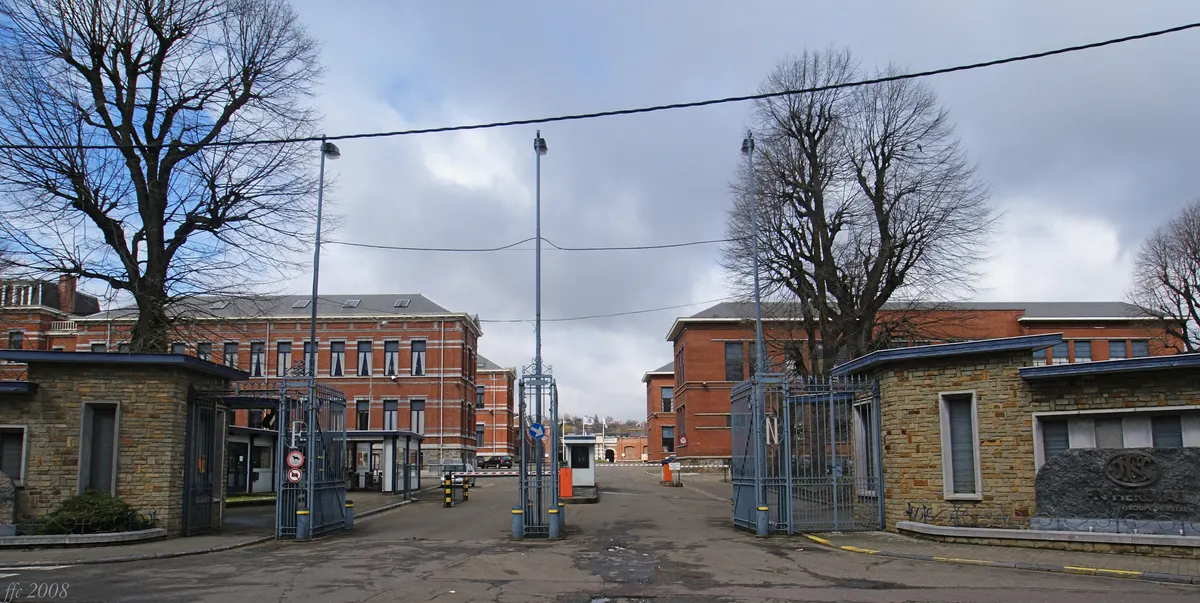
West Germany's postwar rearmament began not with the Bundeswehr but with the Bundesgrenzschutz, formed in 1951 and initially equipped with leftover Wehrmacht small arms.1 By 1954-56 the BGS had planned to procure the Spanish CETME rifle, cancelled that plan, and adopted the FN FAL instead, a FAL-then-CETME sequence that would repeat itself, in reverse, at the full Bundeswehr level only a few years later.5 The Bundeswehr itself was only established in 1955-56, following West Germany's NATO accession, and needed a modern rifle immediately.1
Why Belgium Said No
West Germany wanted more than finished rifles. It sought a license to build the FAL domestically, and FN refused.4,1 The refusal traces back to World War Two. Belgium had been occupied twice by Germany within one generation, and during the second occupation FN Herstal itself was seized and run under German control by Deutsche Waffen- und Munitionsfabriken, its assembly lines reportedly kept running on forced labor after most Belgian workers refused to return.4,1 That history gave FN and the Belgian state a concrete reason to sell finished rifles to West Germany while refusing the tooling and rights that would let German industry build the weapon itself.6
The refusal was not the only factor. FN's rifles reportedly cost around $110 apiece, noticeably more than the CETME design Rheinmetall and Heckler & Koch could eventually build under license, and German industrial planners wanted a rifle their own factories controlled rather than permanent dependence on a Belgian supplier.3 Occupation politics, unit cost, and industrial pride all pointed the Bundeswehr toward the same exit.
German Engineers Coming Home
The rifle that replaced the G1 has a stranger origin than the G1 itself. CETME's roller-delayed-blowback design descended from Mauser's wartime StG 45(M) prototype, developed by a team including Ludwig Vorgrimler and Theodor Löffler.5,7 After 1945 that team moved to France, produced an unadopted prototype by 1949, then relocated to Spain in 1950, where the work continued as CETME.7 The Dutch firm Nederlandse Wapen- en Munitiefabriek held CETME's outside-Spain sales rights and had already adapted it to fire the full-power 7.62x51mm NATO round rather than Spain's reduced-charge cartridge, which made a West German adoption technically straightforward.5 West Germany's search for a domestically licensable rifle led it back to a design descended from its own wartime engineers, refined abroad and brought home.
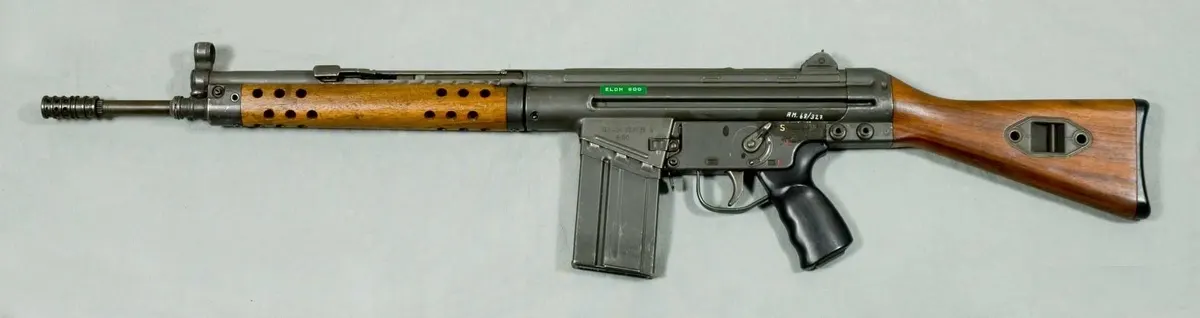
The Bundeswehr formally adopted the CETME proposal as the G3 in January 1959, assigning production to Heckler & Koch and Rheinmetall.5 Heckler & Koch's first production run of 150,000 rifles finished delivery by August 1962, with a further 100,000-rifle order following that November, dates that likely explain why some records list 1962 in connection with the G1 program even though FN's actual G1 manufacturing run ended in May 1958.5
A Second Life Outside Germany
No precise date survives for the G1's final Bundeswehr withdrawal, but it was phased out through the early-to-mid 1960s as G3 supply caught up, with retired rifles passed to the Bundesgrenzschutz, which kept FAL-pattern rifles in service into the mid-1980s.2,1 Most of the surplus went abroad. From 1961, the majority of surplus G1s were sold to the Turkish Army, which kept them in service into the 1980s.2
The Bundeswehr's own G1s never fired a shot in anger. West Germany's Cold War military never saw combat, and the rifle's entire German service window fell in peacetime. Its combat record belongs almost entirely to the countries that bought it secondhand.
The Portuguese Colonial War
Around 1961, West Germany supplied roughly 15,000 G1 rifles to Portugal, locally designated the m/962, just as the Portuguese Colonial War and the parallel Angolan War of Independence were beginning.9,10 The rifles served as a stopgap while Portugal negotiated its own domestic G3 license production, and were reportedly favored by the Caçadores Especiais, Portugal's elite light-infantry units in Africa.9 Portuguese use of the G1 continued until the 1974 Carnation Revolution ended the colonial wars.10
The Rhodesian Bush War
Portugal's 1974 withdrawal from Africa set off a second transfer. Ex-German G1 rifles, some identifiable by markings matching the batch originally sold to Portugal, reached Rhodesia through arms deals that evaded the international embargo then in force, becoming part of the FAL-based backbone of Rhodesian security forces during the Rhodesian Bush War.8 A rifle contracted for a peacetime West German army in 1956 was, within two decades, arming soldiers in two separate African wars it was never designed for.
A smaller number of G1s reportedly reached the American collector market decades later, with one forum source citing around 10,000 rifles imported by Century Arms, a figure that should be treated as approximate and single-sourced.2

Three distinct procurement batches make up the German G1 story, not one uniform rifle. The Bundesgrenzschutz's earliest batch (1954-55) used wood furniture in the Canada pattern common to early export FALs. A second BGS order of 4,800 rifles (September 1956) added the metal handguard and folding bipod that became standard on later batches.1,2 The main Bundeswehr order of 100,000 rifles (the C pattern, delivered 1957-58) is the configuration most commonly labeled G1 today, adding the lowered rear sight, solid front sight hood, and swappable muzzle device.2,1
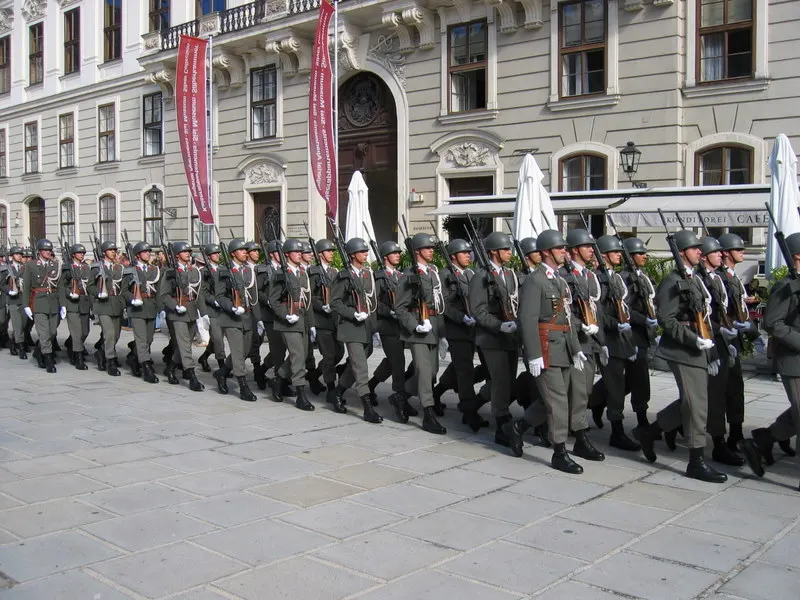
West Germany was not the only FAL customer with its own contract variant. Austria's Steyr StG 58 shares the G1's folding bipod and handguard pattern, reportedly copied directly, but unlike the G1 it moved to full domestic production at Steyr-Daimler-Puch after an initial FN-built batch.4 Israel adopted its own FAL variant as the FN FAL Romat, and the Netherlands fielded the rifle as the Licht Automatisch Geweer. All four share the same core FAL hardware, reached by different licensing paths.


| Yıl | Alıcı | Adet | Tutar | Bugünkü Değer (2025) |
|---|---|---|---|---|
| 1961 |  Portekiz | 15,000 | — | — |
West Germany was the G1's original customer, issuing it to the Bundeswehr from 1957 into the early-to-mid 1960s and to the Bundesgrenzschutz into the mid-1980s.1,2 Turkey became the largest secondhand operator, receiving the bulk of German surplus from 1961 and keeping the rifle in service into the 1980s.2
Portugal operated roughly 15,000 G1s from 1961 to 1974 as the m/962, primarily in its African colonial campaigns.9,10 Rhodesian security forces picked up an unknown number of the same Portuguese-supplied rifles after 1974 and used them through the remainder of the Bush War.8 A single forum source also claims German G1s reached Myanmar through the trading firm Fritz Werner, a claim thin enough that it should be treated as unconfirmed rather than stated as fact.
Austria received the FN manufacturing license that Belgium refused West Germany, and the difference in outcome is the cleanest illustration of how much licensing politics, rather than the hardware, decided each rifle's fate. The G1 and the Steyr StG 58 are close to the same rifle, both tracing to the same FN FAL action and both built at Herstal in their earliest batches, with Austria's rifle reportedly copying the G1's folding bipod and handguard.4,2 What diverged was licensing. Belgium sold Austria the tooling and rights to build the rifle domestically at Steyr-Daimler-Puch, letting the StG 58 stay Austria's primary infantry rifle for nineteen years, 1958 to 1977, before the indigenous Steyr AUG replaced it.11,4 West Germany got none of that, and the G1 lasted barely two years as the Bundeswehr's standard-issue rifle.
| G1 (West Germany) | StG 58 (Austria) | |
|---|---|---|
| Manufacture | 100% FN Herstal, Belgium, no license ever granted | First ~20,000 by FN, remainder built domestically by Steyr |
| Total for that country | Roughly 100,000 (Bundeswehr) plus about 7,000 (BGS) | Over 150,000 |
| Standard-issue service life | About two years (1957-1959) | About nineteen years (1958-1977) |
| Replacement | Heckler & Koch G3, license Germany could obtain | Steyr AUG, an indigenous design |
The G3 comparison runs on different terms. Where the StG 58 question is about licensing, the Heckler & Koch G3 question is about mechanism and cost. The G1 uses the FAL's gas-operated tilting-bolt action, while the G3 uses a delayed-blowback roller system descended from Mauser's wartime work, a mechanically simpler design that let Rheinmetall and Heckler & Koch build it domestically at lower unit cost than FN's roughly $110-per-rifle FAL.3 That cost gap, layered on top of the licensing refusal and German industrial pride, is why the Bundeswehr abandoned a combat-proven rifle already in mass production for one that had only recently finished troop trials.


Is the G1 rifle still in service? No. West Germany withdrew it from front-line Bundeswehr service by the mid-1960s, and the Bundesgrenzschutz, its last German user, retired remaining stock by the mid-1980s.1,2
What is the difference between the G1 and the G3? The G1 is West Germany's designation for an imported, Belgian-built FN FAL. The G3 is the CETME-derived rifle that replaced it in January 1959, built domestically using a roller-delayed-blowback action instead of the G1's gas-operated tilting bolt.5,4
Why did West Germany replace the FN FAL so quickly? Belgium refused a manufacturing license, tracing back to FN Herstal's forced-labor operation under the World War Two German occupation, while the CETME/G3 alternative was cheaper and available for full domestic manufacture.4,1,3
How many G1 rifles were produced? FN built about 100,000 for the main Bundeswehr contract between April 1957 and May 1958, on top of roughly 7,000 for earlier Bundesgrenzschutz orders, for a total near 107,000.1,2
Was the G1 ever manufactured in Germany? No. Every G1 was built at FN's Herstal plant in Belgium and imported complete.1,2
- "Rearming West Germany: The G1 FAL", Forgotten Weapons — forgottenweapons.com ↩
- "Ident/German: G1 History??", The FAL Files forum — falfiles.com ↩
- "Rheinmetall G3", Armourers Bench — armourersbench.com ↩
- "FN FAL", Wikipedia — en.wikipedia.org ↩
- "Heckler & Koch G3", Wikipedia — en.wikipedia.org ↩
- "FN G1 (1990.60.15)", Pitt Rivers Museum — web.prm.ox.ac.uk ↩
- "How the WWII StG-45(M) Became the CETME, Which Became the G3", wwiiafterwwii — wwiiafterwwii.wordpress.com ↩
- "Rhodesian FALs, A Brief History", The Kommando Blog — kommandoblog.com ↩
- "Portuguese Equipment in the Colonial War", balagan.info — balagan.info ↩
- "List of weapons of the Portuguese Colonial War", Wikipedia — en.wikipedia.org ↩
- "DS Arms STG58 Austrian FAL", Athlon Outdoors — athlonoutdoors.com ↩