


The KAL1 General Purpose Infantry Rifle began as the unofficial project of a single Australian officer cadet rather than a formal Army requirement. In November 1969, Staff Cadet Kevin Loughrey sat through a cold, wet field exercise in the Brindabella Mountains and started listing everything wrong with the standard-issue L1A1 Self-Loading Rifle he was carrying. It was too long for the close terrain infantry were fighting through in Vietnam, awkward for left-handed soldiers, front-heavy, and its sight mount flexed enough to throw off accuracy.1 Over the next seven years that private complaint grew into two working prototypes built largely from cannibalized L1A1 parts, an Army Design Establishment report deliberately hidden from its author, an order to physically destroy the rifle, and a mixed but respectful trial by the Special Air Service Regiment. None of it led to adoption. The weapon exists today only as a museum piece and a footnote in the story of how Australia eventually did field a bullpup service rifle, the F88 Austeyr, fourteen years later.
- Full L1A1 firepower in a much shorter package
- Built almost entirely from existing L1A1 parts, low unit cost to prototype
- AK-47-derived gas system reported extremely reliable in testing
- Field-strips to three major components
- Never resolved beyond hand-built prototypes, no production tooling
- SASR testers found prone accuracy worse than the L1A1
- Institutional opposition killed the project before it reached a formal trial cycle
- Bullpup trigger linkage and balance never independently re-tested after 1976
There was no company behind the KAL1. It was built inside the Army itself, first at the Small Arms Factory Lithgow under the Department of Supply, then at 3 Base Workshop Battalion in Melbourne, using Australia's own soldiers as designers and machinists. That arrangement explains both how a cadet's sketch got built at all and why it was so easy for a handful of senior officers to quietly stop it. It also belongs to the same broader family of battle rifles as the L1A1 it was designed to shrink, chambered in the same full-power 7.62mm NATO round rather than the intermediate cartridges that later replaced both of them.
Wikipedia's infobox lists the finished KAL1 at 3.98 kg and 856 mm overall, with a barrel the same length as the L1A1's.2 Loughrey's own account gives a different but compatible figure, around 8.4 lb (roughly 3.8 kg) fully loaded, against 11 lb 15 oz (about 5.4 kg) loaded for the L1A1 it was meant to replace.1 Both numbers point the same direction. Moving the action and magazine behind the trigger group let the rifle carry the same 20 in barrel and the same 7.62x51mm NATO cartridge in a body around 300 mm shorter than the standard-issue rifle, without the weight penalty that shortening a conventional rifle would normally cost.
- İlk Üretim Yılı1970
- TasarımcıKevin Loughrey, Andrew Witt
- Ağırlık (Boş)3,98 kg
- Halen HizmetteHayır
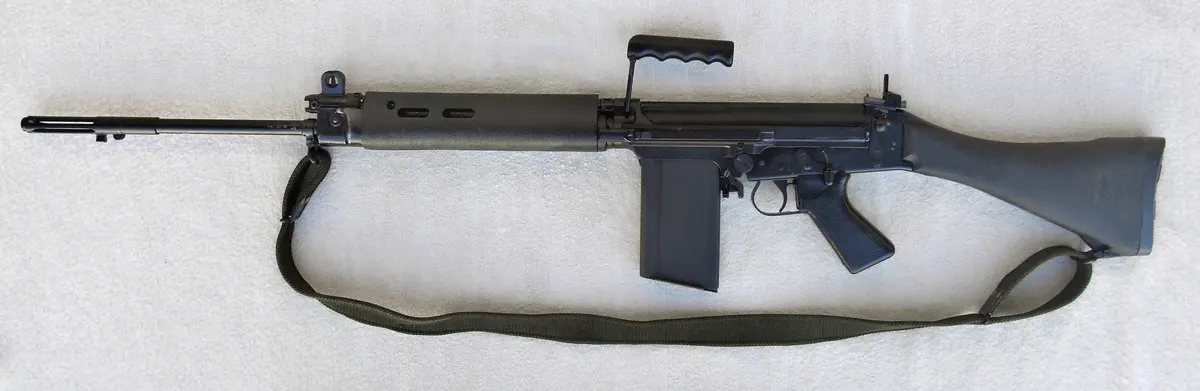
The mechanism itself was not a KAL1 invention. Loughrey and the Lithgow team adapted a long-stroke gas piston and rotating bolt directly from the AK-47, married to L1A1 furniture, a detachable-magazine 20-round box compatible with existing L1A1 magazines, and a single AK-style return spring.1 The rifle used ambidextrous controls, a folding charging handle, and a safety selector built into the trigger guard rather than a separate lever, all changes aimed squarely at the complaints Loughrey had written down in 1969. Sights were conventional iron sights, though the Jungle Training Centre demonstrator was later fitted with a scope for testing.1
- Fişek7.62x51mm NATO
- Çap7,62 mm
- Kovan Uzunluğu51 mm
- Kenar AteşlemeliHayır
- Kovansız MühimmatHayır
The design was never locked to 7.62mm NATO as a permanent choice. Loughrey's own writing treats the caliber as a policy decision the Army never got far enough to make, since the whole point of building the prototypes from L1A1 parts was to prove the gas-operated bullpup layout cheaply before committing to a specific cartridge or a production contract.1
- Mekanizma TipiGazlı
- Besleme SistemiÇıkarılabilir Şarjör
- Şarjör Kapasitesi20
- Nişangah TipiMekanik nişangah
- Açık NişangahEvet
- Toplam Uzunluk856 mm
- Bullpup DüzeniEvet
- Çift Yönlü KumandalarEvet
- Gaz PistonluEvet
- Toplam Üretim1
- Üretim Başlangıcı1970
- Üretim Bitişi1974
- Varyantlar1
The idea had an inauspicious start. Loughrey's first attempt to get permission, a handwritten minute to his commanding officer LtCol Stewart in June 1970, was passed down through Duntroon's workshop officer and came back rejected, with the recommendation that he direct his energy toward a more profitable project.1 It survived through a personal connection. A classmate introduced him to Max Nesbitt, the Army's Scientific Advisor, who already knew Infantry units in Vietnam were unhappy with the L1A1's length and weight in dense terrain. Nesbitt brought in Peter Gardiner and Eric Duve from the Department of Supply, and their support was what actually got metal cut.1
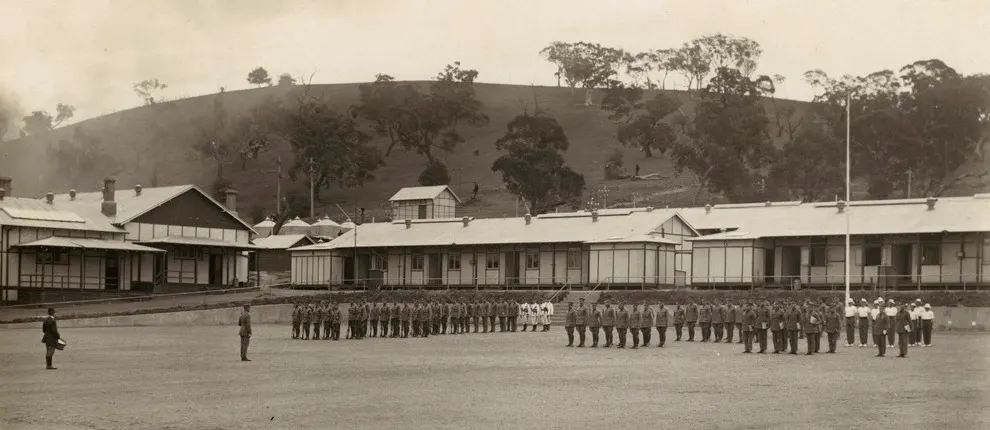
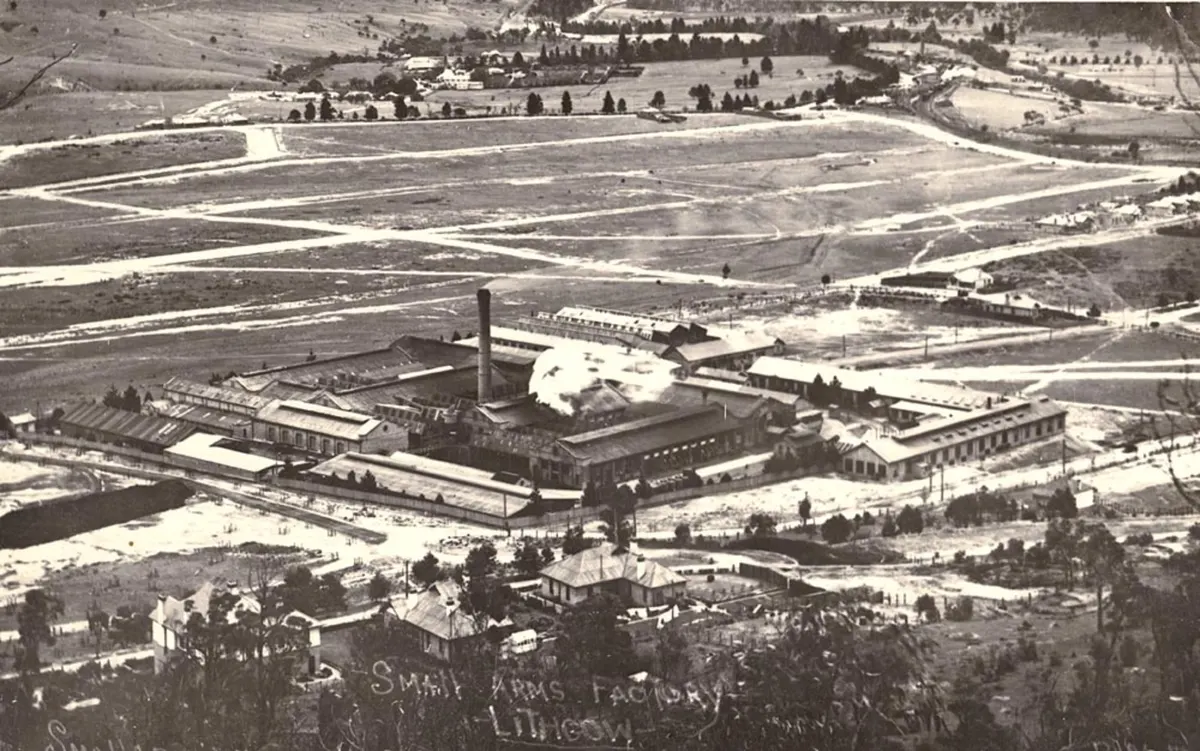
At the Small Arms Factory Lithgow in July 1971, craftsmen built the first working prototype, generally referred to as RMC No.2, around the AK-47-derived gas system. Loughrey carried and fired it extensively through his final RMC field exercises, putting more than 5,000 rounds through it without a stoppage, a reliability record that held up again after graduation.1 The rifle's forward center of gravity actually made the bullpup easier to carry on patrol than the heavier, front-loaded L1A1, despite the two weighing about the same.1
In early 1972 Loughrey took the prototype through a four-month jungle warfare course at Canungra.

There it reportedly put a scoped shot on a 4.5 litre paint can at 600 metres, a demonstration meant to show the shortened rifle had lost nothing in practical accuracy.1 That same year the project ran into the opposition that would eventually kill it. On 28 April 1972 the Army Design Establishment issued a wholly negative assessment, written mainly by LtCol Mike Chivers, a retired British Army officer without an engineering qualification. Loughrey later described it as riddled with errors of technical fact, and its central prediction of unreliability was directly contradicted by the 5,000-round test he had already run.1
Work on a second, more refined prototype began in earnest in 1973 at 3 Base Workshop Battalion in Melbourne, where Loughrey, by then a serving RAEME officer, worked with Craftsman Andrew Witt, a fitter and turner, to build what became the KAL1 proper. Their commanding officer LtCol John Faulks backed the project and sought formal approval to continue it in June and July 1973.1 The rifle was completed and fired at the workshop in 1974 before being transferred toward the Infantry Centre. A replacement commanding officer, LtCol Kenneth Rawnsley, proved far less sympathetic, and it was around this period that Army Headquarters moved to shut the project down for good.1
The closest the project came to disappearing entirely was a direct order to destroy it. Warrant Officer Stan Whitwell was dispatched from Army Headquarters to carry out the destruction of both the rifle and its supporting paperwork. Loughrey got word he was coming and rushed to the quartermaster, Captain Michael Stark, to have the rifle formally entered onto the workshop's weapons charge register before Whitwell arrived. Once an item is on charge, Army procedure requires a certificate of destruction to remove it, and Whitwell, on arrival, refused to be the one to sign off on destroying a functioning weapon that was now formally accounted for. He left it alone, and Loughrey quietly kept working on it until it was finished enough to hand over to a museum.1
By 1975, Captain Patrick Cullinan had arranged for the Special Air Service Regiment at Swanbourne, Western Australia, to trial the rifle. The result was mixed rather than the clean vindication the earlier field results suggested. SASR testers found the KAL1 measurably less accurate than the L1A1 from a prone unsupported position, a stance where a bullpup's shorter sight radius and rearward balance point are a known disadvantage. Loughrey argued the disparity mostly vanished in a basic prone position using the off hand to cup the pistol grip instead.1 SASR's own conclusion recommended sending the rifles back to the Army Design Establishment for further consideration. Nothing came of that recommendation, and the program quietly ended.1
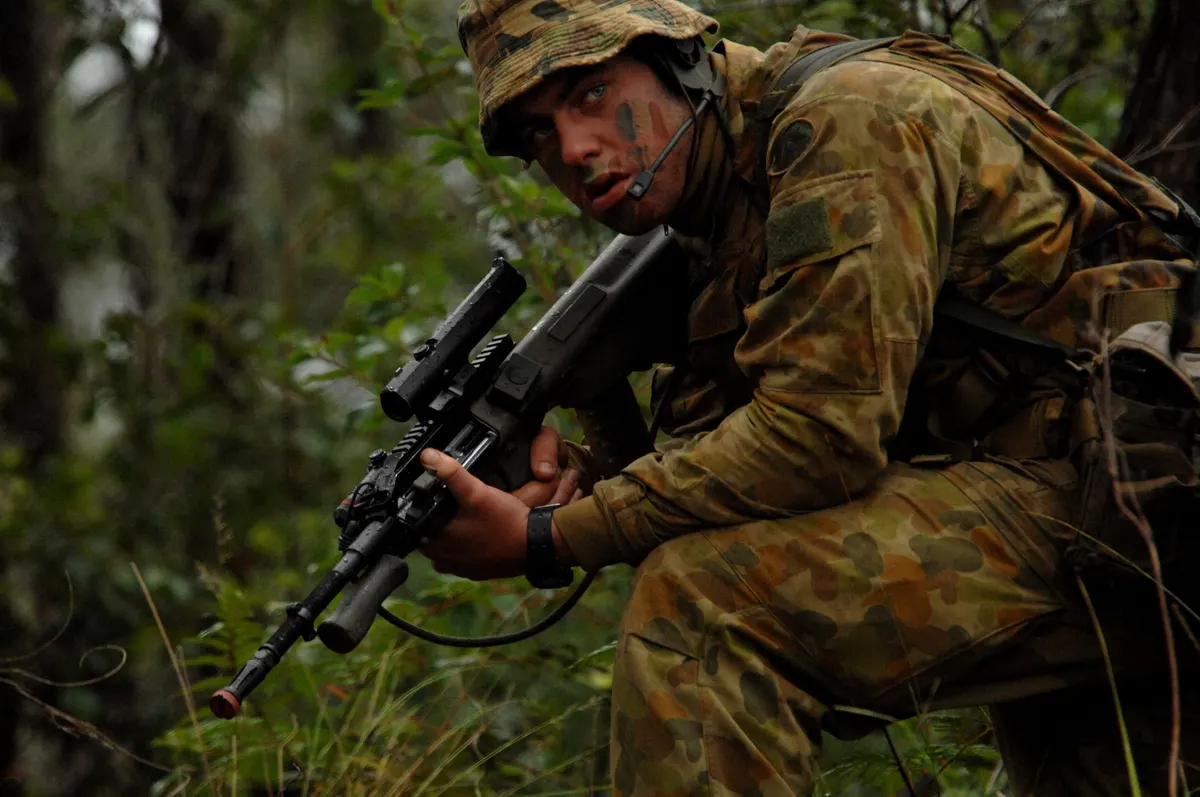
Loughrey later wrote that with comparatively little further engineering work the KAL1 could have become a fully polished operational rifle in any caliber the Army chose, and called its cancellation a lost opportunity caused by a lack of leadership and imagination among some senior officers. Australia did eventually adopt a bullpup rifle. In the late 1980s the Army selected the F88 Austeyr, a licensed assault rifle derivative of the Steyr AUG chambered in 5.56mm, to replace the L1A1.1,2,4
The completed KAL1 itself survives and is on display at the Australian Army Infantry Museum, Lone Pine Barracks, in Singleton, New South Wales.1
The gap between the Army Design Establishment's confident 1972 prediction of unreliability and the 5,000-round test Loughrey had already run is the clearest single measure of what went wrong with the program, an institutional judgment overtaken by facts that already existed before the judgment was written.
Sources agree exactly two prototypes were built, and each was a functionally distinct design rather than a duplicate copy. The first, built at SAF Lithgow in 1970 and 1971 and referred to in Loughrey's account as RMC No.2, used the AK-47-derived gas system and was the rifle that ran the 5,000-round reliability test and the Canungra demonstration. The second, the KAL1 proper, was built from 1973 to 1974 at 3 Base Workshop Battalion by Loughrey and Andrew Witt, refining the earlier layout and incorporating lessons from the first build. It was this second rifle that went to the SASR trial and later to the museum.1
No production series, licensed copy, or civilian variant of either rifle was ever made.
Because RMC No.2 and the KAL1 proper are often described together under a single name in secondary sources, a claim that really only applies to one of the two prototypes can easily get attached to the other, a good reason to treat any single-sourced detail about either rifle with some caution.


The KAL1 was designed around a single number, the L1A1's overall length, and everything else about it follows from trying to shrink that one figure without giving anything up. The two rifles fired the same 7.62x51mm NATO cartridge from the same 20-round box magazine and shared a similar barrel length, so the comparison comes down almost entirely to layout and handling rather than ballistics.
| KAL1 | L1A1 SLR | |
|---|---|---|
| Overall length | 856 mm2 | 1,143 mm3 |
| Weight | 3.98 kg (basis unclear)2 | 4.337 kg empty3 |
| Cartridge | 7.62x51mm NATO | 7.62x51mm NATO |
| Magazine | 20-round box | 20-round box |
| Field strip | 3 major components1 | more complex breakdown1 |
At close to 300 mm shorter than the standard-issue rifle, the KAL1 would have been dramatically easier to swing through doorways, thick brush, or a vehicle hatch than the L1A1, the exact complaint that started the project. What it never proved was whether that advantage held up in every shooting position. SASR's 1975 trial found it gave up some prone accuracy against the rifle it was meant to replace, a genuine tradeoff bullpup advocates were still arguing about decades later. The L1A1 stayed in first-line Australian service for another decade after the KAL1 program ended, until the Army moved to the F88 Austeyr in the late 1980s, a rifle that made the same length-and-weight argument Loughrey had made in 1969 and this time carried it all the way to adoption.2,4


Was the KAL1 rifle ever actually built? Yes. Two hand-built prototypes were completed and fired, one at SAF Lithgow in 1970 to 1971 and the KAL1 proper at 3 Base Workshop Battalion in 1973 to 1974. Neither went beyond that stage.1
Why was the KAL1 never adopted by the Australian Army? A negative 1972 Army Design Establishment report, later found to have been withheld from its own designer, combined with senior-officer opposition that culminated in an order to destroy the rifle. A 1975 SASR trial found real merit in the concept but recommended only further study, and the recommendation went nowhere.1
What replaced the L1A1 in Australian service? The 5.56mm F88 Austeyr, a licensed bullpup derivative of the Steyr AUG, entered Australian Army service in the late 1980s.2,4
How much did the KAL1 weigh compared to the L1A1? Wikipedia lists the KAL1 at 3.98 kg against roughly 4.3 kg for the L1A1 empty. Loughrey's own account separately gives about 3.8 kg loaded for the KAL1 against about 5.4 kg loaded for the L1A1, a bigger gap on a different basis.1,2,3
Where can the KAL1 be seen today? The completed KAL1 prototype is on display at the Australian Army Infantry Museum at Lone Pine Barracks, Singleton, New South Wales.1
- "The GPIR / KAL1 Story", Non Volatile Technologies — nvtech.com.au ↩
- "KAL1 general purpose infantry rifle", Wikipedia — en.wikipedia.org ↩
- "L1A1 Self-Loading Rifle", Wikipedia — en.wikipedia.org ↩
- "F88", Wikipedia — en.wikipedia.org ↩