


The AVT-40 is the standard Soviet SVT-40 self-loading rifle fitted with a redesigned trigger and safety group that adds a third, fully automatic firing position alongside the existing safe and semi-automatic settings, the same rifle rather than a separate design.1 Ordered into production on 20 May 1942, it reached front-line Red Army units in July that year as a stopgap answer to a severe wartime shortage of light machine guns and submachine guns in Soviet infantry squads.1 Roughly 500,000 were built before production ended in the summer of 1943, which makes the AVT-40 by volume the most widely produced select-fire rifle fielded by any nation in the Second World War, a strange distinction for a weapon whose defining feature was formally banned from combat use within its own service life.7
- shared parts and ammunition with the already-issued SVT-40
- higher rate of fire than the bolt-action Mosin-Nagant in semi-auto use
- fast, cheap way to add select fire to an existing production line
- comparatively mild felt recoil in semi-automatic fire from its muzzle brake
- rifling burned out after as few as 150 to 250 rounds of automatic fire
- burst accuracy collapsed to roughly 25 to 30 percent hits at 300 meters
- jam rates reached 14 to 50 percent in dusty field conditions
- automatic fire was formally banned from Soviet service after testing
Everything besides the fire-control group carries over unchanged from the semi-automatic SVT-40, including the receiver, the gas-operated short-stroke piston, the tilting-bolt lock, the 625mm barrel, the ten-round detachable magazine, and the slotted muzzle brake that gave the rifle its comparatively mild felt recoil in semi-automatic shooting.1,2 Soviet ordnance designers reasoned that a cartridge and action already tame enough for controlled semi-automatic fire should also tolerate short automatic bursts. Wartime field testing disproved that assumption thoroughly, and the results form the core of the AVT-40's technical reputation today.4
The AVT-40 belongs to the broader family of full-power-cartridge battle rifles that armed most major infantry forces before the assault-rifle era, though its short production run and troubled combat reputation make it one of the category's least successful entries. Designer Fedor Tokarev built the select-fire conversion directly onto his own SVT-40, which itself grew out of a design he had been developing since well before the First World War, and the whole episode sits at the exact moment the Soviet Union was deciding, under wartime pressure, whether a self-loading rifle or a cheaper automatic weapon belonged in every infantry squad.
A separate SVT-40 sniper-scoped variant, fitted with scope rails and built in quantities exceeding 50,000, had no automatic-fire capability at all and is a distinct product line from the AVT-40, though the two are sometimes confused in casual references, since both descend from the same base rifle Tokarev designed.6 The AVT-40's own defining feature, the added fully automatic setting, is what separates it from that sniper line and from the standard semi-automatic SVT-40 alike.
The Trigger Group That Turned an SVT-40 Into a Select-Fire Rifle
The conversion from SVT-40 to AVT-40 was concentrated almost entirely in the fire-control assembly. The original safety lever was replaced by a three-position selector switch for safe, semi-automatic, and fully automatic fire, and the wooden stock needed a second cutout added on its right side to clear the relocated lever.1 Everything else, the receiver, sights, barrel, and external profile, remained externally almost indistinguishable from a standard SVT-40. The rifle fed from a detachable magazine holding ten rounds of 7.62x54mmR as the standard configuration, though a small batch of 15-round magazines was produced in 1942 and quickly superseded, and 20-round and 25-round magazines are referenced in some wartime sources as later, non-standard production.12,7
- İlk Üretim Yılı1942
- Hizmete Giriş Yılı1942
- TasarımcıFedor Vasilievich Tokarev
- Ağırlık (Boş)3,85 kg
- Halen HizmetteHayır
- Önemli KullanıcılarSoviet Union (Red Army, primary operator), Finland (captured/reissued, Continuation War), Germany (captured, Selbstladegewehr 259(r))
Mechanical cyclic rate ran to roughly 750 rounds per minute, muzzle velocity sat around 830 to 840 meters per second, and the barrel measured 625mm.1 Iron sights consisted of a post front sight under a circular protective guard and a tangent-type open rear sight graduated from 100 to 1,500 meters in 100-meter increments, a range scale far beyond what any shooter could realistically use the rifle for, since practical effective range sat closer to 500 meters.1 A shortened version of the standard SVT bayonet, with a bayonet lug mount and a blade cut down from the longer Mosin-Nagant pattern specifically to save weight, came issued with the rifle.1
- Fişek7.62x54mmR
- Çap7,62 mm
- Kenar AteşlemeliHayır
- Kovansız MühimmatHayır
The rifle carried a traditional two-piece wooden stock with no pistol grip, and the AVT-pattern stock's extra selector cutout is the single visible external detail that lets a collector or historian distinguish it from a standard SVT-40 at a glance.1,2
- Mekanizma TipiGazlı
- Atış ModlarıSemi-automatic and fully automatic, selectable via a three-position lever (automatic fire was later banned in Soviet service)
- Seçmeli AtışEvet
- Besleme SistemiÇıkarılabilir Şarjör
- Şarjör Kapasitesi10
- Teorik Atış Hızı750
- Pratik Atış Hızı50
- Emniyet TipiThree-position selector lever (safe, semi-automatic, fully automatic)
What the Declassified Test Numbers Actually Showed
A wartime Soviet engineering test report, declassified after the war and summarized in detail by the firearms research site Forgotten Weapons, laid out in hard numbers exactly how badly the automatic-fire concept performed.4 Groups fired in bursts at 100 meters opened up to three to three and a half times the size of single-shot groups. At 300 meters, only 25 to 30 percent of rounds fired in a burst struck a 3 by 3 meter target, and at 500 meters roughly 30 percent struck a 3.5 by 4 meter target. Testers noted that in practice only the first bullet of a burst tended to hit anything, since the rifle climbed and shifted off target so severely that the remaining rounds in the same burst were essentially wasted.4
- Namlu Çıkış Hızı835 m/sn
- Etkili Menzil (nokta)500 m
- Nişan Menzili1.500 m
Sustained automatic fire burned the barrel's rifling smooth in as few as 150 to 250 rounds, against roughly 6,000 rounds of useful barrel life under normal semi-automatic use.4,1 Thermal shimmer rising off the overheated barrel degraded the shooter's own ability to aim, which effectively capped practical sustained fire at about 50 rounds per minute regardless of the much higher mechanical cyclic rate.4
- Namlu Uzunluğu625 mm
- Optik RayıHayır
- Açık NişangahEvet
The testers' comparative verdict was blunt. In semi-automatic fire the AVT-40 was judged less accurate than the bolt-action Mosin-Nagant it was meant to supplement, and in automatic fire it was judged less accurate than the PPSh-41 and PPS-43 submachine guns it was meant to substitute for.4 The 7.62x54mmR full-power rimmed cartridge produced far more muzzle climb and recoil impulse per shot than the reduced-power intermediate cartridges that later assault rifles would rely on, and automatic fire from the shoulder was, in practice, largely uncontrollable.1,3 Soviet command formally prohibited use of the AVT-40's automatic-fire mode in service after these results. Many issued rifles were used by their crews as nothing more than a slightly heavier, slightly less reliable SVT-40, which negated the entire point of fielding a select-fire variant in the first place.1,3
- Toplam Uzunluk1.226 mm
- Kabza/Dipçik MalzemesiWood, two-piece stock, no pistol grip
- Katlanır / Toplanır DipçikHayır
- Bullpup DüzeniHayır
- Çift Yönlü KumandalarHayır
- Susturucuya HazırHayır
- Süngü TakozuEvet
- Entegre BipodHayır
- Bombaatar KabiliyetliHayır
- Gaz PistonluEvet
- Toplam Üretim500.000
- Üretim Başlangıcı1942
- Üretim Bitişi1943
From the 1938 Rifle Trials to a 1942 Emergency Order
The SVT-40 that underlies the AVT-40 was Tokarev's improved follow-on to his earlier SVT-38, adopted in 1938 after Tokarev's design won out over Sergei Simonov's rival AVS-36 automatic rifle in Soviet service trials, and rooted in Tokarev's own self-loading rifle experiments dating back to 1908.1 Production of the refined SVT-40 began at the Tula Arsenal in July 1940, later expanding to the Izhevsk and Podolsk arms plants.1,9
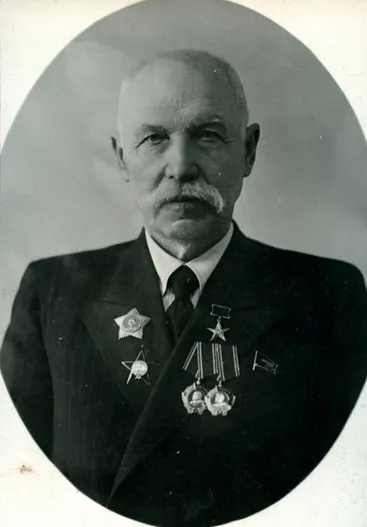
Fedor Vasilievich Tokarev, born in 1871 in the Cossack stanitsa of Yegorlykskaya near Rostov, trained as a gunsmith from a young age and served as a master armorer attached to a Cossack cavalry regiment before he ever designed a weapon of his own.5 Despite having been a commissioned officer in the Imperial Russian Army, a background that could have been politically dangerous after 1917, Tokarev survived the Soviet purges and rose to senior engineer at the Izhevsk Arms Plant in 1919, then moved to the Tula Arsenal in 1920, where he spent the bulk of his career.5 Beyond the SVT line, he designed the Maxim-Tokarev light machine gun and the TT-30/TT-33 pistol, was named a Hero of Socialist Labor, and sat as a deputy of the Supreme Soviet from 1937 to 1950.5
The year 1941 was catastrophic for the SVT program generally. The German invasion cost the Red Army hundreds of thousands of SVT-40s, and Izhevsk was ordered in 1942 to stop SVT production and revert to the simpler, cheaper bolt-action Mosin-Nagant, with SVT-family output collapsing from over a million rifles in 1941 to only 264,000 in 1942.1,6 The AVT-40 order of 20 May 1942 sits in the middle of that retreat from the self-loading rifle concept. Rather than retool factories to build entirely new light machine guns or submachine guns, converting a rifle already in mass production to select fire looked like a fast, cheap way to inject more automatic firepower into a Red Army rebuilding after catastrophic 1941 losses.1,8 First production batches reached the front in July 1942.1
Wartime conscripts with only rudimentary training also struggled to maintain the SVT action's added mechanical complexity compared with the dead-simple Mosin-Nagant bolt gun, a manufacturing and training backdrop that fed into the wider retreat from the self-loading rifle concept even before the AVT-40's own automatic-fire failures became clear.6
Stalingrad and the Eastern Front, 1942 to 1943
Both the SVT-40 and the AVT-40 saw combat at the Battle of Stalingrad and across the wider Eastern Front, arriving in numbers just as that campaign intensified through late 1942.1 Their higher rate of fire relative to the standard bolt-action Mosin-Nagant presumably offered some tactical edge in the extremely dense urban close-quarters fighting the battle became known for, though no detailed unit-level combat-effectiveness report from the period appears to survive.
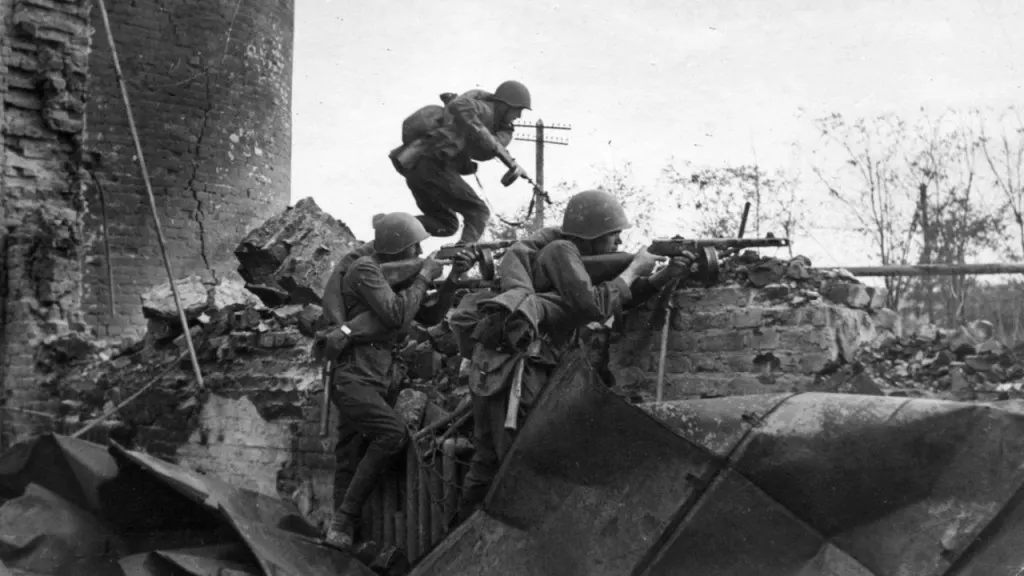
The Red Army's own most celebrated snipers of the campaign chose otherwise. Vasily Zaytsev, credited with 225 confirmed kills at Stalingrad, and Ivan Sidorenko, credited with roughly 500, both used the bolt-action Mosin-Nagant rather than the semi-automatic or automatic Tokarev rifles, because Soviet sniper doctrine ultimately favored the Mosin's superior inherent mechanical accuracy over the SVT-40's or AVT-40's higher rate of fire.10 It is a useful contrast for understanding the whole platform, the semi-automatic and automatic Tokarev rifles were valued in Soviet doctrine for volume of fire, not precision, and lost that argument decisively among the army's own best marksmen.
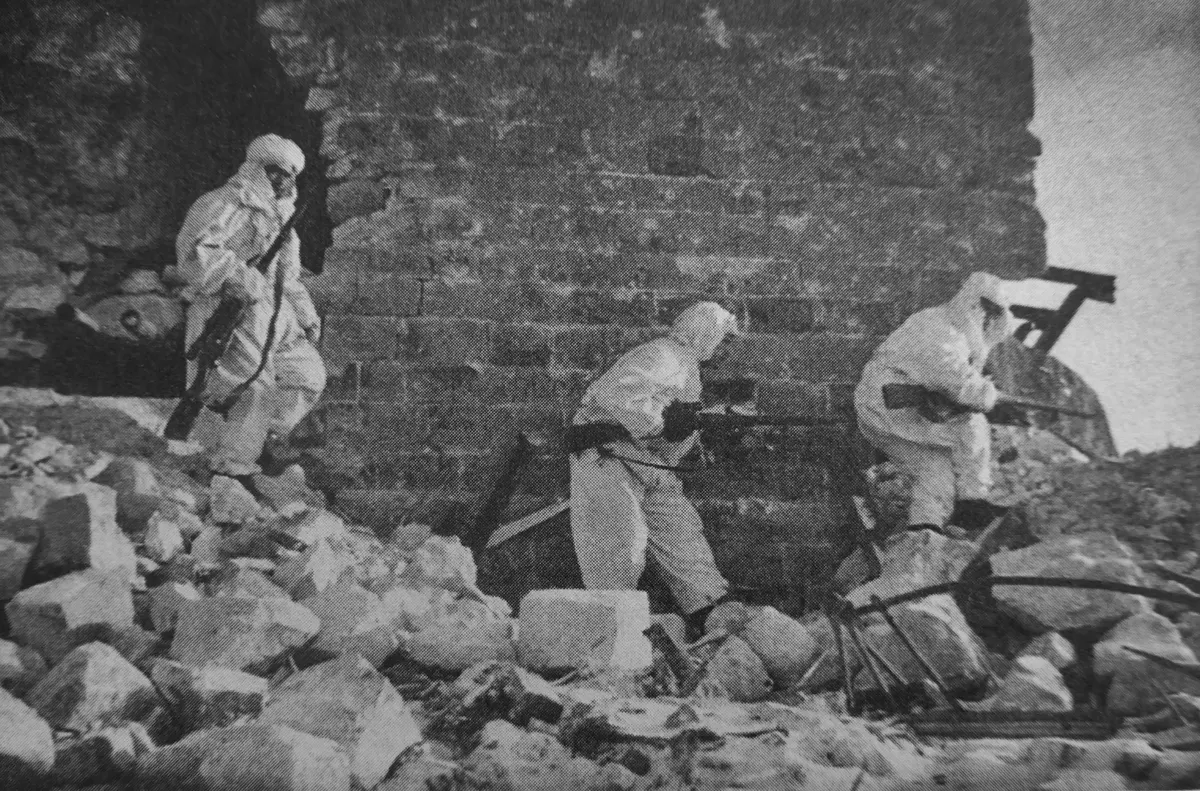
One notable exception survives. Soviet sniper Lyudmila Pavlichenko, credited with 309 confirmed kills on the Eastern Front and among the most successful female snipers in history, is recorded using a scoped SVT-40 sniper rifle at various points in her service, showing the platform did see credible sniper use even as the minority choice against the Mosin-Nagant.10
AVT-40 production ended in the summer of 1943, and the rifle's role in Soviet doctrine declined from there. Automatic fire had already been banned from use, and the doctrinal search for automatic firepower shifted first to mass fielding of the cheap, simple PPSh-41 submachine gun and, after the war, to the AK-47 chambered in an intermediate cartridge purpose-built to be controllable in full automatic fire.1,8
Capture and Reissue by Finland in the Continuation War
Finland had already captured Soviet SVT-38 rifles in large numbers during the 1939 to 1940 Winter War, and captured a further wave of SVT-38, SVT-40, and specifically AVT-40 rifles during the 1941 to 1944 Continuation War, the second and larger conflict that overlapped the AVT-40's own production window.1,11 Roughly 17,000 SVT-family rifles were taken in the early Continuation War period alone, and captured examples were marked with the Finnish army's SA property stamp, the standard identifier for Finnish war-booty small arms.11
Finnish frontline troops did put the captured rifles into active service, but found the design's durability too weak for sustained use under Finnish conditions, and most examples eventually broke down and were withdrawn to reserve stores rather than repaired. By the end of the Continuation War only around 6,000 or so remained in active Finnish frontline service.11 Finland's own field experience independently confirmed the same failure modes the Soviets had documented in their own testing, and automatic fire on captured AVT-40s added further reliability problems on top of the SVT platform's existing ones.11
In the late 1950s, Finland sold off much of its surplus SVT stock through the American importer Interarms, and these SA-marked, no-import-stamp examples remain a specifically identifiable and collectible category today.11
German Capture, the Selbstladegewehr 259(r), and a Design Fingerprint on the Gewehr 43
Germany, chronically short of its own self-loading infantry rifles for most of the war, captured several hundred thousand SVT-38 and SVT-40 rifles from the Eastern Front, formally redesignating them Selbstladegewehr 258(r) and 259(r) in Wehrmacht ordnance nomenclature, with AVT-40s swept into the same intake process rather than treated as a separate program.1 By 1942 many thousands had been issued, primarily to second-line, security, and reserve units rather than first-echelon frontline infantry, to relieve Germany's own shortage of self-loading rifles.1
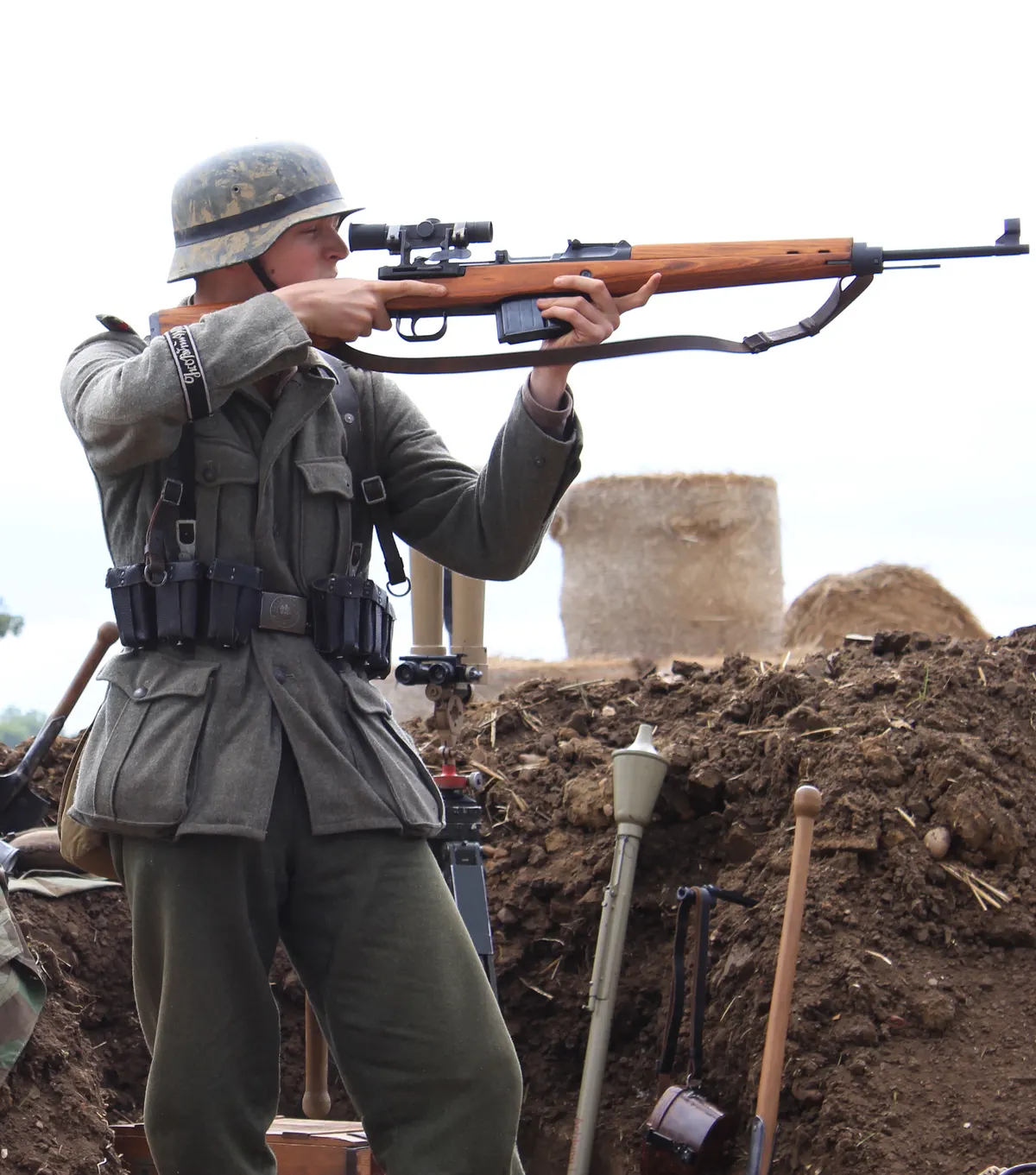
The technically significant downstream effect came from close German study of the SVT's gas-operated short-stroke piston action, which directly influenced the development of Germany's own Gewehr 43 self-loading rifle, a real design fingerprint the Tokarev line left on an enemy nation's wartime rifle.1
The dependency ran in only one direction logistically. Since 7.62x54mmR was not a cartridge German industry produced, using captured rifles at scale meant relying on captured Soviet ammunition stocks, a supply constraint that limited how far the Wehrmacht could push the type beyond rear-area and reserve use.
The core distinction within the AVT-40 line is magazine capacity rather than mechanical variation. The standard configuration used a ten-round box magazine, a small batch of 15-round magazines appeared in 1942 before being quickly superseded, and 20-round and 25-round magazines are referenced in some wartime sources as later production, though the ten-round magazine remains the best-documented default.12,7
Because the only real production-line difference between an AVT-40 and a standard SVT-40 is the trigger-group and selector-switch modification, collectors today sometimes describe certain SVT-40s as AVT-configured if they retain the selector-cut stock and modified fire-control parts, even where full-automatic function was deactivated or never actually fired.13 Buyers in that market need to distinguish a genuinely transferable, live full-automatic AVT-40 from a semi-automatic rifle simply built on AVT-pattern furniture and parts, since the two occupy entirely different legal and price categories.13


The Soviet Union was the AVT-40's sole original operator, fielding it through the Red Army from July 1942 until production ended in the summer of 1943, with automatic fire banned from service use well before the rifle itself fell out of front-line issue.1 Finland operated captured examples during the Continuation War, marking them with its SA property stamp and keeping several thousand in active frontline service into the war's later stages before durability problems pushed most into reserve storage.11 Germany issued captured examples under the Selbstladegewehr 259(r) designation, primarily to second-line, security, and reserve Wehrmacht units rather than first-echelon infantry.1
The declassified Soviet test report that doomed the AVT-40's automatic-fire role also delivered a direct verdict against a specific rival, judging burst fire from the AVT-40 less accurate than aimed fire from the PPSh-41 submachine gun it was meant to help replace in the automatic-firepower role.4 That verdict explains why the PPSh-41, not the AVT-40, became the Red Army's actual answer to the automatic-firepower shortage. The PPSh-41 was a stamped-steel, drum-fed submachine gun built for cheap mass production and short-range volume of fire, chambered in the far milder 7.62x25mm pistol cartridge that made sustained automatic fire genuinely controllable from the shoulder, exactly what the AVT-40's full-power 7.62x54mmR round could not deliver.3,8
| Spec | AVT-40 | PPSh-41 |
|---|---|---|
| Cartridge | 7.62x54mmR | 7.62x25mm Tokarev |
| Fire modes | Select-fire | Fully automatic |
| Magazine | 10-round detachable | 35-round box or 71-round drum |
| Cyclic rate | ~750 rpm | ~900 rpm |
| Effective range | ~500 m | ~150 to 200 m |
The AVT-40's underlying problem, a full-power rifle cartridge in a select-fire shoulder weapon, was not unique to the Soviet Union or to 1942. The American M14 ran into the same physics roughly two decades later in Vietnam, where its own full-automatic setting proved similarly uncontrollable and was frequently disabled or ignored in the field. Both cases point to the same underlying lesson that the intermediate-cartridge AK-47 and Germany's earlier StG 44 eventually solved properly, that controllable automatic fire from an individual rifle requires a reduced-power cartridge, not a full-power one paired with a clever trigger group.


What is the difference between the AVT-40 and the SVT-40? The AVT-40 is a standard SVT-40 fitted with a modified trigger and safety group that adds a fully automatic firing position. The receiver, barrel, gas system, and magazine are otherwise identical between the two.1
How accurate was the AVT-40 in automatic fire? Poorly. A declassified Soviet test found only 25 to 30 percent of rounds fired in a burst struck a 3 by 3 meter target at 300 meters, and testers judged the rifle less accurate in full-auto fire than the PPSh-41 submachine gun.4
How many AVT-40 rifles were made? Approximately 500,000, produced between May 1942 and the summer of 1943, making it the most widely produced select-fire rifle of any nation in the Second World War despite its troubled combat reputation.7
Is the AVT-40 still in service anywhere? No. Automatic fire was banned from Soviet service after wartime testing, and the type was fully out of production and front-line use by the end of 1943, with only Finnish and German war-booty examples seeing any later use.1,11
What replaced the AVT-40? The Red Army's search for squad automatic firepower shifted to the mass-produced PPSh-41 submachine gun during the war, and after 1945 to the intermediate-cartridge AK-47, which solved the controllable-automatic-fire problem the AVT-40 never did.1,8
How much does an AVT-40 cost today? Genuine transferable, fully-automatic-registered examples reportedly range from roughly 10,000 to 20,000 dollars in the current United States collector market, a far higher figure than a common semi-automatic-only SVT-40.13
- "SVT-40", Wikipedia — en.wikipedia.org ↩
- "Tokarev SVT-38/SVT-40", Modern Firearms — modernfirearms.net ↩
- "The SVT-40, Soviet Russia's Battle Rifle", Gun Digest — gundigest.com ↩
- "AVT-40 Testing Report", Forgotten Weapons — forgottenweapons.com ↩
- "Fedor Tokarev", Wikipedia — en.wikipedia.org ↩
- "SVT 40, the Soviet Semi-Automatic Rifle", Rock Island Auction — rockislandauction.com ↩
- "AVT-40", Military Conflict Vietnam Wiki — wiki.militaryconflictvietnam.com ↩
- "The Full Auto SVT-40, The Soviet M14 of 1942", The Firearm Blog — thefirearmblog.com ↩
- "SVT-40 Tokarev Semi-Auto Rifle", m9130.info — m9130.info ↩
- "Russian Sniper Rifle, Mosin, SVT-40, and Eastern Front Mayhem", Rock Island Auction — rockislandauction.com ↩
- "This Old Gun, Finnish-Capture SVT-40", American Rifleman — americanrifleman.org ↩
- "AVT-40", FirearmCentral Wiki — firearmcentral.fandom.com ↩
- "AVT-40 Machine Gun Value in 2026", webuyguns.com — webuyguns.com ↩