

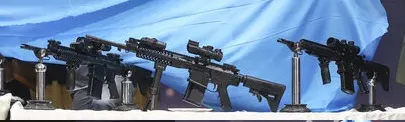

In February 2025, Brigadier General Kioumars Heydari, commander of the Islamic Republic of Iran Army's Ground Forces, announced that the service had officially abandoned the G3 rifle after 53 years of service.1 Its replacement is the Masaf, a family of indigenously designed rifles built by Iran's Defense Industries Organization (DIO), the state conglomerate that sits under the Ministry of Defense and Armed Forces Logistics.2 The name Masaf (مصاف) is a Persian word meaning battle or battlefield confrontation, a deliberately martial choice for a weapon Iranian officials present as proof of self-sufficiency under decades of arms sanctions.3
- AR-10/AR-15 modularity and accessory rails
- retains 7.62x51mm NATO logistics compatibility
- adjustable gas regulator and hammer-forged barrel
- signals domestic manufacturing capability under sanctions
- combat-untested against a battle-proven predecessor
- numeric specifications remain unconfirmed by an independent source
- reportedly requires more maintenance than fixed-gas Kalashnikov-pattern rifles
- unclear fielded numbers despite a formal 2025 rollout announcement
The family covers two calibers. Masaf-1, unveiled in 2016, is chambered in 5.56x45mm NATO and was pitched as a joint successor to both the G3 and Iran's AK-pattern rifles.4 Masaf-2, unveiled in March 2021 by then-Defense Minister Amir Hatami, is chambered in 7.62x51mm NATO, the same full-power cartridge the outgoing G3 fires, and it is the Masaf-2 that the Ground Forces are now fielding as a direct G3 replacement.5 Both variants share an AR-10/AR-15-pattern layout, with an aluminum upper and lower receiver, a free-floating handguard, and Picatinny rail real estate the G3 never had, marking a sharp mechanical break from the roller-delayed G3 it succeeds.3 The weapon fits the wider battle rifles category of full-power service rifles, alongside its cousins the G3 and the Turkish MPT-76.
No individual designer is credited in available sourcing. DIO's ammunition and small-arms subsidiary group, the Ammunition and Metallurgy Industries Group, is generally associated with Iranian rifle production, though no source directly ties a specific subsidiary to Masaf manufacturing.2 Persian-language design documentation cites a roughly eight-year development window, from the Iranian calendar years 1393 to 1401 (approximately 2014 to 2022 on the Gregorian calendar).4
The Masaf-2 uses a gas-operated, short-stroke piston system with a manual, adjustable gas regulator, a layout Persian-language sources describe as indirect gas pressure to distinguish it from direct-impingement designs.7 A rotating bolt locks into a barrel extension, the same basic lockup principle used by the AR-10 and AR-15 rifle families, a mechanism the G3 it replaces never used.3 The rifle is select-fire, with a dual-mode selector for safe, semi-automatic, and automatic or burst fire, and it feeds from a detachable magazine.3
- Ağırlık (Boş)3,47 kg
- Ağırlık (Yüklü)3,9 kg
Construction is aluminum and polymer throughout rather than the wood and steel of the rifle it replaces. The upper and lower receivers are aluminum alloy joined by two cross-pins in AR-pattern fashion, the handguard and magazines are polymer, and the stock is a six-position telescopic type, all consistent with a modern AR-10-derivative design rather than the older G3 pattern.3 Rear iron sights follow the G3's rotary-drum aperture layout, but optic rails across the receiver and handguard let operators mount red-dot or magnified optics, and display units at unveiling events have been photographed with EOTech-type sights and ACOG-pattern optics.3 At least one demonstration unit was also fitted with what looked like an AN/PEQ-15-style laser illuminator, though observers on defense forums openly questioned whether the unit was genuine hardware or a low-cost replica, a caution worth noting given Iran's history of showcasing unverified equipment at unveiling events.8,10
- Fişek7_62x51mm_nato
- Çap7,62 mm
- Çap Sınıfıorta güçlü
Manufacturer literature describes the platform as modular, expandable without special tools into carbine, personal-defense, light-machine-gun, and marksman configurations, and compatible with underbarrel grenade launchers and bipods.9 These are catalog claims from DIO's Mindex sales arm rather than independently verified capabilities, and no source documents a fielded Masaf variant beyond the base 5.56mm and 7.62mm rifles.
- Mekanizma TipiGazlı
- Atış Modlarıseçmeli ateş
- Seçmeli AtışEvet
- Besleme SistemiÇıkarılabilir Şarjör
- Şarjör Kapasitesi20
- Teorik Atış Hızı600
- Pratik Atış Hızı100
- Tetik Tipitek kademeli
- Emniyet Tipiseçici kol
The clearest numeric conflict concerns barrel length and magazine capacity. English-language sources focused specifically on the 7.62mm variant, including Modern Firearms and Militarnyi, cite a 450mm barrel and a 20-round polymer magazine similar to PMAG standards.3,11 A 30-round figure and shorter barrel lengths down to 368mm appear mainly in sources that mix in Masaf-1 catalog data, where 20, 30, and 40-round magazines are offered for the 5.56mm gun.9,4 Weight sits closer to 4kg unloaded per the same 7.62-specific sources, versus roughly 3kg figures that again look like they describe the lighter 5.56mm rifle.3,11 Cited rate of fire ranges from 600 to 900 rounds per minute depending on source.3,4
- Namlu Çıkış Hızı715 m/sn
- Etkili Menzil (nokta)400 m
- Etkili Menzil (alan)600 m
- Azami Menzil800 m
- Nişan Menzili800 m
The barrel itself is hammer-forged, described in Iranian coverage as more durable than conventionally rifled barrels, and the rifle reportedly underwent a public durability test series before adoption, including firing after full water submersion, a fire-extinguisher dousing, and mud submersion with accessories removed.4,6 The stunt closely mirrors how Western manufacturers such as Heckler & Koch have historically demonstrated the HK416, a rifle the Masaf-2's 5.56mm sibling is most often compared to in silhouette.3
- Namlu Uzunluğu450 mm
- Yiv Adımı1:240 mm
- Yiv Sayısı4
- Nişangah Tipiayarlanabilir mekanik nişangah
- Nişangah Mesafesi378 mm
- Açık NişangahEvet
- Gövde Malzemesi (Receiver)Çelik
- Kabza/Dipçik Malzemesiahşap/lamine
Iran first unveiled the 5.56mm Masaf-1 in autumn 2016 at the IPAS exhibition, presenting it as a candidate to eventually replace both the G3 and Iran's AK-family rifles across the Army.4 The 7.62mm Masaf-2 followed in March 2021, unveiled by Defense Minister Amir Hatami alongside other new small arms, aircraft, and helicopters at the 13th Hazrat Ali Akbar Soldier Young Festival in Tehran, explicitly framed by Iranian officials as evidence of domestic manufacturing capacity despite international sanctions.5,6 Officials described the rifle as intended for longer-range engagements in both day and night operations, to be issued alongside thermal sights and infrared laser units.5,6

For several years after the 2021 unveiling, the Masaf-2 remained in a trials and small-batch phase. It was reportedly spotted in limited use with Iranian special-forces units, while outside observers on defense forums voiced skepticism about whether Iran's frequent weapons unveilings would ever translate into meaningful fielded numbers, a pattern seen with other Iranian small-arms programs.10 Iranian officials announced that the Masaf-2 successfully completed its military trials in 2024.3
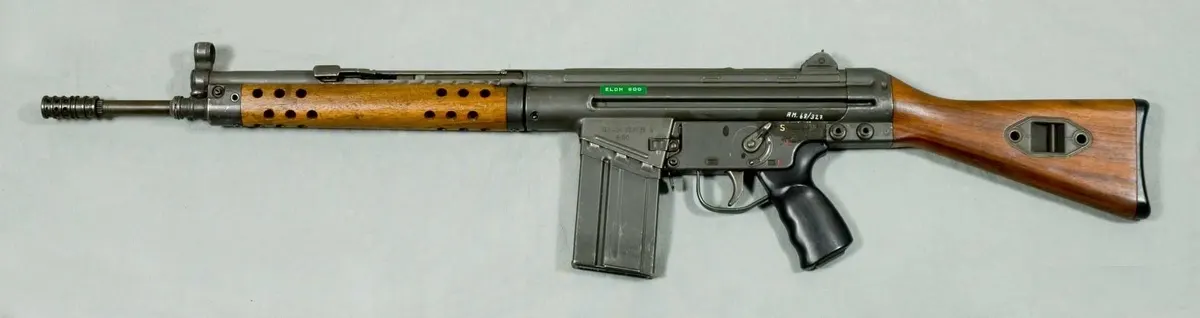
Iran began license-producing the G3 domestically between 1971 and 1974 under a West German license from Heckler & Koch, and it remained the Army's standard rifle for more than five decades.6,11 The formal turning point came during a February 2025 briefing tied to the Zulfiqar 1403 exercises, when General Heydari confirmed the Ground Forces were retiring the G3 in favor of the Masaf, framing the switch as an order from Admiral Sayyari.1 Iranian domestic reporting instead dates the operational rollout to the Iranian month of Bahman 1403, corresponding to late January and February 2025.4 Sources disagree on the exact figure, citing both roughly 50 and 53 years of G3 service, but agree the changeover marks the end of the longest-serving rifle in Iranian Army history.12,11
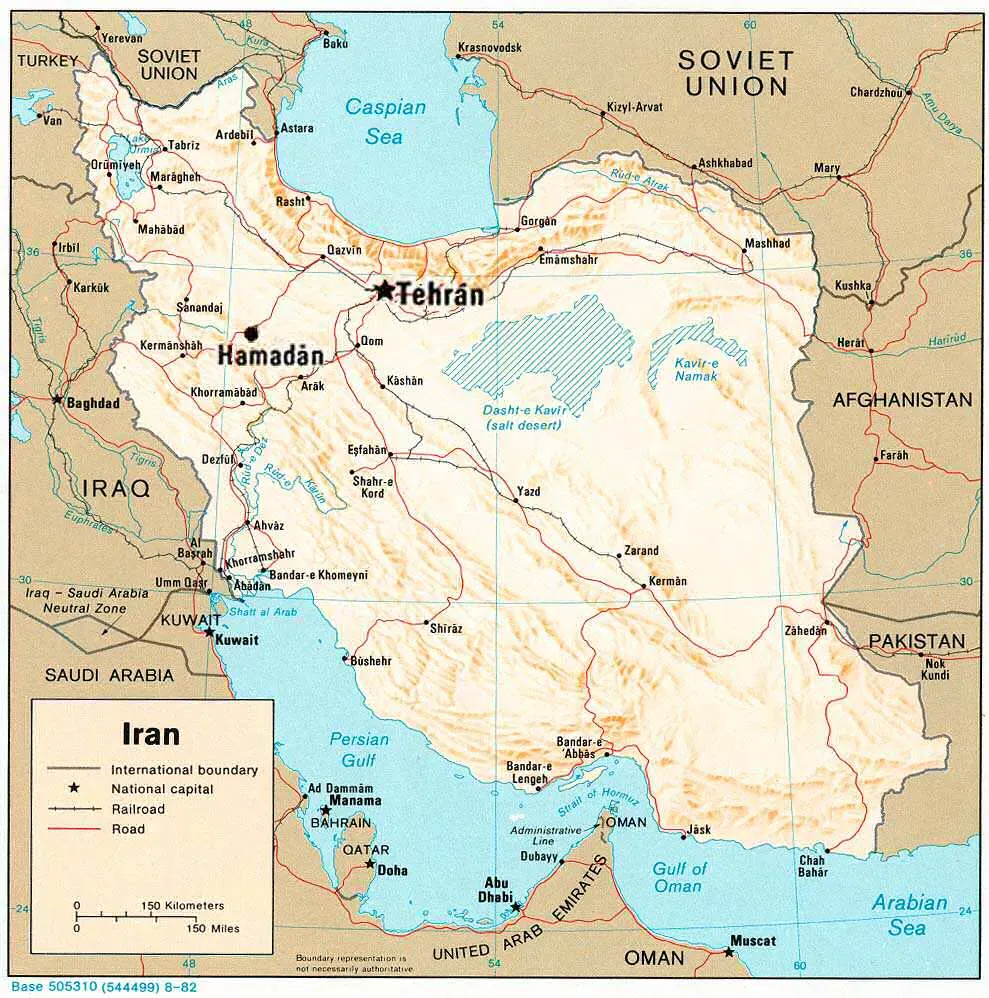
As of the 2025 announcements, distribution of the Masaf-2 to regular Army (Artesh) ground units was described as underway, with deliveries reported in progress rather than complete.1 Notably, the Islamic Revolutionary Guard Corps has reportedly continued favoring Kalashnikov-pattern rifles over the Masaf, a preference one source attributes to the IRGC's already-built AK logistics and armorer infrastructure, though this remains a lower-confidence secondary claim rather than an on-the-record statement.10
The Masaf-2 itself has no confirmed combat record. Its operational history to date runs from unveiling, through the public durability demonstrations and multi-year trials period, to the 2025 rollout described above, a contrast with the G3 it replaces, whose Iranian-built examples remained in frontline service through decades that included the 1980 to 1988 Iran-Iraq War.

The Masaf family splits into two production calibers built on the same general architecture. Masaf-1 fires 5.56x45mm NATO, which puts it closer to the assault rifles category than the full-power Masaf-2, and is styled closer to the HK416 and M4 carbine family in outward appearance, while Masaf-2 fires the full-power 7.62x51mm NATO round used by the outgoing G3.4 DIO's Mindex sales catalog also lists the 5.56mm variant with a choice of 20, 30, or 40-round magazines, a modular handguard, and compatibility with underbarrel grenade launchers, though no independent source confirms these configurations exist as fielded, rather than catalog, options.9
Manufacturer marketing also claims the platform can be adapted into a light machine gun or a designated-marksman configuration without special tooling, but no source documents an actual fielded example of either.9 Iran already fields a dedicated sniper rifle separately from the Masaf line, the Nakhjir-3, a domestic copy of the Chinese Type 79 (itself derived from the Soviet SVD Dragunov) chambered in 7.62x54mmR, and no source directly benchmarks the Masaf-2 against it.13 A larger 12.7x99mm anti-materiel rifle, the AM-50, is also a separate DIO product not comparable in role to either Masaf variant.14


The confirmed operator is the Islamic Republic of Iran Army (Artesh), specifically its Ground Forces, which announced the formal replacement of the G3 with the Masaf-2 through General Heydari's February 2025 statement.1
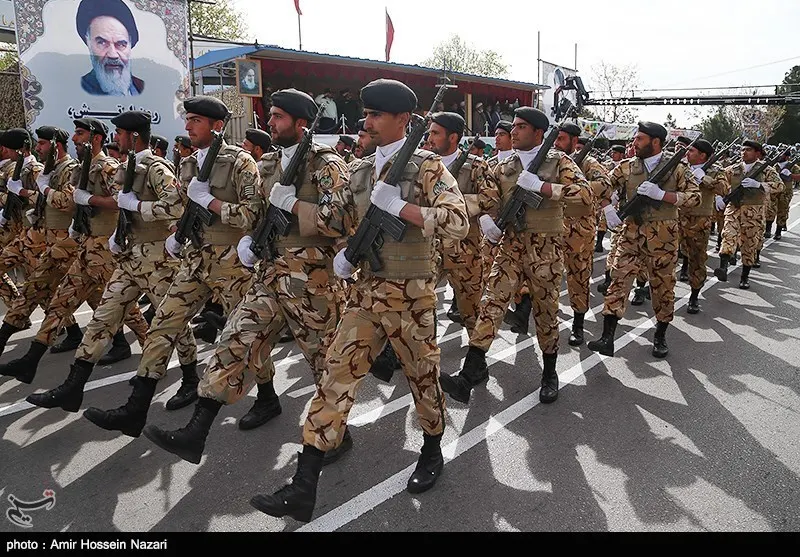
No source documents Masaf use by the Islamic Revolutionary Guard Corps as a matter of formal issue, and available reporting suggests the IRGC has instead continued to lean on its existing AK-pattern inventory.10 No source, similarly, documents Basij militia issue of the rifle either way.
No credible source documents export of the Masaf, or its transfer to non-state armed groups linked to Iran, and broader reporting on Iran's regional proxy-supply networks for missiles, drones, and anti-tank weapons does not mention the rifle at all. On current evidence, the Masaf-2 is a purely domestic-issue Iranian service rifle rather than an export or proxy-network item.
Iran's decision on the Masaf-2 was less about the rifle's mechanism than about the cartridge it kept. Where most 20th-century service rifle programs, including the G3 itself in other user nations, eventually moved toward intermediate 5.56mm-class cartridges, Iran deliberately retained the G3's full-power 7.62x51mm NATO chambering for its direct replacement.12 Officials and Iranian analysts cite several reasons. Mountainous terrain along Iran's western and northern borders favors longer-range fire, doctrinal lessons from prolonged positional and trench warfare during the 1980 to 1988 Iran-Iraq War reinforced the same preference, and five decades of accumulated 7.62mm ammunition stockpiles made the choice cheaper. A broader regional pattern reinforces it too, with armies such as Turkey (MPT-76) and India (a partial reversion to 7.62mm rifles) concluding that 5.56mm ammunition underperforms against cover and barriers.12
Mechanically, the two rifles could hardly be more different. The G3 is a roller-delayed blowback design, sensitive to variance in ammunition, known for a stamped-steel receiver and, in many Iranian-production examples, wood furniture. The Masaf-2 instead uses a gas-piston, rotating-bolt AR-10-pattern action with an adjustable gas regulator, aluminum receivers, and polymer furniture, trading the G3's mechanical simplicity for modern modularity and accessory rail space the older rifle never had.3,7
| Heckler & Koch G3 | Masaf-2 | |
|---|---|---|
| Cartridge | 7.62x51mm NATO | 7.62x51mm NATO |
| Action | Roller-delayed blowback | Gas-piston, rotating bolt |
| Receiver | Stamped steel | Aluminum alloy |
| Furniture | Wood/polymer (by variant) | Polymer |
| Iranian service start | c. 1971-1974 | 2025 (rollout) |
Persian-language comparisons against the Kalashnikov family, which the IRGC continues to favor, frame the Masaf as more accurate and more accessory-friendly thanks to its adjustable gas system and rail space, set against the AK's fixed, non-adjustable gas system.7 The same coverage concedes the Masaf demands more maintenance and, unlike the battle-proven AK, remains combat-untested.7 Against the Turkish MPT-76, the closer structural comparison, the two rifles reflect a shared regional pattern, with NATO-aligned and non-aligned states alike converging on AR-10-derived, 7.62x51mm modular rifles for general-issue service with a built-in marksman capability, rather than following the global shift to intermediate calibers.10


What caliber does the Masaf 7.62mm rifle use? The Masaf-2 fires 7.62x51mm NATO, the same full-power cartridge used by the G3 it replaces.3,12 It should not be confused with the 7.62x39mm intermediate round used by AK-pattern rifles.
Is the Masaf replacing Iran's G3 rifles? Yes. In February 2025, the commander of Iran's Army Ground Forces announced the G3 had been formally retired after roughly five decades of service, with the Masaf-2 as its replacement, though deliveries were still described as in progress at the time.1
How does the Masaf compare to the AK-47 and Kalashnikov-pattern rifles? Iranian coverage describes it as more accurate and modular than fixed-gas Kalashnikov rifles, at the cost of higher maintenance demands and no combat record, unlike the AK.7
Is the Masaf-2 in official service yet? It is being issued to Iranian Army Ground Forces units as of 2025, following trials Iranian officials say concluded successfully in 2024, though independent confirmation of fielded numbers is limited.3,1
What is the Masaf-2's unit cost? No source publishes a unit price for the Masaf-2. As a domestically produced rifle for internal Iranian issue rather than an export product, no public contract or catalog pricing has surfaced.
- "Iranian Army Replaces G3 Rifle With Fully Indigenous Masaf Assault Rifle", Caliber.Az — caliber.az ↩
- "Defense Industries Organization (DIO)", Iran Watch — iranwatch.org ↩
- "Masaf-2 assault rifle (Iran)", Modern Firearms — modernfirearms.net ↩
- "مصاف" (Masaf), Persian Wikipedia — fa.wikipedia.org ↩
- "Iran Unveils New 7.62x51mm MASAF Series Rifle", Silah Report — silahreport.com ↩
- "Iran Minister of Defense Unveils New 7.62x51 Masaf Assault Rifle", The Firearm Blog — thefirearmblog.com ↩
- "مصاف چه فرقی با کلاشنیکف و ژ-۳ دارد" (How the Masaf differs from the Kalashnikov and G3), Tabnak — tabnak.ir ↩
- "Das neue iranische Sturmgewehr", SPARTANAT — spartanat.com ↩
- "Individual Assault Rifle (MASAF)", Mindex — mindex-center.ir ↩
- "Iran Unveils New 7.62x51mm Masaf Series Rifle" (forum thread), DefenceHub — defencehub.live ↩
- "Iran to Rearm With Masaf-2 Rifles", Militarnyi — militarnyi.com ↩
- "Iran to Replace G3 Assault Rifle With Domestic Masaf-2 After 53 Years, West Seeks Explanation for Chosen Caliber", Militarnews — militarnews.com ↩
- "SVD (rifle)", Wikipedia — en.wikipedia.org ↩
- "Iranian AM-50 12.7x99mm Anti-Materiel Rifle", Conflict Armament Research — conflictarm.com ↩