

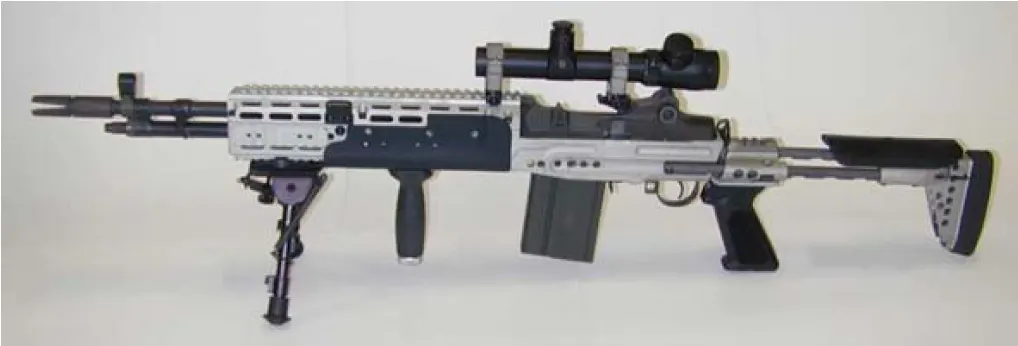

The Mk 14 Enhanced Battle Rifle is a 7.62x51mm NATO designated marksman rifle built by wrapping the proven M14 rifle's gas-operated action inside a modular aluminum chassis. United States Navy SEALs requested it in 2000, looking for a shorter, optics-ready rifle that kept the M14's stopping power while shedding its wood stock and lack of accessory rails.1 Development ran through the Naval Surface Warfare Center Crane Division in Crane, Indiana, which converted surplus M14 receivers and barreled actions rather than design an entirely new rifle, a deliberate cost and logistics decision that reused an existing US parts stockpile instead of starting a fresh procurement line.2
- full-power 7.62x51mm NATO round in an optics-ready package
- reuses existing M14 receiver stockpile, a real cost and logistics advantage
- modular Picatinny rail chassis for optics, lasers, bipods
- collapsible stock and pistol grip fix the original M14's ergonomics
- heavy, roughly 5.1kg empty and close to 6.8kg loaded with a 20-round magazine
- front-heavy handling criticized against lighter AR-pattern DMRs
- the earliest 2001 prototype suffered from excessive muzzle blast and noise
- judged too heavy over time and dropped from Army squad issue by 2018
The Navy fielded the finished rifle, designated Mk 14 Mod 0, from 2004.1 That configuration, an 18 inch medium heavy barrel, a manganese phosphate corrosion coating, and a Sage International telescoping chassis stock replacing the M14's fixed wood or fiberglass furniture with a rail equipped aluminum shell, is the baseline configuration described below.3
A separate Army version, the M14 EBR-RI, used the same Sage chassis concept but kept the M14's original 22 inch barrel, a genuine hardware difference from the Navy's shorter Mod 0 explained fully in Variants below. Readers searching for Mk 14 EBR specifications should note that the two are often confused online despite different barrel lengths and origins.
The rifle answered a real capability gap inside Naval Special Warfare. By 2000, the M14 rifles still in SEAL inventory (see the parallel M14 Sniper Security Rifle covered in History) were accurate and powerful but heavy, awkward in vehicles, and impossible to accessorize with optics or lights. The chassis conversion fixed the ergonomics problem without touching the rifle's core mechanism, at the cost of adding still more weight to an already heavy platform, a tradeoff that resurfaces throughout its service history.
The Sage International Chassis and Its Rail System
The single biggest change the Enhanced Battle Rifle program made was not to the M14's action at all. It was the replacement stock. Sage International in Oak Harbor, Washington built an aluminum chassis, informally called the EBR Chassis Stock System, that surrounds the barrel and receiver with four Picatinny rails, a Kydex handguard, a pistol grip, and a telescoping buttstock with adjustable length of pull.3 Engineers reportedly debated spending roughly 120,000 dollars on an injection mold for the rail sections against machining the stock from a solid billet of aluminum, chose the billet route, and unveiled the finished chassis at the 2003 SHOT Show.4
- İlk Üretim Yılı2001
- Hizmete Giriş Yılı2004
- TasarımcıMike Rock and Jim Ribordy (original 2001 prototype); Smith Enterprise, Inc. / Ron Smith (refined 2003 design adopted as production Mk 14 Mod 0), developed with Naval Surface Warfare Center Crane Division
- Ağırlık (Boş)5,1 kg
- Ağırlık (Yüklü)6,8 kg
- Halen HizmetteEvet
- Önemli KullanıcılarABD Deniz Kuvvetleri SEAL'leri, Delta Force, Yeşil Bereliler ODA takımları, ABD Kara Kuvvetleri, ABD Sahil Güvenlik, Avustralya SASR, Yunan Kara Kuvvetleri Özel Kuvvetleri, Irak Terörle Mücadele Servisi, Filipin Ulusal Polisi Özel Harekat Gücü
That rail space let operators mount day and night optics, infrared lasers, weapon lights, and a Harris bipod directly to the rifle for the first time, alongside an improved flash hider that replaced the older lugged suppressor mount and an M4 style paddle bolt release.1 None of this changed the rifle's fundamentals. The action underneath remains the M14's gas-operated, short-stroke piston system driving a rotating bolt, chambered for the same 7.62x51mm NATO round the rifle fired in the 1960s.5
- Fişek7.62x51mm NATO
- Çap7,62 mm
- Kovan Uzunluğu51 mm
- Çap Sınıfımuharebe tüfeği
- Kenar AteşlemeliHayır
- Kovansız MühimmatHayır
The 18 Inch Barrel and Why It Differs from the Full-Length M14
The Mk 14 Mod 0 and Mod 1 baseline covered here uses an 18 inch (457mm) medium heavy barrel, shorter than the classic M14's 22 inch (559mm) barrel, tuned to cycle reliably with the shorter length while controlling muzzle blast after the 2001 prototype's noise problems.3 The Army's separate M14 EBR-RI variant, discussed in Variants, instead kept the full 22 inch barrel, so barrel length is the cleanest way to tell the two rifle families apart at a glance.
- Mekanizma TipiGazlı
- Atış Modlarıseçmeli ateş
- Seçmeli AtışEvet
- Besleme SistemiÇıkarılabilir Şarjör
- Şarjör Kapasitesi20
- Teorik Atış Hızı700
Feeding is from a detachable box magazine, most commonly a 20-round magazine as the standard combat load, though 10-round magazines see use in some prone and bipod supported shooting.1 Cyclic rate runs around 700 to 725 rounds per minute on full automatic, and muzzle velocity out of the 18 inch barrel is approximately 853 meters per second (2,800 feet per second) with standard ball ammunition.5 The rifle retains the M14's select-fire capability, though full-automatic fire is rarely used in the designated marksman role it actually fills.
- Namlu Çıkış Hızı853 m/sn
- Etkili Menzil (nokta)700 m
- Namlu Uzunluğu457 mm
- Nişangah TipiDeğiştirilmiş M14 mekanik nişangahı, normalde büyütmeli dürbünle kullanılır
- Optik RayıEvet
- Açık NişangahEvet
- Gövde Malzemesi (Receiver)Forged steel
- Katlanır / Toplanır DipçikEvet
- Bullpup DüzeniHayır
- Modülerlikşasi tabanlı
- Entegre BipodEvet
- Bombaatar KabiliyetliHayır
- Gaz PistonluEvet
- Üretim Başlangıcı2004
- Varyantlar4
From Mike Rock's Prototype to Smith Enterprise's Fix
The story begins with a 2000 request from Navy SEALs for a shorter, modernized M14 that could work in close quarters and vehicles as well as at range.1 The Naval Surface Warfare Center Crane Division took the lead as the government program office, running what became known as the Enhanced Battle Rifle program through 2000 and 2001.2
That first prototype proved excessively loud, a side effect of its shortened barrel and gas tuning, and did not go into production as built.2 In 2003, Ron Smith and Smith Enterprise Inc in Tempe, Arizona, produced an alternative using an 18 inch medium heavy barrel that proved far more reliable and became the direct basis for the fielded Mk 14 Mod 0.3 Springfield Armory Inc, the modern Illinois based manufacturer, supplied production tooling and machinery to the Naval Surface Warfare Center Crane Division to build the Smith Enterprise derived design at scale.4 Some of the receivers recycled into these rifles had originally been manufactured in the 1960s by contractors including the historic government-run Springfield Armory, Harrington and Richardson, TRW, and Winchester as part of the original M14 production run, a detail that explains why decades-old steel forgings ended up inside 21st century rifles.5
The Parallel Navy M14 Sniper Security Rifle

Before and alongside the Enhanced Battle Rifle program, Navy SEALs and the Naval Expeditionary Combat Command fielded a separate accurized 7.62mm semi-automatic rifle called the M14 Sniper Security Rifle, in service from roughly 1996 into the early 2010s.1 It is not an alternate name for the Mk 14, it is an earlier and distinct Navy designation, though the two programs shared the same underlying M14 action and the same institutional appetite for a modern 7.62mm marksman weapon.
Some retired M14 SSR barreled actions were later dropped directly into new Sage chassis stocks around 2011, becoming the rare Mk 14 Mod 2 EBR-EDMV variant described in Variants below, a direct physical link between the older Navy sniper rifle and the newer chassis-based design.1
Army Adoption and the Rock Island Arsenal Conversion
Naval Special Warfare kept the Mk 14 designation and Navy oversight, but the Army built its own version separately. Rock Island Arsenal in Illinois, working under the Army's TACOM organization, converted roughly 5,000 to 6,200 M14 rifles into the M14 EBR-RI configuration between 2008 and 2011, issuing two per infantry squad for use as a squad-level designated marksman rifle.1 Those rifles deployed heavily to Afghanistan during Operation Enduring Freedom, giving ordinary infantry squads organic 7.62mm reach that a 5.56mm M4 carbine could not match.7
Replaced by a Lighter Design
By 2016 to 2018 the Army had concluded that the M14 EBR's weight, alongside the separate M110 Semi-Automatic Sniper System's weight, no longer made sense against lighter alternatives. In March 2018 the Army announced it would field a version of the Heckler and Koch G28, designated the M110A1, as the new standard Squad Designated Marksman Rifle, replacing both the M110 SASS and the M14 EBR in that role.7
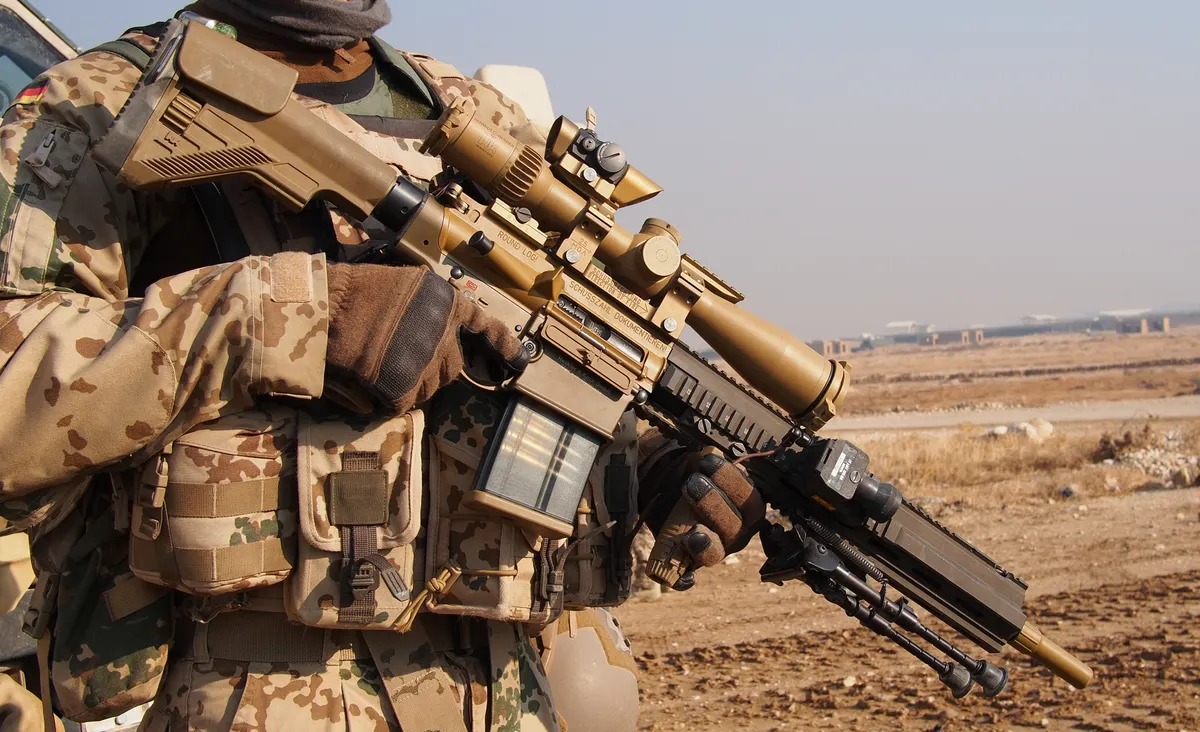
The new rifle targeted roughly 11 pounds (5kg) loaded, several pounds lighter than the fully accessorized M14 EBR, and could stay with a soldier permanently rather than being turned in to an armory between deployments the way the M14 EBR often was.7 That single weight comparison, close to 15 pounds loaded for the M14 EBR against roughly 11 pounds loaded for its replacement, is the cleanest explanation for why a rifle built on a proven action still lost its place in Army squads within a decade of adoption.
Naval Special Warfare and other special operations units retained Mk 14 variants in smaller numbers even after the Army moved on, valuing the 7.62mm chambering for specific roles where the M110A1's lighter build was not the deciding factor.
Designated Marksman Role in the War in Afghanistan
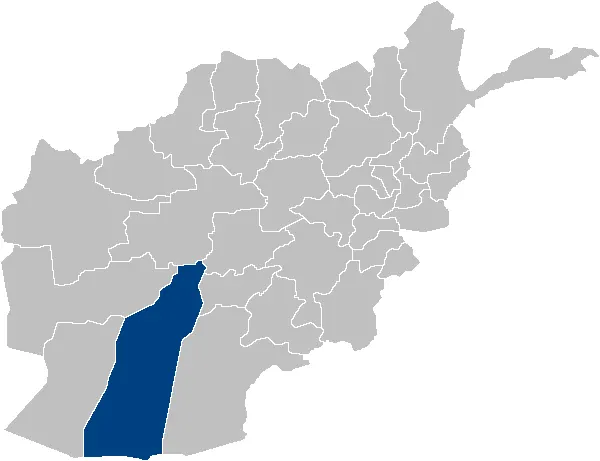
The War in Afghanistan is the Mk 14 family's primary combat theater. Army infantry squads carried M14 EBR-RI rifles as their organic 7.62mm designated marksman weapon from 2009 onward, giving line units reach beyond the M4 carbine's effective range without waiting on a dedicated sniper team.7

Navy SEALs, Army Delta Force operators, and Green Beret ODA teams carried Mk 14 variants through the same conflict and into the Iraq War, generally in a designated marksman or sniper support role rather than as a primary weapon.1 No single named engagement is reliably documented as the rifle's defining combat moment. The honest combat record is one of squads and teams issued the rifle for a specific role over two decades, without a single signature battle attached to it.
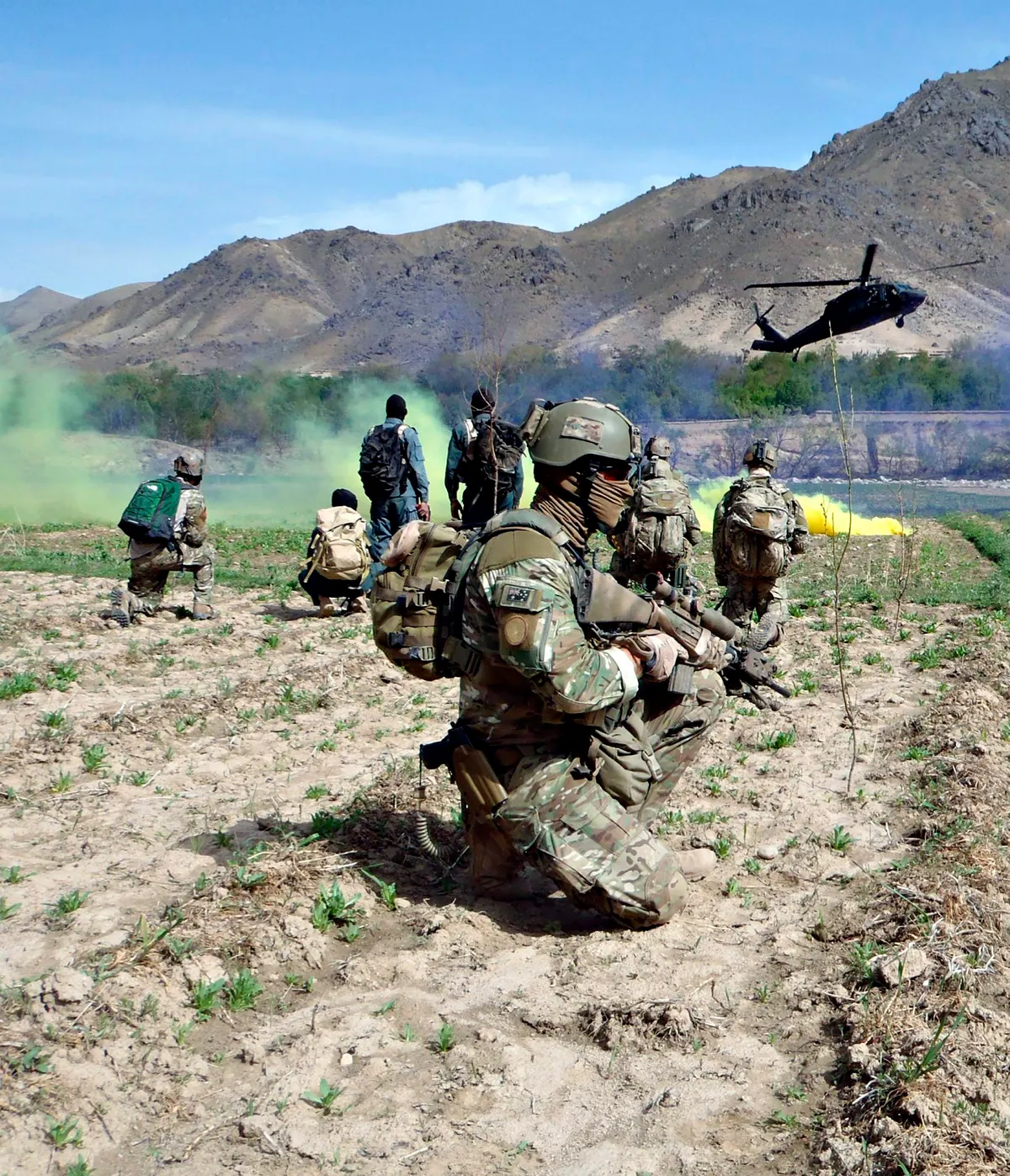
Outside US forces, Australia's Special Air Service Regiment carried Mk 14 rifles during operations against Taliban forces in Afghanistan, valuing the same 7.62mm reach that drove US adoption.1
Reporting also places captured or transferred rifles from the Mk 14 family in the hands of both Free Syrian Army fighters and later Islamic State fighters during the Syrian Civil War, part of a broader pattern of Western-supplied small arms circulating through that conflict after changing hands on the battlefield.1
The rifle's combat picture, in short, is a squad support weapon carried widely by capable units across two decades of counterinsurgency fighting, not a rifle tied to one battle or one unit's reputation.
Mk 14 Mod 0 and Mod 1
The Mk 14 Mod 0 is the baseline configuration described throughout, fielded from 2004 with the redesigned operating rod, corrosion-resistant finish, and 18 inch barrel described in Specs and Design. The Mk 14 Mod 1 followed in 2006, developed at the Naval Surface Warfare Center Crane Division specifically for close-quarters work, with a shorter handguard and tube extension plus a Magpul CTR stock with an adjustable cheek riser for better optic alignment.1
Mk 14 Mod 2 (EBR-EDMV) and the Army's M14 EBR-RI
A rare Mk 14 Mod 2, also called the EBR-EDMV, appeared in small numbers, somewhere between roughly 50 and 250 rifles, built from retired M14 Sniper Security Rifle barreled actions dropped into Sage chassis stocks with a 22 inch precision barrel and a Magpul PRS2 stock.1 Unlike the Mod 0 and Mod 1, the Mod 2 is locked to semi-automatic fire only and went to the Maritime Expeditionary Security Force rather than SEAL teams.

The Army's M14 EBR-RI, built separately at Rock Island Arsenal and covered in detail in History, sits in the same chassis family but keeps the M14's original 22 inch barrel and lugged GI flash hider rather than the Navy's shorter, tuned barrel, making it mechanically distinct from the Mod 0 and Mod 1 despite the shared Sage chassis.1 It was also adopted by the Marine Corps, elements of Delta Force, and the Coast Guard.
A related but separate Marine Corps program, the M39 Enhanced Marksman Rifle, was requested around 2006 and fielded in 2008 with its own lighter grey-finished chassis, worth noting here as a sibling development rather than a Mk 14 variant proper.
| Variant | Barrel length | Stock | Fire control |
|---|---|---|---|
| Mk 14 Mod 0 | 18 in (457mm) | Sage telescoping | Semi and full auto |
| Mk 14 Mod 1 | 18 in (457mm) | Magpul CTR | Semi and full auto |
| Mk 14 Mod 2 / EBR-EDMV | 22 in (559mm) | Magpul PRS2 | Semi-auto only |
| M14 EBR-RI (Army) | 22 in (559mm) | Sage telescoping | Semi and full auto |
The Sage chassis concept also spawned a substantial civilian market. Smith Enterprise sells its own MK14 SEI clone, and companies including Fulton Armory, Troy Industries with its Modular Chassis System, and the Philippine manufacturer FERFRANS all built comparable aluminum chassis stocks for civilian M14 and M1A pattern rifles, a direct commercial legacy of the military program.3


The United States is the Mk 14 family's core operator, spanning Navy SEALs and Naval Special Warfare, Delta Force, Green Beret ODA teams, the general Army infantry from 2009, the Marine Corps, and the Coast Guard.1
Australia's Special Air Service Regiment carries the rifle, as described in Conflicts, and continues to value its 7.62mm reach in roles where a 5.56mm carbine falls short. Greece received Mk 14 rifles for its special forces through US defense assistance, and Iraq's Counter Terrorism Service used the rifle during operations in the war against the Islamic State.1 The Philippines' National Police Special Action Force also fields the rifle, another case of a close US security partner adopting American special operations small arms.1
Across every confirmed operator, the pattern is consistent. Units that already relied on 7.62mm NATO for reach and penetration, and that had rail-mounted optics and accessories as standard practice, found the Enhanced Battle Rifle concept, an M14 wrapped in a modern chassis, an efficient way to modernize existing inventory rather than replace it outright.
Mk 14 EBR vs Mk 12 Special Purpose Rifle
The Mk 12 Special Purpose Rifle came out of the same Naval Surface Warfare Center Crane Division ecosystem but solved a different problem. Built on the AR-10 and SR-25 pattern action in 5.56x45mm, the Mk 12 traded the Mk 14's larger cartridge for a lighter rifle built to very tight tolerances, and many SOCOM operators actually preferred it for close and medium range precision work despite its smaller caliber.1 The choice between the two was rarely about raw performance. It was about whether a mission called for 7.62mm penetration and range or for a lighter, more controllable 5.56mm platform.
Mk 14 EBR vs M110 Semi-Automatic Sniper System
The M110 Semi-Automatic Sniper System, a Knight's Armament SR-25 derivative that won the Army's 2005 Semi-Automatic Sniper Rifle competition, competed for the same 7.62mm semi-automatic marksman niche as the Mk 14.8 Where the Mk 14 existed largely to reuse an existing M14 stockpile cheaply, the M110 was a purpose-built rifle procured through a formal competition, a difference in program origin as much as in hardware. Both rifles ultimately lost out to the same replacement, the Heckler and Koch G28 adopted as the M110A1, when the Army decided in 2018 that neither older design was light enough for standard squad issue.7
| Rifle | Caliber | Barrel | Empty weight | Origin |
|---|---|---|---|---|
| Mk 14 Mod 0 | 7.62x51mm NATO | 18 in (457mm) | 5.1kg | Converted M14 |
| Mk 12 SPR | 5.56x45mm NATO | 18 in | approx 3.5kg | AR-10/SR-25 pattern |
| M110 SASS | 7.62x51mm NATO | 20 in | approx 7.3kg | Knight's Armament SR-25 |


Is the Mk 14 Enhanced Battle Rifle still in service? Yes in limited numbers. The Army phased its M14 EBR-RI variant out of standard squad issue after selecting the M110A1 in 2018, but Naval Special Warfare and other special operations units still retain Mk 14 variants for specific 7.62mm roles.7
What is the difference between the Mk 14 EBR and the M14 EBR-RI? Both use the same Sage International chassis concept, but the Navy's Mk 14 Mod 0 and Mod 1 use an 18 inch tuned barrel while the Army's M14 EBR-RI keeps the M14's original 22 inch barrel and lugged flash hider, a distinction covered fully in Variants.1
How does the Mk 14 EBR's chassis system work? Sage International's aluminum chassis bolts around the unmodified M14 barrel and receiver, adding four Picatinny rails, a pistol grip, and a telescoping stock without altering the underlying gas-operated rotating bolt action described in Specs and Design.3
What cartridge does the Mk 14 EBR fire, and what is its effective range advantage? It fires 7.62x51mm NATO, the same round the original M14 fired, giving it more range and penetration than a 5.56x45mm M4 carbine at the cost of extra weight and recoil.5
How much does a Mk 14 Enhanced Battle Rifle cost? No official per-unit cost has been published. Reusing existing M14 receivers rather than machining new ones was one of the program's core cost advantages over buying an entirely new rifle design.2
- "Mk 14 Enhanced Battle Rifle", Wikipedia — en.wikipedia.org ↩
- "MK 14 Mod 0 Enhanced Battle Rifle", American Special Ops — americanspecialops.com ↩
- "Review: Smith Enterprise Custom Mk 14 EBR Mod 0 SEI", The Armory Life — thearmorylife.com ↩
- "Smith Enterprise, Inc.", Wikipedia — en.wikipedia.org ↩
- "M14 rifle", Wikipedia — en.wikipedia.org ↩
- "M14 EBR", Call of Duty Wiki, Fandom — callofduty.fandom.com ↩
- "Army Plans to Field H&K G28 as New Squad Marksman Rifle", Military.com — military.com ↩
- "M110A1 rifle", Wikipedia — en.wikipedia.org ↩