

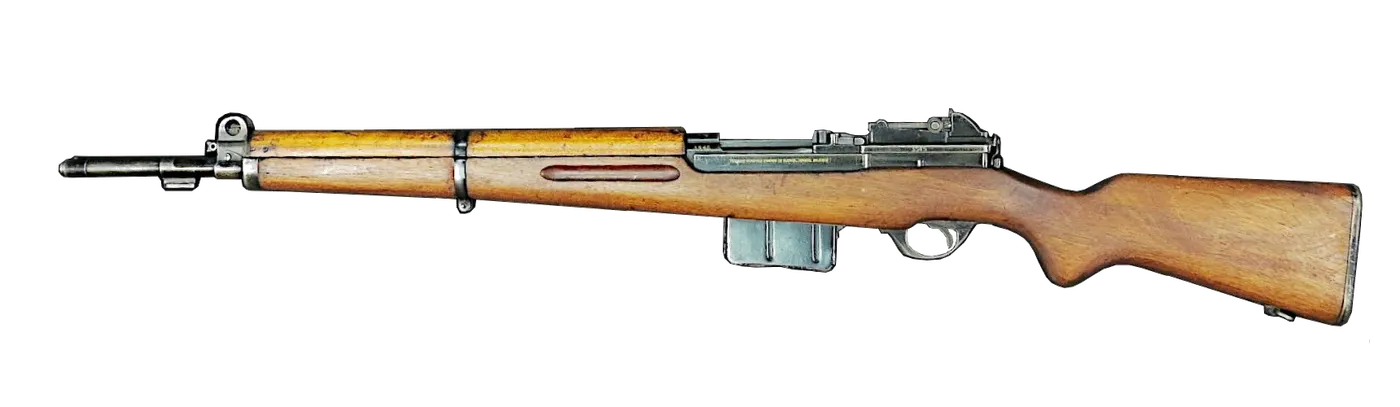

The FN Model 1949, commonly called the FN-49 or SAFN-49, is a semi-automatic battle rifle designed by Belgian engineer Dieudonné Saive and built by FN Herstal between 1948 and 1961.1 It fired a full-power rifle cartridge from a 10-round magazine loaded with stripper clips, and FN sold it to nine different armies, each in a different caliber, thanks to an adjustable gas system that let the same basic action run on almost any rimless round of the era.1,2 Total production reached roughly 176,000 rifles, a modest number next to contemporaries like the M1 Garand, and the design is now most often remembered as the direct technical predecessor of the FN FAL, the rifle that made FN Herstal a household name among Cold War infantry weapons.1,6
- Full-power rifle cartridge in a controllable semi-automatic platform
- Adjustable gas regulator let FN sell one design in multiple calibers
- Strong reputation for reliability and accuracy among surplus collectors
- Direct technical basis for the far more successful FN FAL
- Fixed 10-round magazine loaded only by stripper clip, slow to reload under pressure
- Select-fire AFN-49 variant gained little from full-automatic fire given its tiny magazine
- Arrived years behind schedule, into a market already full of cheap surplus Garands
- Heavy and long by the standards that replaced it within a decade of adoption
Saive began the work that became the FN-49 in the 1930s, and the rifle's finished form did not appear until 1947, a nine-year gap driven almost entirely by the Second World War.1 By the time it reached full production, cheap surplus M1 Garands were already flooding the same export market FN had hoped to serve, and few buyers wanted a new, non-standard rifle when a proven American design was available at a fraction of the cost.2 The FN-49 sold anyway, in smaller numbers than FN had hoped, to Belgium, Belgian Congo, Luxembourg, Egypt, Venezuela, Argentina, Colombia, Indonesia, and in trial quantities to Brazil.1

FN treated the FN-49 less as a single rifle and more as a flexible export product. Depending on the customer, the same basic action left the Herstal factory chambered for .30-06 Springfield, 7x57mm Mauser, 7.92x57mm Mauser, or 7.65x53mm Argentine Mauser, with the gas regulator retuned for each round's pressure curve.1,2 That flexibility briefly made the FN-49 a genuine world rifle, fielded from South America to the Middle East to Southeast Asia within little more than a decade, before the FAL took over the same role on a far larger scale and effectively ended the FN-49's export career.1
The FN-49 is a gas-operated rifle using a short-stroke piston and a tilting bolt that locks directly into the receiver, an arrangement Saive would carry forward almost unchanged into the FN FAL.1 An empty rifle weighs about 4.31 kg and measures roughly 1,116 mm overall, with a 590 mm barrel, dimensions that put it firmly in the same size class as the M1 Garand and the later FN FAL rather than anything more compact.1,2 Muzzle velocity runs around 730 m/s depending on chambering, and FN advertised an effective range out to 700 m with iron sights consisting of a shielded post front sight and a tangent aperture rear sight.2
- İlk Üretim Yılı1948
- Hizmete Giriş Yılı1949
- TasarımcıDieudonné Joseph Saive
- Ağırlık (Boş)4,31 kg
- Halen HizmetteEvet
- Önemli KullanıcılarArjantin, Belçika, Belçika Kongosu, Brezilya, Kolombiya, Mısır, Endonezya, Lüksemburg, Venezuela
The rifle's most distinctive feature is its gas regulator, a knurled valve under the handguard that let an armorer tune how much propellant gas bled into the piston. Adjusting it required a special wrench and partial disassembly, so it was not a field-expedient control in the way the FN FAL's later regulator became, but it served two purposes at once. It let FN calibrate one basic design for four or more different cartridges, and a fully closed setting could cut gas to the piston entirely, a position used for launching rifle grenades from the muzzle without cycling the action.1,2
- Fişek.30-06 Springfield, 7x57mm Mauser, 7.92x57mm Mauser, 7.65x53mm Argentine Mauser, 7.62x51mm NATO (Argentine post-production conversion only)
- Çap7,62 mm
- Çap Sınıfıtam boy
- Kenar AteşlemeliHayır
- Kovansız MühimmatHayır
Sniper-configured rifles added a dovetail rail machined into the left side of the receiver for a claw-mount scope, along with a raised wood cheekpiece on the stock.1 FN's own sniper rifles carried a 4-power OIP telescopic sight, while Egypt later modified a small batch of its own rifles in-country with a different Czechoslovak-made 2.5-power Meopta scope and a muzzle brake, a locally driven variant not part of FN's original sniper production run.2
- Mekanizma TipiGazlı
- Atış Modlarıyarı otomatik, seçmeli ateş
- Seçmeli AtışEvet
- Besleme SistemiÇıkarılabilir Şarjör
- Şarjör Kapasitesi10
- Tetik Tipitek kademeli
- Emniyet Tipimanuel emniyet
Compared with the FN FAL that followed it, the FN-49 is heavier for its cartridge, feeds from a far smaller magazine, and lacks any provision for a folding stock, a feature that belongs to the later FAL Para rather than to the FN-49 despite it sometimes being wrongly attributed to the earlier rifle.1 The table below sets the two designs side by side.
- Namlu Çıkış Hızı730 m/sn
- Etkili Menzil (nokta)700 m
| Parameter | FN-49 | FN FAL (standard) |
|---|---|---|
| Action | Gas-operated, tilting bolt1 | Gas-operated, tilting bolt6 |
| Cartridge | .30-06, 7x57mm, 7.92x57mm, 7.65x53mm (by contract)1 | 7.62x51mm NATO6 |
| Magazine | 10-round, loaded by stripper clip2 | 20-round detachable box6 |
| Empty weight | About 4.31 kg1 | About 4.25 kg6 |
| Gas regulator | Adjustable, workshop tool required2 | Adjustable, field tool6 |
- Namlu Uzunluğu590 mm
- Nişangah TipiDemir nişangah, teleskopik nişangah
- Optik RayıHayır
- Açık NişangahEvet
- Dişli NamluHayır
- Toplam Uzunluk1.116 mm
- Gövde Malzemesi (Receiver)Çelik
- Kabza/Dipçik Malzemesiahşap
- Katlanır / Toplanır DipçikHayır
- Bullpup DüzeniHayır
- Çift Yönlü KumandalarHayır
- Susturucuya HazırHayır
- Süngü TakozuEvet
- Entegre BipodHayır
- Bombaatar KabiliyetliEvet
- Gaz PistonluEvet
- Toplam Üretim176.000
- Üretim Başlangıcı1948
- Üretim Bitişi1961
Dieudonné Saive joined FN Herstal in 1906 as a young tool designer and eventually worked as an assistant to American firearms designer John Browning, whose unfinished projects Saive completed after Browning's death in 1926, including the pistol that became the Browning Hi-Power.1,7 Saive became FN's chief weapons designer in 1930 and began experimenting with recoil-operated semi-automatic rifles soon after, work that evolved by 1936 into a patented gas-operated design.1 A five-round prototype was nearly ready for market in late 1938, and full production seemed close, when the German invasion of Poland in September 1939 forced FN to redirect its factory to bolt-action rifles and machine guns for the coming war instead.1
The German occupation of Liège in May 1940 halted the project outright. Saive concealed his rifle designs, escaped occupied Belgium through Portugal, and reached London by the middle of 1941, where he went to work at the Enfield Design Department in Cheshunt, England, continuing the same basic rifle under the British designation EXP-1, also referred to as SLEM-1 for Self-Loading Experimental Model.1,3,4 By late 1943 the Royal Small Arms Factory at Enfield had ordered 50 prototypes chambered for 7.92x57mm Mauser, and testing went well enough that Enfield placed a further order for 2,000 rifles for troop trials.1,4 A last-minute problem regulating gas pressure, combined with the war's end making the whole program less urgent, led Britain to cancel that order before it was filled.1
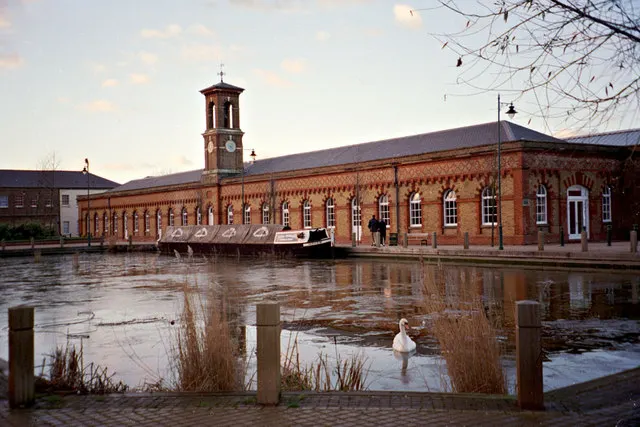
Saive returned to a liberated Liège shortly after September 1944 and picked the project back up almost immediately, finalizing the design that would become the FN-49 by 1947.1 Production began in 1948, with Venezuela placing FN's first export order on 31 March 1948 and receiving its full shipment of 8,003 rifles within about four months, a remarkably fast turnaround for a brand-new production line.2 Belgium adopted the rifle for its own army the following year.1
By the time the FN-49 was finding its first customers, Saive was already working on its successor. He began FAL prototype work as early as 1946, developing it in parallel with the last stages of FN-49 finalization, and completed the new design by 1951 chambered for the emerging 7.62x51mm NATO round.1,6 The FAL kept the FN-49's tilting-bolt gas action almost unchanged but paired it with a 20-round detachable magazine and, in most versions, select-fire capability from the start.6 Adopted eventually by roughly 90 countries and built in more than two million examples, the FAL earned the nickname the right arm of the free world and became one of the most widely issued rifles of the entire Cold War, a scale of success the FN-49 never came close to matching.6 FN kept the FN-49 in production alongside its increasingly successful successor until 1961, when the last export order, from Indonesia, closed out the line.1
The FN-49's first confirmed use in an armed conflict came at home for its Egyptian customer. Egyptian forces carrying FN-49s took part in the 1952 Egyptian revolution that deposed King Farouk and brought Gamal Abdel Nasser's Free Officers movement to power.2 Four years later, Egypt fielded its FN-49s again during the 1956 Suez Crisis, against Israeli, British, and French forces.2 Rifles captured from Egyptian units during that fighting later became the only pre-1968 route by which Egyptian-contract FN-49s reached American soil, imported as war trophies and surplus stock well before Egypt's own later 8mm shipments arrived commercially.2
American Rifleman and other firearms references also list Belgian FN-49s in Korean War service, plausibly with the Belgian United Nations battalion that served in Korea between 1951 and 1955, though no source consulted names the specific unit or engagement, so the claim should be treated as probable rather than firmly documented.2
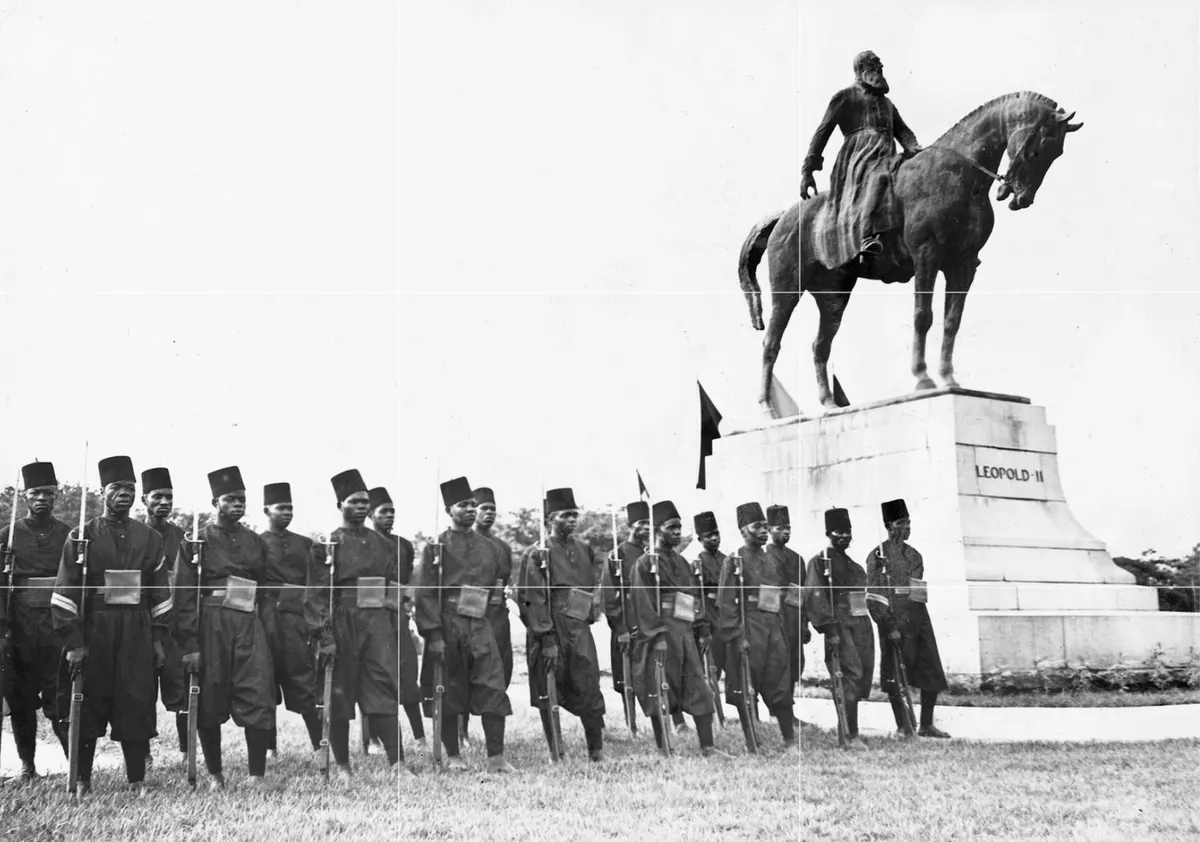
The clearest case of the FN-49 fighting on both sides of the same war came a decade later, during the Congo Crisis that followed Belgian Congo's 1960 independence.11 Congolese Force Publique units inherited roughly 2,795 Belgian-contract FN-49s, including select-fire AFN-49s and a batch of 185 scoped sniper rifles delivered in 1954, and continued using them through the turmoil that followed.1,2 At the same time, Indonesian troops serving with the United Nations peacekeeping mission during the Katanga insurgency carried their own nationally issued FN-49s, purchased under Indonesia's separate 1960 to 1961 contract with FN.2,12 The result, by the account of firearms historians who have studied the conflict, is that the Congo Crisis stands as the only documented war in which opposing forces on both sides carried the FN-49.2
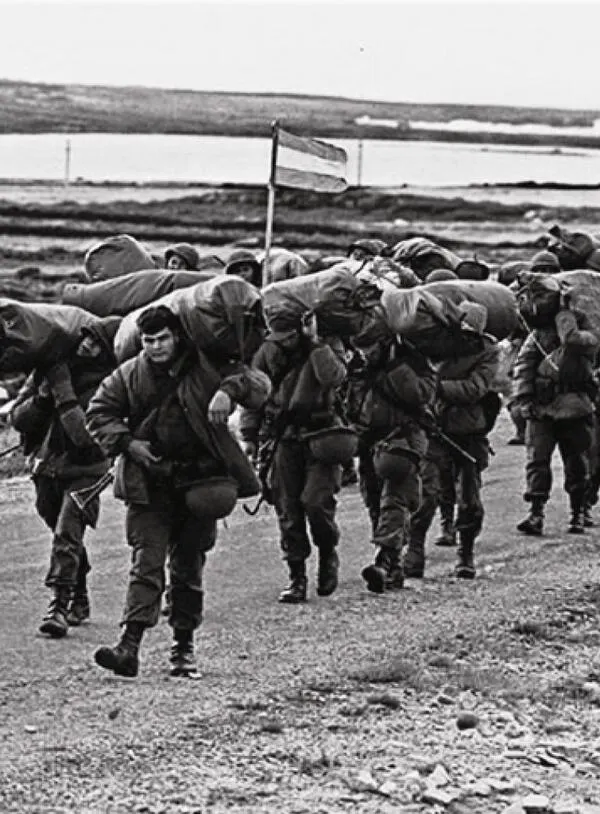
Argentina's FN-49s returned to combat two decades after that, in a very different theater. Argentine Navy rifles, originally chambered in 7.65x53mm Argentine Mauser and later converted domestically to 7.62x51mm NATO, reportedly equipped a small number of Argentine snipers during the 1982 Falklands War.13 The claim comes with a genuine caveat. Argentina's main infantry rifle in that campaign was overwhelmingly the FAL, logistics to the islands were difficult, and at least one detailed English-language account of Argentine small arms in the Falklands argues it is unlikely any FN-49 variant saw real combat there, since defenders had little reason to bring a second obsolete rifle and its non-standard ammunition into an already strained supply chain.14 The two positions have not been fully reconciled in the available literature, and the true extent of FN-49 use in the Falklands remains uncertain.
The rifle also appears, more thinly documented, in accounts of the 1965 Dominican Civil War, among Colombian forces during the long internal violence of the mid-20th century, and among Indonesian units through the various rebellions and campaigns of the late 1950s and early 1960s, though none of these uses is tied in the sources reviewed to a specific named unit or battle, and they should be read as general operator context rather than documented engagements.1,2
Nearly half of all FN-49s left the factory as the select-fire AFN-49, adopted by the Belgian Army, the Luxembourg Army and Gendarmerie, and Belgian Congo's Force Publique.8 The conversion kept the same fixed 10-round magazine as the semi-automatic rifle, which severely limited what full-automatic fire could actually accomplish. A magazine that empties in well under a second of sustained fire, combined with a full-power rifle cartridge's recoil, made the AFN-49 a select-fire rifle in name more than in practical utility, a criticism firearms historians have made consistently.8 A Belgian naval infantry version of the same select-fire rifle was designated ZM-FN, for Zeemacht/Force Navale.8
The AFN-49 also produced one of the odder footnotes in American import history. A shipment of Luxembourg Gendarmerie rifles arrived in the United States without anyone realizing, until they were unpacked, that they were the select-fire AFN-49 pattern rather than ordinary semi-automatics.8 Rather than turn the shipment away, the importer, International Armaments Corporation (InterArms), worked directly with the Alcohol and Tobacco Tax Division of the Internal Revenue Service, the predecessor agency to today's ATF, to legally demilitarize the rifles by removing their selector levers and auto sears and milling off the attachment points on the receivers.8 Those deactivated former-automatic rifles remain identifiable and sought after on the American collector market today.8
FN's dedicated sniper rifle, built in far smaller numbers, totaled about 750 units across the Belgian, Belgian Congo, and Luxembourg contracts.1 These carried a wood cheekpiece and a dovetail scope rail on the left side of the receiver for a 4-power OIP telescopic sight, and roughly half of surviving FN-49s reportedly still carry that dovetail rail today, whether or not they were ever issued as sniper rifles.2 Belgian Congo's final 1954 shipment of 185 rifles consisted entirely of this scoped sniper pattern.1
Argentina produced its own conversion program in the late 1960s, when the domestic firm Metalúrgica Centro, formerly known as Fábrica de Armas Halcón, rechambered the Navy's original 7.65x53mm rifles to 7.62x51mm NATO, fitting new barrels, modified ejectors, and proprietary 20-round detachable magazines compatible with FAL chargers.13 A single rifle had already been converted directly by FN itself, as a one-off demonstration piece, in March 1967, ahead of the larger domestic program.1 These NATO-caliber Argentine conversions are the same rifles reportedly used as improvised sniper weapons in the Falklands fifteen years later.13
A small final variant deserves mention for its distinctiveness rather than its numbers. Venezuela's contract was the only one to specify a flash hider, and it used a longer 15-inch single-edge bayonet in place of the roughly 9.25-inch double-edge bayonet standard on every other national contract.1 Small numbers of sporterized FN-49s also reached the American and Australian civilian markets through Browning in the 1960s, finished with checkered stocks, a rollover cheekpiece, and a side-mounted scope base for commercial hunters rather than soldiers.1


| Yıl | Alıcı | Adet | Tutar | Bugünkü Değer (2025) |
|---|---|---|---|---|
| 1961 |  Endonezya | — | — | — |
| 1953 |  Arjantin | 5,536 | — | — |
| 1951 |  Kongo Demokratik Cumhuriyeti | 2,795 | — | — |
| 1950 |  Lüksemburg | 6,306 | — | — |
| 1949 |  Mısır | 37,602 | — | — |
| 1948 |  Venezuela | 8,003 | — | — |
Belgium was both the FN-49's home market and its largest single customer, taking 87,777 rifles, roughly half of total production, into service with its own army from 1949.1 Egypt was the second-largest buyer, receiving 37,602 rifles chambered in 7.92x57mm Mauser rather than the .30-06 round often assumed for it, delivered under a contract completed in 1949.1 Venezuela's 8,003 rifles, chambered in the distinct 7x57mm Mauser round already standard in Venezuelan service, arrived in 1948 as FN's first export contract.1,2
Luxembourg received 6,306 rifles in .30-06 Springfield for its army and gendarmerie, including the AFN-49 select-fire variant and a small training batch of cutaway demonstration rifles.9,10 Argentina's Navy ordered 5,536 rifles in July 1953, chambered in 7.65x53mm Argentine Mauser and later domestically converted to 7.62x51mm NATO.1 Belgian Congo's Force Publique received 2,795 rifles across three shipments between 1951 and 1954, all in .30-06, replacing the older Mauser Model 1930 bolt-action rifle previously issued there.1 Colombia and Indonesia also adopted the .30-06 chambering, with Indonesia's order, placed in December 1960 and delivered in February 1961, closing out FN-49 production entirely.1
Brazil never adopted the FN-49 as a service rifle. FN converted a single example to 7.62x51mm NATO for Brazilian trials in March 1967, a one-off demonstration rather than a fielded contract, and it belongs in the FN-49's story mainly as evidence of how late the design was still being adapted for new cartridges.1 Ethiopia also acquired a number of FN-49s from Belgium as part of a broader mid-20th-century pattern of buying European surplus and export-contract small arms, a real but thinly documented chapter that deserves a cautious mention rather than a confident production figure.2 Claims that the FN-49 was adopted by as many as 26 nations appear in some secondary sources but are not corroborated by primary contract records, and the standard, well-documented operator list runs to eight adopting countries plus Brazil's trial batch.2
None of the FN-49's original military customers still issue it as a standard rifle today. Every documented adopting army had transitioned to the FN FAL, a licensed alternative, or another later-generation rifle well before the end of the twentieth century, and the FN-49's remaining presence is almost entirely in collector and museum hands rather than active armories.1,2
The FN-49's most direct comparison is with its own successor, the FN FAL, since both share the same gas-piston, tilting-bolt action designed by the same engineer.1,6 The FAL solved the FN-49's central weakness, its tiny fixed 10-round magazine, by pairing the same basic action with a 20-round detachable box magazine and, in most national versions, genuine select-fire capability built in from the start rather than bolted on as an afterthought.6 Chambering the FAL for the new 7.62x51mm NATO round rather than a mix of legacy cartridges also let FN sell a single standardized rifle across an entire alliance instead of retuning a gas system for each new customer's ammunition. Where the FN-49 reached nine countries and 176,000 rifles, the FAL reached roughly 90 countries and more than two million rifles, a difference in scale that reflects both a better design and a market that had, by the 1950s, converged around a single NATO cartridge the FN-49 had arrived just too early to use.1,6
The FN-49's other natural comparison is the rifle that quietly beat it in the export market without ever facing it in a formal trial, the American M1 Garand. Both are full-power semi-automatic rifles from the same design era, but the Garand had a decade's head start in mass production and, by the time the FN-49 reached the market in 1948 and 1949, American military aid programs were distributing surplus Garands to allied and non-aligned governments at prices FN's new-production rifle could not match.2 FN's answer was to sell into the gaps the Garand could not fill, non-aligned states outside US aid programs and buyers who wanted a specific legacy caliber like 7x57mm Mauser rather than .30-06, a narrower niche that explains both the FN-49's modest production total and its unusually wide spread of different chamberings.2


What caliber is the FN-49? It depends entirely on the national contract. Belgium, Luxembourg, Belgian Congo, Colombia, and Indonesia received .30-06 Springfield rifles, Venezuela received 7x57mm Mauser, Egypt received 7.92x57mm Mauser, and Argentina received 7.65x53mm Argentine Mauser, later converted domestically to 7.62x51mm NATO.1
How does the FN-49 work? It is a gas-operated rifle with a short-stroke piston and a tilting bolt that locks into the receiver, fed by a fixed 10-round magazine loaded through the open action with 5-round stripper clips, an action Saive carried forward almost unchanged into the later FN FAL.1,2
Is the FN-49 still in service? No standard military still issues it. Every documented operator had replaced it, mostly with the FN FAL, well before the end of the Cold War, and surviving examples are now collector and museum pieces rather than active-duty rifles.1,2
FN-49 vs FN FAL, what changed? The FAL kept the FN-49's basic gas-piston action but replaced its fixed 10-round magazine with a 20-round detachable box, added genuine select-fire capability to most national versions, and standardized on the new 7.62x51mm NATO cartridge instead of the four or more different chamberings FN sold the FN-49 in.1,6
What is the FN-49's unit cost today? No confirmed original contract price has surfaced in the sources reviewed. On the modern collector market, surplus examples have traded from a few hundred dollars for common Egyptian 7.92mm rifles up to roughly 1,200 dollars for less common 7mm and 7.62mm variants, figures reflecting collector demand rather than any historical military contract price.2
- "FN Model 1949", Wikipedia — en.wikipedia.org ↩
- "FN-49, The Last Old-School Battle Rifle", American Rifleman — americanrifleman.org ↩
- "Fabrique Nationale EXP-1/SLEM", Rock Island Auction — rockislandauction.com ↩
- "SLEM-1", Wikipedia — en.wikipedia.org ↩
- "Classic Guns, The FN-49", Shooting Illustrated — shootingillustrated.com ↩
- "FN FAL", Wikipedia — en.wikipedia.org ↩
- "Browning Hi-Power", Wikipedia — en.wikipedia.org ↩
- "AFN-49, The Forgotten Full-Auto Brother of the FN-49", Forgotten Weapons — forgottenweapons.com ↩
- "Luxembourg FN49 Semiauto Sniper Rifle", Forgotten Weapons — forgottenweapons.com ↩
- "Luxembourg Contract Fabrique Nationale FN-49 Rifle", Rock Island Auction — rockislandauction.com ↩
- "Congo Crisis", Wikipedia — en.wikipedia.org ↩
- "United Nations Operation in the Congo", Wikipedia — en.wikipedia.org ↩
- "Argentine FN-49 7.62 NATO", The FAL Files — falfiles.com ↩
- "Garand in the Falklands", wwiiafterwwii — wwiiafterwwii.wordpress.com ↩