


The Howa Type 64 is a 7.62mm battle rifle designed and built by Howa Machinery and adopted in 1964 as the standard infantry rifle of the Japan Self-Defense Forces (JSDF).1 It is a gas-operated, tilting-bolt rifle firing a deliberately reduced-power version of the 7.62x51mm NATO cartridge from a 20-round detachable box magazine, and it carries an integral folding bipod plus a muzzle brake that doubles as a rifle-grenade launcher.2 Roughly 230,000 units were produced between 1964 and 1988, all of them for domestic Japanese use, because Japan's own arms-export rules made the Type 64 one of the very few Cold War era standard service rifles from a US-aligned state that could never legally be sold abroad.3
- reduced-power 7.62mm NATO round keeps full-auto fire controllable
- adjustable gas regulator (grenade-launch mode or full-power NATO ammo)
- integral folding bipod adds a light-support role
- selector positions spell out *atare*, a built-in training mnemonic
- heavier and mechanically more complex than contemporaries like the CETME
- bulkier 7.62mm platform next to later 5.56mm service rifles
- never exported, so no foreign production base or spares network
- standard-power NATO ammunition needs a manual gas-regulator adjustment first
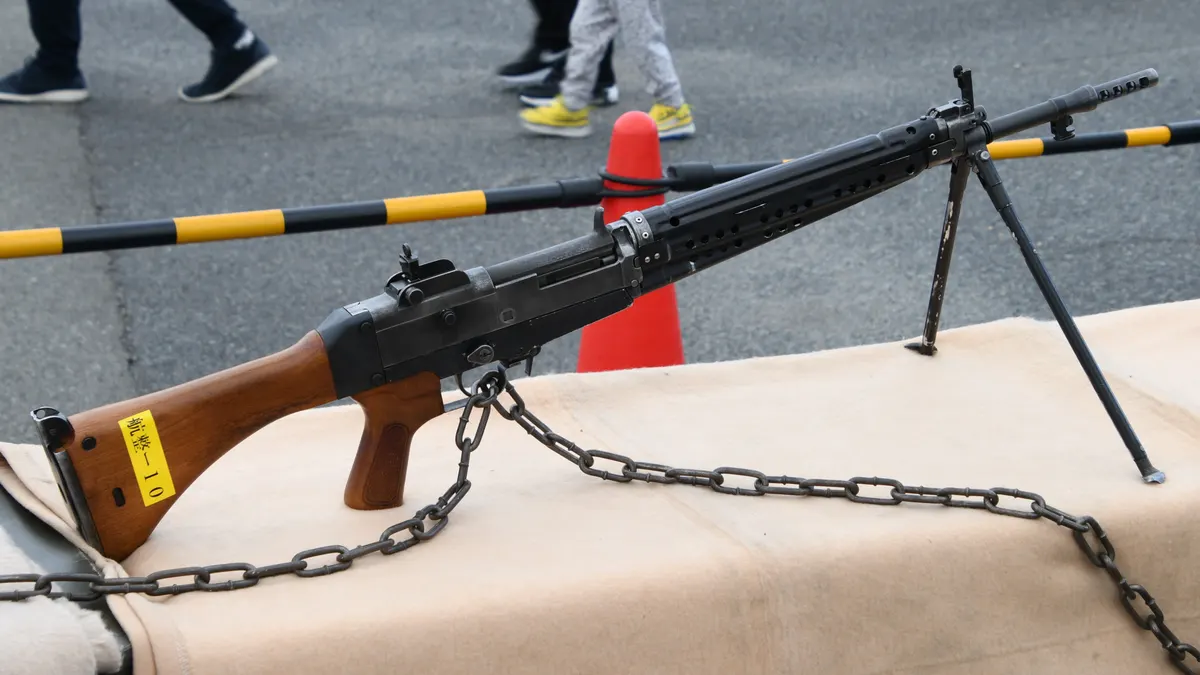
That indigenous design choice was not a technical accident. Japan Defense Agency (JDA) trial rifles built during the 1950s and early 1960s were explicitly modeled on the American ArmaLite AR-10 and M14, and Howa's engineers even copied the M14's magazine geometry outright, yet the Japanese government still chose to finalize and mass-produce its own design rather than adopt or license-build a Western rifle already in NATO service.4 The result served as the JSDF's sole standard rifle for about twenty-five years before the 5.56mm Type 89 began replacing it from 1989, and worn examples still turn up today in Japanese reserve units, the Japan Coast Guard, and the police Special Assault Team.5
The rifle's core engineering idea, a 7.62mm cartridge deliberately downloaded to make full-automatic fire manageable by an average-sized soldier, is unusual enough that firearms researchers routinely group the Type 64 with the Spanish CETME rifle as one of the only 7.62mm NATO-class weapons genuinely controllable in full-auto, a comparison covered in depth below.6 Sections that follow work through the design in detail, the constitutional and political background that shaped it, its production run and slow retirement, and how it stacks up against the M14 and CETME it was tested and compared against during development.
Fully indigenous Japanese design and production, deliberately pursued instead of adopting or license-building the AR-10/M14-influenced trial rifles or an existing NATO design (FAL/G3), consistent with Japan's kokusanka (domestic-production) defense-industrial policy and reinforced after the fact by the 1967/1976 arms-export ban that barred any sale of the finished rifle abroad.
A Reduced-Power 7.62mm NATO Round for Recoil Control
The Type 64 fires a cartridge dimensionally close to standard 7.62x51mm NATO but loaded with a lighter bullet and a reduced propellant charge, cutting muzzle velocity to roughly 700 to 715 meters per second against about 810 meters per second for full-power NATO ammunition.7 JDA planners built the round around the smaller average stature and lighter body mass of Japanese soldiers, reasoning that a full-power 7.62mm load, already considered too punishing for controllable automatic fire by many contemporary armies, would be even harder to manage for a typical JSDF conscript.8 The rifle's trigger group is a striker-fired unit of Howa's own design with a built-in, patented rate-reducing mechanism, and the combination of the milder cartridge and the slowed cyclic rate, around 450 to 500 rounds per minute, is what lets a shooter keep the muzzle on target through a full-automatic burst.9
- İlk Üretim Yılı1964
- Hizmete Giriş Yılı1964
- TasarımcıIwashita Kenzō and Dōgane Giichi
- Ağırlık (Boş)4,4 kg
- Halen HizmetteEvet
- Önemli KullanıcılarJaponya Öz Savunma Kuvvetleri, Japonya Sahil Güvenlik, Özel Saldırı Timi
Beyond the reduced-power round, the rifle is unremarkable by contemporary standards. It weighs about 4.3 to 4.4 kilograms unloaded, measures 990 millimeters overall with a 450mm barrel, and cycles through a short-stroke gas piston mounted above the barrel that drives a tilting bolt, broadly similar in principle to the mechanism used in the Soviet SKS and early AK-pattern rifles.10 Sights are a simple folding post front and a flip-up aperture rear calibrated for 200 and 400 meters, giving the rifle a quoted effective range of about 400 meters, modest even by 1960s infantry-rifle standards but consistent with its emphasis on controlled automatic fire over long-range precision.11
- Fişek7.62×51mm NATO (modified load)
- Çap7,62 mm
- Kovan Uzunluğu51 mm
- Çap Sınıfı7.62mm
- Kenar AteşlemeliHayır
- Kovansız MühimmatHayır
The Atare Selector and an Adjustable Gas Regulator
One distinctive detail sits in plain sight on every Type 64. The fire selector rotates through three positions, safe, semi-automatic, and full-automatic, and the first character of each Japanese label reads in sequence as atare, meaning hit the target, a deliberate mnemonic built into the rifle so a soldier under stress can recall the firing sequence just from the word itself.12
- Mekanizma TipiGazlı
- Atış Modlarıemniyet, yarı otomatik, otomatik
- Seçmeli AtışEvet
- Besleme SistemiÇıkarılabilir Şarjör
- Şarjör Kapasitesi20
- Teorik Atış Hızı500
- Tetik Tipidoğrusal horoz
- Emniyet Tipiアタレ (Atare) etiketli seçici anahtar
The gas system carries its own piece of flexibility. A manually adjustable regulator lets the shooter close off gas to the piston entirely, which is necessary to fire the Type 06 rifle grenade off the rifle's muzzle brake without the launch overpressuring or damaging the action, or open the regulator further to safely cycle full-power standard NATO ammunition if the reduced-charge Japanese loading is not available.13 That second setting matters operationally, since it means Japanese units are not stranded if resupplied with ordinary NATO-specification 7.62mm rounds, at the cost of losing the controllability the rifle was built around while that ammunition is loaded.
- Namlu Çıkış Hızı700 m/sn
- Etkili Menzil (nokta)400 m
An M14-Pattern Magazine on a Locally Designed Rifle
Despite its home-grown pedigree, the Type 64's 20-round detachable box magazine was patterned directly on the M14's, a deliberate piece of parts commonality left over from the R3 prototype phase of development described in the History section below.14 The rest of the rifle is a wooden buttstock with a hinged steel buttplate over a metal foregrip, a design language closer to a traditional battle rifle than to the black polymer service rifles that followed it. The stock's front end carries the rifle's most visually distinctive feature, an integral, lightweight folding bipod mounted near the front sight post, letting a single rifleman use the Type 64 as an improvised light support weapon in a defensive position, a role consistent with the ambush-and-static-defense doctrine the JGSDF favored through the 1960s and 1970s.15
- Namlu Uzunluğu450 mm
- Nişangah TipiMekanik nişangah
- Optik RayıHayır
- Açık NişangahEvet
- Dişli NamluHayır
- Toplam Uzunluk990 mm
- Kabza/Dipçik Malzemesiwood and steel
- Katlanır / Toplanır DipçikHayır
- Bullpup DüzeniHayır
- Çift Yönlü KumandalarHayır
- Susturucuya HazırHayır
- Entegre BipodEvet
- Bombaatar KabiliyetliEvet
- Gaz PistonluEvet
- Toplam Üretim230.000
- Üretim Başlangıcı1964
- Üretim Bitişi1988
- Birim Maliyet1.180 USD
Article 9, the Self-Defense Forces, and an Export Ban That Locked In an Indigenous Rifle
Japan's 1947 constitution renounces war in Article 9 and, under the government's long-standing interpretation, bars maintaining conventional war potential, a legal framework under which the Self-Defense Forces were organized in 1954 as a strictly defensive body rather than a standard national military.16 Postwar demilitarization had already dismantled Japan's prewar arms industry, and it took the outbreak of the Korean War, and American encouragement, to push Tokyo toward rebuilding any domestic defense capacity at all, first through the National Police Reserve and then the JSDF itself.17
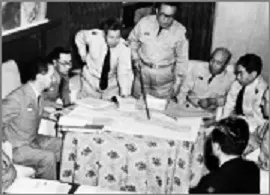
That constrained legal footing hardened further in 1967, when Prime Minister Eisaku Sato announced the Three Principles on Arms Exports, and again in 1976, when Prime Minister Takeo Miki expanded them into a near-total ban on exporting any weapon developed in Japan.18 Every subsequent Japanese-designed weapon, the Type 64 included, was therefore permanently barred from foreign sale the moment it entered service, a restriction that had nothing to do with the rifle's own qualities and everything to do with a national policy adopted years after the rifle was already fielded. Choosing to design and mass-produce an entirely domestic rifle, rather than adopt or license-build a Western design already proven in NATO service, fit a broader Japanese defense-industrial policy of self-sufficiency, sometimes referred to in Japanese planning documents as kokusanka or domestic production, that by the late 1970s had Japanese firms independently supplying the JSDF with aircraft, tanks, artillery, and naval vessels as well.19
From a Rejected Garand-Pattern Prototype to the R6E
The Japan Defense Agency gave Howa Machinery a development contract in 1956, and the JSDF formally began looking for a replacement for its worn M1 Garand rifles the following year.20 Howa's engineers built a sequence of prototypes designated R1, R2, and R3, with R2 explicitly following the American AR-10's layout and R3 following the M14's, both of them ultimately rejected in JDA trials.21 A separate, competing prototype team led by General Kijiro Nambu, already famous for the Nambu pistol series, built a rival design based on the M1 Garand's action, but it failed field trials and was dropped from consideration, making Nambu a rejected competitor in the Type 64 program rather than its designer, a point sometimes confused in secondary sources.22
Howa refined its own line of prototypes into the R-6 by 1962, and a 7.62mm chambered version, the R6E, was formally adopted by the JSDF in 1964, taking its official name from the last two digits of the Japanese imperial year 64, corresponding to 1964 on the Showa calendar.23 Design credit is generally given to Kenzo Iwashita and Dogane Giichi, and the finished rifle was Japan's first entirely indigenously designed infantry rifle since the bolt-action Type 99 of 1939, a 25-year gap without a domestically originated service rifle.24
Thirty Years of Production and a Long Handover to the Type 89
Howa manufactured approximately 230,000 Type 64 rifles at its Nagoya plant between 1964 and 1988, all of them for the JSDF, and the rifle served as Japan's sole standard-issue infantry weapon for roughly a quarter century.25 Replacement began in 1989 and 1990 with the introduction of the 5.56mm Howa Type 89, but the handover was gradual rather than immediate, and Type 64 rifles remained in frontline JGSDF units for years afterward before settling into reserve, second-line, and specialist inventories.26
Howa Machinery itself had an unusual path into small-arms production. Founded as Toyoda Loom Works to build textile machinery, the firm took on Imperial Japanese Army arsenal work during the Second World War, including production tied to the Type 99 rifle, before reverting entirely to civilian looms after 1945.27 It reentered firearms manufacturing gradually through the civilian hunting-rifle market, building Japan's first mass-produced semi-automatic hunting carbine, before landing the Type 64 defense contract and later going on to design the Type 89 that eventually replaced it.29
The retirement pace stayed slow well past 1990. Reserve JGSDF companies and training units kept issuing the Type 64 for years after the Type 89 became the standard frontline rifle, and the older rifle remained visible in JGSDF exercises and Japan Coast Guard service long after its last production example left the Nagoya plant in 1988, a drawn-out drawdown covered further in Operators below.26
The Type 64 has no confirmed combat record of its own. Because the export ban kept every example inside Japanese government hands, and because the JSDF itself did not deploy overseas in any combat capacity for most of the rifle's service life, firearms historians describe it as a weapon that was never employed in any significant combat role.30
The closest the rifle came to an overseas deployment during its frontline years was Japan's first-ever overseas military deployment, an approximately 600-strong JGSDF engineering unit sent to Cambodia under the United Nations Transitional Authority in Cambodia (UNTAC) between September 1992 and March 1993, made possible by Japan's newly passed 1992 Peacekeeping Operations Law.31 The Type 64 was still the JGSDF's primary standard rifle at that point in its service life, which makes it plausible that deployed personnel carried it, but no source located during research explicitly confirms the rifle model actually issued to that engineering unit, and this account does not treat the connection as settled.
The Designated Marksman Variant and Its Single-Screw Scope Mount
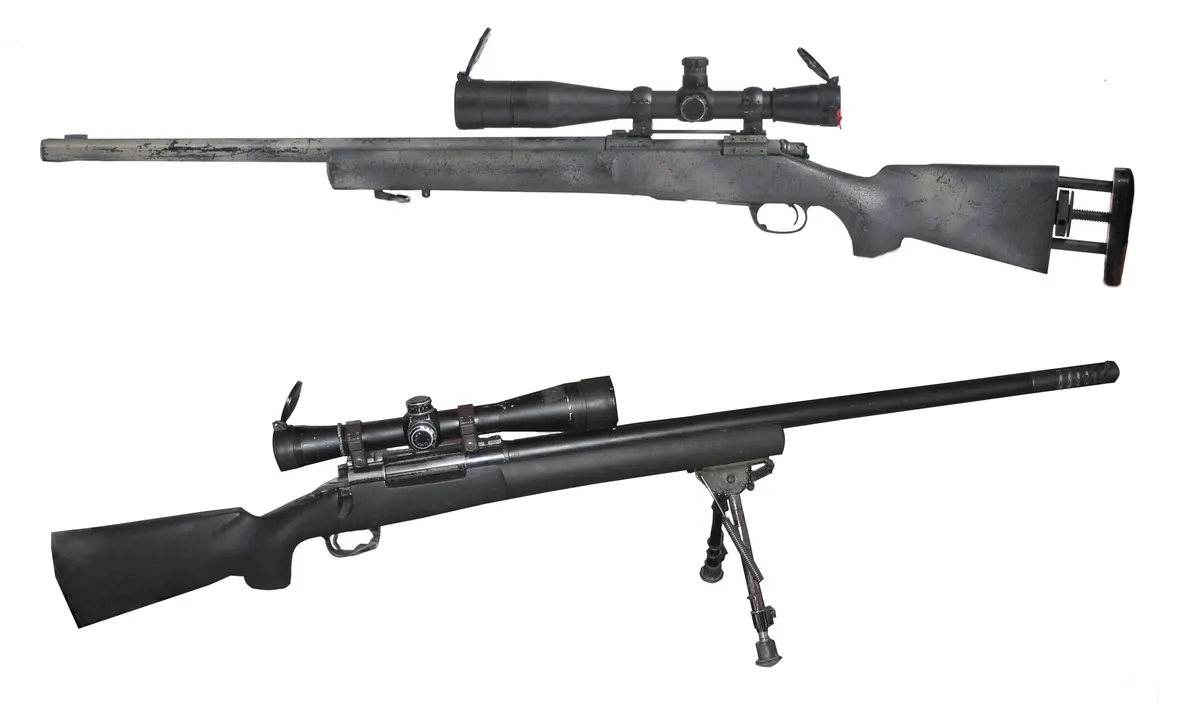
Howa produced a designated marksman version of the Type 64 fitted with a scope mount, typically carrying a 2.2x magnification optic drawn either from surplus American M84 scopes or Japanese Nikon equivalents.32 The mount itself attached to the receiver with a single screw, a design criticized for allowing the scope's zero to shift and undermining accuracy repeatability compared with a more rigidly clamped mount, though this variant never fully displaced iron-sighted rifles in general infantry use.33 It was retired from frontline JGSDF service once the bolt-action Remington-derived M24 Sniper Weapon System entered inventory in 2002, giving Japanese designated marksmen a purpose-built precision rifle rather than a converted service weapon.34
No production variant of the Type 64 ever left Japan or was adapted for a foreign customer's requirements, a direct consequence of the export restrictions covered in History above, and the rifle never developed the sprawling family of licensed and derivative models common to contemporaries like the FN FAL.

Japan Self-Defense Forces, Coast Guard, and Special Assault Team Use

Japan is the Type 64's only operator, a direct consequence of the export ban described above, and no other country has ever fielded the rifle.35 Within Japan, use extends beyond the JGSDF itself. The Japan Coast Guard has issued the Type 64 to some of its personnel, and a small number of scoped designated-marksman examples have seen use with the National Police Agency's Special Assault Team, the country's dedicated counter-terrorism unit.36 Reserve JGSDF elements and some second-line units continued carrying the Type 64 well into the Type 89 transition, and isolated examples remain in inventory even decades after the rifle's last production run ended in 1988.
Japan's Firearm and Sword Possession Control Law bars private ownership of select-fire military rifles outright, so no civilian, collector, or exported example of the Type 64 exists anywhere. Every surviving rifle remains in a Japanese government inventory or a museum display case, making it one of the least internationally accessible standard-issue service rifles of the entire Cold War.37
The Howa Type 64 vs the CETME, Two Rifles Solving the Same Problem
The Type 64 and the Spanish CETME rifle arrived at strikingly similar answers to the same design question from opposite ends of the world. Both militaries judged full-power 7.62mm NATO ammunition too punishing to control in automatic fire, and both responded by fielding a dimensionally similar but deliberately downloaded cartridge paired with a rifle engineered specifically around that milder round.6 Firearms researchers single out exactly this pair when discussing which 7.62mm NATO class rifles are genuinely controllable in full-auto, treating the FN FAL, the Heckler & Koch G3, and the M14 as reference points for how uncontrollable the standard chambering usually was.6 The two designs diverge mechanically. The Type 64 is gas-operated with a tilting bolt, while the CETME relies on a roller-delayed blowback system that needs no gas system at all, and the CETME's own later Model C variant abandoned its reduced-power round for full-power NATO ammunition under military pressure, giving up exactly the controllability advantage the Type 64 held onto throughout its production run.
| Howa Type 64 | CETME (Model B) | |
|---|---|---|
| Cartridge | 7.62x51mm, reduced-power Japanese load | 7.62x51mm CETME, reduced-power Spanish load |
| Action | Gas-operated, tilting bolt | Roller-delayed blowback |
| Weight (empty) | About 4.3 to 4.4 kg | About 4.5 kg |
| Magazine | 20-round detachable box | 20-round detachable box |
The Howa Type 64 vs the M14, One Rejected Prototype and One Adopted Rifle
Howa's own R3 prototype during the 1956 to 1962 trial period was explicitly modeled on the M14, and the finished Type 64 kept the American rifle's magazine geometry even after Japan finalized its own indigenous design, a direct engineering link between the two rifles despite their very different service outcomes.14 The M14 entered full US service in 1959 chambered for full-power NATO ammunition and quickly earned a reputation for being nearly uncontrollable in its select-fire M14A1 automatic-rifle configuration, prompting most American units to lock their rifles to semi-automatic fire only. The Type 64 answers the same underlying problem the M14 never solved, how to keep a 7.62mm service rifle usable in full-automatic fire, by changing the ammunition itself rather than accepting the tradeoff and restricting the rifle to single shots.


What caliber does the Howa Type 64 fire? The Type 64 fires a reduced-power version of the 7.62x51mm NATO cartridge, dimensionally similar to standard NATO ammunition but loaded with a lighter bullet and less propellant to keep automatic fire controllable.7
Why was the Howa Type 64 never exported? Japan's 1967 and 1976 arms-export restrictions banned the sale of any Japanese-developed weapon abroad, a policy adopted after the Type 64 had already entered service and one that applied to every subsequent domestically designed Japanese weapon as well.18
Is the Howa Type 64 still in service? Yes, in a limited capacity. The 5.56mm Type 89 replaced it as the JGSDF's primary rifle starting in 1989 and 1990, but Type 64 rifles remain in reserve JGSDF units, with the Japan Coast Guard, and in small numbers with the police Special Assault Team.5
How does the Howa Type 64 compare to the M14? Both trace back to related 1950s trial rifles and share a magazine design, but the M14 fires full-power 7.62mm NATO ammunition and struggled with controllability in automatic fire, while the Type 64 uses a reduced-power round specifically engineered to solve that problem.14
What does the Type 64's selector switch spell out? Its three positions, safe, semi-automatic, and full-automatic, spell atare, Japanese for hit the target, a mnemonic built directly into the rifle's controls.12
How much did a Howa Type 64 cost? A 1985 figure puts the unit cost at approximately 188,000 yen, though this comes from a single source and should be treated as an approximate historical data point rather than a precise figure across the full production run.38
- "Howa Type 64", Wikipedia — en.wikipedia.org ↩
- "Type 64", Modern Firearms — modernfirearms.net ↩
- "Japanese arms-export ban", Wikipedia — en.wikipedia.org ↩
- "Howa Type 64 In 1957 the Japanese Self Defense...", Historical Firearms — historicalfirearms.info ↩
- "Howa Type 64", Wikipedia — en.wikipedia.org ↩
- "Type 64", Modern Firearms — modernfirearms.net ↩
- "Type 64", Modern Firearms — modernfirearms.net ↩
- "Type 64", Modern Firearms — modernfirearms.net ↩
- "Type 64", Modern Firearms — modernfirearms.net ↩
- "Howa Type 64", Wikipedia — en.wikipedia.org ↩
- "Howa Type 64", Wikipedia — en.wikipedia.org ↩
- "Japan's Howa Type 64, Never Exported", GAT Daily — gatdaily.com ↩
- "Howa Type 64", Wikipedia — en.wikipedia.org ↩
- "Howa Type 64 In 1957 the Japanese Self Defense...", Historical Firearms — historicalfirearms.info ↩
- "Howa Type 64", Wikipedia — en.wikipedia.org ↩
- "Article 9 of the Constitution of Japan", Wikipedia — en.wikipedia.org ↩
- "Japan Self-Defense Forces", Wikipedia — en.wikipedia.org ↩
- "Japanese arms-export ban", Wikipedia — en.wikipedia.org ↩
- "Defense industry of Japan", Wikipedia — en.wikipedia.org ↩
- "Howa Type 64 In 1957 the Japanese Self Defense...", Historical Firearms — historicalfirearms.info ↩
- "Howa Type 64 In 1957 the Japanese Self Defense...", Historical Firearms — historicalfirearms.info ↩
- "Howa Type 64 In 1957 the Japanese Self Defense...", Historical Firearms — historicalfirearms.info ↩
- "Howa Type 64", Wikipedia — en.wikipedia.org ↩
- "Howa Type 64", Wikipedia — en.wikipedia.org ↩
- "Type 64", Modern Firearms — modernfirearms.net ↩
- "Type 64", Modern Firearms — modernfirearms.net ↩
- "Company History", Howa Machinery — howa.co.jp ↩
- "Japan's Howa Type 64, Never Exported", GAT Daily — gatdaily.com ↩
- "Company History", Howa Machinery — howa.co.jp ↩
- "Japan's Howa Type 64, Never Exported", GAT Daily — gatdaily.com ↩
- "Japan Self-Defense Forces", Wikipedia — en.wikipedia.org ↩
- "Howa Type 64", Wikipedia — en.wikipedia.org ↩
- "Howa Type 64", Wikipedia — en.wikipedia.org ↩
- "Howa Type 64", Wikipedia — en.wikipedia.org ↩
- "Japanese arms-export ban", Wikipedia — en.wikipedia.org ↩
- "Howa Type 64", Wikipedia — en.wikipedia.org ↩
- "Japanese arms-export ban", Wikipedia — en.wikipedia.org ↩
- "Howa Type 64", Wikipedia — en.wikipedia.org ↩